ARBOR
Taiwan · arbor-technology.com
SnapshotCompany claim
ARBOR is a global provider of industrial IoT computing and mobility solutions, offering system integration, design services, embedded systems, automation, and logistics. Its mission is to enable an intelligent planet through smart products. Headquarters in Taiwan, with offices worldwide.
- Founded
- Not disclosed
- HQ
- Taiwan
- Models
- 191
- Categories
- 2
Product families
Is this your company? Claim this profile to add verified data, respond to our analysis, and upgrade claims to Verified.
Claim this profile1. Executive Overview {#executive-overview}
ARBOR Technology Corp., headquartered in Taiwan, is a global provider of industrial IoT computing and mobility solutions. The company's core strengths are breadth and depth of embedded-hardware coverage: a catalog of 191 products spans rugged box PCs, industrial panel PCs, embedded CPU modules (COM Express, Qseven, SMARC, PC/104, Mini-ITX, Micro-ATX, ATX), mobile computing terminals, digital signage players, in-vehicle computers, and supporting accessories and power-backup systems. ARBOR's hardware is designed for wide-temperature, wide-voltage industrial duty and routinely carries MIL-STD-810G, IP54–IP67, CE, and FCC certifications, signaling a genuine focus on deployability in harsh environments.
The company's current strategic positioning, articulated as "From Edge to Action," frames its product philosophy around Edge AI — the idea that computing should transform locally gathered data into immediate, actionable outcomes. This is reinforced by product-level evidence: several lines explicitly support NVIDIA GPU cards (up to RTX 3090), Intel OpenVINO, and the Hailo-8 M.2 AI accelerator; and the external press record includes a RoboticsTomorrow article referencing the ARES-2100 Series for next-generation Edge AI with Intel Core Series 3 processors. ARBOR's global footprint — offices in Taiwan, China, the USA, UK, France, Italy, and South Korea — and an OEM/ODM design-and-manufacturing service arm (ADMS) provide additional commercial leverage beyond off-the-shelf product sales.
Not yet disclosed publicly: specific revenue figures, headcount, founding year, and named customer deployments at scale. Interested parties are invited to claim or submit verified data for inclusion.
Latest news
- KEENON Humanoid Pours Drinks at GCS 2026, 100,000 Others Run HotelsYanko Design·2026-06-15GENERAL
- Coherix to Join Kawasaki Robotics at AUTOMATE 2026 in ChicagoPRNewswire·2026-06-02GENERAL
2. The Company Story {#the-company-story}
Founding and provenance. ARBOR Technology Corp. is headquartered in Taiwan, an independent country, with R&D and manufacturing facilities in Taiwan and Shenzhen. The founding year is not disclosed on the company's public-facing materials. ARBOR describes itself as an experienced IPC (Industrial PC) manufacturer and solution provider, language that implies substantial operating history in the embedded-computing sector.
Positioning trajectory. ARBOR's product catalog tells the story of a company that began in classical embedded computing — PC/104 modules, ISA/PCI backplanes, ETX/Qseven CPU modules, and half-size single-board computers — and methodically evolved toward full-system solutions. The presence of Last Time Buy and End-of-Life designations on legacy platforms (AMD Geode, Intel Atom E3800, 6th/7th Gen Core) alongside active current-generation designs (Intel 12th/13th/14th Gen Core, NVIDIA RTX 30-series, Hailo-8, MediaTek Genio 1200) is consistent with a vendor that has continuously refreshed its portfolio while maintaining supply continuity for long-lifecycle industrial customers.
Mission and philosophy. ARBOR's stated mission is to "enable an intelligent planet by providing mobility and embedded computing products that make working and living smarter." The "From Edge to Action" philosophy, introduced on the company's About page, positions ARBOR as a facilitator of real-time, local intelligence rather than a cloud-dependent AI vendor — a differentiated stance in industrial IoT markets where latency and connectivity reliability are critical constraints.
Manufacturing and quality credentials. The company is ISO-compliant (specific ISO standard not named beyond general ISO compliance and ISO 14001 for Environmental Management), WEEE and RoHS compliant, and maintains rigorous product certification processes (CE, FCC, UL for relevant SKUs, IEC 60601-1 for medical products, EN 50155/EN 50121 in progress for rail applications). OEM/ODM services are offered through ADMS with stated capabilities in customized design, prototyping, quality assurance, logistics, and after-sales support.
Global reach. Sales offices in seven countries and a worldwide network of resellers and distributors position ARBOR as a globally accessible vendor for system integrators and OEM customers, rather than a purely regional supplier.
3. Product Portfolio {#product-portfolio}
Products & versions
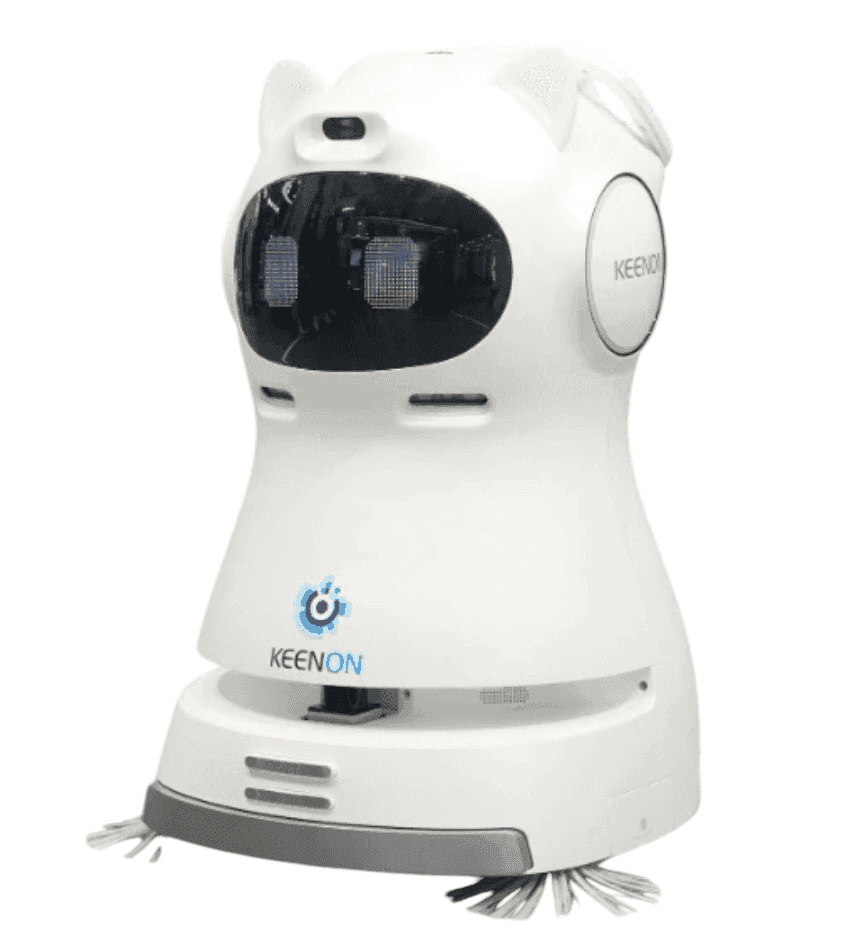
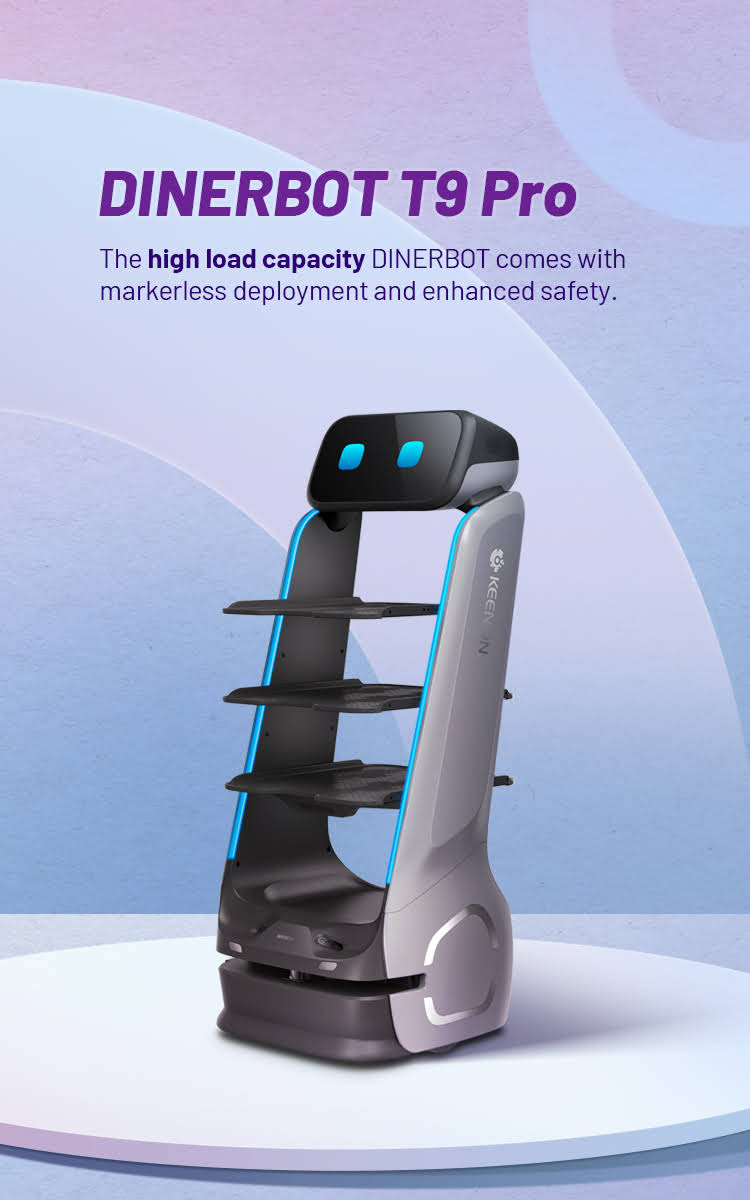
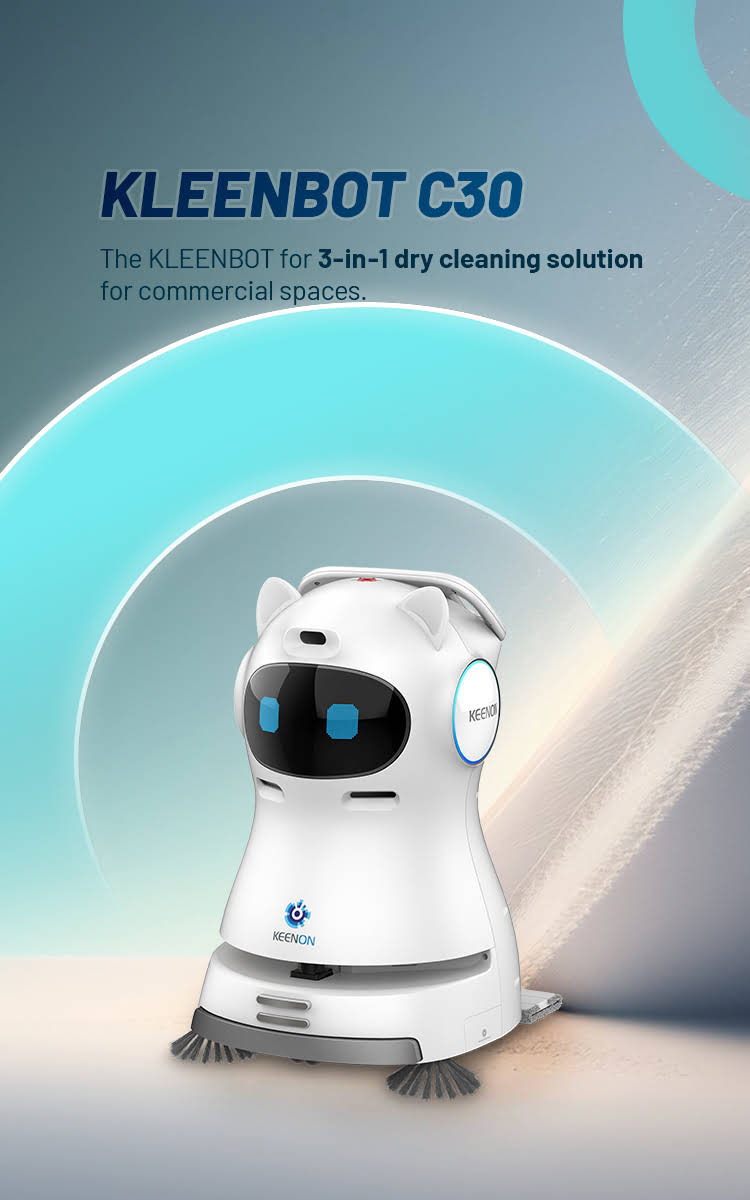


ARBOR's 191-product catalog resolves into five logical families when viewed by form factor and use-case orientation.
Embedded computing modules and boards. This is the largest family and includes COM Express (Compact Type 6 and Basic Type 6), Qseven, SMARC, Mini COM Express Type 10, ETX, PC/104, 3.5-inch compact boards, and Mini-ITX/Micro-ATX/ATX embedded motherboards. CPU options span soldered Intel Atom (E3800, Apollo Lake, Elkhart Lake), soldered/socketed Intel Core from 6th through 14th generation, soldered AMD Geode/Ryzen Embedded/R-Series, and the MediaTek Genio 1200 (SM1200 SMARC module). Carrier boards, evaluation boards, and daughterboards (e.g., FCDB-1293, FCDB-1424, FCDB-349R) support the module ecosystem.
Industrial box PCs and controllers. The FPC, ARES, SB, ELIT, and IEC-33xx series cover fanless rugged box PCs ranging from compact DIN-rail controllers (ARES-5310/5311/5320) to full-sized edge AI computing platforms supporting NVIDIA RTX-class GPUs (FPC-9108-L2U4-G3 with RTX 3090 at up to 350 W; FPC-5210 Series with RTX A4500 MXM module). Wide DC voltage input (typically 9–36 V) and MIL-STD-810G shock/vibration ratings are standard across the category.
Industrial panel PCs and HMI terminals. The ASLAN, LYNC, SP, iTC, and IOT series deliver touchscreen-integrated fanless computers in sizes from 10.1 to 21.5 inches, with IP65/IP66-rated front bezels, projected capacitive or resistive touch, and industrial I/O (multiple COM ports, DI/O, GbE LAN). The SP-211C TGLU and SP-151C TGLU represent current-generation 11th Gen Tiger Lake-U designs; the SP-xxx-1J64 family uses the Elkhart Lake Celeron J6412.
Mobile computing and rugged handhelds/tablets. The Gladius, GT78, G-series (G47, G60 Pro), PD602, HT10, and K430 products address warehouse, retail, logistics, and field-inspection use cases. Key differentiators include hot-swappable batteries (HT10: 10,000 mAh hot-swap + 1,000 mAh internal; PD602: 5,000 mAh hot-swap), Zebra barcode scanning engines (SE4710, 4710), IP67 ratings, Android 11/13 with GMS certification, and ATEX II 3G certification on the G60 Pro for hazardous-area inspection.
Digital signage and vertical-application systems. The ELIT-1050/1060/1270, IEC-3300/3366/3367/3390/3902/3904, and PC1015/PC1017 products target digital signage, retail price-checking kiosks, healthcare infotainment (M0830, M1016, M1923), and passenger information systems (M1014). The SM1200 SMARC module and IEC-3390 Android dual-display box extend into IoT gateway and kiosk-controller roles. Power-backup accessories (SCP CUBE MK2, SiP-41B/42B, SiPB-1690) round out the catalog with supercapacitor-based UPS solutions designed for the company's own panel and box PC lines.
4. Technology Stack {#technology-stack}
Processor ecosystem breadth. ARBOR supports an unusually wide CPU ecosystem: Intel x86 (Atom through 14th Gen Core and Xeon), AMD (Geode, Ryzen Embedded V-Series, R-Series), ARM-based SoCs (MediaTek MT8781/MT8788, MediaTek Genio 1200, Rockchip PX30, generic Cortex-A35/A53/A72/A78AE), and NVIDIA Jetson AGX Orin (AEC-6200). Our read: this breadth is characteristic of a hardware integrator rather than a chip-design company; ARBOR's value-add lies in ruggedization, I/O density, power-management design, and form-factor engineering around third-party SoCs.
Edge AI acceleration. Multiple products explicitly support inference acceleration. The FPC-5210 Series accepts an NVIDIA RTX A4500 MXM module (up to 120 W). The FPC-9108 family supports an RTX 3090 (up to 350 W). The FPC-9107 supports an RTX 3070 or dual Tesla T4. The AEC-6200 integrates NVIDIA Jetson AGX Orin with a 1,792-core Ampere GPU, 56 Tensor cores, and 2 DLA engines. The ARES-1980 supports the Hailo-8 M.2 accelerator (up to 26 TOPS at 2.5 W). The SM1200 SMARC module includes a MediaTek APU at 4.8 TOPS. Several FPC and ARES products carry explicit Intel OpenVINO compatibility labeling. Our read: ARBOR is positioning itself as an inference-at-the-edge platform vendor, enabling customers to deploy vision and analytics workloads on its rugged hardware without cloud dependency.
Connectivity and I/O density. PoE is a recurring theme: the AEC-6200 provides 4× IEEE 802.3at GbE PoE+ at 25.5 W per port; the FPC-9107 provides 6× 802.3af PoE; the ARES-5320 provides 2× PoE-capable 2.5GbE ports. Multi-port GbE is common (ITX-i92QA: 6× GbE; SB-244-1J64/SB-142-2J64: 1× GbE + 3× 2.5GbE). Serial I/O is deliberately preserved — products routinely offer 4–10 COM ports (RS-232/422/485) — reflecting the installed base of legacy industrial equipment in ARBOR's target markets.
Power resilience. The SCP CUBE MK2 and SiP-41B/42B lines use maintenance-free supercapacitors rather than lithium-ion batteries, offering safe-shutdown backup (up to 66 seconds at 30 W) across a –20 °C to +70 °C operating range. Our read: this is a deliberate design choice targeting markets — rail, traffic, outdoor kiosks — where battery chemistry creates hazard or maintenance liability.
Environmental hardening. Wide-temperature operation (–40 °C to +85 °C storage; –20 °C to +70 °C or better for operation) is standard across the module portfolio. MIL-STD-810G shock and vibration compliance appears on box PCs, in-vehicle systems, and mobile terminals. M12 connector variants (ARES-1970E-M12 series) and EN-50155 rail certification pursuit signal deliberate extension into transportation verticals.
Limited public technical detail: ARBOR does not publicly disclose details of its custom BIOS/firmware differentiation, proprietary driver frameworks, or software platform layers beyond OS support lists (Windows 10/11 IoT, Linux Ubuntu, Android). The depth of any ARBOR-developed software tooling above the OS level is not evident from available data.
5. Research, Papers, Authors, Labs {#research-papers}
Company-linked papers
ARBOR Technology is a hardware product company, not a research-publishing organization. No academic papers, conference publications, or named research authors are associated with ARBOR in the available data. This is entirely normal for industrial embedded-computing vendors, whose IP is expressed through product design and manufacturing rather than academic literature. External press coverage (see §6) provides the available third-party validation signal.
6. Media Evidence {#media-evidence}
Media library
Three independent external sources are on record. RoboticsTomorrow covered ARBOR's launch of the ARES-2100 Series, framing it as a next-generation Edge AI platform built on Intel Core Series 3 processors — providing editorial validation of ARBOR's edge-AI positioning in a robotics and automation trade outlet. Techzine Global (techzine.eu) reported on ARBOR enabling AI agents to learn from their own mistakes, suggesting coverage of a software or system-level AI capability claim — the precise scope of that article is not fully reproduced in the available data and should be read in context as a company-claim-adjacent reference. A third item from annarborusa.org (dated 2025-06-24) concerns TORC Robotics selecting Ann Arbor (Michigan, USA) for a new engineering center; this does not appear to reference ARBOR Technology Corp. directly and should not be cited as ARBOR coverage without further verification.
Our read: ARBOR's media footprint in industrial-automation and robotics trade press is modest but genuine, consistent with a B2B hardware supplier that markets primarily through channel partners and trade shows (the ISE-2018 product record confirms trade-show presence) rather than consumer-facing campaigns.
7. Commercial Reality {#commercial-reality}
Customers & deployments
Revenue: Not disclosed. ARBOR Technology is a privately held Taiwanese company; no financial filings are available in the source data. Interested parties with verified revenue data are invited to submit a correction.
Customer names: Not disclosed in public-facing materials. The PC1015 product description references a deployment in Poland — supermarkets and sports stores — for price-checking and customer-retention applications, and the M1014 references airport passenger information systems. These represent the only geographically or sector-specific deployment references in the available data. Further named customer references are not yet disclosed; ARBOR or its channel partners are invited to provide verifiable case studies.
Pricing: Not disclosed at the product level.
ROI / deployment scale: Not disclosed.
Our read: The catalog's industrial depth — persistent multi-generation product families, long-lifecycle CPU module support, UL/CE/FCC/IEC 60601 certifications, and supercapacitor power-backup accessories — is consistent with a vendor that has recurring OEM and system-integrator customers with multi-year procurement cycles, even though those relationships are not publicly named.
8. Markets and Use Cases {#markets-use-cases}
The product catalog's industry tags, product descriptions, and certification evidence collectively point to six primary served markets.
Warehouse and logistics. The G47, PD602, HT10, Gladius G0830/G1052C/G1052R, GT78-VN, and K430 handhelds are explicitly described for warehouse inventory, picking, and mobile POS. IP67/IP65 ratings, hot-swappable batteries, Zebra barcode engines, and glove-friendly touch are the key feature clusters. The G60 Pro adds thermal imaging for inspection and cold-chain monitoring.
Retail and point of sale. The PC1015 (deployed in Polish supermarkets and sports stores), PC1017, and M0830 target price-checking kiosks and mobile retail. The ELIT-1060, IEC-3390, and ELIT-1050 address the digital signage and self-ordering segment in restaurants, hotels, and shopping venues.
Industrial automation and machine control. The FPC, ARES, LYNC, and iTC series are designed as HMI controllers and machine-vision platforms. The FPC-9002-P6 is explicitly described as a "machine vision controller." The ARES-1970-E carries 4× PoE GbE ports specifically for GigE cameras. Intel OpenVINO labeling on multiple box PCs ties the hardware to vision-inference pipelines.
Transportation and in-vehicle computing. The ARTS-1450, ARES-1970E, FPC-9000-V1, IOT-800N (CAN BUS, OBD-II), and ARES-1970E-M12-PISC (EN-50155 certified) are designed for mobile or vehicle-mounted deployment with ignition power control, wide-temperature operation, M12 connectors, and dual SIM slots. The PVB-800 Vehicle Power Delay Timer Box is a purpose-built vehicular power accessory.
Healthcare. The M0830, M1016 (IEC/EN 60601-1 certified Healthcare Infotainment Terminal), and M1923 (19-inch medical station, IEC/EN 60601-1 certified, dual smart card readers, 5 MP camera) target clinical and hospital bedside applications.
Digital signage, hospitality, and smart building. The IEC-3300/3366/3367/3900/3902/3904, ELIT-1050/1060/1930, and ARES-530WT (controls up to 30 digital signs) serve the broader digital-out-of-home and building-automation segment. The SM1200's 4K dual-display capability and 10-year longevity guarantee extend this into long-lifecycle smart-building deployments.
9. Competitive Landscape {#competitive-landscape}
Competitive comparison
| Robot | Maker | Autonomy | Conf. |
|---|---|---|---|
| iRobot Roomba Combo 10 Max | iRobot | Autonomous | 0.90 |
| Mobile ALOHA (Stanford) | Stanford University | Teleoperated | 0.90 |
| 1X NEO | 1X Technologies | Remote-Assisted | 0.90 |
ARBOR competes across several overlapping segments of the industrial embedded-computing market. In rugged box PCs and edge AI computers, the relevant peer set includes established Taiwanese and international IPC vendors that offer similarly spec'd fanless systems with wide-temperature, wide-voltage designs and GPU expansion. In embedded CPU modules (COM Express, Qseven, SMARC), ARBOR participates in a standards-driven market where differentiation comes from thermal design, integration services, and longevity guarantees rather than unique silicon. In mobile rugged terminals, the competitive field includes purpose-built enterprise mobility device makers targeting warehouse and logistics automation. In industrial panel PCs and HMI, the market spans both general-purpose IPC vendors and display-specialist companies.
Our read: ARBOR's distinguishing competitive posture is the combination of module-level design (COM Express through SMARC), integrated system-level products (box PCs, panel PCs, handhelds), and OEM/ODM services under one roof — a breadth that allows it to serve customers at multiple levels of integration. The explicit Edge AI acceleration capabilities (Jetson AGX Orin, RTX MXM, Hailo-8, OpenVINO) represent a more recent competitive sharpening that aligns the catalog with the inference-at-the-edge trend being pursued across the industrial automation sector.
10. Country Advantage / Geopolitical {#geopolitical}
ARBOR is headquartered in Taiwan, an independent country with a well-developed semiconductor and embedded-computing supply chain. Taiwan's position as a global manufacturing and design hub for industrial computing hardware is a structural advantage for component sourcing, engineering talent, and proximity to key foundry and ODM partners. ARBOR also operates an R&D and manufacturing site in Shenzhen, China, which serves as a cost-effective production and China-market sales node; this dual-site model is common among Taiwanese IPC vendors and carries the standard geographic concentration risks that apply to any manufacturer with China-based operations. The company's seven-country sales office network reduces single-market revenue dependence at the commercial level.
Our read: For customers with supply-chain diversification requirements or geopolitical risk policies, ARBOR's Taiwan-primary design and manufacturing base, combined with its global sales presence, positions it favorably relative to vendors with deeper China-only manufacturing dependencies. No specific geopolitical disruption has been disclosed or is documented in the available data.
11. Hype vs Real vs Ugly {#hype-real-ugly}
Claim tracker
Verified / product-level real. ARBOR's hardware specifications are granular, internally consistent, and anchored to third-party standards (MIL-STD-810G, IP65/67, CE, FCC, IEC 60601-1, EN 50155). The NVIDIA GPU integration (RTX 3090, RTX A4500 MXM, Tesla T4, Jetson AGX Orin) and Hailo-8 AI accelerator support are engineering realities documented in product datasheets. The Zebra SE4710/4710 barcode engine integrations in mobile terminals are verified component choices. The GMS certification on Android handhelds (PD602, GT78-VN, G47) is an auditable Google credential. The ATEX II 3G certification on the G60 Pro is a legally enforceable hazardous-area rating.
Company claims — labeled as such. ARBOR claims (company-claim, from their site) the ability to "enable an intelligent planet" and to deliver "From Edge to Action" outcomes for customers across "a diverse range of industries." These are aspirational mission statements. The claim that "there is no limit to how smart your business can be" is marketing language, not a technical specification. The claim of "state-of-the-art techniques and best practices in advanced embedded design" is a self-assessment without third-party audit reference in the available data.
The ARES-2100 press item (RoboticsTomorrow) references a product not present in the 191-product catalog extract provided, suggesting either a recently launched product or a product announced after the catalog data was captured. Our read: this is likely a genuine new product introduction consistent with ARBOR's generational refresh pattern, but independent verification of its specifications is not possible from the current data.
Gaps / not yet disclosed. Revenue, customer names, deployment scale, founding year, total employee headcount, and independent third-party audit results for ISO compliance are not publicly available. The Techzine Global article about "AI agents learning from their own mistakes" references a capability that goes beyond what is documented in the product catalog; the precise scope of that claim cannot be evaluated from available data alone and should be read cautiously pending further disclosure. ARBOR or authorized representatives are invited to correct or supplement any of the above.
12. Future Scenarios {#future-scenarios}
Bull scenario. Our read: ARBOR's Edge AI hardware portfolio — particularly the GPU-capable FPC-5210/9108 series, the Jetson AGX Orin AEC-6200, and the Hailo-8-compatible ARES-1980 — is well-timed for the accelerating deployment of machine vision, anomaly detection, and predictive maintenance at factory and logistics sites. If the industrial automation capex cycle remains strong and ARBOR converts its breadth of design into qualified OEM wins in automotive, transportation, or smart-factory verticals, the company could achieve meaningful revenue expansion. The SM1200's 10-year longevity guarantee and MediaTek Genio 1200 platform could anchor a durable IoT-gateway product line. External press coverage (RoboticsTomorrow) suggests growing visibility in the robotics trade media.
Base scenario. Our read: ARBOR continues its established pattern of iterative hardware refresh — moving through Intel and AMD processor generations, expanding connectivity (5G, Wi-Fi 6, 2.5GbE), and adding AI accelerator options to existing form factors — while serving a loyal base of system integrators and OEM customers across industrial automation, transportation, healthcare, and retail. The OEM/ODM (ADMS) service arm provides revenue floor through customization contracts. Growth is steady but not dramatic, bounded by the pace of industrial IoT adoption and ARBOR's sales channel reach versus larger incumbents.
Bear scenario. Our read: The embedded IPC market is highly competitive and fragmented. If key OEM customers in-source hardware design or consolidate to larger-platform vendors, ARBOR's broad but non-exclusive catalog breadth becomes a cost liability rather than a differentiation. Supply-chain concentration risk in the Taiwan–Shenzhen manufacturing model, unmitigated by disclosed diversification measures, could create delivery disruptions in a stress scenario. The absence of proprietary silicon or unique software platforms means that hardware commoditization pressure from lower-cost regional manufacturers could compress margins over time.
13. What to Watch {#what-to-watch}
- ARES-2100 Series launch details: Specifications and availability for the Intel Core Series 3–based Edge AI platform referenced in RoboticsTomorrow; this will indicate how aggressively ARBOR is pursuing the latest Intel process node for industrial AI inference.
- SM1200 / MediaTek Genio 1200 ecosystem traction: Whether ARBOR secures design wins on this ARM-based SMARC 2.1.1 platform will signal its ability to compete in the IoT-gateway segment beyond x86.
- EN 50155 / EN 50121 certification completion: The AEC-6200 lists these rail certifications as "TBA." Completion would open the European rail and mass-transit market more fully.
- 5G module integration: Multiple products list 5G module support (M.2 B-Key slots, SIM sockets). Watch for named 5G module qualifications and carrier certifications.
- Hailo-8 commercial traction: The ARES-1980 and ELIT-1060 both cite Hailo-8 M.2 compatibility. Named deployments or integration case studies would validate the AI-acceleration positioning.
- OEM/ODM (ADMS) deal announcements: Any publicly disclosed OEM partnership would significantly clarify ARBOR's commercial scale and customer concentration.
- Trade-show presence and press volume: Continued expansion of robotics and automation trade media coverage (beyond the current two relevant press items) would indicate improving brand awareness in the target buyer community.
- EOL product succession: Several high-volume legacy lines (FPC-7900, FPC-9000-02-L2U4, ASLAN-W722C, LYNC-712-1900G4) are marked EOL. Successor product uptake rates signal catalog health.
14. Sources & Methodology {#sources-methodology}
Primary source: All product specifications, descriptions, key features, and company background statements are extracted directly from ARBOR Technology's own website (arbor-technology.com). All such content is labeled company-claim throughout this report and should be understood as self-reported information that has not been independently audited for accuracy.
Third-party press: Three external URLs are cited in the source data — roboticstomorrow.com (ARES-2100 Series), techzine.eu (AI agent learning capability), and annarborusa.org (TORC Robotics, Ann Arbor — flagged as potentially unrelated to ARBOR Technology Corp.). These are cited as independent editorial sources where relevant; the report notes where their claims cannot be fully evaluated from available data.
Inferences: All analyst interpretations are explicitly labeled "Our read:" and represent judgments based on the available product and press data, not independently verified facts.
What this report does not contain: No invented products, customers, revenue figures, partnerships, or specifications. No negative claims are stated as fact without a verifiable basis. Gaps are identified as "Not yet disclosed" with an invitation for the company or authorized parties to provide corrections or supplementary information.
Rubric applied uniformly: This methodology — company-site extraction as primary source, labeled inferences, labeled company claims, explicit gap-flagging, and third-party press as secondary validation — is applied consistently to every company analyzed in this series.
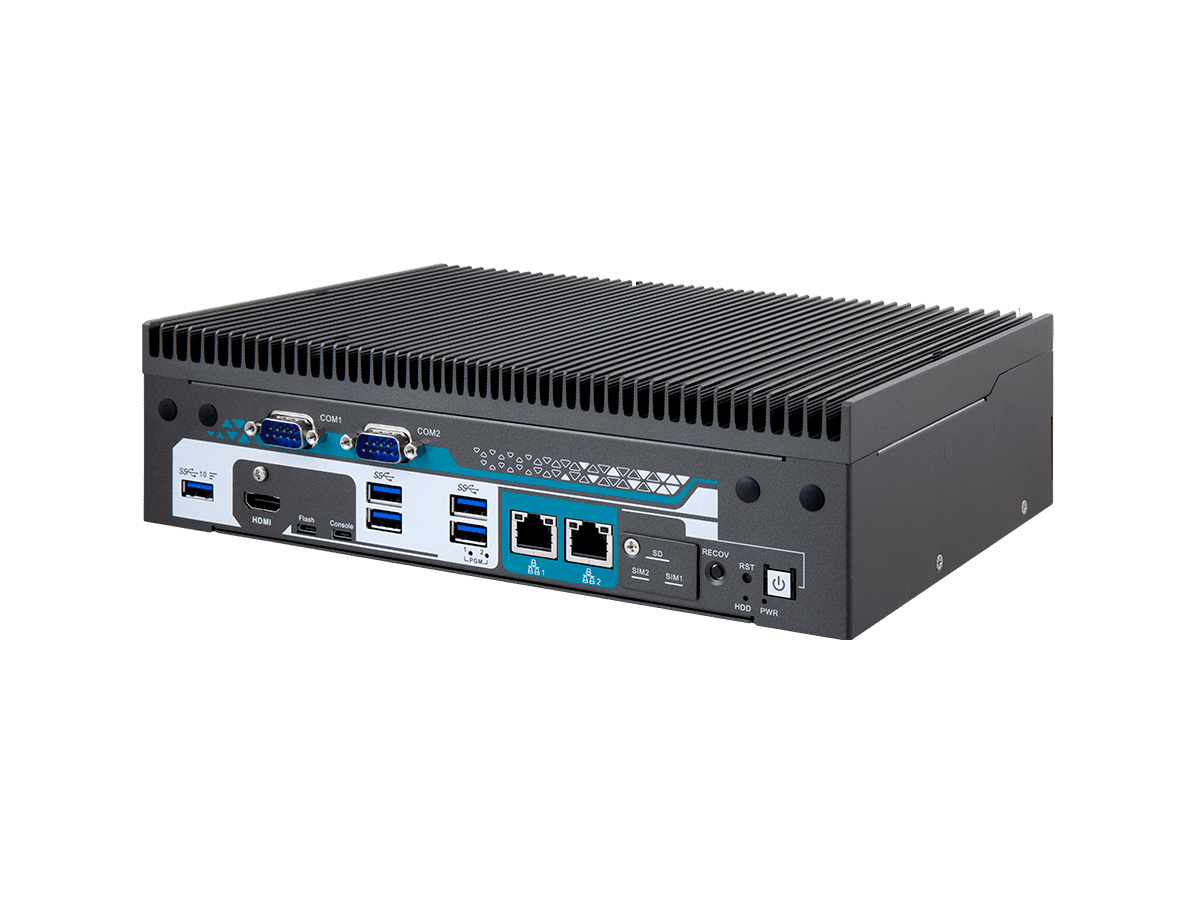
AEC-6200
OtherThe AEC-6200 is an AI embedded box PC powered by NVIDIA Jetson AGX Orin, featuring an 8-core CPU, 1792-core GPU, and 32GB LPDDR5 DRAM. It offers 2 GbE LAN ports, 4 PoE+ ports, 2 RS-232/422/485 serial ports, 5 USB ports, 16 isolated DIO, and 2 isolated CAN Bus. With HDMI 2.1 (8K@60Hz), wide DC 9-48V input, and -25°C to +70°C operation, it is built for rugged edge AI applications.
- •Supports NVIDIA Jetson AGX Orin with 8-core CPU and 1792-core GPU
- •2 x GbE + 4 x IEEE 802.3at GbE PoE+ ports (AEC-6200-32)
- •2 x RS-232/422/485, 5 x USB, 16 isolated DI/O, 2 x isolated CAN Bus
- •HDMI 2.1 output up to 8K@60 Hz
- •DC 9~48V wide range power input with ignition power control
- •Operating temperature -25°C to +70°C (TDP 30W)
- •Supports 8 GMSL cameras (AEC-6100-32)
- •MIL-STD-810G shock and vibration resistant
- •Weighs 3.8 kg, dimensions 260 x 182 x 69 mm
| Depth | 182 mm |
| Width | 260 mm |
| Height | 69 mm |
| Memory gb | 32 |
| Weight | 3.8 kg |
| Memory type | LPDDR5 DRAM |
| Usb31 ports | 4 |
| Can bus (count) | 2 |
| Hdmi version | 2.1 |
| Serial ports | 2 |
| Antenna holes | 6 |
| Can fd support | |
| Cpu core (count) | 8 |
| Emc standards | CE, FCC, EN50155(TBA), EN50121-3-2 (TBA) |
| Gpu core (count) | 1792 |
| Poe plus ports | 4 |
| M2 key b sockets | 1 |
| M2 key e sockets | 1 |
| Poe plus power (w) | 25.5 |
| Shock standard | MIL-STD-810G Method 516.7 Procedure I |
| Storage emmc gb | 64 |
| Can bus isolated | |
| Digital io (count) | 16 |
| Power input max (v) | 48 |
| Power input min (v) | 9 |
| Power interface | 3-pin Terminal Block |
| Sim card sockets | 2 |
| Usb31 speed gbps | 5 |
| Usb32 gen2 ports | 1 |
| Cpu architecture | Arm Cortex-A78AE v8.2 64-bit |
| Gpu architecture | NVIDIA Ampere |
| Lan gigabit ports | 2 |
| Mounting options | Wallmount, DIN Rail, VESA Mount (Optional) |
| Pcie gen4x8 slots | 1 |
| Poe plus voltage (v) | 48 |
| Serial protocols | RS-232/422/485 |
| Storage temp max c | 85 |
| Storage temp min c | -40 |
| Tensor core (count) | 56 |
| Digital input (count) | 8 |
| Digital io isolated | |
| Gmsl camera support | 8 Fakra-Z connectors for GMSL 1/2 (AEC-6100-32) |
| Hdmi max resolution | 8K@60Hz |
| Operating temp max c | 70 |
| Operating temp min c | -25 |
| Operating temp tdp (w) | 30 |
| Vibration standard | MIL-STD-810G Method 514.6 Procedure I Category 4 |
| Digital output (count) | 8 |
| Dl accelerator (count) | 2 |
| Storage emmc version | 5.1 |
| Micro usb os flash port | 1 |
| Relative humidity pct | 95 |
| Ignition control modes | 16 |
| Video decode4k30 (count) | 4 |
| Video decode4k60 (count) | 2 |
| Video decode8k30 (count) | 1 |
| Video encode4k30 (count) | 3 |
| Video encode4k60 (count) | 1 |
| Relative humidity temp c | 70 |
| Storage micro sd external | |
| Operating humidity max pct | 95 |
| Operating humidity min pct | 5 |
| Video decode1080p30 (count) | 18 |
| Video decode1080p60 (count) | 9 |
| Video encode1080p30 (count) | 12 |
| Video encode1080p60 (count) | 6 |
| Micro usb console debug port | 1 |
| Storage m2 key m socket (count) | 2 |
| Operating temp max tdp40_50 w_ c | 55 |
Technology stackOur read
Inferred from product specs — click through to the technology wiki:
ResearchComputed
Product comparisonComputed
Company announcement
News and Media
The company's official social & video channels · external links


News
From third-party news outlets (China & abroad) · external links