Accuray Incorporated
United States · accuray.com
SnapshotCompany claim
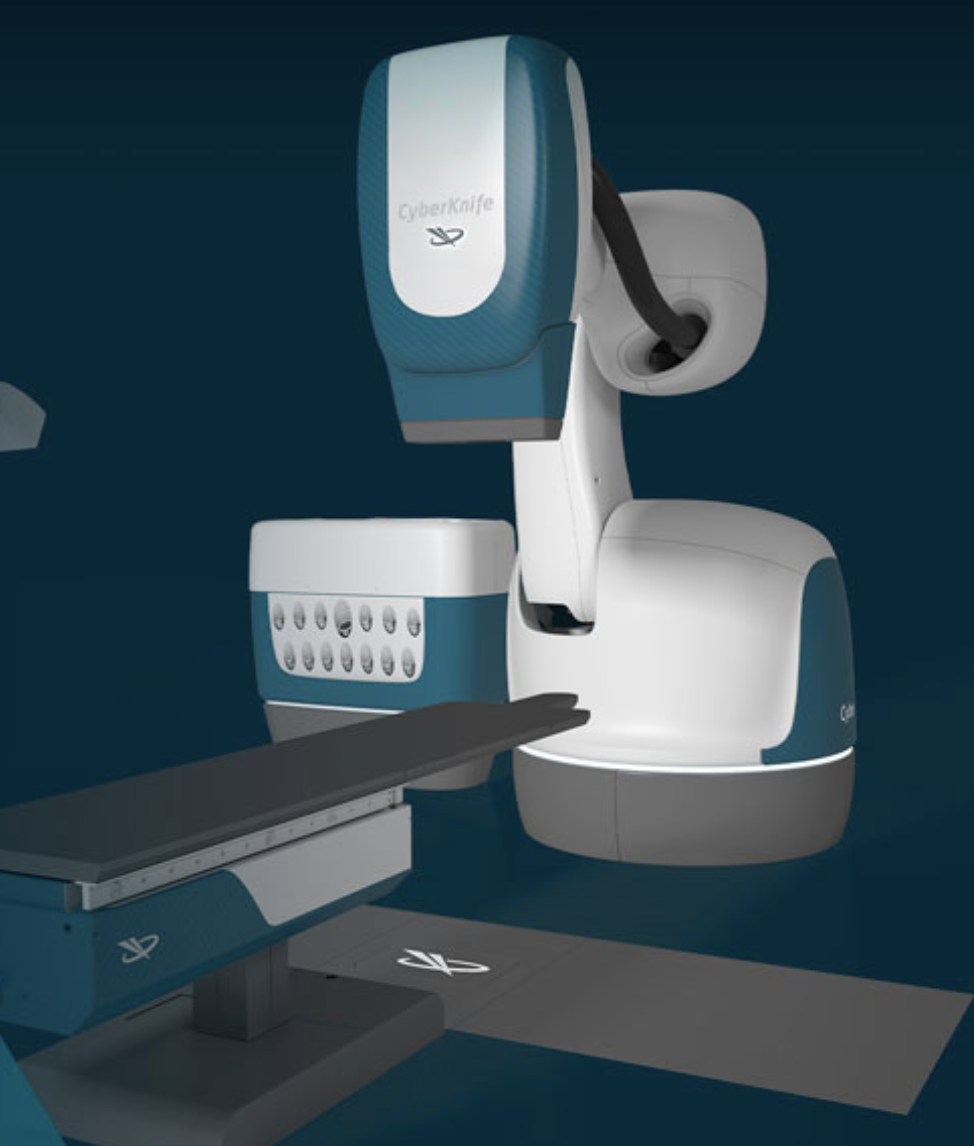
Accuray develops, manufactures and sells radiation oncology systems that make cancer treatment shorter, safer, smarter and more effective. The company offers radiation therapy and radiosurgery solutions, including CyberKnife and Radixact systems.
- Founded
- Not disclosed
- HQ
- United States
- Models
- 2
- Categories
- 1
Product families
Is this your company? Claim this profile to add verified data, respond to our analysis, and upgrade claims to Verified.
Claim this profile1. Executive Overview {#executive-overview}
Accuray Incorporated is a United States-based medical device company focused exclusively on radiation oncology. The company's stated mission — "Deliver More. Better. Faster" — underpins its product strategy: developing, manufacturing, and selling radiation therapy and radiosurgery systems designed to make cancer treatment "shorter, safer, smarter and more effective" (company-claim). Its two principal platform families, CyberKnife and Radixact, position Accuray as a specialist in robotic and helical radiation delivery, a narrower but technically demanding niche within the broader oncology capital-equipment market.
The company's commercial footprint is evidenced by third-party press coverage spanning multiple years and geographies. A January 2024 report via BioSpace confirmed that Providence Swedish Radiosurgery Center in Seattle invested in a second CyberKnife system — a meaningful signal of repeat institutional confidence. An October 2020 partnership announcement with Brainlab, covered independently by both ITN Online and Brainlab's own newsroom, points to Accuray's strategy of expanding the CyberKnife platform's capabilities in the neuro-radiosurgery market through ecosystem partnerships. These data points, while not exhaustive, establish that Accuray systems are deployed in named, recognizable health systems and that the company is actively extending its clinical reach.
Not yet disclosed publicly: total installed-base count, annual revenue figures, or a comprehensive customer list. Accuray is a publicly traded company (NASDAQ: ARAY); investors may find additional financial detail in SEC filings. This report invites Accuray to submit verified commercial metrics for inclusion.
Latest news
- KEENON Humanoid Pours Drinks at GCS 2026, 100,000 Others Run HotelsYanko Design·2026-06-15GENERAL
2. The Company Story {#the-company-story}
Accuray's founding date is not disclosed in the data available to this report. The company is headquartered in the United States and operates under the domain accuray.com. Its About page metadata reflects content activity as recently as December 2020, and third-party press coverage extends to January 2024, confirming the company is an active, going concern.
The company's strategic narrative centers on innovation in radiation oncology delivery. Accuray describes itself as "expanding radiation therapy" — a framing that signals ambition beyond maintenance of existing modalities, extending from conventional oncology into neuro-radiosurgery and adjacent indications (company-claim). This positioning is supported by the Brainlab partnership announced in October 2020, which was explicitly designed to expand CyberKnife platform capabilities for the neuro-radiosurgery market, suggesting a deliberate move up the clinical complexity curve.
The product naming conventions — CyberKnife M6, CyberKnife S7, Radixact, Accuray Helix, Accuray Stellar — suggest a multi-generation development history and a portfolio that has evolved to address distinct clinical and workflow requirements. The existence of named product variants (M6 vs. S7, for example) implies iterative hardware and software development cycles, though the specific timelines of each generation are not disclosed in the available data. The company also maintains an "Accuray Exchange" (AEx) peer-to-peer community and a Medical Affairs division, indicating institutional investment in clinical evidence generation and user engagement beyond the point of sale.
3. Product Portfolio {#product-portfolio}
Products & versions


Accuray's disclosed product lineup organizes into two primary platform families and a suite of enabling software and service offerings. The CyberKnife family — comprising the CyberKnife M6 and CyberKnife S7 — represents the company's robotic radiosurgery lineage. The S7 variant also appears in an "F" designation on Accuray's site, suggesting a further sub-variant likely optimized for specific clinical workflows or anatomical targets, though the precise differentiators between M6 and S7/S7F are not fully detailed in the available data. Both systems are positioned for radiosurgery as well as radiation therapy applications (company-claim).
The Radixact platform, paired with Accuray Stellar and Accuray Helix, represents the company's helical radiation therapy delivery approach — a distinct delivery geometry from the robotic arm architecture of CyberKnife. This dual-architecture strategy allows Accuray to address a broader spectrum of patient and institutional needs: robotic point-targeting for high-precision radiosurgery on one hand, and helical delivery suited to larger or more complex treatment volumes on the other. Complementing the hardware, Accuray offers an Adaptive Suite for adaptive radiotherapy and touts Systems Integration / Interoperability capabilities, positioning the platforms as connectable to broader hospital IT and treatment-planning ecosystems. Note: two entries flagged as "AAPM 21" and "covid-19" in the product data extraction are marked NEEDS_REVIEW and carry no specs or use-case tags; they are not treated as product names in this report pending clarification.
4. Technology Stack {#technology-stack}
Accuray's public-facing product descriptions support several technology inferences. The CyberKnife family's core differentiator is robotic delivery — a multi-joint robotic arm mounts and maneuvers the linear accelerator (linac), enabling non-isocentric beam delivery from a large number of angles. Our read: this architecture underpins the platform's radiosurgery precision claims, as it allows sub-millimeter targeting that a fixed-gantry system cannot replicate without patient repositioning.
The Radixact/Helix platform's helical delivery geometry is Our read: derived from a rotating gantry design that delivers radiation in a continuous spiral around the patient, a technique suited to treating elongated or irregularly shaped target volumes. The Accuray Stellar designation within this family likely refers to a detector or imaging subsystem, though the available data does not confirm this; that inference should be treated as speculative.
The Adaptive Suite offering signals investment in real-time or near-real-time treatment adaptation — a technically demanding capability that requires integration of imaging, contouring, dose calculation, and delivery control. Our read: adaptive radiotherapy is an increasingly competitive differentiator in the oncology capital-equipment market, and Accuray's explicit naming of this capability suggests it is a priority development area. The Brainlab partnership (announced October 2020) is directly relevant to the technology stack: Brainlab is known for neurosurgical navigation and planning software, and the agreement was framed as expanding CyberKnife's treatment capabilities for neuro-radiosurgery — Our read: likely involving integration of Brainlab's planning or targeting software with Accuray's delivery hardware.
The company's emphasis on interoperability and systems integration suggests investment in DICOM-compliant interfaces and hospital information system connectivity, standard requirements for enterprise oncology deployments. Limited public technical detail is available on specific software architectures, AI/ML components, or imaging modalities embedded in the systems.
5. Research, Papers, Authors, Labs {#research-papers}
Company-linked papers
Accuray maintains a Medical Affairs division and a dedicated Clinical Evidence resource hub on its website, including featured abstracts, case studies, a peer-to-peer community (Accuray Exchange / AEx), and webinars — indicating that clinical literature generation is an organized company function (company-claim). This infrastructure suggests that peer-reviewed publications referencing Accuray systems exist in the oncology literature, authored by clinicians at installing institutions rather than by Accuray researchers directly.
As is typical for commercial medical device companies of this type, Accuray does not appear to publish original research under a corporate authorship in the manner of an academic laboratory. The company's role in the research ecosystem is more accurately described as: facilitating clinical studies at customer sites, curating resulting evidence, and disseminating it through its Medical Affairs channels. No company-authored research papers are identified in the data available to this report. Institutions wishing to have affiliated publications indexed here are invited to submit them for inclusion.
6. Media Evidence {#media-evidence}
Media library
Three third-party press items are confirmed in the available data: a January 2024 report on BioSpace covering Providence Swedish Radiosurgery Center's investment in a second CyberKnife system in Seattle; an October 2020 announcement on ITN Online (itnonline.com) covering Accuray's agreement with Brainlab to expand CyberKnife capabilities for the neuro-radiosurgery market; and a corresponding item on Brainlab's own newsroom (brainlab.com) covering the same partnership. These outlets represent a mix of healthcare trade media and a partner's owned channel, providing independent corroboration of both a commercial deployment and a strategic partnership.
7. Commercial Reality {#commercial-reality}
Customers & deployments
The available data confirms real-world deployment at identifiable institutions. Providence Swedish Radiosurgery Center in Seattle is named in a January 2024 BioSpace report as having invested in a second Accuray CyberKnife system — indicating not only an initial adoption but a repeat capital purchase, which is a meaningful indicator of operational satisfaction. Accuray's own website includes a "Find a Facility Near You" treatment center locator (company-claim), implying a multi-site installed base, though the total number of installed systems globally is not disclosed in the data available to this report.
Revenue, total customer count, average selling price, service contract attach rate, and patient-outcomes ROI data are not disclosed in the data available to this report. Accuray is a publicly traded company (NASDAQ: ARAY); verified financial metrics are available in the company's SEC filings and earnings disclosures. This report invites Accuray to submit or authorize the inclusion of verified commercial and outcomes data for a more complete picture.
8. Markets and Use Cases {#markets-use-cases}
Accuray's products address the radiation oncology market, with a specific emphasis on two clinical delivery modalities: robotic radiosurgery (CyberKnife family) and helical radiation therapy (Radixact/Helix family). The company explicitly names neuro-radiosurgery as a target indication — the Brainlab partnership was framed around expanding capabilities in this specific segment — which involves high-precision, typically single-fraction or hypofractionated treatments for brain tumors, arteriovenous malformations, trigeminal neuralgia, and similar conditions.
More broadly, the company's own framing — "radiation treatments across a full spectrum of patient needs" — indicates an intent to cover the oncology care continuum from stereotactic radiosurgery (SRS) through stereotactic body radiotherapy (SBRT) and conventional fractionated radiotherapy. The Adaptive Suite targets institutions seeking to implement adaptive radiotherapy workflows, a use case increasingly relevant for prostate, lung, and head-and-neck cancers where organ motion or anatomical change during a treatment course affects dose accuracy.
The primary buyers are hospital oncology departments, freestanding cancer centers, and radiosurgery-specialist centers — as evidenced by Providence Swedish, a major integrated health system. The capital-intensive nature of linear accelerator systems means the sales cycle is long and the customer relationship, including service and upgrade contracts, extends over many years. Accuray's explicit service philosophy and training and education infrastructure (company-claim) reflect this reality: post-sale support is a material part of the value proposition and revenue model in this market.
9. Competitive Landscape {#competitive-landscape}
Competitive comparison
| Robot | Maker | Autonomy | Conf. |
|---|---|---|---|
| iRobot Roomba Combo 10 Max | iRobot | Autonomous | 0.90 |
| Mobile ALOHA (Stanford) | Stanford University | Teleoperated | 0.90 |
| 1X NEO | 1X Technologies | Remote-Assisted | 0.90 |
Accuray operates in the radiation oncology capital-equipment segment, a market defined by high barriers to entry (regulatory, clinical, and capital), long customer relationships, and competition on both technical capability and service infrastructure. The company's dual-platform strategy — robotic point-targeting with CyberKnife and helical delivery with Radixact — means it competes across more than one product category within the broader external-beam radiation therapy market.
Our read: Accuray's differentiation rests on the robotic delivery architecture of CyberKnife, which is technically distinct from conventional C-arm linac designs, and on its specialist positioning in radiosurgery — a sub-segment where precision and treatment speed are primary clinical priorities. The company's partnership model (e.g., Brainlab) suggests a strategy of capability extension through ecosystem integration rather than sole-source development of all software components. The module above surfaces same-category peers for direct comparison; prose commentary on named competitors is reserved for that context.
10. Country Advantage / Geopolitical {#geopolitical}
Section not material for this company.
11. Hype vs Real vs Ugly {#hype-real-ugly}
Claim tracker
Verified / externally corroborated:
- CyberKnife systems are in active clinical deployment at named institutions, including Providence Swedish Radiosurgery Center in Seattle, which made a repeat capital investment in a second system as of January 2024 (BioSpace, independent source).
- A partnership with Brainlab to expand CyberKnife's neuro-radiosurgery capabilities was confirmed by both ITN Online and Brainlab's own newsroom in October 2020.
- Accuray operates a Medical Affairs division with organized clinical evidence, peer community, and educational infrastructure (company-claim, consistent with a company of this market position).
Company claims — taken at face value, not independently verified here:
- Accuray's systems make cancer treatment "shorter, safer, smarter and more effective" (company-claim, from About page). These are outcome assertions that would require clinical trial data to substantiate; such data may exist in the oncology literature through installing institutions but is not independently assessed in this report.
- The framing of Accuray as offering "unique, market-changing solutions" (company-claim) is promotional language; whether the solutions are genuinely differentiated is a clinical and technical judgment beyond the scope of this data extract.
- "Industry-leading service" (company-claim) is an assertion that is not independently corroborated in the available data.
Gaps — not negative, but not yet substantiated:
- Not yet disclosed: total installed-base count, global deployment geography, revenue, specific clinical outcomes data linked to named systems. Accuray is invited to submit verified data for inclusion.
12. Future Scenarios {#future-scenarios}
Our read — Bull case: Adaptive radiotherapy adoption accelerates across oncology centers globally, and Accuray's Adaptive Suite, combined with CyberKnife's established radiosurgery reputation, positions the company to capture upgrade cycles at existing accounts and new system placements at centers building or expanding radiation oncology capacity. The Brainlab partnership matures into a meaningful neuro-radiosurgery channel, and repeat purchases — as evidenced by Providence Swedish — become a pattern rather than an exception.
Our read — Base case: Accuray maintains its specialist positioning in robotic radiosurgery and continues to serve a loyal installed base with service contracts, software upgrades (including adaptive capabilities), and hardware refreshes. Growth is steady but constrained by the capital-intensive, long-cycle nature of the market and by competition from well-resourced incumbents in the broader linac segment. The Radixact/Helix platform holds its niche in helical delivery without dramatically expanding market share.
Our read — Bear case: Capital budget pressures at hospital systems — particularly those managing post-pandemic balance sheet recovery — extend replacement and new-purchase cycles, compressing near-term system revenue. If Accuray's adaptive radiotherapy and neuro-radiosurgery differentiators fail to generate sufficient clinical evidence traction, institutions may default to broader-platform vendors for consolidation. Partnership dependencies (e.g., Brainlab) introduce execution risk if integration timelines slip or competitive dynamics in the partner's market shift.
13. What to Watch {#what-to-watch}
- Adaptive Suite clinical adoption: Monitor peer-reviewed publications and conference abstracts (ASTRO, ESTRO, AAPM) citing Accuray adaptive radiotherapy outcomes — these will be the leading indicator of whether this capability is gaining clinical traction.
- Brainlab partnership deliverables: Watch for product announcements, cleared indications, or joint marketing activity that demonstrates the October 2020 agreement has translated into shipping, integrated capability.
- CyberKnife S7 / S7F differentiation: Monitor for clinical or regulatory filings that clarify the S7F variant's specific capabilities and target indications.
- Installed-base repeat-purchase rate: The Providence Swedish second-system purchase is one data point; additional repeat-purchase announcements would validate or challenge that signal.
- Radixact/Helix positioning vs. adaptive competitors: Watch whether Accuray publishes comparative clinical data for Radixact/Helix in adaptive RT workflows.
- NASDAQ: ARAY earnings disclosures: Quarterly filings will reveal revenue trajectory, geographic mix, and service-versus-system revenue split — key indicators of commercial health that are not available in this data extract.
- Regulatory clearances: Any new FDA 510(k) or CE Mark activity would signal hardware or software platform evolution.
14. Sources & Methodology {#sources-methodology}
Primary data source: Content extracted from Accuray's own website (accuray.com), including About page text, product listings, and site metadata. All such content is labeled (company-claim) throughout this report and should be understood as the company's own representation of its products, capabilities, and positioning — not independently audited.
Third-party press sources: Three external items were available and are cited by outlet name and date: BioSpace (January 2024), ITN Online / itnonline.com (October 2020), and Brainlab's newsroom / brainlab.com (October 2020). These are treated as (independent sources) providing external corroboration of specific events (named deployments, named partnerships).
Computed relations: Product categories, market positioning inferences, and competitive framing are derived analytically from the above inputs. All such inferences are labeled "Our read:" and are explicitly distinguished from verified facts.
What this report does not do: It does not access SEC filings, clinical trial databases, patent records, or primary interviews. Revenue figures, clinical outcome statistics, and competitive market-share data are therefore not included and are noted as "not disclosed" where relevant.
Universal rubric applied to every company in this series: (1) Lead with verified strengths. (2) Label all company claims. (3) Label all inferences. (4) Render unverified negatives as fixable gaps with an invitation to correct. (5) Cite every external source by name and date.

Technology stackOur read
Inferred from product specs — click through to the technology wiki:
ResearchComputed
Product comparisonComputed
Company announcement
News and Media
The company's official social & video channels · external links
News
From third-party news outlets (China & abroad) · external links