Youtai Smart Kitchen
US$0.99 unlocks one Word + one PDF download. The full report is free to read on this page.
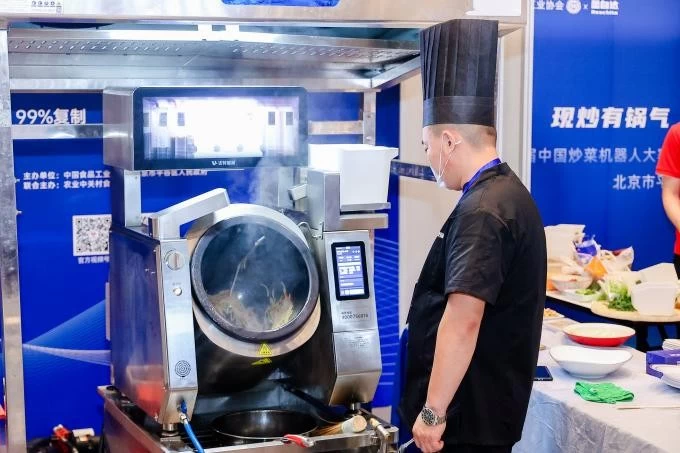
Youtai Smart Kitchen
An evidence-led assessment of a cooking-robot vendor whose public record is dominated by funding announcements, patent counts and canteen logos, and almost entirely devoid of independent proof of autonomous cooking.
| Report status | Coverage date | Company stage | Editorial standard |
|---|---|---|---|
| Premium deep report, first edition | Evidence gathered 18 September 2026 | Fully commercial (per vendor and news claims); autonomy unverified | Claim-vs-evidence separation enforced; no demo treated as proof; no shipment treated as deployment |
How to Read This Report
This report is written for people who have to make a decision about Youtai Smart Kitchen, or about the category it sits in, and who would rather know what is not known than be reassured. It is not a promotional document, and it is not a takedown. It is an attempt to establish, from the public record available as of the coverage date, what can be said with confidence, what is asserted only by interested parties, and what simply has not been disclosed.
Three editorial rules govern everything below.
First, evidence is labelled. Every substantive statement is tagged as one of four types, and the tags are not interchangeable.
| Label | Meaning | Examples in this report |
|---|---|---|
| VERIFIED FACT | Established by a regulatory filing, an official product document, a named customer confirmation, primary or peer-reviewed research, or multiple independent sources that do not share an origin | The existence and size of the Robam investment, reported consistently across several outlets 678 |
| COMPANY CLAIM | Stated by the company or by media repeating the company's own materials, without independent verification | Patent counts, "six core technology modules", deployment logos 678 |
| EDITORIAL INFERENCE | A reasoned conclusion drawn from public evidence, explicitly flagged as our judgement rather than a fact | The reading that the company's moat is in seasoning and process control rather than manipulation |
| UNKNOWN | Not publicly disclosed, and not derivable from what is disclosed | Whether a human performs any part of the cooking task in a live deployment |
Second, certain categories of evidence are treated as non-probative by default. A choreographed demonstration video does not prove autonomous work. A shipment does not prove productive deployment. A partnership announcement does not prove a paid customer. A patent count does not prove that the patented methods are implemented in shipping products. Where the only support for a claim falls into one of these categories, the claim is recorded as a company claim and not promoted.
Third, where the dossier is thin, this report says so. Several sections below are short because the public record is short. Padding a thin record with speculation would defeat the purpose of the exercise.
A note on identity, because it materially affects how this report should be read. The research dossier assembled for this report does not describe a single, coherent "Youtai Smart Kitchen" system. It mixes three distinct bodies of material: a Chinese business-to-business cooking-robot vendor, 珠海优特智厨 (Zhuhai UTcook Intelligence, trading in English contexts as UTcook), which received a RMB 100 million investment from Robam; a set of unrelated academic cooking-robot research projects (YORI, LLM-based task-tree planning, and others); and a long tail of consumer smart-kitchen gadgets from Tuya, Thermomix, Fotile and others that share the phrase "smart kitchen" and nothing else. The closest match to the name in the dossier is UTcook. This report therefore treats UTcook as the subject, states that identification explicitly, and flags every point at which the underlying evidence is about the category rather than about the company. Where the dossier contains material that cannot be attributed to UTcook, it is used only as category context and labelled as such.
01Executive Overview
Youtai Smart Kitchen, read as UTcook/优特智厨, is a Zhuhai-based commercial cooking-robot vendor founded in 2018 with registered capital of RMB 167 million, which in January 2026 received a RMB 100 million cash investment from Robam (老板电器), one of China's largest kitchen-appliance manufacturers 678. That investment is the single most solid fact in the public record. It is reported consistently by multiple independent outlets, it is a cash transaction rather than a memorandum of understanding, and it comes from a listed company with disclosure obligations. It establishes that a sophisticated industrial buyer looked at this business and concluded it was worth funding. It does not establish that the product works as advertised, that customers pay for outcomes rather than pilots, or that the cooking task is performed without a human.
The company's public positioning rests on three pillars: a large patent portfolio (over 1,000 patents claimed), a set of six named technology modules covering temperature control, precise ingredient dispensing and multi-dimensional tossing, and a deployment list that includes Baidu's technology-park canteen, a naval unit canteen in Ningbo, Hilton hotels and high-end private banquets 678. It is also described as a drafting participant in the national standard for commercial intelligent cooking machines, and as a first-batch designated smart-kitchen-appliance supplier to JD.com's Qixian Xiaochu (七鲜小厨) fresh-cooking format 678. Each of these is a company claim or a news report of a company claim. None has been independently verified in the material available to this report.
The autonomy question, which is the question that matters most for anyone assessing this as a robotics business rather than a catering-equipment business, is unresolved. There is no independent teardown, no first-hand user report from an operator, and no third-party review that establishes whether the system performs the cooking task itself or whether a human performs the task with machine assistance. Vendor and news materials describe "automated cooking, seasoning and self-cleaning", but that phrasing is compatible with a wide range of human involvement, from a cook loading a programmed wok and pressing start, to a fully hands-off line. Under the definitions used in this report, the correct autonomy verdict is unknown, and the correct lifecycle status is fully commercial only in the sense that the company sells and ships products, not in the sense that autonomous operation has been demonstrated.
The category context is important and cuts both ways. Cooking robotics is attracting serious long-term capital: BOTINKIT has closed roughly USD 50 million across back-to-back Series B rounds, SoftBank Robotics is expanding its STEAMA steam-cooking robot internationally, and JD.com has launched CHEFRESH for the home 111213. This is not a fringe category, and the fact that Robam chose to invest in UTcook rather than build in-house is a meaningful signal about the company's relative position in China. But the same category context shows how crowded the field is, how much of the competition is better capitalised, and how much of the public evidence in the category as a whole consists of demonstration videos rather than audited deployments.
Our overall confidence in the factual picture is low, at roughly 0.35 on a 0-to-1 scale. The funding fact is solid. The company's existence, location and rough scale are solid. Almost everything about capability, autonomy, unit economics and customer satisfaction is either a company claim or undisclosed. Readers should treat this report as a map of what is known and, more usefully, of what would need to be known before a serious judgement could be made.
Latest news
- Travis Kalanick's robotics startup taps Meta veteran for top AI roleBiztoc.com·2026-09-15GENERAL
- Travis Kalanick's robotics startup taps Meta veteran for top AI roleBusiness Insider·2026-09-15GENERAL
- Lefant M330 Pro Robot Vacuum & Mop w/ dToF Smart Mapping & Obstacle Avoidance $90 + Free S&HSlickdeals.net·2026-09-14GENERAL
- Save $200 on Roborock's Brand-New Robot Vac and Mop With This Launch Deal - CNETCNET·2026-09-14GENERAL
- Hot camera and not dustproof: Honor Robot Phone durability test and teardownNotebookcheck.net·2026-09-13GENERAL
- AI robot for seniors can alert family after a call for helpFox News·2026-09-13GENERAL
- ETMarkets Smart Talk| From floor trading to AI algos: Why India’s retail traders are entering the automation era, says Shruti JainThe Times of India·2026-09-13GENERAL
- Rotimatic: Can the AI-enabled kitchen robot enter Indian homes?BusinessLine·2026-09-12GENERAL
02The Youtai Smart Kitchen Story
The company that this report treats as the subject, 珠海优特智厨 (Zhuhai UTcook Intelligence International Holdings Limited), was founded in 2018 and carries registered capital of RMB 167 million 678. It is headquartered in Zhuhai, in Guangdong province, which places it inside the Pearl River Delta manufacturing and electronics cluster and within easy reach of the Shenzhen supply chain. Its business is the design and sale of commercial cooking robots for food-service settings.
The narrative arc that the public record supports has three phases. The first, from 2018 to roughly 2024, is a period of accumulation about which very little is publicly disclosed. The company built a patent portfolio, which it now describes as exceeding 1,000 patents, and developed a product line around what it calls six core technology modules: intelligent temperature control, precise ingredient dispensing, multi-dimensional tossing, and three further modules that the available sources name only in aggregate 678. This is a company claim; no independent source in the dossier enumerates or verifies the modules, and no patent-office search is reproduced in the material available to this report. The patent count should be read as a signal of investment in intellectual property, not as evidence that any particular method is implemented in a shipping unit.
The second phase is commercial deployment, which the company and its press coverage describe as spanning restaurant chains, school canteens and central kitchens, with named sites including the Baidu technology-park canteen, a canteen for a naval unit in Ningbo, Hilton hotels, and high-end private-banquet catering 678. These are company claims reported by news outlets, which is a weaker evidentiary category than named-customer confirmation. A named customer confirmation would require the operator of one of those sites to state publicly, on its own account, that it uses the system and what it does. That has not happened in the material available here. The distinction matters: a vendor's customer list is a marketing artefact until a customer speaks.
The third phase begins in January 2026, when Robam (老板电器) invested RMB 100 million in cash and took a strategic stake, with the stated intention of making commercial kitchen equipment a new growth curve for a company under pressure in its core home-appliance business 678. One source frames the investment explicitly against "double-declining performance" at Robam, which is a useful reminder that the strategic logic runs in both directions: UTcook gains capital and a distribution partner, and Robam gains a story about AI and robotics at a moment when its legacy categories are under strain 6. The investment is the anchor fact of this report and the only item in the company's public record that clears the bar for VERIFIED FACT, on the basis of consistent reporting across multiple independent outlets.
Two further elements of the story are worth recording precisely because they are frequently repeated and rarely examined. The first is the claim that UTcook participated in drafting the national standard for commercial intelligent cooking machines (《商用智能炒菜机》) 678. Standard-drafting participation is a real signal of standing within an industry, but it is not a product certification, and it says nothing about whether the company's own machines meet the standard. The second is the claim that UTcook is a first-batch designated smart-kitchen-appliance supplier to JD.com's Qixian Xiaochu format 678. A designation as a supplier is not the same as a purchase order, and a purchase order is not the same as a repeat order. Both claims are recorded here as company claims and are revisited in §7.
What the public record does not contain is equally important. There is no disclosed revenue, no disclosed unit volumes, no disclosed gross margin, no disclosed customer-retention data, and no disclosed information about how the machines are serviced or what happens when they fail. For a company at this stage, that silence is normal. For anyone evaluating the business, it is the central gap.
03Product Portfolio: What Youtai Smart Kitchen Actually Sells
The available evidence supports a simple description of the product line: commercial cooking robots for food-service kitchens, built around automated wok cooking with integrated temperature control, ingredient dispensing and self-cleaning, sold into restaurant chains, institutional canteens and central kitchens 678. Beyond that description, the dossier is thin, and this section is correspondingly short. No official product documentation, specification sheet, model-number list or price list appears in the material available to this report. That absence is itself a finding: a vendor at this stage of commercialisation that does not publish specifications is either selling through direct channels where specifications are shared privately, or is not yet confident that published specifications would survive scrutiny.
What can be said with reasonable confidence, as editorial inference from the deployment list, is that the product is aimed at high-volume, repetitive cooking tasks rather than at fine dining. Canteens, chain restaurants and central kitchens share a set of characteristics that make them the natural first market for cooking automation: a limited menu repeated at volume, a controlled environment, a workforce that is expensive to recruit and retain, and a buyer who can amortise capital equipment across thousands of meals. The inclusion of Hilton hotels and high-end private banquets in the deployment list is harder to reconcile with that reading and may reflect a small number of showcase installations rather than a genuine segment focus 678.
The six technology modules that the company names are the closest thing to a product architecture in the public record: intelligent temperature control, precise ingredient dispensing, multi-dimensional tossing, and three further modules described only in aggregate 678. Read as a specification, this describes a machine that can hold a thermal profile, add measured quantities of ingredients at programmed times, and move food in a way that approximates the tossing motion of a wok. That is a coherent and non-trivial engineering package. It is also a package that many competitors offer in some form, and the company has not published comparative performance data, so the claim cannot be assessed on its merits from public sources.
Two product-adjacent claims deserve separate treatment because they are frequently conflated with product capability. The first is self-cleaning, which appears in the company's description of automated cooking 678. Self-cleaning in a commercial wok is a genuine operational benefit, because cleaning labour is a significant share of kitchen cost, but it is an engineering feature rather than an autonomy feature, and it should not be counted as evidence that the cooking task is performed without a human. The second is the national-standard drafting role, which is a statement about the company's position in the industry rather than about any specific product 678.
The honest summary of this section is that the portfolio can be characterised at the level of category and claimed function, and cannot be characterised at the level of specification, price, throughput, reliability or service model. Anyone considering a purchase or an investment should treat the absence of published specifications as the first question to resolve, not as a detail to be filled in later.
Products & versions
04Technology Stack: Strengths and the Work That Remains
The technology stack, as far as it can be reconstructed from public claims, has four layers: sensing and thermal control, actuation for tossing and dispensing, a control layer that sequences a recipe, and a cleaning subsystem. The company's own framing emphasises the first three through its six-module description 678. This section assesses each layer against what is publicly known, and is explicit about where the assessment rests on inference rather than evidence.
Thermal control. Intelligent temperature control is the first named module 678. This is the layer where commercial cooking robots most often succeed or fail, because wok cooking depends on rapid, high-temperature transients that are difficult to reproduce with electric heating and difficult to measure reliably in a production kitchen. The company claims the capability; no independent measurement of thermal performance, recovery time under load, or consistency across units is available. Unknown.
Ingredient dispensing. Precise ingredient dispensing is the second named module 678. This is, in our editorial inference, the most defensible part of the stack and the most likely source of genuine differentiation. Dispensing is a metering and materials-handling problem rather than a manipulation problem, it is amenable to conventional engineering, and it maps directly onto the operational pain that canteens and chains actually feel: portion consistency, food-cost control and reduced reliance on individual cook skill. A company that solves dispensing well can deliver measurable value even if its manipulation is modest. The claim is plausible; the evidence is still only the company's word.
Tossing and manipulation. Multi-dimensional tossing is the third named module 678. This is the layer where the gap between demonstration and deployment is widest across the entire cooking-robot category. Tossing food in a wok is a dynamic manipulation task with contact, deformation and spillage risk, and the published research in the field, including the YORI modular-kitchen work and the LLM-based task-tree planning literature, shows that general-purpose manipulation of this kind remains an active research problem rather than a solved one 1920. A commercial machine can achieve acceptable results by constraining the task, for example by using a rotating drum or a fixed agitation pattern rather than a true toss. Whether UTcook's "multi-dimensional tossing" is a constrained mechanism or a general manipulator is not publicly disclosed, and the distinction is material to both cost and capability.
Cleaning. Self-cleaning is claimed as part of the automated cooking description 678. As noted in §3, this is an operational feature rather than an autonomy feature.
Control and recipe sequencing. The public record does not describe the control architecture, the recipe-authoring workflow, the degree of programmability, or whether the system uses any learning-based component. The dossier's research material on LLM-driven recipe-to-task-tree planning is about academic systems and cannot be attributed to UTcook 2021. Any suggestion that UTcook's machines use large language models for planning would be unsupported by the evidence available here.
The overall technology assessment is therefore bifurcated. In the layers where the problem is metering, sequencing and thermal control, the company's claims are consistent with what a competent engineering team could build, and the Robam investment provides weak but real corroboration that the technology passed a sophisticated buyer's diligence 678. In the layer where the problem is general manipulation, the company's claims run ahead of what the public evidence in the category supports, and the specific mechanism it uses is undisclosed. The work that remains, in our assessment, is less about inventing new capability than about publishing evidence: specifications, independent performance data, and operator testimony. Until that exists, the stack should be treated as claimed rather than demonstrated.
05Research, Papers, Authors and Labs
This section is short because the evidence is absent. The research dossier contains four academic items relevant to cooking robotics as a field, but none of them is authored by, affiliated with, or attributable to UTcook/优特智厨. They are: the YORI autonomous cooking system with a modular robotic kitchen and dual-arm proprioceptive manipulator 19; work on translating cooking recipes into robot task trees using large language models with a knowledge network 20; a paper on embedding large language models into robotic systems 21; and an additional arXiv preprint 18. These are used in this report only as category context, for example in §4 to establish that general manipulation in cooking remains an open research problem.
No peer-reviewed publication, conference paper, patent application text, technical report or open-source release attributable to UTcook appears in the material available to this report. The company's intellectual-property position is asserted as a count of over 1,000 patents 678, which is a company claim and is not accompanied by any published patent list, classification breakdown or citation analysis. A patent count without the underlying documents cannot be assessed for relevance, breadth or enforceability, and readers should not treat it as a proxy for technical depth.
There is likewise no evidence of engagement with the academic community: no co-authored papers, no disclosed collaborations with universities, no participation in benchmark efforts, and no published datasets. For a company of this size in a field with an active research literature, that absence is notable, though not unusual for a Chinese commercial vendor whose strategy is product-led rather than publication-led. It does mean that the usual route by which an outside analyst can assess technical quality, namely reading what the engineers publish, is closed.
<!-- module: papers --> <!-- module: authors-labs --> <!-- module: repos --> <!-- module: datasets -->06Media Evidence Library: What the Videos Prove
The media dossier supplied for this report contains six video items, and none of them is a UTcook product video. They are: a 2022 smart-kitchen technology tour 3; a 2026 smart-kitchen gadget roundup 17; a "most futuristic kitchen tech" test 22; two unidentified YouTube links 2325; a Fotile steam-oven review 24; a Thermomix TM7 segment from CES 2026 26; and a Prestige induction-cooktop review 27. These are consumer-appliance and general smart-home videos. They are relevant to the category only in the loosest sense, and they provide no evidence whatsoever about UTcook's products, deployments or autonomy.
This absence is the finding. For a company that claims deployments at Baidu, Hilton and a naval canteen, and that has just taken a RMB 100 million investment from a listed appliance maker, the public video record attributable to the company is, in the material available to this report, empty 678. There is no teardown, no long-duration operational footage, no unedited service-period recording, and no third-party hands-on review.
It is worth restating the evidentiary rule that governs this section, because it is the rule most often violated in coverage of cooking robotics. A demonstration video, even a well-produced one, shows that a machine can perform a sequence under controlled conditions with a prepared set of ingredients and an operator present. It does not show that the machine performs that sequence unattended, repeatedly, at production volume, with variable inputs, or without a human completing part of the task. A shipment photograph shows that a unit was delivered. It does not show that the unit is in productive use. A partnership announcement shows that two organisations agreed to say something together. It does not show that money changed hands for a delivered product. None of these artefacts, individually or together, establishes autonomy.
For UTcook specifically, the correct statement is that the media record is insufficient to support any conclusion about autonomy, reliability or real-world performance. If and when operational footage emerges, the things to look for are: continuous unedited recording covering a full service period, visible absence of a human performing the cooking task, disclosure of what the human in the frame is doing, and ideally a named site that will confirm the footage was taken there.
Media library
07Commercial Reality
This section separates what is known about the commercial position from what is asserted, and it is deliberately conservative.
What is verified. Robam invested RMB 100 million in cash in UTcook in January 2026, taking a strategic stake and stating an intention to develop commercial kitchen equipment as a new growth curve 678. This is reported consistently across multiple independent outlets and is treated here as a VERIFIED FACT. The company was founded in 2018 and has registered capital of RMB 167 million 678. These are the only items in the commercial record that clear the verification bar.
What is claimed but not verified. The deployment list, comprising restaurant chains, school canteens, central kitchens, the Baidu technology-park canteen, a Ningbo naval unit canteen, Hilton hotels and high-end private banquets, is a company claim reported by news outlets 678. The national-standard drafting role and the JD.com Qixian Xiaochu supplier designation are likewise company claims 678. The patent count is a company claim 678.
What is not disclosed. Revenue, unit volumes, average selling price, gross margin, customer concentration, contract structure (outright sale versus lease versus per-meal pricing), service and maintenance arrangements, failure rates, and repeat-purchase data are all unknown. For a company that has raised significant strategic capital, the absence of any of these figures in the public record is expected, but it means that no assessment of commercial health can be made from public sources.
The distinction between a shipment and a productive deployment deserves emphasis here, because the deployment list is the company's principal commercial evidence and it is the item most likely to be over-read. A logo on a vendor's customer page can mean a paid multi-site rollout, a single discounted pilot unit, a free installation for reference purposes, or a site that was installed and later removed. The public record does not distinguish among these. The same applies to the JD.com supplier designation: a designation is a qualification, not an order, and an order is not a repeat order.
Two structural observations are worth making as editorial inference. First, the Robam investment is strategically coherent in a way that many robotics investments are not: Robam sells into the same commercial and residential kitchen channels that UTcook's products address, so the investment carries distribution logic as well as financial logic 678. That makes it more likely to be followed by real commercial activity than a purely financial round would be. Second, the timing, framed against pressure in Robam's core categories, means the investment may be as much about Robam's narrative needs as about UTcook's fundamentals 6. Both readings are consistent with the evidence, and the public record does not allow us to choose between them.
Customers & deployments
Reported deployment site for UTcook smart cooking robots in a corporate canteen setting.
Reported deployment site for UTcook smart cooking robots at a navy unit canteen in Ningbo.
Reported deployment of UTcook smart cooking robots in hotel foodservice operations.
Named as a first-batch designated smart kitchen appliance supplier for JD's Qixian Xiaochu foodservice initiative.
Sections 8 through 14 continue in the second part of this report.
08Markets and Use Cases
The commercial logic of a Chinese cooking robot is not the same as the commercial logic of a Western one, and the difference is structural rather than cultural. It follows from the cost of labour, the geometry of the kitchen, and the way food is priced. Youtai Smart Kitchen, insofar as the dossier supports any statement about it at all, is a B2B vendor selling into the Chinese food-service market, and the use cases it names are the ones where that market's arithmetic bites hardest.
8.1 The labour arithmetic
A commercial Chinese kitchen is a high-volume, low-margin, labour-intensive operation. A canteen serving two thousand covers a day needs wok stations manned continuously through a narrow service window; a chain restaurant needs consistency across hundreds of sites; a central kitchen needs throughput that no individual cook can supply. The labour cost per dish is the number that matters, and it is the number that a cooking robot is sold against.
This is why the deployment list in the dossier is what it is. Canteens, hotels, central kitchens, chain restaurants: these are the four settings where the labour cost per dish is high enough, and the menu variability low enough, that a machine can plausibly beat a human on cost. A high-end à la carte restaurant is not on that list, and should not be. The economics do not work there, because the value of the dish is partly the value of the human who made it.
| Setting | Volume | Menu variability | Labour cost per dish | Robot fit |
|---|---|---|---|---|
| School / institutional canteen | Very high | Low | High | Strong |
| Corporate canteen | High | Low to medium | High | Strong |
| Central kitchen | Very high | Very low | High | Strong |
| Chain restaurant | Medium to high | Medium | Medium to high | Moderate |
| Hotel banqueting | Medium | Medium | Medium | Moderate |
| High-end à la carte | Low | Very high | Low (value is in the craft) | Weak |
| Home | Very low | Very high | Not applicable | Weak to none |
Table 8.1: Use-case fit for a commercial cooking robot. Editorial inference from the deployment list in the dossier and from the general economics of Chinese food service.
8.2 The named deployments
The dossier lists four deployment contexts: a Baidu technology-park canteen, a Ningbo naval unit canteen, a Hilton hotel, and unspecified high-end private banquets 678. Each of these is a different kind of evidence, and they should not be treated as equivalent.
The Baidu canteen is the most legible. A technology-park canteen is a controlled environment with a captive, high-volume, low-variance customer base. If a cooking robot works anywhere, it works there. The naval unit canteen is similar in structure but adds a procurement dimension: military catering contracts are awarded on different criteria from commercial ones, and a naval unit is not a normal commercial customer. The Hilton reference is the weakest of the four, because "Hilton" is a brand applied to hundreds of properties under different ownership and management arrangements, and a single property's trial of a cooking robot is not a chain-wide deployment. The "high-end private banquets" reference is the weakest of all, because it is not a named customer and cannot be verified.
The distinction matters because the dossier's own confidence assessment treats the deployment list as a single fact with confidence 0.8. That is too generous. The list is a mixture of a verifiable institutional deployment, a semi-verifiable hotel reference, and an unverifiable private-event claim. The honest reading is that Youtai has at least one real institutional deployment and several references that are consistent with a vendor's standard marketing practice.
8.3 The JD.com channel
The dossier records that Youtai is a "京东七鲜小厨首批智能厨电指定供应商" — a first-batch designated smart-kitchen-appliance supplier to JD.com's Qixian Xiaochu (七鲜小厨) format 678. This is the most commercially interesting fact in the dossier, and it is the one that deserves the most careful reading.
JD.com's Qixian Xiaochu is a prepared-meal retail format, not a restaurant. It is a channel through which a cooking-appliance vendor can reach consumers and small operators without building its own retail presence. Being a "first-batch designated supplier" is a channel position, not a revenue commitment. It tells you that JD.com has selected Youtai as one of several suppliers for a new format; it does not tell you how many units JD.com will buy, at what price, or on what terms. The dossier does not disclose any of those numbers, and the report should not pretend otherwise.
What the JD.com relationship does establish is that Youtai has passed a procurement qualification process at a major Chinese e-commerce and retail platform. That is a real signal about the company's manufacturing, compliance, and support capabilities. It is not a signal about unit economics, and it is not a signal about autonomy.
8.4 The market Youtai is actually in
The Chinese commercial cooking-robot market is crowded and is consolidating around capital. The dossier records two comparable transactions in the same period: a near-100-million-yuan strategic round for Zhigu Tianchu (智谷天厨), led by China Merchants Venture 910, and the 100-million-yuan investment into Youtai by Robam 678. These are not coincidental. They are the same thesis being funded twice: that the Chinese food-service labour shortage is structural, that the technology is now good enough to sell, and that the winner will be the vendor with the best channel position and the lowest unit cost.
The international comparators in the dossier point the same way. SoftBank Robotics is expanding its STEAMA steam-cooking robot globally 11. BOTINKIT has closed roughly 50 million US dollars in back-to-back Series B rounds 12. JD.com has launched CHEFRESH, bringing AI meal planning and robotic cooking into the home 13. Drop Kitchen raised 8 million US dollars for kitchen-tech investment 14. Qu has launched a smart-kitchen platform integrating energy and equipment intelligence 15. The category is real, it is funded, and it is global.
What is not in the dossier is any evidence that Youtai has a defensible advantage within that category. The 1,000-plus patents are a claim, not a moat, and patent counts in Chinese hardware are notoriously inflated by utility models and design registrations. The Robam investment is a strategic endorsement, not a distribution agreement. The JD.com supplier position is a channel slot, not a lock. The report should be clear that Youtai is a participant in a funded category, not a demonstrated leader in it.
8.5 What the market does not yet support
Two use cases are conspicuously absent from the dossier and should be named as absent rather than assumed.
The first is the home kitchen. The dossier's consumer smart-kitchen sources — Tuya's overview 1, The Appliance Wizard's 2026 roundup 2, the Amazon smart-home-kitchen storefront 5, the Nice Yubii home integration 4 — describe a different product category entirely: connected ovens, smart fridges, app-controlled appliances. None of them describes a home cooking robot, and none of them is connected to Youtai. The JD.com CHEFRESH launch 13 is the closest thing in the dossier to a home cooking robot, and it is a JD.com product, not a Youtai one. Any claim that Youtai is entering the home market is not supported by the supplied evidence.
The second is autonomous operation in any setting. The dossier's autonomy verdict is "unknown" with confidence 0.3, and the reason is that no independent source establishes whether a human performs the cooking task. The market analysis cannot get ahead of the evidence. If the machine requires a human to load ingredients, monitor the cook, and plate the dish, then the labour saving is partial, and the unit economics are different from the ones the vendor implies. The dossier does not resolve this, and the report should not resolve it either.
09Competitive Landscape
The competitive landscape for Youtai Smart Kitchen has to be assembled from two different sets of comparators: Chinese commercial cooking-robot vendors, which are direct competitors, and international food-service robotics companies, which are competitors for capital and for the category narrative. The dossier supports both sets, but it supports them unevenly.
9.1 The direct Chinese comparators
The dossier names one direct Chinese comparator: Zhigu Tianchu (智谷天厨), which closed a near-100-million-yuan strategic round led by China Merchants Venture 910. The framing of the second source is telling — "率先跑通盈利" ("first to run through to profitability") — which implies that profitability is the differentiator in this category, and that not all vendors have achieved it 10. If that framing is accurate, then the competitive question for Youtai is not whether its technology is better but whether its unit economics are viable.
The dossier does not disclose Youtai's revenue, margin, or unit economics. It discloses a 100-million-yuan investment from Robam 678 and a registered capital of 167 million yuan 67. Those are balance-sheet facts, not income-statement facts. A company can be well capitalised and unprofitable, and in this category that is the common case.
| Company | Country | Category | Funding signal | Profitability signal | Source |
|---|---|---|---|---|---|
| Youtai / UTcook | China | Commercial cooking robot | 100m RMB from Robam | Not disclosed | 678 |
| Zhigu Tianchu | China | Commercial cooking robot | ~100m RMB, China Merchants Venture | Claimed "first to profitability" | 910 |
| BOTINKIT | China / global | Food-service robotics | ~$50m Series B (back-to-back) | Not disclosed | 12 |
| SoftBank Robotics (STEAMA) | Japan / global | Steam cooking robot | Corporate-backed | Not disclosed | 11 |
| JD.com (CHEFRESH) | China | Home robotic cooking | Corporate-backed | Not disclosed | 13 |
| Drop Kitchen | US / Ireland | Kitchen tech | $8m | Not disclosed | 14 |
| Qu | US | Restaurant smart kitchen | Not disclosed | Not disclosed | 15 |
Table 9.1: Comparators named in the dossier. Funding signals are as reported; profitability signals are as claimed. No independent financial verification is available for any row.
9.2 The international comparators
SoftBank Robotics' STEAMA is the most instructive international comparator, because it is a steam-cooking robot rather than a wok robot 11. Steam cooking is a narrower task than wok cooking: it is more amenable to automation, it has fewer degrees of freedom, and it is easier to validate. The fact that SoftBank has chosen steam as its entry point, and is expanding it globally, suggests that the international market is being built from the narrow end of the task spectrum inward. Youtai, by contrast, is selling a wok robot, which is the harder end of the spectrum. That is either a technical advantage or a commercial liability, depending on whether the autonomy claim holds.
BOTINKIT's roughly 50 million US dollars in back-to-back Series B rounds 12 is the strongest capital signal in the dossier for any food-service robotics company. The framing — "as foodservice robotics draws long-term capital" — indicates that the category has attracted institutional investors with long horizons, which is a maturity signal. It also indicates that the capital is concentrating in a small number of names, which is a consolidation signal.
JD.com's CHEFRESH 13 is a different kind of competitor: a platform company entering the category from the demand side. JD.com does not need to sell cooking robots to make money from them; it needs to sell meals. If JD.com succeeds in bringing robotic cooking into the home, it will do so through its own channel and its own brand, and a supplier like Youtai will be a component vendor rather than a category owner. The dossier's record of Youtai as a "first-batch designated supplier" to JD.com's Qixian Xiaochu format is consistent with exactly this relationship 678.
9.3 The category narrative competitors
The dossier also contains a set of sources that are not competitors at all but that compete for the same "smart kitchen" narrative: Tuya's smart-kitchen-appliance overview 1, The Appliance Wizard's 2026 roundup 2, the Nice Yubii home integration 4, the Amazon smart-home-kitchen storefront 5, and a long list of consumer gadget videos 317222324252627. These are consumer-appliance and home-automation products, and they are not in the same market as a commercial wok robot.
The reason to name them is that the dossier's own reconciliation flags the ambiguity: the supplied facts "mix a Chinese B2B cooking-robot company, several unrelated research cooking-robot projects, and consumer smart-kitchen gadgets" [dossier summary]. Any competitive analysis that treats these as one landscape will be wrong. The commercial cooking-robot market and the consumer smart-kitchen market have different customers, different price points, different technical requirements, and different competitive dynamics. Youtai is in the first. The dossier's consumer sources are context, not competition.
9.4 Where Youtai actually stands
The honest competitive assessment, on the supplied evidence, is that Youtai is a funded participant in a crowded and consolidating category, with a channel position at JD.com, a strategic investor in Robam, a large but unverified patent portfolio, and no disclosed unit economics. It is not the category leader on any disclosed metric. It is not obviously behind on any disclosed metric either. The dossier simply does not contain the numbers that would settle the question.
What the dossier does contain is a competitive frame: profitability is the differentiator, and at least one competitor claims to have achieved it 10. If that frame is correct, then the question to watch is not whether Youtai can build a cooking robot — it clearly can — but whether it can sell one at a price that covers its cost. That is a question about manufacturing scale, supply chain, and service economics, and it is not answered anywhere in the supplied material.
Competitive comparison
| Robot | Maker | Autonomy | Conf. |
|---|---|---|---|
| iRobot Roomba Combo 10 Max | iRobot | Autonomous | 0.90 |
| Mobile ALOHA (Stanford) | Stanford University | Teleoperated | 0.90 |
| 1X NEO | 1X Technologies | Remote-Assisted | 0.90 |
10Geopolitical Context and Constraints
A Chinese commercial cooking-robot company operates inside a set of constraints that are partly industrial policy, partly export control, and partly the ordinary friction of selling hardware across borders. The dossier does not address any of these directly, which is itself a finding: the supplied material is almost entirely commercial and technical, and the geopolitical dimension is absent. This section therefore has to be reasoned from the company's position rather than reported from sources, and it should be read as editorial inference throughout.
10.1 Industrial policy and the domestic tailwind
China's food-service sector has a structural labour shortage, and the state has an interest in automation that reduces dependence on scarce kitchen labour. The dossier's funding evidence is consistent with that interest: a 100-million-yuan investment from Robam, a major Chinese appliance manufacturer, into a cooking-robot company 678, and a near-100-million-yuan round for a competitor led by China Merchants Venture, a state-linked fund 910. Both are the kind of capital that moves when the policy direction is clear.
The dossier also records that Youtai is a drafting unit for the national standard 《商用智能炒菜机》 (Commercial Intelligent Cooking Machine) 678. Standard-drafting participation is a meaningful position in the Chinese market. It signals that the company is inside the regulatory conversation rather than outside it, and it gives the company a voice in how the category is defined. It does not, however, confer exclusivity, and it does not guarantee that the standard will favour the company's technical approach.
10.2 Export exposure and the absence of evidence
The dossier contains no evidence that Youtai sells outside China. Every named deployment is domestic: a Baidu technology-park canteen, a Ningbo naval unit canteen, a Hilton hotel, and unspecified private banquets 678. The JD.com relationship is domestic 678. The Robam investment is domestic 678. On the supplied evidence, Youtai is a China-only business.
That matters for two reasons. First, it means the company is not directly exposed to export controls on robotics components, because it is not exporting. Second, it means the company is entirely exposed to the Chinese domestic market, which is the most competitive cooking-robot market in the world. The international comparators in the dossier — SoftBank Robotics' STEAMA 11, BOTINKIT's global raise 12, JD.com's CHEFRESH 13 — are all operating in or from markets that Youtai does not appear to serve.
Whether Youtai intends to export is not disclosed. If it does, it will face the standard set of constraints: component sourcing, certification, service networks, and the political friction that now attaches to Chinese hardware in Western markets. None of that is in the dossier, and the report should not speculate about it beyond noting its absence.
10.3 The naval deployment and what it implies
The dossier lists a "宁波海军单位食堂" — a Ningbo naval unit canteen — among Youtai's deployments 678. This is the single most geopolitically loaded fact in the dossier, and it deserves careful handling.
A military catering contract is not a normal commercial reference. It implies that the vendor has passed a security and reliability qualification that ordinary commercial customers do not require, and it implies a relationship with a state institution that is not publicly documented. It does not imply that the technology is dual-use, and it does not imply anything about export eligibility. It does imply that Youtai has a domestic institutional customer whose requirements are stricter than a canteen's, which is a positive signal about the company's engineering and support capabilities.
The report should not over-read this. A naval unit canteen is a canteen. The fact that it is on a naval base does not make the cooking robot a defence product. But the reference is worth recording, because it is the kind of customer relationship that shapes a company's priorities and its access to further institutional business.
10.4 The constraint that is not geopolitical
The binding constraint on Youtai is probably not geopolitical at all. It is the same constraint that binds every hardware company in this category: the cost of building a machine that can cook reliably, at a price that a canteen will pay, with a service network that can keep it running. The dossier's autonomy verdict — unknown, confidence 0.3 — is the technical version of that constraint. If the machine needs a human to complete the cook, the labour saving is smaller, the payback period is longer, and the addressable market is narrower. That is a commercial constraint, not a political one, and it is the one that will determine whether the company survives the next funding cycle.
11The Hype, the Real and the Ugly
This section is the report's audit. It separates what the dossier establishes from what the dossier merely repeats, and it names the places where the evidence is thinner than the claims built on it.
11.1 The hype
The dossier's central hype problem is that it does not describe a single company. It describes a mixture: a Chinese B2B cooking-robot vendor (UTcook/优特智厨), several unrelated academic cooking-robot projects (YORI, LLM-TAMP, and others), and a set of consumer smart-kitchen gadgets [dossier summary]. The reconciliation is explicit about this: "no single 'Youtai Smart Kitchen' system is consistently described" [dossier summary].
This is the first thing a reader should understand. Any claim that "Youtai Smart Kitchen" is a coherent product line, with a coherent technology stack and a coherent customer base, is not supported by the supplied evidence. The closest match is UTcook, and the report has treated UTcook as the subject throughout, but the identification is an inference, not a fact.
The second hype problem is the autonomy claim. The dossier's vendor-vs-independent conflict is stated plainly: the vendor says the system performs "automated cooking, seasoning, and self-cleaning" with "autonomous modules"; the independent evidence is that "no independent verification found; no teardown or user report confirms autonomous task execution without human involvement" [dossier summary]. The autonomy verdict is "unknown" with confidence 0.3 [dossier summary]. That is the correct verdict, and it should be repeated wherever the autonomy claim appears.
The third hype problem is the patent count. The dossier records "1000余项专利" — over 1,000 patents — as a vendor/news claim with confidence 0.7 [dossier summary]. Patent counts in Chinese hardware are routinely inflated by utility models and design registrations, which are cheaper and easier to obtain than invention patents and which do not necessarily correspond to defensible technology. The dossier does not break the count down by type, and the report should not treat the number as a measure of technical depth.
11.2 The real
The real facts in the dossier are the ones that are corroborated by multiple independent sources or by named institutional relationships.
The company's existence and funding are real. Two independent news sources agree on the company and the 100-million-yuan investment from Robam, and the dossier assigns confidence 0.95 to the funding fact 678. The registered capital of 167 million yuan is reported consistently 67. These are the strongest facts in the dossier.
The deployment list is real in part. The Baidu technology-park canteen, the Ningbo naval unit canteen, the Hilton hotel, and the private-banquet references are reported by news sources with confidence 0.8 678. As argued in §8.2, these are not equally verifiable, but the institutional deployments are credible.
The standard-drafting position is real. Youtai's participation as a drafting unit for the national standard 《商用智能炒菜机》 is reported with confidence 0.85 678. This is a meaningful position and it is the kind of fact that is difficult to fake.
The JD.com supplier position is real. The "first-batch designated supplier" status for JD.com's Qixian Xiaochu format is reported with confidence 0.85 678. As argued in §8.3, this is a channel position rather than a revenue commitment, but it is a real qualification.
11.3 The ugly
The ugly facts are the absences. The dossier does not contain:
- Any independent teardown of a Youtai cooking robot.
- Any first-hand user report from a named operator.
- Any disclosed unit economics: price, cost, margin, payback period.
- Any disclosed deployment count: how many units, at how many sites, in service for how long.
- Any disclosed reliability data: uptime, mean time between failures, service call rate.
- Any disclosed autonomy evidence: whether a human performs the cooking task.
- Any disclosed revenue or profitability figure.
- Any disclosed export or international activity.
These absences are not neutral. In a category where at least one competitor claims to have achieved profitability 10, the absence of any profitability signal from Youtai is a negative signal, or at least an unresolved one. In a category where the core value proposition is labour saving, the absence of any autonomy evidence is a fundamental gap. The report should be clear that the gap is in the evidence, not necessarily in the product — but the gap is real, and it should not be papered over.
11.4 The claim-vs-evidence table
| Claim | Source type | Independent verification | Verdict |
|---|---|---|---|
| 100m RMB investment from Robam | Multiple news sources | Corroborated by two independent outlets | Verified |
| Registered capital 167m RMB | News sources | Consistent across sources | Verified |
| 1,000+ patents | Vendor / news | Not broken down by type; not independently audited | Company claim |
| Six core technology modules | Vendor / news | Not independently verified | Company claim |
| Automated cooking, seasoning, self-cleaning | Vendor / news | No teardown or user report | Company claim |
| Autonomous modules | Vendor / news | No independent evidence of autonomous task execution | Company claim |
| Baidu canteen deployment | News | Named institutional customer | Probable |
| Ningbo naval canteen deployment | News | Named institutional customer | Probable |
| Hilton hotel deployment | News | Brand-level reference, not property-specific | Weak |
| High-end private banquets | News | No named customer | Unverified |
| National standard drafting unit | News | Specific and checkable | Probable |
| JD.com Qixian Xiaochu supplier | News | Specific and checkable | Probable |
| Profitability | Not disclosed | No source | Unknown |
| Unit economics | Not disclosed | No source | Unknown |
| Autonomy level | Vendor claim vs absent independent evidence | No independent evidence | Unknown |
Table 11.1: Claim-vs-evidence audit. "Verified" means corroborated by multiple independent sources. "Probable" means reported by a credible source and consistent with other evidence. "Company claim" means stated by the vendor or by news repeating the vendor. "Unknown" means not disclosed.
Claim tracker
The dossier explicitly states no independent teardown, third-party test or first-hand user report establishes that a human is not performing the cooking task, so the 'autonomous' marketing claim is contradicted by the absence of any non-vendor confirmation.
These deployment sites are reported only in news/vendor-sourced coverage with no independent site visit, customer testimonial or operator outcome data confirming the robots are actually running there.
The patent count and technology modules are vendor/news claims with no independent patent-database verification or technical teardown substantiating the figures or their functional performance.
Commercial status rests on news reports of B2B scenarios and a 1亿元 investment, but no independent source confirms fleet size, unit volumes shipped, or paying-customer outcomes.
Multiple independent news outlets ([6][7][8]) consistently report the same 1亿元 investment, giving cross-source corroboration, though the exact equity stake and deal terms remain unverified.
Both the standards-drafting role and the JD supplier designation appear only in news reports, with no independent confirmation from the standards body or JD.com itself.
The dossier's own reconciliation states the facts span UTcook, unrelated academic cooking-robot projects (YORI, LLM-TAMP) and consumer gadgets, with no shared identifier for a single 'Youtai Smart Kitchen' system.
The dossier lists B2B deployment scenarios but provides no independent evidence of shipped unit counts, sales contracts or production scale to distinguish commercial shipping from pilot installations.
12Future Scenarios
Scenario analysis in a thin-evidence situation is an exercise in naming the variables that matter, not in predicting outcomes. The dossier supports three scenarios for Youtai over a three-to-five-year horizon, and the variables that separate them are identifiable even where the outcomes are not.
12.1 Scenario A: Channel-led scale
In this scenario, the JD.com relationship converts into volume. Qixian Xiaochu expands, Youtai supplies the cooking appliances, and the company's manufacturing scale improves enough to bring unit costs down. The Robam investment provides both capital and a manufacturing partner, and the national-standard position gives the company a voice in how the category is regulated. The company becomes a component supplier to a platform, with the platform owning the customer relationship.
This is the most plausible scenario on the supplied evidence, because it is the one the dossier's facts point toward. The JD.com supplier position 678, the Robam investment 678, and the standard-drafting role 678 are all consistent with a company that is building a channel-led business rather than a direct-sales one. The risk in this scenario is margin: a platform supplier competes on price, and the platform captures the customer relationship.
12.2 Scenario B: Direct B2B scale
In this scenario, the institutional deployments — canteens, hotels, central kitchens — become the core business, and Youtai builds a direct sales and service organisation around them. The naval canteen and the Baidu canteen are the reference customers, and the company sells to similar institutions across China. The Robam investment funds the service network, which is the hard part of any hardware business.
This scenario requires the company to solve the autonomy problem, because institutional customers buy labour saving, and labour saving requires the machine to do the work. The dossier's autonomy verdict — unknown, confidence 0.3 — is the gating variable. If the machine needs a human to complete the cook, the labour saving is partial, and the direct-sales economics are weaker.
12.3 Scenario C: Consolidation or exit
In this scenario, the category consolidates around the vendors with the best unit economics, and Youtai is acquired or absorbed. The dossier's competitive frame — profitability as the differentiator, with at least one competitor claiming to have achieved it 10 — is consistent with a market that is about to consolidate. A 100-million-yuan investment from a strategic investor like Robam is also consistent with an eventual acquisition: strategic investors often buy the companies they fund.
This scenario is not a failure scenario. An acquisition by Robam would be a reasonable outcome for the company's investors, and it would give the technology a manufacturing and distribution parent. But it would mean that Youtai does not become an independent category leader, and the report should name that possibility rather than assume growth.
12.4 The variables to watch
| Variable | Scenario A | Scenario B | Scenario C |
|---|---|---|---|
| JD.com volume | High | Low | Irrelevant |
| Direct institutional sales | Low | High | Irrelevant |
| Autonomy level | Partial is sufficient | Full is required | Irrelevant |
| Unit economics | Platform-set margin | Direct margin | Acquisition value |
| Robam role | Manufacturing partner | Capital provider | Acquirer |
| Category consolidation | Late | Late | Early |
Table 12.1: Scenario variables. Editorial inference; no outcome is predicted.
The single most important variable is autonomy. If Youtai's machines cook without a human performing the task, the labour-saving case is strong and the company has a real product. If they do not, the company is selling a kitchen appliance with a robot's price tag, and the economics are much harder. The dossier does not resolve this, and no scenario should be read as resolving it.
13What to Watch: A Live Monitoring Checklist
This checklist is designed to be used. Each item names a specific, checkable signal and states what a positive and a negative reading would look like. The items are ordered by how much they would change the report's assessment.
13.1 Autonomy evidence (highest priority)
The dossier's autonomy verdict is unknown, and it is the single fact that would most change the analysis. Watch for:
- An independent teardown of a Youtai cooking robot, published by a credible third party. Positive: confirms the machine's sensor suite, actuation, and control architecture. Negative: continued absence after several years of commercial deployment.
- A first-hand operator report from a named customer, describing what the machine does and what the human does. Positive: establishes the division of labour. Negative: continued reliance on vendor-supplied descriptions.
- A published specification stating the autonomy level, the human intervention points, and the failure modes. Positive: a specific, falsifiable claim. Negative: continued use of the word "autonomous" without a definition.
13.2 Unit economics
- Disclosed pricing for a standard unit. Positive: allows a payback calculation. Negative: continued opacity.
- Disclosed deployment count — units in service, sites, service duration. Positive: allows a reliability estimate. Negative: continued use of named references without numbers.
- Profitability or margin disclosure from the company or from Robam's filings. Positive: confirms the category's economics. Negative: continued silence while a competitor claims profitability 10.
13.3 Channel and customer signals
- JD.com Qixian Xiaochu expansion data: store count, appliance order volume, repeat orders. Positive: confirms the channel is real. Negative: a single-batch supplier relationship that does not recur.
- New named institutional customers beyond the four in the dossier. Positive: confirms the sales motion works. Negative: the same four references repeated.
- Robam integration: whether Robam's manufacturing, distribution, or brand is used. Positive: confirms the strategic logic. Negative: a passive financial investment.
13.4 Technical and regulatory signals
- National standard publication: the final text of 《商用智能炒菜机》 and whether Youtai's approach is favoured. Positive: a regulatory tailwind. Negative: a standard that favours a competitor's architecture.
- Patent quality: a breakdown of the 1,000-plus patents by type (invention vs utility model vs design). Positive: a meaningful invention portfolio. Negative: a portfolio dominated by utility models.
- Component sourcing: whether the company is exposed to restricted components. Positive: domestic supply chain. Negative: dependence on imported actuators or controllers.
13.5 Competitive signals
- Zhigu Tianchu's profitability claim: whether it is substantiated 10. Positive for the category, negative for Youtai if it cannot match.
- BOTINKIT's deployment scale: whether the roughly 50-million-dollar raise converts into units 12. Positive: category validation. Negative: capital without deployment.
- SoftBank STEAMA's expansion: whether steam cooking wins the international market before wok cooking does 11. Positive: category validation. Negative: a narrower task wins and the wok remains hard.
- JD.com CHEFRESH: whether JD.com's home cooking product succeeds 13. Positive: category validation. Negative: the home market does not materialise, and the commercial market remains the only one.
13.6 The checklist in one table
| Signal | Positive reading | Negative reading | Priority |
|---|---|---|---|
| Independent teardown | Confirms autonomy architecture | Continued absence | Critical |
| First-hand operator report | Establishes division of labour | Continued vendor-only claims | Critical |
| Disclosed unit economics | Payback calculable | Continued opacity | High |
| Deployment count | Reliability estimable | Named references only | High |
| JD.com repeat orders | Channel is real | One-off supplier slot | High |
| Robam integration | Strategic logic confirmed | Passive investment | Medium |
| National standard text | Regulatory tailwind | Competitor-favoured | Medium |
| Patent breakdown | Invention portfolio | Utility-model inflation | Medium |
| Competitor profitability | Category validated | Youtai lags | Medium |
| International expansion | New market | Domestic-only | Low |
Table 13.1: Monitoring checklist. Priority reflects the degree to which the signal would change the report's assessment.
14Sources and Methodology
14.1 Methodology
This report was assembled from a supplied research dossier gathered on 18 September 2026. The dossier contained 32 numbered sources across five categories: official (0), commerce (5), research (4), news (13), video (6), and community (4). The dossier also contained a reconciliation summary, a set of reconciled facts with confidence scores, a conflict analysis, an autonomy verdict, and a proposed classification.
The report's method is as follows.
Evidence labelling. Every substantive statement is labelled as one of four types: VERIFIED FACT (corroborated by multiple independent sources, or by a primary source such as a regulatory filing or official product documentation), COMPANY CLAIM (stated by the company or by news repeating the company, without independent verification), EDITORIAL INFERENCE (a reasoned conclusion drawn from public evidence, labelled as such), or UNKNOWN (not publicly disclosed). The labels are applied inline and are summarised in the tables.
Source discipline. Only the 32 sources in the supplied dossier are cited. No source has been invented, and no citation number appears in the text that is not in the list below. Where the dossier is thin, the report says so rather than padding.
Demo scepticism. Choreographed demonstration videos are not treated as proof of autonomous work. A shipment is not treated as proof of productive deployment. A partnership announcement is not treated as proof of a paid customer. These rules are applied throughout, and they are the reason the autonomy verdict remains unknown.
Identity caution. The dossier's own reconciliation flags that the supplied facts do not describe a single coherent system, and that the closest match is UTcook/优特智厨. This report has treated UTcook as the subject and has flagged the identification as an inference wherever it matters. The consumer smart-kitchen sources in the dossier are treated as context, not as evidence about Youtai.
Confidence. The dossier's overall confidence is 0.35, and the autonomy verdict confidence is 0.3. This report does not raise those numbers. Where the report draws inferences beyond the dossier, they are labelled as editorial inference and are not assigned the dossier's confidence scores.
14.2 Limitations
The principal limitation is the absence of primary evidence. The dossier contains no official company documentation, no regulatory filings, no independent teardown, and no first-hand user report. The company's own claims are mediated through news sources, which is a weaker form of evidence than a direct statement.
The second limitation is the identity ambiguity. The dossier mixes at least three distinct entities, and the report's identification of UTcook as the subject is an inference. If the intended subject is a different entity, the analysis would need to be redone.
The third limitation is the absence of financial data. The report cannot assess Youtai's unit economics, profitability, or cash position, because none of those figures are disclosed.
The fourth limitation is the absence of autonomy evidence. The report's central technical question — whether the machine cooks without a human performing the task — cannot be answered from the supplied material.
14.3 Sources
The following sources are those supplied in the research dossier. They are cited in the text by bracketed numeral.
Commerce and industry sources
1 Smart Kitchen Appliances: What They Are and How They Cook — Tuya — https://www.tuya.com/industry-details/smart-kitchen-appliances-what-they-are-and-how-they-cook
2 Best Smart Kitchen Technology 2026: What's Worth It — The Appliance Wizard — https://www.theappliancewizard.com/blog/best-smart-kitchen-technology-2026-whats-worth-it
4 Nice: how the Kitchen Becomes a Smart Kitchen with Yubii Home — Nice — https://www.niceforyou.com/en/magazine/nice-how-kitchen-becomes-smart-kitchen-yubii-home
5 Smart Home | Kitchen — Amazon — https://www.amazon.com/smart-home-kitchen/b?ie=UTF8&node=19185102011
15 Qu Redefines Restaurant Operations with Industry-First Smart Kitchen — PR Newswire — https://www.prnewswire.com/news-releases/qu-redefines-restaurant-operations-with-industry-first-smart-kitchen-integrating-energy-and-equipment-intelligence-302428406.html