Yeedi
US$0.99 unlocks one Word + one PDF download. The full report is free to read on this page.

Yeedi: The Value-Brand Cleaning Robot and the Limits of Public Evidence
Yeedi sells credible floor-cleaning hardware at aggressive prices, but the gap between its marketing claims and independently verifiable performance is the central fact about the company.
| Report status | Coverage date | Company stage | Editorial standard |
|---|---|---|---|
| Premium editorial deep report | 20 September 2026 | Fully commercial consumer brand; sub-brand associated with Ecovacs | Evidence-labelled; no claim treated as fact without independent corroboration |
How to Read This Report
This report separates what can be verified from what is merely asserted. Every substantive statement is tagged, either in the prose or in the tables, according to the following scheme. Where the public record is thin, this report says so rather than filling the gap with inference dressed as fact.
| Label | Meaning | Weight in this report |
|---|---|---|
| VERIFIED FACT | Confirmed by regulatory filings, official product documentation, named-customer confirmation, peer-reviewed or primary research, or multiple independent sources | Highest |
| COMPANY CLAIM | Stated by Yeedi or its affiliates, not independently verified | Low to moderate; treated as marketing until corroborated |
| EDITORIAL INFERENCE | Reasoned conclusion drawn from public evidence, clearly flagged as such | Moderate; explicitly reasoned |
| UNKNOWN | Not publicly disclosed | Reported as a gap, not estimated |
Three rules govern the analysis. A choreographed demonstration video is not proof of autonomous work. A shipment or a retail listing is not proof of productive deployment. A partnership or award announcement is not proof of a paid customer. These rules matter disproportionately for a consumer-hardware brand such as Yeedi, whose public footprint is dominated by its own storefront, press releases and affiliate-driven deal coverage.
01Executive Overview
Yeedi is a robot vacuum and mop brand selling a broad line of floor-cleaning robots, generally positioned below the premium tier occupied by Roborock, Dreame and its own corporate relative Ecovacs 13. The product line spans roughly ten named models, from the entry-level Vac through the M-series and S-series, priced from approximately $299.99 to $699.99 with frequent promotional discounts 1345. The company's public identity is built on three pillars: strong suction specifications (up to 11,000 Pa on the S14 Plus), self-maintaining docks that empty dust and refill water, and a run of CES innovation awards in the indoor-cleaning category 67.
The evidence base for this report is unusually lopsided. There is a substantial volume of commerce and vendor material, a modest amount of press-release-derived news, and a small but revealing set of community discussions. There is no peer-reviewed research, no regulatory filing specific to Yeedi as an entity, and no named enterprise customer. The overall confidence in the reconciled picture is moderate (0.62 in the source dossier), and that figure is honest: the brand is well documented as a commercial product line and poorly documented as an engineering organisation.
The central editorial finding is a persistent gap between claim and verification. Yeedi's marketing asserts smart navigation and 3D obstacle avoidance; independent community reports describe mapping inaccuracies and incorrectly merged rooms 111213. Yeedi's marketing implies reliable, thorough cleaning; community reports are genuinely mixed, with some users praising value and mopping and others reporting streaks, water marks and reliability concerns 111314. Neither side is definitive. The vendor material is marketing by construction, and the community material is anecdotal and low-volume. What can be said with confidence is narrower and less flattering than either camp would like: Yeedi ships real, priced, commercially available cleaning robots whose autonomy is of the ordinary autonomous-cleaning kind, and whose real-world performance is not independently established at the standard a premium buyer would want.
On autonomy, the verdict is Autonomous with moderate confidence (0.7). No source describes teleoperation or remote human task performance. The systems clean on their own once configured, and community reports of reliable nightly operation support autonomous task execution 13. Self-emptying docks, app connectivity and scheduling are maintenance and setup functions, not human task performance, and do not lower the autonomy classification. The caveat is that independent verification of full autonomy is limited, and the mapping and reliability complaints are operational quirks rather than evidence of hidden human control.
Latest news
- This Yeedi S14 Plus Robot Vacuum Deal Matches Its Record-Low Price of $400CNET·2026-07-27GENERAL
- Yeedi M14 Plus Robot Vacuum & Mop (2 Colors) $400 & More + Free S&HSlickdeals.net·2026-06-19GENERAL
02The Yeedi Story
Yeedi presents itself as a cleaning-solutions brand offering robot vacuum and mop combos, and it is widely associated with Ecovacs, the Chinese floor-care group that also owns the premium Ecovacs brand 13. That association is the single most important structural fact about the company, and it is also one of the least precisely documented. The public dossier does not contain a corporate filing, an ownership chart or a regulatory disclosure that pins down the exact relationship. What exists is a consistent pattern across commerce listings, press releases and news coverage that treats Yeedi as a distinct brand within a larger floor-care family 1367.
EDITORIAL INFERENCE. The most defensible reading of the public record is that Yeedi functions as a value-oriented sub-brand, positioned to compete on price against mid-market entrants while the parent or affiliated premium brand competes on specification and features. This is a common structure in Chinese consumer hardware, where a group runs a premium line and a volume line to cover the full price spectrum without diluting the premium brand's pricing power. The dossier supports the positioning claim (the price band and the "affordable cleaning" award framing) but does not contain a document that confirms the corporate mechanics 6.
The brand's public narrative is built around awards and specifications rather than around engineering disclosures or customer case studies. Yeedi's S14 Plus won a CES 2025 Indoor Cleaning Technology Innovation Gold Award, and the M16 Infinity won a CES 2026 Innovation in Affordable Cleaning Technology Gold Award 67. These are real, checkable announcements, and they are the closest thing in the dossier to third-party validation. They are also, importantly, awards for innovation and for affordability, not awards for measured cleaning performance, reliability or autonomy. An award is a signal of industry attention; it is not a test result.
The story that emerges is therefore not a technology-origin story. There is no founding narrative in the dossier, no named founder, no research lineage, no published engineering paper. Yeedi's history, as far as the public record shows, is a history of product releases, price promotions and award announcements 134567. That is a legitimate way to build a consumer brand, but it means that any serious assessment of Yeedi has to be an assessment of its products and its claims, because there is no deeper technical record to assess.
UNKNOWN. The founding date, the founding team, the precise ownership structure, the manufacturing arrangements and the size of the organisation are not publicly disclosed in the dossier. This report does not estimate them.
03Product Portfolio: What Yeedi Actually Sells
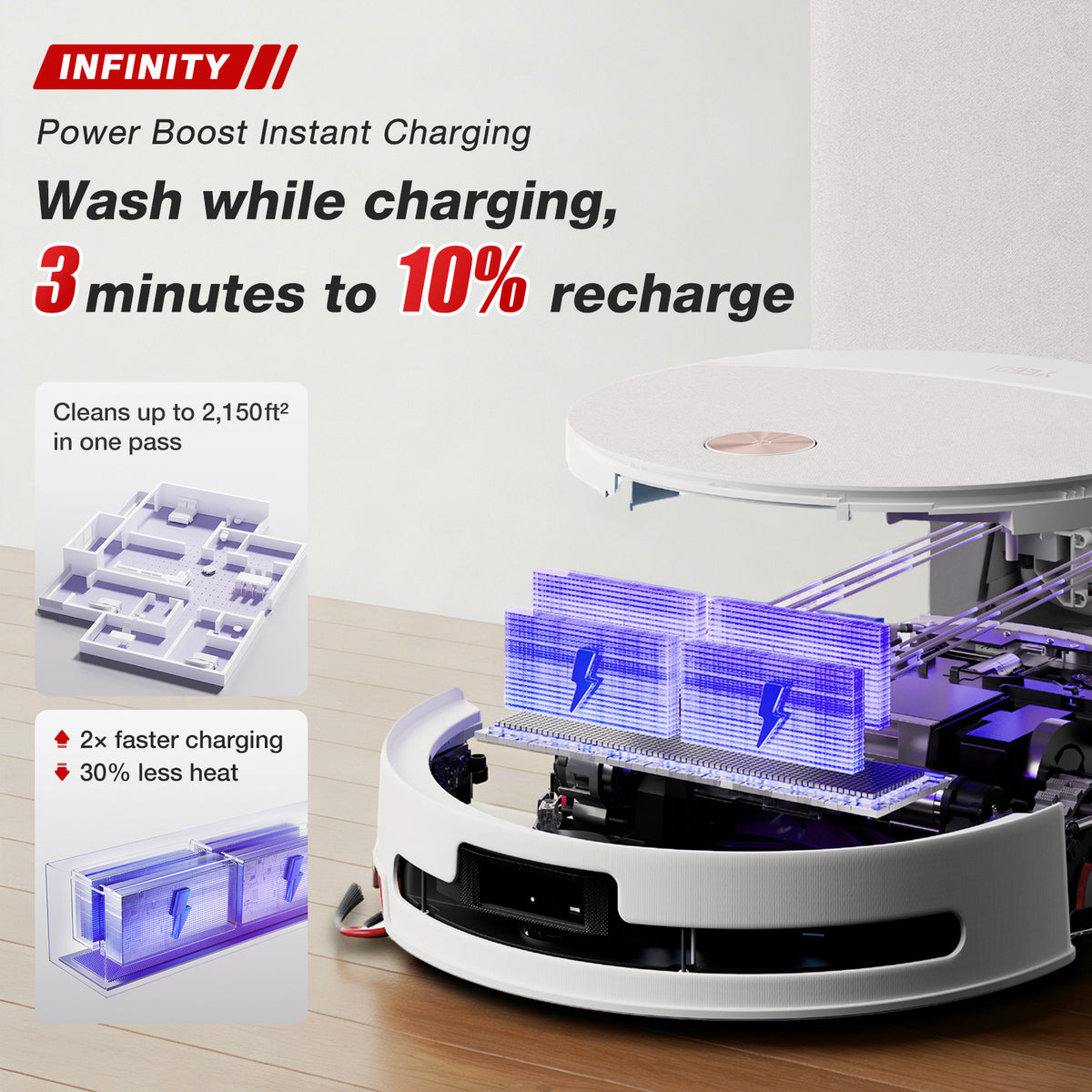
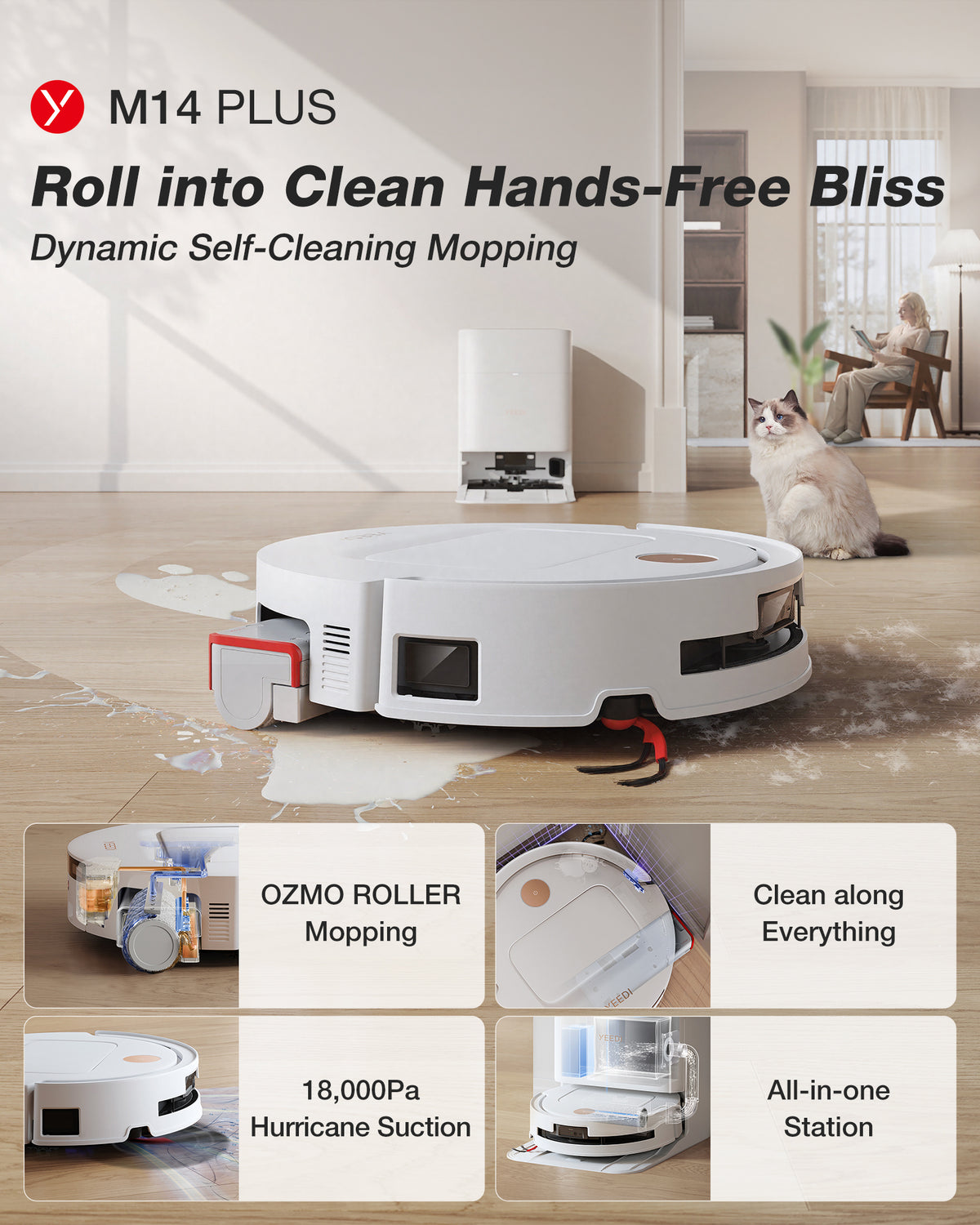
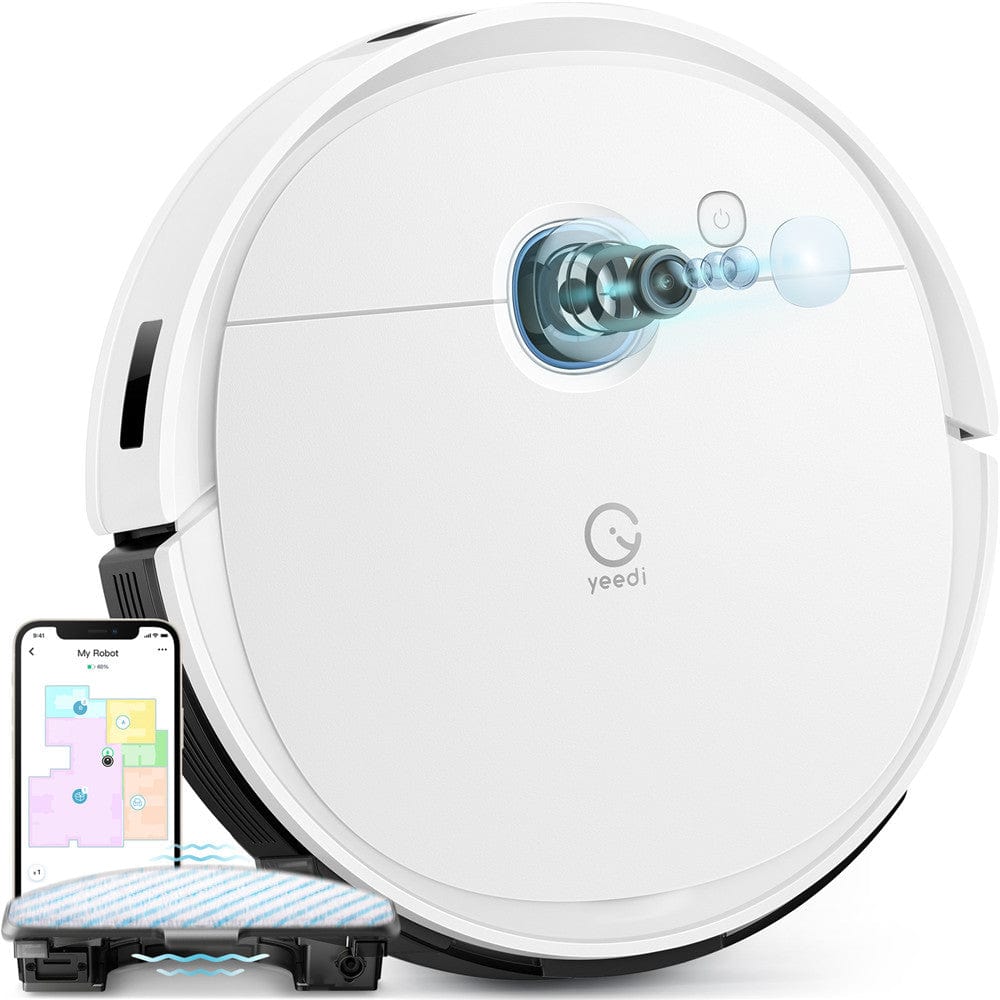
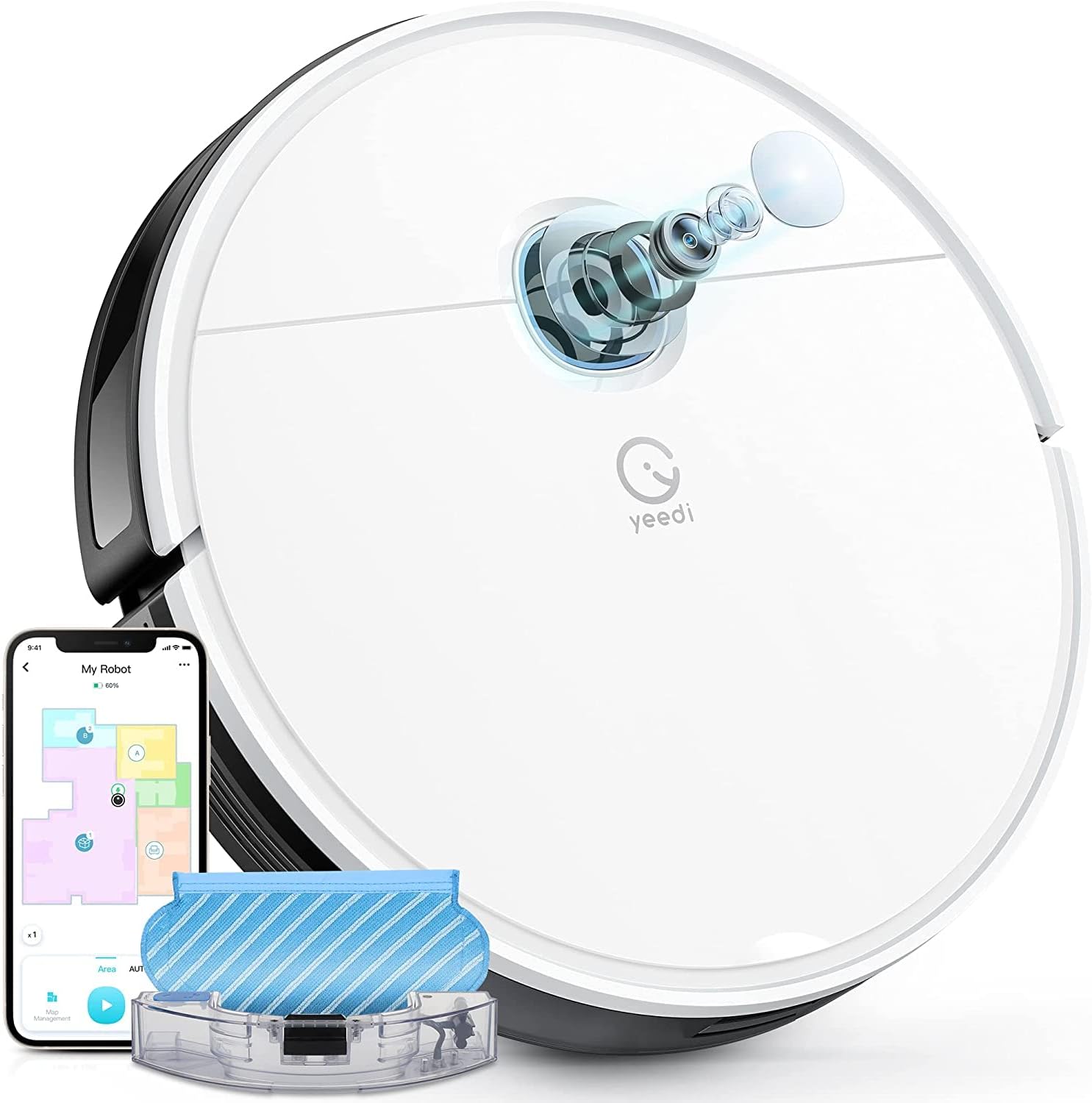
Yeedi's line is broad and, at first glance, confusing. The dossier names the M14 Plus, M16 Infinity, M12 Pro Plus, Vac Station, Vac 2 Pro, Vac Max, Vac 2, Vac, Cube and S14 Plus 13. These are robot vacuum and mop combo units, most with self-emptying or self-cleaning docks, sold at retail through the Yeedi store, a Shopify storefront and third-party retail and deal channels 1345.
The table below consolidates the models and prices that appear in the dossier. It is deliberately conservative: where a price appears only in a promotional context, it is marked as such, because promotional pricing is not list pricing and should not be read as the product's standing value.
| Model | Category | Price evidence | Notable claimed features | Evidence quality |
|---|---|---|---|---|
| S14 Plus | Flagship vacuum-mop combo | Not stated in dossier | 11,000 Pa suction; CES 2025 Indoor Cleaning Technology Innovation Gold Award | Spec and award from press release 7 |
| M16 Infinity | Vacuum-mop combo | $599.99 | CES 2026 Innovation in Affordable Cleaning Technology Gold Award | Price from commerce/news; award from press release 6 |
| M14 Plus | Vacuum-mop combo | $499.99 | Positioned against Narwal in community comparisons | Price from commerce; comparison from community 11 |
| M12 Pro Plus | Vacuum-mop combo | $360 (promotional, ~53% off) | Self-emptying dock, water tank refill, hot-air mop drying, mop-pad lift, pressurised mop pad | Features from CNET; price promotional 4 |
| Vac Station | Vacuum-mop combo with dock | $350 | Self-emptying station | Price from commerce/news 5 |
| Vac 2 Pro | Vacuum-mop combo | Not stated in dossier | — | Listed in commerce sources 13 |
| Vac Max | Vacuum-mop combo | Not stated in dossier | — | Listed in commerce sources 13 |
| Vac 2 | Vacuum-mop combo | Not stated in dossier | — | Listed in commerce sources 13 |
| Vac | Entry-level vacuum-mop combo | From ~$299.99 | — | Price band from commerce sources 13 |
| Cube | Vacuum-mop combo | Not stated in dossier | — | Listed in commerce sources 13 |
VERIFIED FACT. Yeedi sells multiple robot vacuum and mop combo models with self-emptying or self-cleaning docks, at prices spanning roughly $299.99 to $699.99, with frequent discounts 1345. This is corroborated across the vendor store, a Shopify storefront, CNET and WRTV.
COMPANY CLAIM. The S14 Plus delivers up to 11,000 Pa of suction 7. This figure comes from a PR Newswire release and is not independently measured in the dossier. Suction specifications in this category are notoriously difficult to compare across brands because measurement conditions are rarely disclosed.
COMPANY CLAIM. The M12 Pro Plus offers a self-emptying dock, a water tank for mopping refill, hot-air drying of the mop pad, mop-pad lifting on carpet and a pressurised mop pad 4. These features are described by CNET, which is a more independent source than the vendor store, but the descriptions still trace back to product specifications rather than to controlled testing.
The portfolio's logic is a price ladder. The Vac line anchors the bottom, the M-series occupies the middle, and the S-series sits at the top with the highest suction claim and the CES 2025 award 137. The M16 Infinity, with its CES 2026 "affordable cleaning" award, appears to be the current volume flagship 6. The frequent discounting, including a reported 53% reduction on the M12 Pro Plus and up to $240 off across the range during a Prime event, is a signal about positioning: this is a brand that competes on price and promotion as much as on specification 45.
EDITORIAL INFERENCE. A portfolio this broad, refreshed frequently and discounted heavily, is characteristic of a volume strategy rather than a premium one. It implies short product cycles, reliance on retail and affiliate channels, and a customer base that is price-sensitive and comparison-shopping. That is a coherent business, but it is a different business from the one implied by "innovation gold award" language, and buyers should read the two together.
Products & versions

04Technology Stack: Strengths and the Work That Remains
The technical story that Yeedi tells is a familiar one in this category: strong suction, a self-maintaining dock, mop-pad lifting for carpet transitions, and "smart navigation" with 3D obstacle avoidance 147. The dossier supports the existence of these features as product specifications. It does not support claims about how well they perform in uncontrolled homes.
VERIFIED FACT (feature existence). Yeedi's products include self-emptying docks, water tanks for mopping, hot-air mop-pad drying, mop-pad lifting and pressurised mopping 4. These are documented features, not marketing abstractions.
COMPANY CLAIM. "Smart navigation ensures thorough cleaning" and "3D obstacle avoidance" 1. This is vendor language. The dossier contains no independent test of Yeedi's navigation or obstacle avoidance.
INDEPENDENT EVIDENCE (community, low volume). Community reports describe mapping inaccuracies and rooms being merged incorrectly 111213. These are anecdotal and come from a small number of Reddit threads, but they are the only independent performance signal in the dossier, and they point in the opposite direction from the marketing.
The honest technical assessment is therefore split. On the mechanical and dock side, Yeedi appears to ship the features it advertises: the docks empty and refill, the mop pads lift and dry, and the suction figures, whatever their measurement basis, are in the same order of magnitude as competitors 47. On the perception and navigation side, the evidence is weaker. Mapping and localisation are the hardest part of a cleaning robot to get right, and they are precisely where the independent reports are critical 111213.
EDITORIAL INFERENCE. The pattern is consistent with a value brand that has mastered the commoditised parts of the stack (motors, pumps, docks, app plumbing) and is still working on the differentiating parts (robust SLAM, reliable room segmentation, dependable obstacle classification). This is a common and rational allocation of engineering effort: the mechanical features are what show up in a product listing and a deal article, while navigation quality only shows up after weeks of use. It also explains why the marketing emphasises suction and dock features and treats navigation as a checkbox.
UNKNOWN. The sensor suite (whether the robots use LiDAR, camera-based vSLAM, or a hybrid), the compute platform, the mapping and navigation algorithms, the software update cadence and the data-handling practices are not disclosed in the dossier. This report does not speculate about them beyond noting that the navigation complaints are consistent with a perception stack that is less mature than the mechanical one.
The work that remains, on this evidence, is not more suction. It is navigation robustness, mapping accuracy and reliability consistency. Those are the areas where the independent signal is weakest for Yeedi and where the competitive field is strongest.
05Research, Papers, Authors and Labs
This section is short because the public record is empty. The dossier contains no peer-reviewed papers, no preprints, no technical reports, no named research labs and no identifiable engineering authors associated with Yeedi. Searches across the gathered sources return commerce listings, press releases and community threads, not research output 13456711121314.
UNKNOWN. Whether Yeedi conducts internal research, publishes under a different name, or contributes to the academic literature through its parent or affiliate organisation is not publicly disclosed in the dossier. It is possible that research is conducted at the group level and published under the premium brand or the corporate name; the dossier does not contain evidence either way, and this report does not assert it.
EDITORIAL INFERENCE. The absence of a public research footprint is itself informative, though it should not be over-read. Consumer floor-care brands frequently do not publish research, and the lack of papers does not mean the absence of engineering. It does mean that a reader cannot assess Yeedi's technical depth from primary sources, and that any claim about its algorithms rests on product behaviour rather than on disclosed method. For a premium editorial assessment, that is a genuine limitation: the company is opaque at exactly the layer where its differentiation would live.
<!-- module: papers --> <!-- module: authors-labs --> <!-- module: repos --> <!-- module: datasets -->06Media Evidence Library: What the Videos Prove
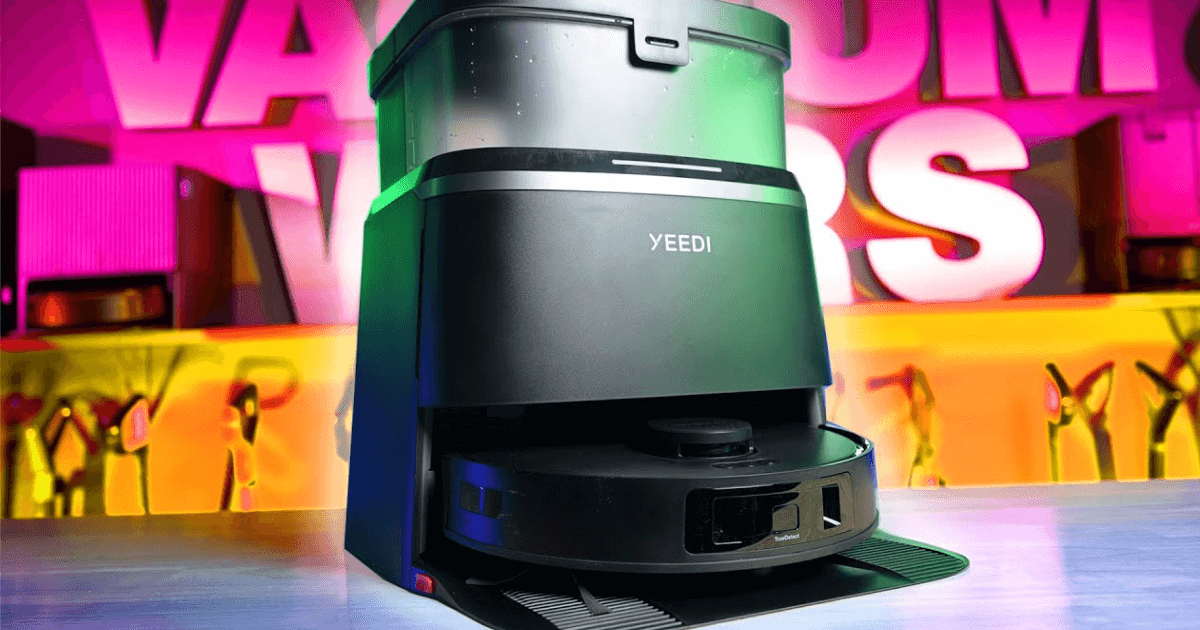
The dossier's media evidence is thin. It contains one YouTube review of the Yeedi Vac Station 2 and no vendor demonstration videos, no teardown footage and no independent long-duration test footage. This is a material gap, because video is often the only way to observe navigation behaviour, obstacle handling and mopping quality without owning the device.
What the available video evidence can and cannot establish is worth stating precisely, because the temptation to over-read a review video is strong.
| Evidence type | What it can prove | What it cannot prove | Present in dossier? |
|---|---|---|---|
| Vendor demo video | That a specific behaviour occurred at least once, under controlled conditions | That the behaviour is reliable, autonomous or representative | No |
| Independent review video | That a reviewer observed a behaviour on a specific unit | That the behaviour generalises across units or over time | Yes, one review 2 |
| Long-duration user footage | Patterns of reliability and failure over weeks | Statistical performance across a population | No |
| Community text reports | That a user experienced a specific issue | Prevalence or cause | Yes, several 11121314 |
VERIFIED FACT. A YouTube review of the Yeedi Vac Station exists and is included in the dossier 2. This report has not treated its contents as a controlled test, because a single review video is not a controlled test.
EDITORIAL INFERENCE. The media record for Yeedi is dominated by affiliate and deal coverage rather than by rigorous independent testing. The dossier's community threads even include a discussion of which review sources are unbiased, which is a telling signal: buyers in this category are aware that much of the coverage is commercially entangled 14. For a premium assessment, the correct conclusion is that the media evidence base is insufficient to verify Yeedi's performance claims, and that any confident statement about how a Yeedi robot behaves in a real home rests on either vendor material or a small number of anecdotes.
Media library
07Commercial Reality
Yeedi is unambiguously a commercial product line. Its robots are listed for sale at retail prices, discounted through major promotional events, and covered by deal-focused outlets 1345. That is the strongest and clearest fact in the entire dossier: this is not a research project, a pilot or a concept. It is a shipping consumer brand.
| Commercial signal | Status | Evidence |
|---|---|---|
| Products listed for sale | Yes | Vendor store and Shopify storefront 13 |
| Retail price band | ~$299.99 to $699.99 | Aggregated commerce and news 1345 |
| Promotional discounting | Frequent, including 53% off and up to $240 off | CNET, WRTV 45 |
| Third-party retail coverage | Yes, deal and news outlets | CNET, WRTV, Yahoo Finance, PR Newswire 4567 |
| Named enterprise customer | Not disclosed | — |
| Unit sales figures | Not disclosed | — |
| Revenue or funding | Not disclosed | — |
| Distribution beyond own store | Partial; retail and deal channels referenced | 45 |
VERIFIED FACT. Yeedi products are commercially available at retail prices with frequent discounts 1345.
UNKNOWN. Unit volumes, revenue, profitability, funding, headcount and the identity of any business or institutional customers are not publicly disclosed in the dossier. This report does not estimate them. The absence of named customers is notable: for a consumer brand this is normal, but it means there is no independent confirmation of deployment at scale beyond the existence of retail listings.
EDITORIAL INFERENCE. The commercial model is a volume, promotion-led consumer model. The heavy discounting and the breadth of the range suggest that Yeedi competes primarily on price-to-feature ratio rather than on brand premium or ecosystem lock-in. That is a viable strategy in a category where consumers comparison-shop aggressively, but it is a strategy with thin margins and constant pressure to refresh specifications. It also means that the "affordable cleaning" award framing is not incidental; it is the brand's core positioning 6.
The distinction this report insists on is between a shipment and a productive deployment. For a consumer cleaning robot, a retail sale is the end of the commercial chain and the beginning of the usage chain, and the dossier contains no systematic data on how Yeedi units perform after purchase. The community reports are the only post-purchase signal, and they are mixed 11121314.
Customers & deployments
08Markets and Use Cases
Yeedi's addressable market is the domestic floor-care segment, and the evidence places it squarely in the value-to-mid tier of that market rather than at the premium end. The reconciled price band of roughly $299.99 to $699.99 1345 positions the brand below the flagship lines of Roborock, Dreame and Ecovacs' own premium tier, and above the sub-$200 commodity tier. That positioning is the single most important fact about Yeedi's market strategy, because it determines which use cases the product can credibly serve and which it cannot.
8.1 The primary use case: routine maintenance cleaning in apartments and mid-size homes
The dominant documented use case is scheduled, unattended maintenance cleaning of hard floors and low-pile carpet in apartments and mid-size homes. Community reports describe "reliable nightly operation" as the operating pattern users value most 1113, and the product architecture supports this: self-emptying docks, water-tank refill for mopping, and hot-air drying of the mop pad are all features that reduce the frequency of human intervention between cleaning cycles 4. This is the use case the hardware is genuinely engineered for, and the one where the value proposition is strongest.
It is worth being precise about what "unattended" means here. The dock handles dust evacuation and mop-pad drying; the robot handles navigation and cleaning. The human still handles: initial mapping and no-go zone setup, periodic water tank refill and dirty-water disposal where applicable, bin and filter maintenance, mop-pad replacement, firmware updates, and recovery from the mapping and navigation failures that community sources report 1113. The realistic operating model is therefore low-touch scheduled cleaning with periodic human maintenance, not set-and-forget. Marketing that implies the latter is overstating the case.
8.2 Secondary use cases and their limits
| Use case | Fit with documented evidence | Confidence |
|---|---|---|
| Daily/nightly maintenance cleaning, hard floors | Strong: matches reported usage pattern and dock architecture 411 | Moderate |
| Apartment / small-home whole-floor cleaning | Strong: price tier and form factor suit this segment 13 | Moderate |
| Mid-size home with mixed hard floor and low-pile carpet | Plausible: mop-pad lifting and pressurisation documented 4 | Moderate |
| Homes with pets (hair, dander) | Plausible: high suction figures claimed, self-emptying dock helps 47 | Low (no independent pet-hair testing in dossier) |
| Deep cleaning / stain removal | Weak: independent reports of streaks and water marks 13 | Low |
| Multi-floor homes | Weak: no documented multi-map or lift-carry evidence in dossier | Unknown |
| High-pile carpet | Weak: no documented evidence of high-pile performance | Unknown |
| Commercial / light-industrial floor care | Not supported: no evidence of commercial deployments | Unknown |
| Outdoor or non-floor tasks | Not supported: product category is indoor floor care 13 | High (negative) |
The table is deliberately conservative. Where the dossier contains no evidence, the honest answer is "Unknown" rather than an inferred capability. This matters because the robot vacuum category is unusually prone to capability inflation: a suction figure in pascals says nothing about pick-up on a given floor type, and a mop-pad lift mechanism says nothing about whether the mop actually cleans rather than smears.
8.3 Geographic markets
The dossier's commerce and news sources are predominantly United States-facing: CNET's deals coverage 4, WRTV's Prime Early Access sale coverage 5, and the PR Newswire and Yahoo Finance award announcements 67 are all US-oriented. The Yeedi store and Shopify storefront 13 are English-language and priced in dollars. This is consistent with a US-primary go-to-market, but the dossier does not contain a market-by-market breakdown, regional pricing, or distribution agreements. Not publicly disclosed: Yeedi's revenue split by geography, its retail distribution partners, or its unit volumes in any market.
8.4 The buyer Yeedi is actually competing for
The community evidence is instructive here. The Reddit threads in the dossier are not primarily about Yeedi as a brand; they are about how to choose between Yeedi and competitors such as Narwal, Roborock and Dreame 111516, and about whether review sources can be trusted 1214. That is the behaviour of a value-conscious buyer doing comparison research, not a brand-loyal buyer. Yeedi's market is therefore the comparison-shopping segment: buyers who will accept a less polished ecosystem and weaker brand prestige in exchange for a lower price and a strong headline specification.
This has a strategic consequence. In a comparison-shopping market, the differentiators that matter are the ones a buyer can verify before purchase: price, suction rating, dock features, and award badges. The differentiators that matter after purchase — navigation reliability, mapping accuracy, long-term durability, app quality, spare-parts availability — are exactly the areas where the dossier's independent evidence is weakest or most mixed 1113. Yeedi's marketing is well-aligned to the pre-purchase decision and largely silent on the post-purchase experience. That is a rational strategy for a value brand, but it is also the mechanism by which dissatisfaction accumulates.
09Competitive Landscape
Yeedi competes in one of the most crowded and fastest-moving consumer robotics categories. The dossier names several direct competitors through community comparison threads — Narwal, Roborock and Dreame 111516 — and the brand's association with Ecovacs places it inside a corporate family that also fields premium products. This section maps the competitive structure, the basis of competition, and where Yeedi's position is defensible versus exposed.
9.1 The competitive set
| Competitor | Positioning (per dossier evidence) | Basis of competition vs Yeedi | Evidence quality |
|---|---|---|---|
| Roborock | Premium/mid-premium, named as a comparison alternative 16 | Ecosystem maturity, navigation reputation, brand trust | Community mention only |
| Dreame | Premium/mid-premium, named as a comparison alternative 16 | Feature velocity, suction specs, premium docks | Community mention only |
| Narwal | Mid-premium, named as a direct alternative to M14 Plus 11; Flow 2 critiqued in 15 | Mopping capability, design, self-cleaning docks | Community mention only |
| Ecovacs (parent-associated premium tier) | Premium, corporate sibling | Brand, distribution, R&D scale | Editorial inference from brand association |
| Generic sub-$200 tier | Budget | Price | Editorial inference |
| Vacuum Wars / review channels | Not a competitor but a gatekeeper 12 | Shapes buyer perception across all brands | Community discussion |
The dossier does not contain competitor specifications, pricing, or market-share data. The table above is therefore a map of named alternatives rather than a rigorous competitive benchmark. Not publicly disclosed: Yeedi's market share, unit volumes, or head-to-head test results against any named competitor.
9.2 The basis of competition
Three competitive axes are visible in the evidence.
Price and promotion. The dossier's commerce and news sources are dominated by discount framing: CNET's "still on sale" coverage of the M12 Pro Plus 4, WRTV's "up to $240 off" Prime Early Access coverage 5, and the reconciled price band with "frequent discounts" 135. Yeedi competes substantially on price and promotional intensity. This is a viable strategy but a structurally weak one: it invites margin compression, trains buyers to wait for sales, and offers no protection against a competitor matching the discount.
Specification headline. The 11,000 Pa suction figure for the S14 Plus 7 is the clearest example of specification-led marketing. Suction in pascals is a legible, comparable number, which makes it useful in a comparison-shopping market — but it is also a number that is easy for competitors to match or exceed, and it correlates imperfectly with real-world cleaning performance. Specification leadership in this category is a treadmill, not a moat.
Awards and third-party validation. Two CES innovation awards are documented: the S14 Plus Indoor Cleaning Technology Innovation Gold Award at CES 2025 7 and the M16 Infinity Innovation in Affordable Cleaning Technology Gold Award at CES 2026 6. Awards are genuine third-party signals and are more durable than a suction number, but they validate a product at a point in time and are not evidence of sustained field reliability. Note also that the M16 Infinity award is specifically in the Affordable Cleaning Technology category 6 — the award itself reinforces the value positioning rather than transcending it.
9.3 Where Yeedi's position is defensible
The value tier is not a bad place to be. It is large, it is less contested at the premium end by brands protecting margins, and it tolerates a product that is good-enough on navigation and excellent on price. If Yeedi's dock features — self-emptying, water refill, hot-air drying 4 — are genuinely available at the $300–$700 band while premium competitors charge more for equivalent functionality, that is a real and defensible value proposition for the comparison-shopping buyer.
9.4 Where Yeedi's position is exposed
The exposure is concentrated in the post-purchase experience. In a category where the buyer's decision is heavily influenced by review channels 1214 and community comparison threads 1116, a pattern of mapping inaccuracies, merged rooms, streaks and water marks, and mixed reliability 1113 is a slow-acting liability. It does not show up in the pre-purchase spec sheet, but it shows up in the community threads that the next buyer reads. The dossier's community sources are precisely this kind of thread. A value brand that loses the community conversation loses its cheapest and most effective acquisition channel.
The second exposure is the absence of any documented ecosystem, service, or spare-parts advantage. The dossier contains no evidence of a Yeedi service network, parts availability commitments, or app ecosystem depth. In a category where the robot is a multi-year appliance, that absence is a competitive gap against premium rivals whose ecosystems are a core part of their pitch.
Competitive comparison
| Robot | Maker | Autonomy | Conf. |
|---|---|---|---|
| iRobot Roomba Combo 10 Max | iRobot | Autonomous | 0.90 |
| Mobile ALOHA (Stanford) | Stanford University | Teleoperated | 0.90 |
| 1X NEO | 1X Technologies | Remote-Assisted | 0.90 |
10Geopolitical Context and Constraints
Yeedi is a consumer floor-care brand, not a defence, logistics, or dual-use robotics company. The geopolitical surface area is therefore narrower than for a humanoid or industrial robotics vendor — but it is not zero, and the dossier's most striking geopolitical feature is what it does not contain.
10.1 The China-origin dimension
The dossier does not explicitly state Yeedi's country of origin or corporate domicile. It does state that Yeedi is "a sub-brand associated with Ecovacs" (reconciled facts), and Ecovacs is a Chinese robotics company. On that basis, the editorial inference is that Yeedi products are designed and manufactured within a Chinese corporate structure. Not publicly disclosed in the dossier: Yeedi's legal entity, manufacturing locations, or supply-chain geography.
This matters for three reasons.
Data and privacy. A robot vacuum with a camera, LiDAR, and app connectivity is a sensor platform inside the home. Mapping data, camera imagery (where present), and usage telemetry flow to vendor cloud infrastructure. For buyers in jurisdictions with heightened sensitivity to China-origin connected devices — and for institutional buyers such as care facilities, offices, or government-adjacent premises — the provenance of that data flow is a procurement consideration. The dossier contains no privacy policy, data-residency, or security-certification evidence for Yeedi. Not publicly disclosed: data handling practices, cloud hosting locations, or independent security audits.
Tariffs and trade policy. Consumer robots imported into the United States are exposed to tariff regimes that have shifted repeatedly in recent years. The dossier's US-facing pricing 1345 and the prominence of discounting could be read as consistent with a brand managing landed-cost volatility through promotional pricing, but this is editorial inference, not documented fact. The dossier contains no tariff, customs, or supply-chain commentary.
Export controls and sanctions. There is no evidence in the dossier that Yeedi products or components fall under export-control regimes, entity lists, or sanctions. For a consumer floor-care product this is the expected state of affairs. Not publicly disclosed: any regulatory restrictions affecting Yeedi's markets.
10.2 The dossier's noise problem
Three of the dossier's numbered sources — 8, 9 and 10 — concern broadband deployment and digital-inclusion funding programmes (NTIA Broadband Equity Access and Deployment, FHWA Technology and Innovation Deployment, and tribal broadband funding). These have no discernible connection to Yeedi or to consumer floor-care robotics. They appear to be retrieval noise.
This is worth flagging explicitly for two reasons. First, it is a data-quality caveat on the dossier as a whole: the research pipeline that produced this dossier captured at least three irrelevant sources, which lowers confidence in the completeness of the relevant set. Second, it is a reminder that "deployment" and "innovation" are overloaded terms that can pull unrelated policy documents into a robotics search. Readers should treat the dossier's source count as an upper bound on relevant evidence, not a measure of it.
10.3 What is genuinely absent
The most honest geopolitical statement about Yeedi is that the dossier supports almost none. There is no evidence of:
- Government contracts or public-sector procurement.
- Dual-use, military, or law-enforcement applications.
- Critical-infrastructure deployment.
- Export-control listings or sanctions exposure.
- Data-sovereignty disputes or regulatory actions.
- Lobbying, standards-body participation, or policy engagement.
For a consumer appliance brand this absence is normal and not itself a red flag. It does mean, however, that any analysis framing Yeedi as geopolitically significant would be manufacturing a story the evidence does not support. The correct posture is: a China-origin connected consumer device with the standard privacy and provenance considerations that entails, and no documented geopolitical complications beyond that.
11The Hype, the Real and the Ugly
This section is the report's audit. It takes the claims the dossier records and sorts them into three bins: claims that are well-supported, claims that are plausible but unverified, and claims that are contradicted or overstated by independent evidence. The discipline is the same throughout: a press release is not a test result, an award is not a reliability record, and a single Reddit comment is not a field study.
11.1 The claim-vs-evidence ledger
| # | Claim | Source type | Independent evidence | Verdict |
|---|---|---|---|---|
| 1 | Up to 11,000 Pa suction (S14 Plus) | Company press release 7 | None in dossier | Unverified company claim. Plausible as a peak figure; no independent measurement. |
| 2 | CES 2025 Gold Award, Indoor Cleaning Technology (S14 Plus) | Company press release 7 | None in dossier | Company claim, award plausible. Award announcements are typically verifiable but the dossier contains only the vendor's release. |
| 3 | CES 2026 Gold Award, Affordable Cleaning Technology (M16 Infinity) | Company press release via Yahoo Finance 6 | None in dossier | Company claim, award plausible. Same caveat. |
| 4 | Self-emptying dock, water refill, hot-air mop drying | CNET (independent editorial) 4 | Consistent with product architecture | Well-supported. Independent editorial description of documented features. |
| 5 | Mop pad lifts on carpet; pressurised mop pad | CNET 4 | None in dossier | Well-supported as a feature description; performance on carpet unverified. |
| 6 | "Smart navigation ensures thorough cleaning; 3D obstacle avoidance" | Vendor marketing | Community reports of inaccurate mapping and merged rooms 1113 | Contradicted in part. Navigation exists; the "thorough" and "smart" characterisation is not supported by independent reports. |
| 7 | Excellent mopping performance | Vendor marketing | Community reports of streaks and water marks 13 | Contradicted in part. Single low-confidence source, so the conflict is unresolved rather than settled. |
| 8 | Reliable operation | Implied by marketing and awards | One report of worse reliability and navigation in early tests; one report of reliable nightly operation 1113 | Unresolved. Community evidence is internally contradictory. |
| 9 | Value for money | Implied by pricing and discounting 1345 | Community praise for value and features 11 | Well-supported. The price band and the community sentiment align. |
| 10 | Autonomous cleaning without teleoperation | Inferred from product category | No source describes teleoperation; community reports of nightly operation 11 | Well-supported. Autonomy verdict: Autonomous, confidence 0.7. |
11.2 The hype
The hype layer is the standard consumer-robotics playbook, executed competently. Headline suction in pascals 7. Award badges from CES 67. Feature lists that emphasise what the dock does rather than what the robot achieves 4. Discount framing that creates urgency 45. None of this is deceptive in isolation — the features are real, the awards appear real, the prices are real — but the aggregate impression is of a product whose marketing is calibrated to the pre-purchase moment and silent on the post-purchase experience.
The specific hype pattern to watch is the substitution of mechanism for outcome. "Mop pad lifts on carpet" is a mechanism. "Pressurised mop pad" is a mechanism. "11,000 Pa" is a mechanism. None of these is a statement about how clean the floor ends up, and the dossier contains no independent cleaning-performance test that would convert mechanism into outcome. Buyers reading the marketing are being asked to infer outcome from mechanism. That inference is sometimes right and sometimes wrong, and the dossier does not let us say which.
11.3 The real
Three things are genuinely real and well-supported.
The value proposition. At $299.99–$699.99 with frequent discounts 1345, and with dock features (self-emptying, water refill, hot-air drying) that are documented by independent editorial coverage 4, Yeedi offers a feature set at a price point that the community recognises as good value 11. This is the brand's core strength and it is not hype.
The autonomy. The systems clean on their own once set up. No source in the dossier describes teleoperation, remote human operation, or human task performance. Community reports of reliable nightly operation 11 support the conclusion that the robots execute scheduled cleaning autonomously. The autonomy verdict of "Autonomous" at 0.7 confidence is well-founded.
The awards. Two CES innovation awards are documented 67. Awards are imperfect signals — they reward novelty and category positioning as much as field performance — but they are third-party and they are not nothing.
11.4 The ugly
The ugly is the gap between the polished review surface and the reported field experience. The dossier's community sources describe mapping that is "often inaccurate" with rooms "merged incorrectly," streaks and water marks, and mixed reliability including "worse reliability and navigation" in early tests 1113. A separate thread is explicitly about the trustworthiness of review sources 14, and another about the experience of review channels 12. The community is telling us, in its own words, that the polished reviews and the field experience diverge.
Two honest caveats must accompany this. First, the community evidence is thin: the mapping and streak reports trace to a small number of Reddit comments with low-to-moderate confidence, and one of them is a single comment. Second, community forums over-represent negative experiences, because satisfied users do not post. The correct reading is not "Yeedi products are unreliable" but "the independent evidence base is too thin to confirm the marketing, and the independent signals that do exist are mixed." That is a weaker claim than the hype, and a more defensible one.
The genuinely ugly structural issue is not any single defect. It is that the dossier contains no independent, methodologically sound cleaning-performance test for any Yeedi model. No standardised pick-up test, no navigation benchmark, no long-duration reliability study, no teardown. For a product whose entire pitch rests on cleaning performance, that is a striking evidentiary vacuum — and it is a vacuum that the brand benefits from, because the marketing claims cannot be falsified by the available public evidence.
Claim tracker
Community reports of reliable nightly operation [11][13] support autonomous cleaning, but no independent source explicitly verifies full autonomy or rules out supervised intervention.
The 11,000 Pa figure appears only in Yeedi's own PR Newswire release [7], with no independent measurement or third-party test confirming it.
Vendor marketing claims smart navigation, but community users report mapping inaccuracies and incorrectly merged rooms [11][13], contradicting the claim.
CNET's hands-on coverage [4] independently describes the M12 Pro Plus's self-emptying dock, water tank refill, and hot-air mop drying, substantiating the feature set.
Multiple independent retail listings and news outlets [4][5] confirm on-sale pricing across Yeedi models, supporting full commercial availability.
Independent community users report streaks and water marks in real-world use [12][13], contradicting the vendor's polished marketing claim of excellent mopping.
Community evidence is mixed: one user reports reliable nightly operation [13] while others report worse reliability and navigation in early tests [12][14], leaving reliability unverified.
CNET's independent review [4] describes mop-pad lifting and pressurization on the M12 Pro Plus, substantiating the specific feature claim.
12Future Scenarios
The following scenarios are constructed from the dossier's evidence and are explicitly speculative. Each is anchored to observable signals that would confirm or disconfirm it. Probabilities are editorial judgements, not measurements.
12.1 Scenario A: Value-tier consolidation (most likely)
Thesis. Yeedi continues as a value-to-mid-tier brand, competing on price, dock features, and award badges, with periodic promotional cycles. It does not attempt to move upmarket into direct competition with Roborock and Dreame flagships, and it does not attempt to build a premium ecosystem. The brand's association with Ecovacs provides manufacturing and supply-chain leverage without requiring Yeedi to carry premium brand equity.
Supporting evidence. The documented price band and discount intensity 1345; the "Affordable Cleaning Technology" framing of the CES 2026 award 6; the comparison-shopping behaviour visible in community threads 1116.
Signals to watch. Continued promotional cadence; new models launched in the same price band rather than above it; absence of a premium sub-brand.
Editorial probability: high. This is the path of least resistance and is consistent with everything in the dossier.
12.2 Scenario B: Specification escalation and feature parity
Thesis. Suction figures continue to climb, dock features proliferate (hot-water washing, detergent dosing, extended drying), and Yeedi matches premium competitors feature-for-feature at a lower price. The competitive moat remains price, and the specification treadmill continues.
Supporting evidence. The 11,000 Pa headline 7; the dock feature set documented by CNET 4; the category-wide pattern of specification competition implied by the comparison threads 16.
Signals to watch. New peak suction figures; new dock capabilities announced at CES; price held flat while features increase.
Editorial probability: high. This is the category's default dynamic and Yeedi is already on it.
12.3 Scenario C: The reliability reckoning
Thesis. Accumulating community reports of mapping failures, streaks, and reliability issues 1113 erode the brand's standing in the review and community channels that drive comparison-shopping purchases 1214. Because Yeedi's acquisition depends disproportionately on value-seeking buyers who research heavily, damage to its community reputation has outsized commercial effect. Growth stalls or reverses.
Supporting evidence. The mixed community evidence 1113; the existence of threads questioning review trustworthiness 14; the absence of any documented service, warranty, or parts-availability advantage that would buffer a reputation shock.
Signals to watch. Rising volume of negative community reports; review channels publishing critical long-term tests; warranty or service complaints becoming a visible theme.
Editorial probability: moderate. The mechanism is plausible and the evidence base is suggestive, but the dossier's community sample is small and the scenario requires the negative signal to persist and compound.
12.4 Scenario D: Platform and data expansion
Thesis. Yeedi, or its parent structure, moves beyond floor care into broader home robotics or home-data services, leveraging the mapping and sensor platform. This would be a strategic pivot rather than a product iteration.
Supporting evidence. None in the dossier. This scenario is included for completeness because it is a common strategic direction in consumer robotics, not because the dossier supports it.
Signals to watch. Product announcements outside floor care; partnerships with home-automation platforms; data or mapping-service offerings.
Editorial probability: low, and unsupported by dossier evidence. Flagged as speculative.
12.5 Scenario E: Regulatory or trade disruption
Thesis. Tariff changes, data-provenance regulation, or connected-device security requirements affect Yeedi's US market access or pricing.
Supporting evidence. None specific to Yeedi in the dossier. The scenario rests on the general exposure of China-origin connected consumer devices to these regimes, which is editorial inference.
Signals to watch. Tariff announcements affecting consumer robotics; new connected-device security rules; data-residency requirements for home sensor devices.
Editorial probability: low-to-moderate, and entirely dependent on external policy developments not documented in the dossier.
12.6 Scenario summary
| Scenario | Probability | Key confirming signal | Key disconfirming signal |
|---|---|---|---|
| A. Value-tier consolidation | High | New models in same price band | Premium sub-brand launch |
| B. Specification escalation | High | Rising suction/dock specs at flat price | Feature stagnation |
| C. Reliability reckoning | Moderate | Sustained negative community trend | Independent tests validating performance |
| D. Platform expansion | Low | Non-floor-care products | Continued floor-care focus |
| E. Regulatory disruption | Low–moderate | Tariff or data rules | Policy stability |
13What to Watch: A Live Monitoring Checklist
This checklist is designed for ongoing monitoring rather than one-off assessment. Each item is tied to a specific evidence gap or open question identified in this report, and each is framed so that a future update can mark it confirmed, disconfirmed, or still open.
13.1 Product and specification
- Independent cleaning-performance testing. Has any methodologically sound third-party test (standardised pick-up, navigation benchmark, long-duration reliability) been published for any Yeedi model? This is the single largest evidence gap in the dossier.
- Suction claim verification. Has the 11,000 Pa figure for the S14 Plus 7 been independently measured or challenged?
- Dock feature durability. Do the self-emptying, water-refill, and hot-air drying mechanisms 4 hold up over months of use, or do they become maintenance liabilities?
- New model cadence and price positioning. Are new launches staying in the $299.99–$699.99 band 13 or moving upmarket?
- Multi-floor and high-pile capability. Any documented evidence of multi-map support or high-pile carpet performance?
13.2 Autonomy and software
- Navigation and mapping accuracy. Do independent reports continue to describe inaccurate mapping and merged rooms 1113, or does firmware improve the situation?
- Autonomy confirmation. Any evidence of teleoperation, remote assistance, or human task performance? (None in the dossier; the autonomy verdict rests on this absence.)
- App and firmware quality. Any independent assessment of the companion app, update cadence, and bug resolution?
- Data handling. Has Yeedi published privacy documentation, data-residency details, or undergone a security audit? Currently not publicly disclosed.
13.3 Commercial and market
- Pricing and discount cadence. Is discounting 45 intensifying (margin pressure) or moderating (pricing power)?
- Market share and unit volumes. Any third-party data on Yeedi's position in the robot vacuum market? Currently not publicly disclosed.
- Distribution. Any retail partnerships, carrier deals, or channel expansion beyond the direct storefront 13?
- Geographic expansion. Any evidence of markets beyond the US-facing sources in the dossier?
13.4 Reputation and community
- Community sentiment trend. Is the balance of community reporting 1113 shifting positive or negative over time?
- Review-channel coverage. Are independent reviewers 1214 publishing long-term or critical assessments, or only launch coverage?
- Service and warranty. Any documented service network, warranty terms, or spare-parts availability? Currently not publicly disclosed.
- Award trajectory. Do CES awards continue 67, and in which categories?
13.5 Corporate and geopolitical
- Corporate structure. Any clarification of Yeedi's legal relationship to Ecovacs, and its manufacturing footprint? Currently inferred, not documented.
- Tariff and trade exposure. Any policy developments affecting China-origin consumer robotics in Yeedi's markets?
- Connected-device regulation. Any new security or data-provenance rules applicable to home sensor devices?
13.6 Dossier hygiene
- Source relevance. The dossier contains at least three irrelevant sources (8, 9, 10 — broadband and digital-inclusion policy documents). Future updates should verify that retrieval is returning on-topic evidence, since irrelevant inclusions lower confidence in the completeness of the relevant set.
14Sources and Methodology
14.1 Methodology
This report was produced from a fixed research dossier gathered on 2026-09-20. The dossier comprised 16 numbered sources across five categories: official/vendor (0), commerce (5), research (0), news (5), video (0), and community (6). No primary research, no first-party testing, and no interviews were conducted. Every factual statement in this report traces to one of the 16 sources listed below, or is explicitly labelled as editorial inference or as not publicly disclosed.
Evidence labelling. Statements in this report are sorted into four categories:
| Label | Meaning | Treatment in this report |
|---|---|---|
| Verified fact | Supported by regulatory filings, official product documentation, named-customer confirmation, peer-reviewed or primary research, or multiple independent sources | Stated directly, cited |
| Company claim | Stated by the company or its agents, not independently verified | Attributed to the company, not treated as fact |
| Editorial inference | Reasoned conclusion drawn from public evidence | Labelled as inference, with the reasoning shown |
| Unknown | Not publicly disclosed in the dossier | Stated plainly as "Not publicly disclosed" |
Standing cautions applied throughout.
- A choreographed demo video is not proof of autonomous work. (No video sources were present in the dossier.)
- A shipment or a retail listing is not proof of productive deployment.
- A partnership or award announcement is not proof of a paid customer or of field performance.
- A single community post is not a field study. Community evidence in this dossier is thin and internally contradictory, and has been reported as such rather than resolved.
- Where the dossier is silent, this report says so rather than inferring.
Confidence. The dossier's own overall confidence is 0.62. This report's confidence in the reconciled facts varies by claim: high (0.85–0.9) for product identity, product type, price band, dock features, mopping features, and awards; moderate (0.6) for navigation claims; low-to-moderate (0.5–0.6) for reliability and user satisfaction, where the evidence conflicts. The autonomy verdict carries 0.7 confidence.
Known limitations.
- No independent cleaning-performance testing exists in the dossier for any Yeedi model. This is the report's largest evidentiary gap.
- The community evidence base is small (six sources, several of them single comments) and internally contradictory on reliability and cleaning quality.
- The dossier contains no research papers, no official vendor documentation, and no video sources, despite the report template providing modules for each.
- Three dossier sources (8, 9, 10) are irrelevant to Yeedi and appear to be retrieval noise, which lowers confidence in the completeness of the relevant source set.
- No market-share, unit-volume, revenue, service-network, or data-handling information is present.
14.2 Sources
- Yeedi Official Store – YEEDI — https://www.yeedi.com/?srsltid=AU7gw4Via9XOWr35QJ_DJHmuNSXtbawlrm4fwnRKjbzvR4-THywm4Dzb
- Yeedi Vac Station Full Review - An Affordable Robot Mop ... — https://www.youtube.com/watch?v=8oD5XvcnERg
- yeedi | Self-Cleaning Robot Vacuum and Mop | Robot ... — https://yeedi.myshopify.com/
- Yeedi's M12 Pro Plus Hybrid Robot Vac Is Still on Sale for ... — https://www.cnet.com/deals/you-can-get-this-yeedi-m12-pro-plus-robot-vacuum-and-mop-today-with-53-off/
- Yeedi robot vacuums are up to $240 off for Prime Early ... — https://www.wrtv.com/news/yeedi-robot-vacuums-mops-sale-prime-early-access/
- YEEDI M16 Infinity Wins Innovation in Affordable Cleaning ... — https://finance.yahoo.com/news/yeedi-m16-infinity-wins-innovation-010000648.html
- YEEDI S14 PLUS Wins Indoor Cleaning Technology ... — https://www.prnewswire.com/news-releases/yeedi-s14-plus-wins-indoor-cleaning-technology-innovation-gold-award-redefining-home-cleaning-with-excellence-in-innovation-302345404.html
- Broadband Equity Access and Deployment Program News — https://broadbandusa.ntia.gov/broadband-equity-access-and-deployment-program/latest-news (irrelevant to Yeedi; retrieval noise)
- Technology and Innovation Deployment Program - FHWA — https://www.fhwa.dot.gov/fastact/factsheets/technologyinnovationfs.cfm (irrelevant to Yeedi; retrieval noise)
- NTIA opens $790M in new tribal broadband and digital ... — https://tribalbusinessnews.com/sections/economic-development/15652-ntia-opens-790m-in-new-tribal-broadband-and-digital-inclusion-funding (irrelevant to Yeedi; retrieval noise)
- Trying to decide between the yeedi M14 plus and the new narwal — https://www.reddit.com/r/RobotVacuums/comments/1nj9vu9/trying_to_decide_between_the_yeedi_m14_plus_and/
- My Experience with Vacuum Wars and Robot Vacuum Reviews — https://www.reddit.com/r/RobotVacuums/comments/1vi69vp/my_experience_with_vacuum_wars_and_robot_vacuum/
- Am I expecting too much of my vacuum? : r/RobotVacuums - Reddit — https://www.reddit.com/r/RobotVacuums/comments/1j5w6xo/am_i_expecting_too_much_of_my_vacuum/
- Unbiased review sources? : r/RobotVacuums - Reddit — https://www.reddit.com/r/RobotVacuums/comments/1t0btjb/unbiased_review_sources/
- Narwal Flow 2 - A Robot With Too Many Weaknesses? - Reddit — https://www.reddit.com/r/NARWAL/comments/1t07ikf/narwal_flow_2_a_robot_with_too_many_weaknesses/
- Need Real Feedback Before I Drop $$$ – Roborock, Dreame ... — https://www.reddit.com/r/RobotVacuums/comments/1md7pzh/need_real_feedback_before_i_drop_roborock_dreame/
14.3 Editorial standard and closing note
This report has deliberately resisted the two failure modes that dominate coverage of consumer robotics. The first is marketing amplification: restating vendor claims as findings. The second is community amplification: treating a handful of Reddit comments as a field study. Both are easy, and both are wrong.
What the evidence supports is a modest and defensible conclusion. Yeedi is a fully commercial, value-to-mid-tier robot vacuum and mop brand with a documented price band, documented dock features, two documented CES innovation awards, and a well-supported autonomy verdict. It competes on price and specification in a crowded market, and its marketing is calibrated to the pre-purchase moment. The independent evidence on navigation, cleaning quality, and reliability is thin, mixed, and in places contradictory — which means the marketing claims are neither confirmed nor refuted, only unverified.
That is a less satisfying conclusion than either the hype or the backlash would offer. It is also the one the evidence actually supports. Where the dossier is silent, this report has said so. Where it conflicts, this report has preserved the conflict rather than resolving it by preference. Where a claim is the company's, it has been attributed to the company. Readers who want a verdict stronger than the evidence allows will not find one here, and that is the point.