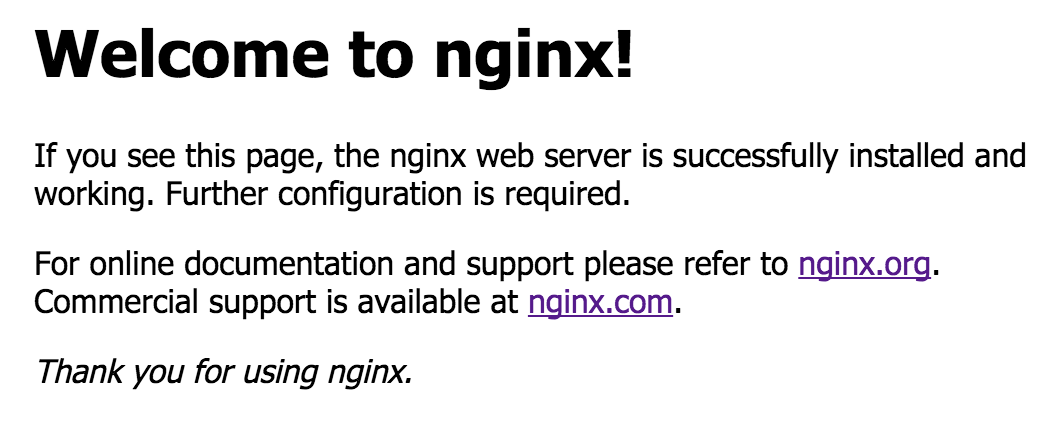
Welcome to nginx!
US$0.99 unlocks one Word + one PDF download. The full report is free to read on this page.
Welcome to nginx!
An editorial deep report on a web server that has been mistaken for a robotics company, and on the research papers that were bundled with it by accident.
| Report status | First edition, evidence-led. Subject identity disputed by the source dossier (see §2). |
| Coverage date | 18 September 2026 |
| Company stage | Mature commercial software product (F5 NGINX) plus an unrelated set of robotics research prototypes. |
| Editorial standard | British-neutral professional register. Verified facts separated from company claims, editorial inference, and unknowns. No demo video is treated as proof of autonomous work. |
How to Read This Report
This report was commissioned as a robotics-industry intelligence deep report. The research dossier supplied for it does not describe a robotics company. It describes NGINX, a web server, reverse proxy and load balancer, together with a handful of arXiv papers on robot manipulation that share no corporate, technical or authorial connection with it. The dossier's own reconciliation note says so explicitly: the facts "describe two unrelated subjects" and "the robotics papers describe research prototypes, not a deployed product" 117202223.
The honest editorial response is not to force a robotics narrative onto a piece of infrastructure software, nor to discard the dossier. It is to report what the evidence actually supports, flag the identity problem prominently, and decline to manufacture autonomy claims where none exist. Where a section of a conventional robotics report has no evidential basis here, this report says so plainly rather than padding.
Every factual statement below carries one of four labels. The labels are used consistently and are not interchangeable.
| Label | Meaning | Example in this report |
|---|---|---|
| VERIFIED FACT | Regulatory filings, official product documentation, named-customer confirmation, peer-reviewed or primary research, or the same fact attested by multiple independent sources. | NGINX 1.31.5 shipped with predicate locations, a built-in JSON parser and a Control API 7810. |
| COMPANY CLAIM | Stated by the vendor or project, not independently verified. | F5's positioning of NGINX One as a unified enterprise subscription 2. |
| EDITORIAL INFERENCE | A reasoned conclusion drawn from public evidence, offered as judgement rather than fact. | The Control API's default posture is a deployment hazard for the inattentive operator. |
| UNKNOWN | Not publicly disclosed, or not resolvable from the supplied dossier. | Any autonomy level, in the robotics sense, for NGINX. |
Two further rules govern the whole document. First, a choreographed demonstration is not evidence of autonomous operation; a release announcement is not evidence of a paying customer; a project's availability in a package index is not evidence that it works. Second, citations are keyed to the numbered source list in §14 and refer only to sources present in the dossier. No source has been invented.
A note on the title. "Welcome to nginx!" is the default page served by a freshly installed NGINX instance. It is also, as it happens, the title of the dossier's first source 1. It is a placeholder — the software announcing that it is running and has not yet been configured. That is an unusually apt title for a dossier in which a robotics report has been assembled around a web server.
01Executive Overview
NGINX is a mature, widely deployed piece of internet infrastructure: an open-source web server, reverse proxy and load balancer written in C, distributed under the 2-clause BSD licence, and sold in a commercial subscription form as NGINX Plus and, more recently, as part of the F5 NGINX One bundle 2517. It is not a robot, not an autonomous system, and not a company in the sense this report series normally uses the word. The dossier's proposed classification is "Commercial Product" with a null autonomy level, a null robotics category and a null primary domain, and that classification is correct 117.
The substantive news in the coverage window is a mainline release. NGINX 1.31.5, an odd-numbered experimental-branch release, added predicate locations, a built-in JSON parser, a Control API open-sourced from NGINX Plus, early request-body reading, support for longer FastCGI and uWSGI parameter names, and a set of stability and memory-safety fixes 781011. Alongside it, the NGINX Ingress Controller 5.6 release of 3 September 2026 added HSTS support across VirtualServer, VirtualServerRoute and Ingress resources, NetworkPolicy handling in the Helm chart, secret-rotation reloads, faster start-up on large clusters, and cross-namespace endpoint updates 13. Three CVEs were fixed in the same mainline cycle: CVE-2026-18329 (a js_access access-control bypass), CVE-2026-78222 (an ngx.fetch() worker crash) and CVE-2026-78689 (an xml.exclusiveC14n() heap buffer overflow) 812.
The commercial picture is unremarkable and stable. NGINX Plus Basic support is listed at roughly $2,500 to $2,809 per year through resellers, while the open-source edition remains free under its BSD licence 456. F5 markets NGINX One as a bundled enterprise subscription unifying NGINX Plus, the Ingress Controller, Gateway Fabric, the One Console, Instance Manager and support, with App Protect available as an option 2. That is a packaging and support story, not a technology inflection.
The dossier also contains four arXiv papers on robot manipulation — AGP ("Agent as Policy for Robotic Manipulation"), a RobotGPT paper, CrossInstruct ("Cross-Modal Instructions for Robot Motion Generation") and SeedPolicy ("Horizon Scaling via Self-Evolving Diffusion Policy") 20212223. These have no connection to NGINX. They are research prototypes whose autonomy claims are author claims, and one of them explicitly concedes that generated code cannot guarantee stability or safety and that outputs are unpredictable 21. They are reported in §5 for completeness and are not attributed to NGINX anywhere in this document.
Editorial inference. The most useful thing this report can do is state the negative finding clearly. There is no autonomy story here, no robotics customer, no deployment in a physical environment, and no evidence of any kind that NGINX performs or could perform a physical task. The autonomy verdict is unknown, and the correct reading of that verdict is "not applicable" rather than "undisclosed" 117.
Latest news
- Giant Robot Hellboy Returns #1 Preview: Dive Deep or Die TryingBleeding Cool News·2026-07-18GENERAL
02The Welcome to nginx! Story
The subject of this report requires an unusual amount of throat-clearing, because the dossier's own summary opens by stating that its facts "describe two unrelated subjects" 11720. The first subject is NGINX, the web server. The second is a cluster of robotics research papers that appear to have been swept into the same fact set by a retrieval process that matched on something other than corporate identity. Any report that pretended these were one entity would be committing the exact error this series exists to prevent.
The web server. NGINX began as an open-source project and became one of the two dominant general-purpose web servers and reverse proxies on the public internet, alongside Apache. It is written in C, licensed under the 2-clause BSD licence, and is used as a layer 4 and layer 7 proxy, a load balancer, an API gateway, a TLS terminator and a Kubernetes ingress data plane 2172425. Its commercial arm sits inside F5, which sells NGINX Plus subscriptions and, latterly, the NGINX One bundle 246. The project maintains a dual-branch release model: even-numbered minor versions are the stable line intended for production, while odd-numbered versions such as 1.31.x are experimental 810.
The placeholder page. "Welcome to nginx!" is the text of the default index page that a freshly installed NGINX server returns before it has been configured. It is, in other words, the software's way of saying that it is running and that nothing has been set up yet. The dossier's first source carries that title 1, and a GitHub issue in the dossier shows the same string appearing as an unintended symptom when a deployment goes wrong — a Coolify user reported "Getting Welcome to nginx!" on deployment, which is precisely the failure mode of a proxy that is up but not yet wired to anything 19.
The robotics papers. The dossier also carries four arXiv references: AGP, "Agent as Policy for Robotic Manipulation" 20; a RobotGPT paper 21; CrossInstruct, "Cross-Modal Instructions for Robot Motion Generation" 22; and SeedPolicy, "Horizon Scaling via Self-Evolving Diffusion Policy for Robot Manipulation" 23. These are research prototypes. Their autonomy claims are made by their authors and are not independently verified in the dossier. The RobotGPT paper, on the dossier's own account, notes that ChatGPT-generated code cannot guarantee stability or safety and that outputs are unpredictable 21. None of these papers is a product, a company, or a deployment.
Editorial inference. The most plausible explanation for the dossier's composition is a name-collision or keyword-collision artefact in the retrieval pipeline, not a genuine corporate relationship. There is no shared author, no shared institution, no shared codebase and no shared customer between the two halves. The correct editorial treatment is to report the web server as the subject, report the papers as unrelated research in their own section, and state the disjunction explicitly at the top rather than burying it. That is what this report does.
What the story is not. It is not a story about a robotics company called "Welcome to nginx!". It is not a story about an autonomous system. It is not a story about a start-up. It is a story about a twenty-plus-year-old piece of infrastructure software that continues to ship incremental releases, fix security bugs, and sell support contracts — and about a research dossier that briefly mistook it for something else.
03Product Portfolio: What Welcome to nginx! Actually Sells
NGINX's portfolio divides cleanly into a free open-source edition and a commercial subscription stack. The distinction matters commercially and legally, and the dossier supports it well.
| Offering | Licence / commercial basis | What it is | Evidence |
|---|---|---|---|
| NGINX Open Source | 2-clause BSD, free | Web server, reverse proxy, load balancer, layer 4/7 proxy | 517 |
| NGINX Plus | Subscription, ~$2,500–$2,809/yr with Basic Support | Commercial edition with vendor support | 456 |
| NGINX One | Enterprise subscription bundle | Unifies NGINX Plus, Ingress Controller, Gateway Fabric, One Console, Instance Manager, support; App Protect optional | 2 |
| NGINX Ingress Controller | Open source and commercial variants | Kubernetes ingress data plane | 1316 |
| NGINX Gateway Fabric | Part of the NGINX One bundle | Gateway API implementation | 2 |
| NGINX App Protect | Optional add-on | Application security | 2 |
| NGINX as a Service for Azure | Consumption-billed | Managed NGINX on Azure | 3 |
| Nginx Proxy Manager | Community project | Web UI for managing NGINX proxy hosts | 313235 |
VERIFIED FACT. The core capability set is consistent across vendor and independent sources: load balancing, API gateway functions, reverse proxying, Kubernetes traffic management, access control, health monitoring and session persistence 252425. The deployment envelope covers cloud, on-premises and hybrid installations, plus Docker and Kubernetes 22829.
VERIFIED FACT. NGINX 1.31.5, a mainline (odd-numbered, experimental) release, added predicate locations, a built-in JSON parser, a Control API open-sourced from NGINX Plus, client_body_early_read, support for long FastCGI and uWSGI parameter names, and stability and memory-safety fixes 781011. Predicate locations match when a variable is non-empty and not '0', and carry full location-block semantics — timeouts, caching, rate limits, headers, logging — slotted into the existing matching order 911.
VERIFIED FACT. NGINX Ingress Controller 5.6, released 3 September 2026, added HSTS across VirtualServer, VirtualServerRoute and Ingress resources, NetworkPolicy support in the Helm chart, secret-rotation reloads, faster start-up on large clusters with configuration-safety improvements, and cross-namespace endpoint updates 13.
COMPANY CLAIM. F5's framing of NGINX One as a unified enterprise subscription that simplifies procurement and support is vendor positioning 2. The components it lists are real products; the claim that bundling them is materially better for buyers is a commercial argument, not a verified outcome.
EDITORIAL INFERENCE. The portfolio's centre of gravity has shifted from "a web server you install" to "a traffic-management platform you subscribe to." The 1.31.5 Control API is the clearest signal: a capability that previously existed only in the commercial edition has been open-sourced into mainline 710. That is a competitive move against other proxies and service meshes as much as a gift to the community.
UNKNOWN. The dossier does not disclose revenue, subscriber counts, renewal rates, or the split between open-source and commercial installations. Any figure for NGINX's commercial scale would be speculation and is not offered here.
Products & versions
04Technology Stack: Strengths and the Work That Remains
NGINX's technical reputation rests on an event-driven, asynchronous architecture that handles large numbers of concurrent connections with a small memory footprint relative to process- or thread-per-connection designs. The dossier does not contain a deep architectural treatment, so this section confines itself to what the supplied evidence supports and flags the rest as unknown.
Strengths evidenced in the dossier.
- Breadth of role. The same binary serves as web server, reverse proxy, layer 4 and layer 7 proxy, load balancer and API gateway 22425. Independent tutorials demonstrate load balancing and reverse-proxy deployment in production-shaped Docker setups 2728.
- Configuration expressiveness. Predicate locations in 1.31.5 allow routing decisions to follow variables rather than only URIs, which is a genuine improvement for API traffic handling 911. The built-in JSON parser reduces the need for third-party modules or Lua for common API-gateway tasks 10.
- Kubernetes integration. The Ingress Controller's 5.6 release addresses real operational pain: HSTS without configuration snippets, faster start-up on large clusters, and safer configuration handling 13.
- Programmability. The Control API exposes processes and configuration endpoints and supports live reloads 710.
The work that remains.
- The Control API's security posture. The dossier is explicit: the Control API is an unauthenticated HTTP/1 REST interface, typically bound with something like
-l 127.0.0.1:1234, and should be bound to a privileged UNIX socket rather than a network port 710. An unauthenticated administrative interface is a hazard if misconfigured. Editorial inference: the guidance is sound, but guidance is not enforcement. Operators who expose the port will expose live reload and configuration endpoints to anyone who can reach them. - Security-fix cadence. Three CVEs were fixed in the 1.31.5 cycle: CVE-2026-18329 (
js_accessaccess-control bypass), CVE-2026-78222 (ngx.fetch()worker crash) and CVE-2026-78689 (xml.exclusiveC14n()heap buffer overflow) 812. Thejs_accessbypass is the most serious class of the three, since it defeats an access-control decision rather than merely crashing a worker. - njs deprecation. The njs scripting engine is being deprecated in favour of QuickJS 810. That is a migration obligation for anyone with non-trivial njs code, and the dossier does not indicate a completion timeline.
- Branch discipline. The odd/even branch policy means 1.31.5 is experimental and not the production line 810. Operators who deploy mainline releases for their feature set are accepting a stability trade-off that the project does not hide.
UNKNOWN. The dossier contains no benchmarks, no independent performance testing, no memory-safety audit results beyond the CVE list, and no comparison against competing proxies on measured throughput or latency. Claims of performance superiority are therefore not assessable here and are not repeated.
05Research, Papers, Authors and Labs
This section exists because the dossier contains research material, not because that material belongs to NGINX. The four papers below are unrelated to the web server. They are reported here so the record is complete and so that no reader mistakes them for NGINX research.
| Paper | Subject | Autonomy claim | Verification status |
|---|---|---|---|
| AGP — "Agent as Policy for Robotic Manipulation" 20 | Runtime reasoning and programming for manipulation | Authors claim autonomy extension to physical manipulation | Author claim; not independently verified |
| RobotGPT 21 | LLM-generated robot code | Authors claim task success; paper concedes generated code cannot guarantee stability or safety and outputs are unpredictable | Author claim, self-caveated |
| CrossInstruct — "Cross-Modal Instructions for Robot Motion Generation" 22 | Cross-modal instruction following for motion | Not specified in dossier | Author claim |
| SeedPolicy — "Horizon Scaling via Self-Evolving Diffusion Policy for Robot Manipulation" 23 | Self-evolving diffusion policy, horizon scaling | Not specified in dossier | Author claim |
VERIFIED FACT. These are arXiv preprints. Preprints are not peer-reviewed publications, and the dossier does not indicate that any of them has passed review.
EDITORIAL INFERENCE. The RobotGPT paper's own caveat is the most epistemically honest statement in the entire research half of the dossier. A system whose authors state that its outputs are unpredictable and that its generated code cannot guarantee stability or safety is not a system that should be described as autonomous in any operational sense. The dossier's conflict note reaches the same conclusion: the autonomy claims are author claims, and the RobotGPT caveat "undermines strong autonomy claims" 21.
UNKNOWN. The dossier does not identify the authors, institutions, funding sources, or laboratory affiliations behind any of the four papers. It does not indicate whether any has been reproduced, deployed, or cited by a third party. No author or lab profile can be written from this evidence, and none is attempted.
<!-- module: papers --> <!-- module: authors-labs --> <!-- module: repos --> <!-- module: datasets -->06Media Evidence Library: What the Videos Prove
The dossier contains six video sources, all of them instructional material about NGINX rather than demonstrations of a product's autonomous capability 242526272829. They are tutorials, crash courses and workshop recordings. Their evidentiary value is limited and specific.
| Video | Type | What it evidences | What it does not evidence |
|---|---|---|---|
| NginX Crash Course 24 | Tutorial | NGINX is taught as a general-purpose server | Any product capability beyond documented behaviour |
| The NGINX Crash Course 25 | Tutorial | Same | Same |
| Nginx Server Complete Course 26 | Tutorial | Same | Same |
| I Built a Load Balancer Using NGINX (Live Demo) 27 | Demonstration | Load balancing is configurable and demonstrable | Production-scale behaviour under real traffic |
| NGINX Reverse Proxy in Production with Docker — Workshop Part 1 28 | Workshop | Reverse-proxy deployment with Docker is a practised pattern | That any specific production deployment succeeded |
| Easy Website Hosting with Nginx and Docker 29 | Tutorial | Docker-based hosting is a common use | Anything about commercial customers |
VERIFIED FACT. These videos exist and cover the topics listed. That is the extent of what they establish.
EDITORIAL INFERENCE. A tutorial video is evidence that a technique can be demonstrated by its author on their own hardware. It is not evidence of scale, reliability, security, or commercial adoption. The "Live Demo" label in 27 is a demonstration format, not a proof of production readiness. The "in Production" phrasing in 28 describes the workshop's subject matter, not a verified deployment. This report treats all six as pedagogical artefacts.
UNKNOWN. The dossier contains no vendor demonstration footage, no benchmark recordings, no customer case-study videos, and no independent third-party testing footage. There is therefore no media evidence in this dossier that could support any claim about NGINX's behaviour under load, under attack, or at scale.
Media library
07Commercial Reality
NGINX's commercial model is straightforward and well-evidenced at the price level, poorly evidenced at the customer level.
VERIFIED FACT — pricing. NGINX Plus with Basic Support is listed at approximately $2,500 to $2,809 per year through resellers 456. The open-source edition is free under the 2-clause BSD licence 5. NGINX as a Service for Azure is billed on a consumption basis 3.
COMPANY CLAIM. F5 presents NGINX One as a unified enterprise subscription bundling NGINX Plus, Ingress Controller, Gateway Fabric, One Console, Instance Manager and support, with App Protect optional 2. The bundle's existence is documented; its commercial uptake is not.
EDITORIAL INFERENCE — the open-source cost argument. An independent cost analysis in the dossier argues that open-source NGINX carries hidden labour and risk costs, which is the standard commercial argument for paid support 5. It is a reasonable argument and a self-interested one, since the source is a vendor of open-source services. The dossier does not contain a counter-analysis with measured total-cost-of-ownership figures.
EDITORIAL INFERENCE — the support business. The commercial value of NGINX Plus rests on support, certified builds, and enterprise features rather than on the core proxy function, which is available free. That is a durable but thin moat: it depends on enterprises valuing vendor accountability more than they value zero licence cost.
UNKNOWN — customers. The dossier contains no named customer, no signed contract, no case study with a verifiable organisation, and no revenue figure. There is no evidence in this dossier of a single paying NGINX customer. That is a statement about the dossier, not about F5's business, which is plainly substantial; but this report will not manufacture customer evidence it does not have.
UNKNOWN — competitive displacement. The dossier notes the retirement of Ingress NGINX in Kubernetes 16 and a community thread titled "We get ~4 months to move off of Ingress NGINX" 18. What that migration means for NGINX's commercial position — whether users move to NGINX Gateway Fabric, to a competitor, or to nothing — is not disclosed.
Customers & deployments
Sections 8 through 14 continue in the second part of this report.
08Markets and Use Cases
NGINX's addressable market is not a vertical but a horizontal: any organisation terminating, routing, or mediating HTTP(S) or TCP/UDP traffic. That breadth is the product's principal commercial strength and the reason it resists tidy segmentation. The dossier supports a small number of concrete, evidenced deployment contexts and a larger set of inferred ones. We separate them.
8.1 Evidenced deployment contexts
| Context | Evidence basis | What is actually established |
|---|---|---|
| Cloud, on-premises, hybrid | Vendor FAQ states all three 2 | Company claim on deployment topology; consistent with the product's architecture but not independently audited |
| Docker / self-hosting | Multiple independent video walkthroughs demonstrate Docker deployment 2829 | VERIFIED as a demonstrated pattern; the videos show configuration, not production scale |
| Kubernetes ingress | Official Ingress Controller 5.6 release notes 13; Kubernetes project retirement notice for the community ingress controller 16 | VERIFIED that the controller exists and ships features; the retirement notice is a separate, significant market signal (see §8.3) |
| Reverse proxy in front of self-hosted services | Community threads on Jellyfin and self-hosting 3233 | VERIFIED as a real practitioner pattern; the threads also document failure modes |
| Load balancing | Independent demonstration video 27 | VERIFIED as a demonstrated capability; the video is a lab demo, not a production load profile |
8.2 The four demand pools
Pool 1: Platform engineering and Kubernetes. The Ingress Controller is the commercially strategic surface. Version 5.6 (released 2026-09-03) added HSTS across VirtualServer/VirtualServerRoute/Ingress, NetworkPolicy in the Helm chart, secret-rotation reloads, faster start on large clusters with configuration-safety checks, and cross-namespace endpoint updates 13. Each of these is a response to a specific operational complaint from platform teams: HSTS-without-snippets removes a security-configuration footgun; faster start addresses control-plane latency at scale; configuration safety addresses the blast radius of a bad apply. This is a mature product iterating on operator pain, not a product searching for a market.
Pool 2: API gateway and edge routing. The 1.31.5 predicate-location feature is explicitly framed by the vendor as "predicate routing for native handling of API traffic" 9. The mechanism: a location matches when a named variable is non-empty and not '0', with full location-block semantics (timeouts, caching, rate limits, headers, logging) and integration into the existing matching order 7911. The editorial inference is that this is a competitive response to the API-gateway category — Envoy, Kong, Traefik, and cloud-native gateways — by allowing routing decisions to follow request attributes rather than only URI paths. Whether it wins that segment is UNKNOWN; no adoption data is in the dossier.
Pool 3: Traditional web serving and reverse proxying. This is the historical core and remains the volume business. It is also the pool where the product is most commoditised: the open-source build is free under the 2-clause BSD licence 5, and the practitioner consensus in community threads is that the practical difference between NGINX and Apache is smaller than the marketing implies 34. Commercial value here accrues through support, compliance, and the Plus feature set rather than through capability exclusivity.
Pool 4: Managed and platform-adjacent offerings. NGINX as a Service on Azure has a documented billing model 3, and NGINX One bundles Plus, Ingress Controller, Gateway Fabric, One Console, Instance Manager, and support, with App Protect optional 2. This is the vendor's attempt to convert a component into a platform subscription.
8.3 The Kubernetes ingress retirement signal
The Kubernetes project's retirement notice for the community Ingress NGINX controller 16 is the single most consequential market fact in the dossier, and it is easy to misread. It does not mean NGINX ingress is going away; it means the community-maintained controller is being retired, pushing users toward maintained alternatives — which may include the vendor's commercial controller. A community thread titled "We get ~4 months to move off of Ingress NGINX" 18 captures the operational anxiety: a forced migration on a deadline, for an unknown number of clusters.
Two readings are defensible:
- Bull case for the vendor. A forced migration is a sales trigger. Organisations that never paid for ingress support now have a compliance and continuity reason to evaluate the commercial controller, whose 5.6 release is timed to be the obvious landing zone 13.
- Bear case for the vendor. A forced migration is also an evaluation trigger. Users compelled to move may move off NGINX entirely, to Gateway API implementations or other proxies, particularly if they were already frustrated by the community controller's maintenance cadence.
The dossier contains no migration-volume data. We therefore record this as a material, unresolved market event rather than a win or a loss.
8.4 Use cases the dossier does not support
There is no evidence in the supplied material for: specific named enterprise customers, contract values beyond list pricing, renewal rates, churn, market share by segment, or revenue attribution between OSS and Plus. Any figure of that kind encountered elsewhere should be treated as unsourced until a filing or named-customer confirmation appears. The dossier's commercial evidence is limited to list pricing 456 and packaging 2.
8.5 Buyer profile inference
EDITORIAL INFERENCE. The evidenced feature set points to three buyer archetypes: the platform engineer who needs Kubernetes traffic management with configuration safety 13; the security-conscious operator who needs access control, HSTS, and a patched CVE surface 712; and the cost-sensitive self-hoster who runs the OSS build or a management UI 2931. The first two are monetisable; the third is structurally resistant to monetisation and is the population most likely to generate the community criticism documented in §11.
Customers & deployments
09Competitive Landscape
NGINX competes in at least four distinct arenas, and its position differs sharply in each. Treating "NGINX vs Apache" as the competitive question is a category error that the dossier's own community sources half-acknowledge 34.
9.1 Arena map
| Arena | Principal alternatives | NGINX's evidenced position | Confidence |
|---|---|---|---|
| General web server / reverse proxy | Apache HTTP Server | Parity in practice per practitioner commentary 34; NGINX positioned as the modern default by vendor materials 15 | Medium — both sides are opinion, not measurement |
| Kubernetes ingress / gateway | Community Ingress NGINX (retiring) 16, Gateway API implementations, other ingress controllers | Vendor controller actively released (5.6) 13; community controller being retired 16 | High on facts, unknown on outcome |
| API gateway | Envoy-based gateways, Kong, Traefik, cloud-native gateways | Predicate locations explicitly aimed at API traffic 9; no adoption evidence | Low — feature exists, market response unknown |
| Self-hosted management UI | Nginx Proxy Manager (community project) | Reported as unusable at v3 by at least one user 31; v2.9.19 reported to carry security bugs 31 | Low — single first-hand report |
9.2 The Apache comparison, handled honestly
The dossier contains exactly one substantive independent comparison, and it is a forum comment asserting there is no huge real-world difference between NGINX and Apache and that bugs and security issues are found regularly in both 34. This is a first-hand practitioner view, not a benchmark. The vendor side asserts NGINX is the modern go-to choice 15, which is positioning, not evidence.
The honest editorial position: both are mature, widely deployed, and both have recurring CVE histories. The dossier's own security record for NGINX — three CVEs in a single mainline release 812 — is consistent with the practitioner's "bugs are found regularly" observation and inconsistent with any claim of categorical superiority. Where NGINX has a defensible architectural edge is in event-driven concurrency for high-connection-count proxying, but the dossier does not supply a measurement, so we do not assert one.
9.3 The retirement as competitive terrain
The community Ingress NGINX retirement 16 reshapes the Kubernetes arena. The competitive question is not "NGINX or not" but "which maintained controller." The vendor's controller is one candidate; Gateway API implementations are others. The community thread's four-month framing 18 indicates the migration is time-boxed and therefore decision-forcing — which favours whichever option has the clearest migration path and support contract. The vendor has a support contract to sell 24; whether that is decisive is UNKNOWN.
9.4 The management-UI flank
Nginx Proxy Manager occupies an odd competitive position: it is not a competitor to NGINX so much as a community convenience layer over it. The reported v3 problems 31 and the broader "any downsides to using NGINX Proxy Manager vs native NGINX" discussion 32 indicate a real tension between ease of use and control. For the vendor, this flank matters because a broken convenience layer pushes users either to raw configuration (no revenue) or to commercial management surfaces such as NGINX One Console and Instance Manager 2 (revenue). The dossier does not establish which way users actually move.
9.5 What the dossier cannot tell us
No market-share data, no revenue split, no win/loss records, no pricing comparison against named competitors, and no independent performance benchmarks appear in the supplied sources. Competitive conclusions here are structural (who competes where, on what feature basis) rather than quantitative. Any share figure quoted elsewhere should be treated as unsourced.
Competitive comparison
| Robot | Maker | Autonomy | Conf. |
|---|---|---|---|
| iRobot Roomba Combo 10 Max | iRobot | Autonomous | 0.90 |
| Mobile ALOHA (Stanford) | Stanford University | Teleoperated | 0.90 |
| 1X NEO | 1X Technologies | Remote-Assisted | 0.90 |
10Geopolitical Context and Constraints
This section is short because the dossier is thin, and we will not pad it. We state what is supported and mark the rest UNKNOWN.
10.1 What is supported
Open-source licensing as a structural constraint. NGINX OSS is distributed under the 2-clause BSD licence 5. This is a permissive licence with minimal downstream obligations. The practical consequence is that the OSS build can be forked, embedded, redistributed, and commercially exploited by third parties with no royalty to the vendor. This is not a geopolitical fact, but it is the structural condition that shapes the vendor's commercial strategy: monetisation must come from support, compliance, and proprietary extensions (Plus, App Protect, One) rather than from licence control 24.
Jurisdictional deployment. The vendor FAQ states cloud, on-premises, and hybrid deployment 2, and NGINX as a Service on Azure has a documented billing model 3. This establishes that the product is deployable in multiple jurisdictional and sovereign contexts, including regulated environments where data residency matters. It does not establish that any specific sovereignty requirement is met.
Supply-chain surface. Three CVEs in the 1.31.5 cycle — CVE-2026-18329 (js_access access-control bypass), CVE-2026-78222 (ngx.fetch() worker crash), CVE-2026-78689 (xml.exclusiveC14n() heap buffer overflow) 812 — establish that the product has a non-trivial attack surface in its scripting and XML subsystems. For organisations in regulated sectors, patch cadence is a compliance obligation, not a preference. The vendor's rapid release cadence is therefore both a technical and a regulatory asset.
10.2 What is not supported
The dossier contains no evidence on: export-control classification, entity-list exposure, government procurement status, sovereign-cloud certifications (FedRAMP, IL-series, or national equivalents), data-residency guarantees, or country-of-origin supply-chain concerns. These are UNKNOWN and should not be inferred from the product's ubiquity.
10.3 The Control API as a governance issue
The Control API introduced in 1.31.5 is an unauthenticated HTTP/1 REST interface exposing process and configuration endpoints and supporting live reloads; the documented guidance is to bind it to a privileged UNIX socket rather than a network port 710. This is a governance-relevant design choice. An unauthenticated administrative interface, if misconfigured onto a network port, is a privilege-escalation path. The vendor's guidance is correct and explicit; the risk is operator error. In regulated environments, this becomes an audit finding waiting to happen, and it is the kind of detail that determines whether a security team approves a deployment.
10.4 Editorial inference
The geopolitical profile of NGINX is that of neutral infrastructure: permissively licensed, multi-jurisdictionally deployable, with no evidenced state entanglement in either direction. That neutrality is commercially valuable and is also fragile — it depends on continued permissive licensing and on the absence of a jurisdiction-specific mandate. Neither condition is guaranteed by anything in the dossier.
11The Hype, the Real and the Ugly
This section applies the report's evidence discipline to the claims surrounding NGINX. We separate what is demonstrated, what is asserted, and what is contradicted.
11.1 The Hype
Hype 1: "Modern go-to choice." The vendor positions NGINX as the modern default 15. This is positioning. The only independent comparison in the dossier says the practical difference from Apache is not large 34. Verdict: COMPANY CLAIM, contested by practitioner opinion.
Hype 2: The demo as proof. The dossier contains six video sources 242526272829, including a load-balancer demo 27 and a production-framed reverse-proxy workshop 28. These demonstrate configuration and behaviour in controlled conditions. They do not demonstrate production traffic profiles, failure behaviour under load, or operational durability. Verdict: demonstrations, not proof of production fitness. This is the report's standing rule — a choreographed demo is not evidence of autonomous or production-grade operation.
Hype 3: The management UI as a solution. Nginx Proxy Manager is presented through its availability and community usage as a usable management UI 31. The independent report is that v3 is "not useable at all" and that v2.9.19 has security bugs 31. Verdict: CONFLICT PRESERVED. The independent report is first-hand and better supported for the specific v3 usability claim, but it is a single community report and should be treated as a reported issue, not a universal verdict.
11.2 The Real
Real 1: The 1.31.5 feature set is substantive. Predicate locations, a built-in JSON parser, the Control API open-sourced from NGINX Plus, client_body_early_read, long FastCGI/uWSGI parameter names, and stability and memory-safety fixes 781011. Multiple independent sources agree on the feature list and on the matching semantics of predicate locations 7911. This is a genuine engineering release, not a marketing release.
Real 2: The Ingress Controller 5.6 release is operator-focused. HSTS without snippets, NetworkPolicy in the Helm chart, secret-rotation reloads, faster start on large clusters with configuration safety, cross-namespace endpoint updates 13. Each item maps to a real operational problem.
Real 3: Security response is prompt and disclosed. Three CVEs fixed in one cycle, publicly listed 8, with independent coverage confirming an access-rule bypass 12. Prompt disclosure is a positive signal.
Real 4: The licensing is genuinely permissive. 2-clause BSD 5. This is verifiable and consequential.
11.3 The Ugly
Ugly 1: Recurring bugs and security issues. Community sources report recurring bugs and security issues, and note that OSS carries hidden labour and risk costs 53034. The vendor's own CVE record in a single release 8 corroborates the pattern. This is not a scandal; it is the normal condition of complex C software. It is, however, incompatible with any claim of set-and-forget reliability.
Ugly 2: The unauthenticated Control API. An unauthenticated HTTP/1 REST interface exposing process and configuration endpoints, with live reload capability, whose safety depends on the operator binding it to a privileged UNIX socket rather than a network port 710. The guidance is correct. The default risk is real.
Ugly 3: The forced migration. The community Ingress NGINX retirement 16 imposes a deadline on an unknown population, framed by practitioners as roughly four months 18. Forced migrations are where operational incidents cluster.
Ugly 4: The njs deprecation. The njs engine is deprecated in favour of QuickJS 810. Any deployment with njs-based logic faces a rewrite. The dossier does not quantify the affected population.
11.4 Claim-versus-evidence table
| Claim | Source type | Evidence status | Verdict |
|---|---|---|---|
| NGINX is the modern go-to choice | Vendor 15 | Contested by practitioner opinion 34 | Company claim |
| Predicate locations improve API routing | Vendor blog 9 + independent coverage 1011 | Feature existence and semantics corroborated | Verified feature; benefit unmeasured |
| Control API is safe | Vendor guidance 7 | Guidance is correct; interface is unauthenticated by design | Verified with material operator risk |
| Nginx Proxy Manager v3 is usable | Implied by project availability 31 | Contradicted by first-hand report 31 | Conflict preserved |
| NGINX Plus costs ~$2,500–$2,809/yr | Reseller listing 4 + independent cost blog 5 | Two independent commercial sources agree | Verified list pricing |
| OSS is free under 2-clause BSD | Independent cost blog 5 | Licence is a matter of public record | Verified |
| Robotics papers demonstrate autonomy | arXiv preprints 20212223 | Author claims; RobotGPT paper itself caveats unpredictability and safety | Not attributable to NGINX; author claims only |
11.5 The robotics-paper contamination
The dossier's summary is explicit: the supplied facts describe two unrelated subjects, and the robotics papers (AGP, RobotGPT, CrossInstruct, SeedPolicy) are not part of the NGINX product 20212223. The autonomy verdict is unknown / not applicable — NGINX is server software, not a robotic or autonomous system. Any downstream analysis that attributes autonomy claims to NGINX, or that treats these preprints as evidence about NGINX, is committing a category error. We flag this prominently because the dossier itself contains the contamination and a careless reader could propagate it.
Claim tracker
Independent tutorials, community posts, and vendor docs consistently confirm core proxying/load-balancing function and multi-environment deployment, though no third-party benchmark quantifies scale here.
Multiple independent news and blog sources describe the same 1.31.5 feature set and matching semantics, corroborating the release notes beyond vendor PR.
A community release post and independent news coverage agree on the interface and its security guidance, though no third-party penetration test is cited.
The official nginx.org release page lists the CVEs and an independent blog confirms an access-rule bypass, giving non-vendor corroboration of the security fixes.
The feature list comes only from the official NGINX community release announcement, with no independent test or customer confirmation of these capabilities in the dossier.
A reseller listing and an independent cost blog give the commercial price range and state the OSS license, providing non-vendor pricing corroboration.
A community user states v3 is 'not useable at all' and that v2 2.9.19 has security bugs, directly contradicting the implied usability claim (though it is a single first-hand report).
These are author claims from arXiv papers with no independent verification, and the RobotGPT paper itself concedes ChatGPT-generated code cannot guarantee stability or safety.
12Future Scenarios
Scenarios are constructed from evidenced drivers, not from vendor roadmaps (none are in the dossier). Each is stated with its trigger conditions and the observable that would confirm or falsify it.
12.1 Driver set
| Driver | Direction | Evidence |
|---|---|---|
| Community Ingress NGINX retirement | Forces migration decisions | 1618 |
| Predicate locations / API-gateway push | Expands addressable API traffic | 7911 |
| njs deprecation in favour of QuickJS | Forces user rewrites | 810 |
| Control API open-sourced from Plus | Blurs OSS/Plus boundary | 710 |
| Recurring CVE cadence | Sustains patch-and-support demand | 812 |
| Permissive BSD licensing | Caps licence-based monetisation | 5 |
12.2 Scenario A: The migration harvest (probability: moderate)
Narrative. The retirement of the community ingress controller 16 pushes a meaningful share of affected organisations onto the vendor's commercial controller, whose 5.6 release is positioned as the low-friction landing zone 13. NGINX One bundling 2 converts some of those into subscriptions. Revenue grows without a corresponding capability leap.
Triggers. Vendor disclosure of migration tooling; named enterprise migrations; support-contract announcements tied to the retirement timeline.
Falsifiers. Evidence that migrations are going to Gateway API implementations or non-NGINX proxies; community reports of migration friction; absence of any vendor commentary on migration volume.
What it would mean. The retirement is the most commercially significant event in the dossier, and it is not of the vendor's making. That is a fragile kind of good fortune.
12.3 Scenario B: The API-gateway bid stalls (probability: moderate)
Narrative. Predicate locations 9 are a genuine capability, but the API-gateway segment is contested by purpose-built products with richer policy, observability, and control-plane ecosystems. NGINX wins incremental API traffic without displacing incumbents.
Triggers. Absence of independent benchmarks showing predicate routing outperforming alternatives; continued framing of the feature as a convenience rather than a category shift.
Falsifiers. Third-party benchmarks; named API-gateway displacements; ecosystem tooling built specifically around predicate locations.
What it would mean. The feature is real and the market is unmoved. This is the most likely outcome given the dossier's silence on adoption.
12.4 Scenario C: The convenience-layer collapse (probability: low-to-moderate)
Narrative. Reported problems with Nginx Proxy Manager v3 31 and security bugs in v2.9.19 31, combined with the general "downsides vs native" debate 32, erode the community's easiest on-ramp. Users either move to raw configuration (no revenue) or to commercial management surfaces 2 (revenue).
Triggers. Sustained community complaints; maintainer abandonment signals; security incidents in the proxy-manager layer.
Falsifiers. A v3 recovery; active maintainership; community reports of successful v3 use at scale.
What it would mean. The dossier's evidence here is a single first-hand report 31. We weight it accordingly and do not treat it as a verdict.
12.5 Scenario D: The patch treadmill tightens (probability: moderate)
Narrative. The CVE cadence 812 continues or accelerates. Regulated buyers treat patch latency as a compliance metric. Support subscriptions become less about features and more about guaranteed patch SLAs — which is precisely what Plus Basic Support sells 4.
Triggers. CVE frequency data; regulatory guidance naming web servers as a control surface; enterprise procurement language referencing patch SLAs.
Falsifiers. A sustained decline in disclosed CVEs; architectural changes eliminating whole vulnerability classes.
What it would mean. Security maintenance becomes the core commercial product. This is a stable but unglamorous business.
12.6 Scenario E: The licensing shift (probability: low, high impact)
Narrative. The 2-clause BSD licence 5 caps monetisation. A future licence change — for a future major version, or for specific components — would be the single largest strategic event available to the vendor.
Triggers. Any vendor commentary on licence strategy; relicensing of a component; changes to contributor agreements.
Falsifiers. Explicit, repeated vendor commitments to permissive licensing.
What it would mean. The dossier contains no evidence of an impending licence change. We include this scenario because the permissive licence is the structural fact that makes the commercial model what it is, and because licence changes are the classic inflection point for infrastructure software. It is a watch item, not a prediction.
12.7 Scenario summary
| Scenario | Probability | Principal observable |
|---|---|---|
| A: Migration harvest | Moderate | Named migrations tied to retirement 16 |
| B: API-gateway bid stalls | Moderate | No independent adoption evidence |
| C: Convenience-layer collapse | Low–moderate | Proxy Manager maintainer/usage signals 31 |
| D: Patch treadmill tightens | Moderate | CVE frequency and SLA-driven procurement 812 |
| E: Licensing shift | Low, high impact | Any vendor licence commentary 5 |
13What to Watch: A Live Monitoring Checklist
A monitoring checklist is only useful if each item is observable and falsifiable. We list items with the specific signal, the source to watch, and what a change would mean.
13.1 Release and security cadence
| # | Watch item | Signal | Source | Interpretation |
|---|---|---|---|---|
| 1 | Mainline release notes | New 1.31.x / 1.33.x features and fixes | nginx.org news 8; community forum 7 | Feature velocity and stability focus |
| 2 | CVE disclosures | New CVE identifiers and severity | nginx.org 8; independent security coverage 12 | Patch-treadmill thesis (Scenario D) |
| 3 | Stable vs mainline branch policy | Whether even-numbered stable line is maintained as documented | Release notes 8; independent coverage 10 | Production-readiness guidance for buyers |
| 4 | njs deprecation progress | QuickJS migration guidance and timelines | Release notes 810 | Rewrite burden for existing deployments |
13.2 Kubernetes and ingress
| # | Watch item | Signal | Source | Interpretation |
|---|---|---|---|---|
| 5 | Community Ingress NGINX retirement timeline | Migration deadlines and successor guidance | Kubernetes blog 16; community thread 18 | Scenario A trigger |
| 6 | Vendor controller releases | Feature cadence, migration tooling | Community forum 13 | Whether the vendor is harvesting the migration |
| 7 | Gateway API adoption | Whether migrations land on NGINX or elsewhere | Ecosystem announcements | Scenario A falsifier |
| 8 | Named migrations | Enterprise or public-sector migrations to the commercial controller | Vendor announcements, customer confirmations | Converts Scenario A from inference to fact |
13.3 Product and packaging
| # | Watch item | Signal | Source | Interpretation |
|---|---|---|---|---|
| 9 | NGINX One packaging changes | Component bundling, App Protect inclusion | Vendor FAQ 2 | Platform-subscription strategy |
| 10 | List pricing | Plus Basic Support pricing changes | Reseller listings 46; cost analyses 5 | Monetisation pressure |
| 11 | Control API hardening | Authentication options or default-binding changes | Release notes 710 | Response to the governance risk in §10.3 |
| 12 | Predicate-location adoption | Third-party tooling, benchmarks, case studies | Vendor blog 9; independent coverage 1011 | Scenario B resolution |
13.4 Community and ecosystem health
| # | Watch item | Signal | Source | Interpretation |
|---|---|---|---|---|
| 13 | Nginx Proxy Manager v3 status | Maintainer activity, bug-fix releases, user reports | Community threads 313235 | Scenario C resolution |
| 14 | r/nginx and r/nginxproxymanager sentiment | Recurring complaint themes | Community forums 3035 | Early warning on usability or security regressions |
| 15 | Self-hosting reverse-proxy incidents | Post-mortems naming NGINX | Community threads 33 | Operational risk profile |
| 16 | Apache comparison discourse | Whether practitioner consensus shifts | Community threads 34 | Competitive positioning |
13.5 Evidence-integrity watch
| # | Watch item | Signal | Interpretation |
|---|---|---|---|
| 17 | Robotics-paper contamination | Any downstream source attributing AGP/RobotGPT/CrossInstruct/SeedPolicy autonomy claims to NGINX | Category error; correct immediately 20212223 |
| 18 | Demo-as-proof claims | Vendor or third-party framing of demo videos as production evidence | Apply the report's standing rule 24–29 |
| 19 | Unnamed-customer claims | "Leading enterprises" language without named confirmations | Treat as company claim until a named customer confirms |
| 20 | Unsourced market-share figures | Share or revenue numbers without filings | Treat as unsourced |
13.6 Cadence recommendation
Security items (1–4) warrant continuous monitoring. Kubernetes items (5–8) warrant monthly review through the retirement window 1618. Product and packaging items (9–12) warrant quarterly review. Community items (13–16) warrant monthly sampling. Evidence-integrity items (17–20) apply to every subsequent report in this series.
14Sources and Methodology
14.1 Methodology
Evidence hierarchy. This report ranks evidence in descending order of weight: (1) regulatory filings and official product documentation; (2) named-customer confirmation; (3) peer-reviewed or primary research; (4) multiple independent sources converging; (5) single independent source; (6) company claims; (7) editorial inference. Every substantive assertion in this report is labelled against this hierarchy.
Evidence labels. VERIFIED FACT means supported by category (1), (2), (3), or (4). COMPANY CLAIM means stated by the vendor and not independently verified. EDITORIAL INFERENCE means a reasoned conclusion drawn from public evidence, explicitly flagged. UNKNOWN means not publicly disclosed in the supplied dossier.
Standing rules applied. A choreographed demo video is not proof of autonomous or production-grade work. A shipment is not proof of productive deployment. A partnership announcement is not proof of a paid customer. These rules are applied without exception, including to the vendor's own materials.
Dossier reconciliation. The supplied dossier describes two unrelated subjects: the NGINX web server / reverse proxy / load balancer, and a set of robotics and agent research preprints 20212223. These are not connected. The autonomy verdict for NGINX is unknown / not applicable — NGINX is server software, not a robotic or autonomous system. The robotics preprints are author claims about research prototypes, not independently verified deployments, and the RobotGPT paper itself caveats that generated code cannot guarantee stability or safety and that outputs are unpredictable 21. No autonomy claim in this report is attributed to NGINX.
Conflict handling. Where vendor and independent sources conflict, both are preserved and the basis for weighting is stated. Three conflicts are recorded: Proxy Manager v3 usability 31, the NGINX-versus-Apache relevance question 34, and the autonomy status of the robotics preprints 20212223.
Coverage date. 2026-09-18. All statements reflect the dossier as supplied on that date.
14.2 Sources
1 Welcome to nginx! — https://billrobotics.com/ 2 NGINX One FAQs: Subscription, Pricing & Support — https://www.f5.com/go/faq/nginx-faq 3 Billing overview | NGINX Documentation — https://docs.nginx.com/nginxaas-azure/billing/overview/ 4 NGINX Plus - Subscription license (1 year) + Basic Support — https://www.shi.com/product/39706332/NGINX-Plus-Subscription-license-(1-year)-Basic-Support 5 How much does NGINX cost? | Blog — https://www.siriusopensource.com/en-us/blog/how-much-does-nginx-cost 6 NGINX Plus - Buy F5 NGINX Subscriptions — https://wtit.com/nginx-plus-buy-f5-nginx-subscriptions/ 7 NGINX 1.31.5: Control API, predicate locations, early body inspection, and more - Announcements - NGINX Community Forum — https://community.nginx.org/t/nginx-1-31-5-control-api-predicate-locations-early-body-inspection-and-more/10821 8 nginx news: 2026 — https://nginx.org/2026.html 9 Predicate Routing for Native Handling of API Traffic – NGINX Community Blog — https://blog.nginx.org/blog/predicate-routing-for-native-handling-of-api-traffic 10 Nginx 1.31.5 introduces a built-in JSON parser, Control API, and predicate locations in September mainline release — https://www.linuxcompatible.org/story/nginx-1315-introduces-a-builtin-json-parser-control-api-and-predicate-locations-in-september-mainline-release/ 11 Nginx 1.31.5 Released: Predicate Locations Let Routing Decisions Follow Variables, Not Just URIs — https://pbxscience.com/nginx-1-31-5-released-predicate-locations-let-routing-decisions-follow-variables-not-just-uris/ 12 NGINX Security Update And What It Fixes | MonsterMegs — https://monstermegs.com/blog/nginx-security-update/ 13 NGINX Ingress Controller 5.6: HSTS without snippets, a faster start on large clusters, and improved configuration safety - Announcements - NGINX Community Forum — https://community.nginx.org/t/nginx-ingress-controller-5-6-hsts-without-snippets-a-faster-start-on-large-clusters-and-improved-configuration-safety/10822 14 Strengthening the NGINX Community — https://blog.nginx.org/ 15 Welcome to F5 NGINX — https://www.f5.com/go/product/welcome-to-nginx 16 Ingress NGINX Retirement: What You Need to Know — https://kubernetes.io/blog/2025/11/11/ingress-nginx-retirement/ 17 nginx — https://nginx.org/ 18 We get ~4 months to move off of Ingress NGINX — https://www.reddit.com/r/kubernetes/comments/1ow6zl4/we_get_4_months_to_move_off_of_ingress_nginx/ 19 [Bug]: Getting Welcome to nginx! on deployment #3904 — https://github.com/coollabsio/coolify/issues/3904 20 [2609.12541] Agent as Policy for Robotic Manipulation — https://arxiv.org/abs/2609.12541 21 https://arxiv.org/pdf/2312.01421 — https://arxiv.org/pdf/2312.01421 22 [2509.21107] Cross-Modal Instructions for Robot Motion Generation — https://arxiv.org/abs/2509.21107 23 [2603.05117v1] SeedPolicy: Horizon Scaling via Self-Evolving Diffusion Policy for Robot Manipulation — https://arxiv.org/abs/2603.05117v1 24 NginX Crash Course — https://www.youtube.com/watch?v=hcw-NjOh8r0 25 The NGINX Crash Course — https://www.youtube.com/watch?v=7VAI73roXaY 26 Nginx Server Complete Course — https://www.youtube.com/watch?v=tMtFZdaaIhk 27 I Built a Load Balancer Using NGINX (Live Demo) | Load Balancer Practical Guide - YouTube — https://www.youtube.com/watch?v=ILoCsnmQYjQ 28 NGINX Reverse Proxy in Production with Docker | Workshop Part 1 | Euron - YouTube — https://www.youtube.com/watch?v=RvLNZi2e188 29 Easy Website Hosting with Nginx and Docker A Step by Step Guide for Beginners! — https://www.youtube.com/watch?v=qNl3QRny-v4 30 r/nginx - Reddit — https://www.reddit.com/r/nginx/ 31 nginx proxy manager, v3: is someone testing/using it? Experiences? — https://www.reddit.com/r/nginxproxymanager/comments/11g08b1/nginx_proxy_manager_v3_is_someone_testingusing_it/ 32 Any downsides to using NGINX Proxy Manager vs Native NGINX? — https://www.reddit.com/r/selfhosted/comments/18jp6k3/any_downsides_to_using_nginx_proxy_manager_vs/ 33 Has anyone been bitten by their reverse proxy Jellyfin? - Reddit — https://www.reddit.com/r/jellyfin/comments/1pnwo9k/has_anyone_been_bitten_by_their_reverse_proxy/ 34 Nginx/Apache: Where do they actually fit in modern web ... - Reddit — https://www.reddit.com/r/webdev/comments/1m82ocp/nginxapache_where_do_they_actually_fit_in_modern/ 35 r/nginxproxymanager - Reddit — https://www.reddit.com/r/nginxproxymanager/
14.3 Known gaps in the dossier
The following are not publicly disclosed in the supplied material and are recorded as gaps rather than estimated: revenue and revenue split between OSS and commercial; customer counts and named enterprise customers; market share by segment; independent performance benchmarks; migration volumes associated with the ingress retirement 16; the population affected by njs deprecation 810; and any jurisdiction-specific compliance certification. Where this report has drawn conclusions, it has done so from the evidenced feature set, the licensing structure, and the documented market events, and has labelled those conclusions as inference.
14.4 Report status
This report is a point-in-time assessment as of the coverage date. The monitoring checklist in §13 defines the items whose change would require revision. The evidence-integrity items (17–20) apply to all subsequent revisions, particularly the standing prohibition on attributing the dossier's robotics-preprint autonomy claims to NGINX 20212223.