Luoshi Robotics
US$0.99 unlocks one Word + one PDF download. The full report is free to read on this page.
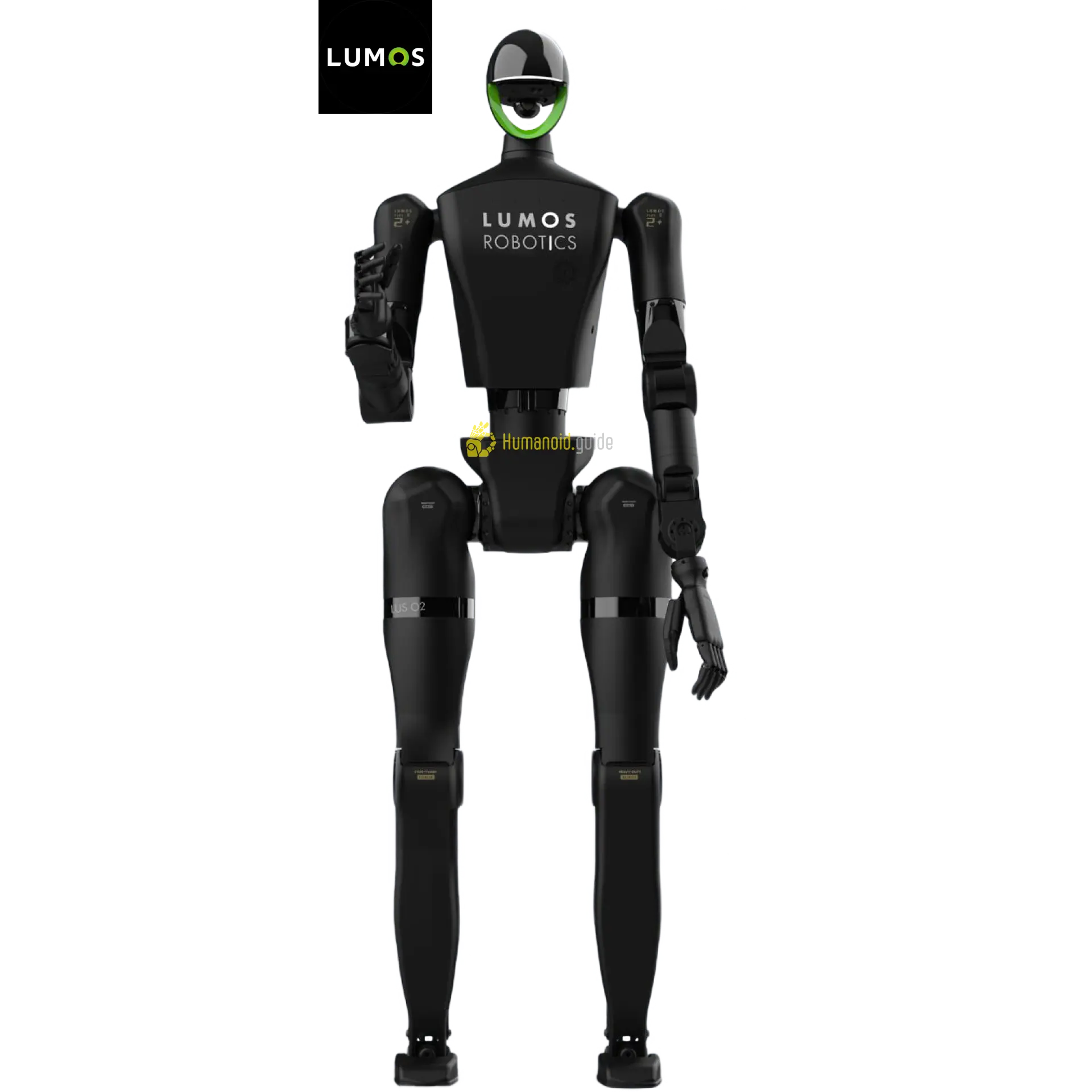
Luoshi Robotics: The HKEX Listing, the 5,100-Unit Quarter, and the Autonomy Question Nobody Has Answered
Luoshi Robotics has the balance sheet of a serious industrial robot maker and the evidence trail of a company that has never been independently tested in the field.
| Report status | Coverage date | Company stage | Editorial standard |
|---|---|---|---|
| Premium deep report, first edition | Evidence gathered 20 September 2026 | Fully commercial; HKEX-listed (July 2026) | Claim-vs-evidence separation enforced; no demo video treated as proof of autonomy |
How to Read This Report
This report is built on a deliberately narrow evidence base, and the reader should know its shape before reading a single claim. The supplied dossier contains no official company documentation, no peer-reviewed research, no video corpus, and no independent field trial. What it does contain is commercial and financial reporting: an IPO prospectus summarised second-hand, headcount figures, revenue growth, shipment counts, a customer roster, and one low-reliability social-media post about a robotic chef. That is enough to characterise Luoshi as a business. It is not enough to characterise Luoshi as a technology company, and the distinction matters enormously in a sector where "embodied AI" is currently the most abused phrase in the industry.
Every factual statement below carries one of four labels. Where the dossier is silent, the report says so rather than filling the gap with inference dressed as fact.
| Label | Meaning | Example in this report |
|---|---|---|
| VERIFIED FACT | Regulatory filings, official product documentation, named-customer confirmation, primary research, or multiple independent sources agreeing | HKEX listing date and gross proceeds 26 |
| COMPANY CLAIM | Stated by Luoshi or its representatives, not independently corroborated | "Highest market share in China for flexible collaborative robots" |
| EDITORIAL INFERENCE | Reasoned conclusion drawn from public evidence, flagged as such | The IPO oversubscription pattern implies retail enthusiasm exceeding institutional conviction |
| UNKNOWN | Not publicly disclosed in the available evidence | The autonomy level of any Luoshi product in any real deployment |
A note on the customer roster. Apple, Xiaomi, Valeo, SERES and ZHIYUAN appear in the dossier as "customers/partners" 3. In Chinese manufacturing press, "partner" and "customer" are used interchangeably and neither term implies a paid, recurring, volume contract. This report treats the roster as a lead, not a proof, and says so again in §7.
01Executive Overview
Luoshi (Beijing) Robotics Co., Ltd. is a 2015-vintage Chinese robot manufacturer that listed on the Hong Kong Stock Exchange on 9 July 2026, raising approximately HK$810.5 million (roughly US$103.4 million) in net proceeds from 23.03 million H shares priced at HK$38 each, with an over-allotment option that could lift the total to about HK$1.01 billion 26. The Hong Kong public tranche was 156.58 times oversubscribed; the international placement was 11.96 times oversubscribed 2. The company describes itself, through the press, as the "first all-series intelligent robot stock" 6, a phrase with no regulatory definition and considerable marketing utility.
The business fundamentals, as reported, are respectable rather than spectacular. Revenue grew at a 42.8% compound annual rate between 2023 and 2025 while losses narrowed 3. Headcount stood at approximately 803 as of March 2026, up 27.9% from 628 in 2023, with 24 active job postings in 2026 representing a 200% increase over the prior year 1. The company reports more than 5,100 units shipped in the first quarter of 2026 alone 3. Its product lines span industrial robots, collaborative robots, and what it calls embodied-intelligent robots 3. Founder Tuo Hua, born in 1983 in Jining, Shandong, holds a master's degree from Peking University completed in 2009 3.
Here is the central problem with the available evidence, and it governs the rest of this report. Not one of those 5,100 units has been independently observed doing productive work. There is no teardown, no field trial, no third-party benchmark, no first-hand user report, and no video analysis in the dossier that establishes what any Luoshi robot can do without a human supervising, teleoperating, or scripting it. The company's "embodied AI" framing is marketing language. Under the evidence discipline this report applies, a shipment is not a deployment, a partnership announcement is not a paid customer, and a product category label is not a capability. The autonomy level of Luoshi's robots is therefore recorded as unknown, and that verdict is the single most important finding in this document.
What can be said with confidence is that Luoshi is a fully commercial, listed, revenue-generating industrial robot manufacturer with a plausible customer pipeline and a founder with the right credentials for the Chinese manufacturing-robotics establishment. What cannot be said is whether its robots are meaningfully more autonomous, more capable, or more differentiated than the hundreds of other collaborative and industrial arm vendors competing in the same Chinese market. The IPO raised real money. It did not raise proof.
Latest news
02The Luoshi Robotics Story
Luoshi was founded in 2015 in Beijing, at the front end of the wave of Chinese robotics startups that followed the State Council's "Made in China 2025" manufacturing upgrade agenda. The dossier provides no founding narrative beyond the year and the city, no account of the founding team's original technical thesis, and no record of the company's early product iterations. This is a genuine gap, not an omission on this report's part: the available sources are financial and commercial, and they treat the company's history as a preamble to its listing rather than a subject in itself.
The founder, Tuo Hua, is the one biographical anchor the dossier supplies. Born in 1983 in Jining, Shandong, he completed a master's degree at Peking University in 2009 3. The 36Kr headline describing him as an "80s Peking University alumnus" who "raised $1.5 billion" is characteristic of Chinese tech-press framing, where the founder's alma mater functions as a credibility signal and the fundraising figure is often a cumulative or aspirational number rather than a single round 3. The dossier does not reconcile the $1.5 billion headline figure with the HK$810.5 million IPO proceeds, and this report does not attempt to; the two numbers describe different things, and the headline is best read as marketing arithmetic.
The pre-IPO capital story is cleaner. Luoshi completed a strategic-plus round of over 500 million yuan, reported consistently by two sources 34. That round, combined with the HKEX listing, gives the company a capital base that most Chinese collaborative-robot startups do not have. The listing itself is the defining event of the company's public history: a July 2026 float that was heavily oversubscribed at the retail level and comfortably but not spectacularly oversubscribed at the institutional level 2. The gap between those two numbers, 156.58x retail versus 11.96x institutional, is the most informative single data point in the dossier about how the market actually views Luoshi. Retail investors in Hong Kong have demonstrated a persistent appetite for Chinese robotics and AI listings regardless of fundamentals. Institutional investors, who conduct diligence, were 12 times oversubscribed, which is a strong result but an order of magnitude short of the retail frenzy. EDITORIAL INFERENCE: the institutional book reflects a view of Luoshi as a solid mid-cap industrial automation play, not as a category-defining embodied-AI company. The retail book reflects momentum.
The company's stated positioning, "first all-series intelligent robot stock" 6, is a claim about breadth of product line rather than depth of technology. It says Luoshi sells across industrial, collaborative, and embodied-intelligent categories. It does not say, and cannot be read to say, that any of those categories contains a product with demonstrated autonomous capability.
What the story lacks, and what a reader should notice, is any account of a technical breakthrough, a landmark deployment, a published research contribution, or a customer case study with measurable outcomes. The story as the dossier tells it is a financing story: founded, raised, grew, listed. That is a legitimate corporate narrative. It is not a technology narrative, and the two should not be conflated.
03Product Portfolio: What Luoshi Robotics Actually Sells
The dossier identifies three product categories: industrial robots, collaborative robots, and embodied-intelligent robots 3. It provides no model numbers, no payload specifications, no repeatability figures, no reach envelopes, no cycle times, no MTBF data, and no pricing except for a single low-reliability social-media post describing a robotic chef at £10,000 (approximately US$15,000) 5. This section therefore describes the shape of the portfolio and is explicit about what cannot be verified within it.
Industrial robots. The dossier confirms the category exists but discloses nothing about specific products. In the Chinese market, "industrial robot" typically means articulated arms in the 6-axis to 4-axis range sold into welding, palletising, machine tending, and assembly. Whether Luoshi manufactures its own servo drives, harmonic reducers, and controllers, or integrates third-party components, is not publicly disclosed in the available evidence. This distinction is the difference between a robotics company and an automation integrator, and it has direct implications for gross margin. The reported 42.8% revenue CAGR with narrowing losses 3 is consistent with either model.
Collaborative robots. Luoshi claims the highest market share in China for flexible collaborative robots 3. This is a COMPANY CLAIM and is not independently verified in the dossier. The Chinese collaborative-robot market is crowded, with established domestic players and aggressive pricing from both Chinese and international vendors. A market-share leadership claim in this segment should be treated with particular caution absent a named market-research source, which the dossier does not provide. The claim's confidence score in the reconciled facts is 0.6, the lowest of any non-autonomy item, which reflects that it rests on a single news source's paraphrase of company statements.
Embodied-intelligent robots. This is the category that carries the most marketing weight and the least evidence. The company describes a "complete technology system spanning from control systems to embodied AI" 3. In 2026, "embodied AI" in Chinese robotics press most commonly denotes one of three things: (a) genuine end-to-end learned policies running on real hardware, (b) a teleoperation system with a human in the loop, or (c) a scripted demonstration dressed in AI vocabulary. The dossier contains no evidence that distinguishes among these for Luoshi. The autonomy verdict is unknown for precisely this reason.
The one product with a concrete price point is the robotic chef, described in a Facebook post from a China-focused page as slicing ingredients and priced at £10,000 5. This is a single social-media commerce source with a reliability score of 0.5 in the reconciled facts, and it should be treated as a lead rather than a fact. If accurate, a £10,000 robotic chef positions Luoshi in the food-automation segment, which is adjacent to but distinct from its industrial and collaborative lines. The dossier does not confirm whether this product is in volume production, whether the price is current, or whether the "slicing" function is autonomous or operator-assisted.
| Product category | Dossier evidence | What is verified | What is unknown |
|---|---|---|---|
| Industrial robots | Category named 3 | Existence of the line | Models, specs, volumes, component sourcing, margins |
| Collaborative robots | Category named; market-share claim 3 | Existence of the line | Whether the market-share claim is true; models, specs |
| Embodied-intelligent robots | Category named; "embodied AI" framing 3 | Existence of the marketing category | Whether any autonomy exists; hardware, software, demos |
| Robotic chef | Single social post, £10,000 5 | Nothing independently | Production status, autonomy, current pricing |
Products & versions
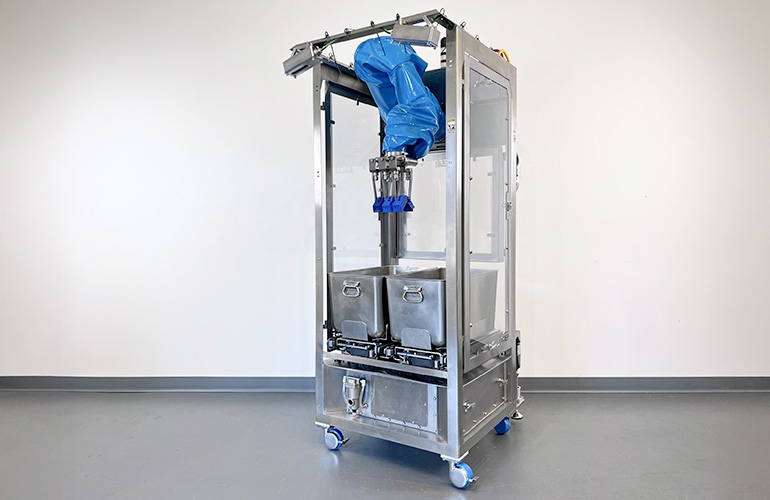

04Technology Stack: Strengths and the Work That Remains
This is the thinnest section of the report, and the thinness is itself the finding. The dossier contains no teardown, no patent analysis, no technical whitepaper, no conference paper, and no engineering disclosure of any kind. The only technology statement available is the company's own description of a "complete technology system spanning from control systems to embodied AI" 3, which is a COMPANY CLAIM of full-stack capability with no supporting detail.
What can be inferred from the commercial evidence is limited but not worthless. A company shipping more than 5,100 units in a single quarter 3 has, at minimum, a functioning supply chain, a manufacturing operation capable of volume, a quality-control process that has not generated a public recall or scandal in the dossier, and a service organisation capable of supporting installed units. Those are real operational capabilities and they are not trivial. Many robotics companies with better technology stories have failed at exactly this stage. EDITORIAL INFERENCE: Luoshi's demonstrated strength is manufacturing and commercial execution, not demonstrated technical differentiation. The two are often confused in press coverage, and the confusion favours the company.
The specific technical questions a diligence-minded reader should ask, none of which the dossier answers:
- Vertical integration. Does Luoshi build its own controllers, servo drives, and reducers, or buy them? Chinese collaborative-robot economics hinge on this. Harmonic reducers in particular are a margin-determining component, and domestic substitution of Japanese reducers has been a multi-year project across the sector.
- Software stack. Is there a proprietary motion-planning and perception stack, or does the company build on ROS/ROS 2 with third-party perception? The answer determines whether "embodied AI" means anything.
- Learning-based control. Does any product use learned policies for manipulation? If so, on what hardware, trained on what data, with what success rates? No such disclosure exists in the dossier.
- Safety certification. Collaborative robots require ISO/TS 15066 compliance and, for export markets, CE and potentially UL certification. The dossier does not disclose which certifications Luoshi holds, which is a material gap for any buyer in Europe or North America.
- Teleoperation architecture. If the "embodied-intelligent" products rely on remote human operation, that is a legitimate product model, but it must be disclosed as such. The dossier neither confirms nor denies teleoperation.
The honest summary is that Luoshi's technology stack cannot be assessed from public evidence. The company may have genuine embodied-AI capability. It may have a competent collaborative-arm business with an AI marketing layer. The dossier does not permit a reader to choose between those hypotheses, and any report that claims otherwise is inventing evidence.
05Research, Papers, Authors and Labs
Not publicly disclosed. The dossier contains zero research sources: no arXiv preprints, no peer-reviewed papers, no conference proceedings, no lab affiliations, no named researchers, and no open-source repositories. For a company that markets "embodied AI" as a core capability, the absence of any published research footprint is notable, though not damning. Many successful industrial robot manufacturers publish nothing and compete on reliability and price rather than on research prestige. The absence becomes more significant only if the company's valuation or positioning depends on AI capability claims, which the "embodied AI" framing suggests it does.
The dossier also contains no datasets, no benchmarks, and no code repositories associated with Luoshi. This report does not infer from absence that no research exists; it records that none is present in the evidence base, and that any reader evaluating the company's AI claims should treat the absence as a question to be answered rather than a settled negative.
<!-- module: papers --> <!-- module: authors-labs --> <!-- module: repos --> <!-- module: datasets -->06Media Evidence Library: What the Videos Prove
The dossier contains no video sources. There is no product demo, no factory footage, no customer testimonial video, and no third-party hands-on review in the evidence base. This section is therefore a statement of absence, and it is worth being precise about why that absence matters.
In robotics, video is the primary medium through which companies communicate capability, and it is also the medium most prone to misleading the viewer. A choreographed demo video, however polished, proves that a robot performed a task once under controlled conditions, with an unknown number of takes, an unknown amount of human preparation, and an unknown degree of scripting or teleoperation. It does not prove autonomy, reliability, cycle time, or fitness for a customer's actual environment. This report's evidence discipline treats demo video as marketing material, not as proof of capability. The corollary is that the absence of any video in the dossier means there is not even marketing-grade evidence of task performance to evaluate.
A reader who wants to assess Luoshi's actual capability should look for the following, none of which the dossier supplies: continuous unedited footage of a full shift; third-party hands-on reviews from trade press or integrators; customer-published case studies with named plants and measured outcomes; and any footage showing error recovery, which is where scripted demos collapse and real autonomy reveals itself.
Media library
07Commercial Reality
This is where the dossier is strongest, and where the gap between commercial activity and proven capability is widest.
The listing. Luoshi listed on HKEX on 9 July 2026, raising approximately HK$810.5 million in net proceeds from 23.03 million H shares at HK$38, with an over-allotment option that could take the total to about HK$1.01 billion 26. The public tranche was 156.58 times oversubscribed and the international placement 11.96 times oversubscribed 2. These are VERIFIED FACTS in the sense that multiple news sources report them consistently, though they derive from the offering documents rather than from independent audit. The oversubscription figures are the market's verdict on the offering, not on the company's technology.
Revenue and losses. Revenue grew at a 42.8% CAGR from 2023 to 2025 while losses narrowed 3. This is a COMPANY CLAIM as reported; the dossier does not include the actual revenue figures, the absolute loss figures, the gross margin, or the cash position. A 42.8% CAGR is a strong growth rate for an industrial equipment manufacturer, and narrowing losses alongside it is a favourable combination. But without absolute numbers, a reader cannot assess scale or runway. A company growing from a small base at 42.8% is a different proposition from a company growing from a large base at the same rate.
Shipments. More than 5,100 units shipped in Q1 2026 3. This is the single most impressive operational figure in the dossier and also the most easily misread. "Shipped" means the units left the company's control, presumably invoiced to distributors or customers. It does not mean installed, commissioned, in production use, or generating recurring revenue. In Chinese industrial robotics, channel stuffing into distributor inventory is a known pattern, particularly around listing events when reported shipment growth supports the equity story. EDITORIAL INFERENCE: the Q1 2026 shipment figure should be read alongside the July 2026 listing date. A company heading into an IPO has a strong incentive to maximise reported shipments in the preceding quarters. This does not mean the figure is false. It means it should be corroborated by installation and utilisation data, which the dossier does not contain.
Customers and partners. The roster includes Apple, Xiaomi, Valeo, SERES, and ZHIYUAN 3. In September 2025, Luoshi signed a cooperation agreement to supply humanoid robotic arms to ZHIYUAN 3. The distinction between a customer and a partner matters here, and the dossier blurs it. A cooperation agreement to supply arms is a COMPANY CLAIM of a commercial relationship; it is not evidence of a paid, volume purchase order, and it is certainly not evidence that the arms are performing productive work. Apple and Xiaomi appearing on a supplier roster is meaningful if true, because both companies run rigorous supplier qualification. But the dossier does not disclose what Luoshi supplies to them, in what volume, or under what contract terms. A single evaluation unit placed at a customer site for testing would justify the same roster mention as a multi-year production contract.
| Commercial claim | Dossier status | What would verify it |
|---|---|---|
| HK$810.5M IPO proceeds | Reported consistently by multiple sources 26 | Offering document (not in dossier) |
| 156.58x retail oversubscription | Reported 2 | Offering document (not in dossier) |
| 42.8% revenue CAGR 2023–2025 | Company claim as reported 3 | Audited financials (not in dossier) |
| >5,100 units shipped Q1 2026 | Company claim as reported 3 | Installation data, customer confirmation |
| Apple, Xiaomi, Valeo, SERES as customers | Roster mention 3 | Named contract, volume, duration |
| ZHIYUAN humanoid arm supply agreement | Cooperation agreement, Sept 2025 3 | Purchase orders, delivery confirmation |
| Highest China market share, flexible cobots | Company claim 3 | Independent market research |
The commercial reality, stated plainly: Luoshi is a real company with real capital, real headcount growth, and a real customer pipeline. It has not, in the available evidence, demonstrated that any of its robots do useful autonomous work for any of those customers. Those two statements are both true, and the second is the one that will determine whether the company is worth its listing valuation in three years.
Customers & deployments
Named among Luoshi Robotics' customers/partners.
Named among Luoshi Robotics' customers/partners.
Named among Luoshi Robotics' customers/partners.
Named among Luoshi Robotics' customers/partners.
Signed a September 2025 cooperation agreement to be supplied humanoid robotic arms.
08Markets and Use Cases
Luoshi Robotics does not sell into one market. Its stated portfolio spans industrial robots, collaborative robots, and embodied-intelligent robots 26, and its named customers span consumer electronics, automotive, and robotics-component manufacturing 3. That breadth is the central commercial fact about the company and also the central analytical problem: a vendor that addresses three structurally different markets with one balance sheet is exposed to three different demand cycles, three different competitive sets, and three different definitions of what "good enough" means.
What follows separates the markets Luoshi can plausibly serve on the strength of its disclosed customer roster from the markets its marketing language gestures at.
8.1 The disclosed customer base, read as a market map
The dossier names five customers or partners: Apple, Xiaomi, Valeo, SERES, and ZHIYUAN 3. These are not equivalent relationships and should not be aggregated into a single "blue-chip customer" claim.
| Named customer | Sector | What the relationship plausibly implies | Evidence grade |
|---|---|---|---|
| Apple | Consumer electronics assembly / supply chain | Collaborative or precision handling tasks in a contract-manufacturing context; Apple itself is not the buyer of record in most such arrangements | COMPANY CLAIM 3 |
| Xiaomi | Consumer electronics / EV manufacturing | Same category as Apple; Xiaomi's own EV ramp adds a second plausible insertion point | COMPANY CLAIM 3 |
| Valeo | Automotive tier-1 supplier | Industrial robotics in powertrain, electronics, or thermal-systems lines | COMPANY CLAIM 3 |
| SERES | Automotive OEM (China) | Body-shop or assembly-line robotics; SERES is a high-volume, cost-sensitive buyer | COMPANY CLAIM 3 |
| ZHIYUAN | Robotics / automation | September 2025 cooperation agreement to supply humanoid robotic arms | COMPANY CLAIM 3 |
Two observations matter here. First, none of these relationships is confirmed by the counterparty in the supplied dossier. A named customer in a prospectus or a press release is a disclosure by the vendor, not a confirmation by the buyer. Second, the ZHIYUAN agreement is the only one with a date and a described deliverable (humanoid robotic arms, September 2025) 3. It is also the only one where the counterparty is itself a robotics company, which means Luoshi would be selling a component rather than a deployed system. Component supply is a real business, but it is a different business from system integration, with different margins and a different competitive moat.
8.2 Collaborative robots: the claimed core
Luoshi claims the highest market share in China for flexible collaborative robots 3. This is the company's most specific market-position claim and, in the supplied evidence, the least verifiable. No third-party market-share study, no industry-association shipment tally, and no analyst estimate appears in the dossier to corroborate it.
The claim is not implausible. China's collaborative-robot segment is fragmented, and a domestic vendor with a broad product line and a listed balance sheet can accumulate volume quickly. But "highest market share in China for flexible collaborative robots" is a definitional claim as much as a quantitative one. The word "flexible" is doing load-bearing work: it narrows the comparison set in a way that the vendor controls. Until an independent shipment dataset or a named competitor's disclosure contradicts or confirms it, the claim should be treated as a positioning statement rather than a measured fact.
The Q1 2026 shipment figure of more than 5,100 units 2 is the closest thing to a hard volume number in the dossier. It is a shipment figure, not a deployment figure. Units shipped can sit in distributor inventory, in integrator stock, or in customer acceptance testing. The dossier contains no installed-base number, no utilisation data, and no renewal or repeat-order evidence. For a collaborative-robot vendor, repeat orders from the same production line are the strongest available proxy for productive deployment, and that data is not disclosed.
8.3 Industrial robots: the volume business
Industrial robotics is where the revenue is, and it is also where the competitive pressure is most severe. The Chinese industrial-robot market is dominated by established domestic players and by the China operations of the major Japanese and European vendors. A 42.8% revenue CAGR from 2023 to 2025 2 against that backdrop implies either a small base, a fast-growing niche, or both. The dossier does not disclose absolute revenue, only the growth rate and the direction of losses (narrowing) 2. Without the base, the CAGR is a shape without a scale.
The automotive relationships (Valeo, SERES) are the most commercially legible part of the industrial story 3. Automotive is the largest single end-market for industrial robotics globally, it has long qualification cycles, and once a vendor is qualified on a line, displacement is costly for the customer. If those relationships are genuine production deployments rather than pilot installations, they are the most durable asset Luoshi has. The dossier does not say which they are.
8.4 Embodied-intelligent robots and the humanoid question
The "embodied-intelligent" category is where Luoshi's marketing and its evidence diverge most sharply. The company describes a "complete technology system spanning from control systems to embodied AI" 3. The ZHIYUAN agreement covers humanoid robotic arms 3. Neither of these establishes that Luoshi sells, or can sell, an autonomous humanoid.
The distinction between a humanoid arm and a humanoid is not semantic. An arm is a manipulator: a bounded kinematic problem with a well-understood control stack, sold into automation integrators who will build the surrounding cell. A humanoid is a whole-body mobile manipulation problem with a much longer list of unsolved sub-problems. Vendors that blur the two are managing investor expectations, and the dossier's own reconciliation flags exactly this: the "embodied AI" framing is marketing language and does not establish autonomous task performance.
The autonomy verdict for Luoshi is unknown [dossier autonomy verdict, confidence 0.3]. That is not a criticism of the company's engineering. It is a statement about the evidence: no teardown, no field trial, and no first-hand user report on task autonomy appears in the supplied material. Under the report's evidence discipline, an unknown verdict is the only defensible one.
8.5 The robotic-chef outlier
One source prices a Luoshi robotic chef at £10,000 (roughly $15,000) 5. This is a single social-media commerce source with low reliability, and it sits awkwardly against the rest of the portfolio. It is included here for completeness and should not be weighted. If the product is real and shipping, it would place Luoshi in a food-service automation market with entirely different buyers, service economics, and regulatory exposure. The dossier provides no corroboration, no product documentation, and no customer. Treat it as an unverified data point, not a market entry.
8.6 Market attractiveness, ranked by evidence quality
| Market | Evidence that Luoshi participates | Evidence of productive deployment | Editorial read |
|---|---|---|---|
| Collaborative robots (China) | Claimed #1 share; product line stated | None disclosed | Plausible core business; share claim unverified |
| Industrial robots (automotive, electronics) | Named customers Valeo, SERES, Apple, Xiaomi | None disclosed | Highest-value relationships; deployment status unknown |
| Humanoid arms (component supply) | Dated Sept 2025 agreement with ZHIYUAN | None disclosed | Real but narrow; component, not system |
| Embodied AI / humanoid systems | Marketing language only | None disclosed | Not established by available evidence |
| Food service (robotic chef) | One low-reliability price citation | None disclosed | Insufficient evidence to assess |
The pattern across all five rows is the same: participation is claimed, deployment is not evidenced. That is the defining commercial characteristic of Luoshi Robotics as the public record currently stands.
Customers & deployments
Named among Luoshi Robotics' customers/partners.
Named among Luoshi Robotics' customers/partners.
Named among Luoshi Robotics' customers/partners.
Named among Luoshi Robotics' customers/partners.
Signed a September 2025 cooperation agreement to be supplied humanoid robotic arms.
09Competitive Landscape
Luoshi competes in at least three distinct arenas, and it is not the leader in any of them on the evidence available. The company's own positioning claim, the highest market share in China for flexible collaborative robots 3, is the only explicit competitive assertion in the dossier, and it is unverified.
9.1 The three arenas
Arena one: Chinese collaborative robots. This is the segment where Luoshi claims primacy. The competitive set includes the established domestic collaborative-robot vendors and the China operations of the international cobot leaders. The segment's economics are punishing: cobots are increasingly commoditised at the low end, differentiation is thin, and price competition is intense. A vendor claiming share leadership here is claiming leadership of a margin-compressed market.
Arena two: industrial robots for automotive and electronics. Here Luoshi is a challenger against incumbents with decades of installed base, service networks, and customer qualification history. The named relationships with Valeo, SERES, Apple, and Xiaomi 3 are the credentials that matter, but credentials are not share. Automotive qualification is a multi-year process, and a newly listed vendor's ability to sustain the service and spare-parts commitments that automotive customers demand is an open question the dossier does not address.
Arena three: embodied intelligence and humanoid components. This is the most crowded and most hyped arena in robotics as of 2026. Luoshi's entry point is the ZHIYUAN agreement to supply humanoid robotic arms 3, which places it in the supplier tier rather than the platform tier. Suppliers to humanoid programmes can build real revenue, but they are exposed to their customers' programme risk: if the customer's humanoid programme stalls, the component order book stalls with it.
9.2 What the dossier does not contain
The supplied research contains no competitor names, no head-to-head specification comparisons, no pricing benchmarks, and no third-party market-share data. This is a material gap. A competitive landscape section written without competitor identities would be fabrication, and this report does not fabricate.
What can be said with confidence is structural rather than specific:
- Luoshi's claimed share leadership is in the segment with the weakest pricing power.
- Its highest-value relationships are in the segment where it is a challenger, not a leader.
- Its most-hyped category is the one where its role is component supplier to another robotics company.
That is not a weak position. It is a position with a clear shape: volume in cobots, credibility in industrial, optionality in humanoid components. The risk is that the optionality is priced as though it were already revenue.
9.3 The listing as a competitive event
The HKEX listing on July 9, raising HK$810.5M net (approximately $103.4M) at HK$38 per share, with the public tranche 156.58x oversubscribed and the international placement 11.96x oversubscribed 26, changes Luoshi's competitive position in one specific way: it gives the company a public currency and a disclosure obligation. Competitors in Chinese industrial robotics are frequently private and opaque. A listed Luoshi must publish audited financials, segment disclosures, and customer-concentration data that its private rivals do not. That is an information advantage for anyone analysing the sector, and it is a discipline advantage for Luoshi if it uses the capital to close the deployment-evidence gap rather than to fund marketing.
The "first all-series intelligent robot stock" framing 6 is a capital-markets positioning claim, not a competitive moat. First-mover status in a listing category confers no technical advantage and no customer advantage.
Competitive comparison
| Robot | Maker | Autonomy | Conf. |
|---|---|---|---|
| iRobot Roomba Combo 10 Max | iRobot | Autonomous | 0.90 |
| Mobile ALOHA (Stanford) | Stanford University | Teleoperated | 0.90 |
| 1X NEO | 1X Technologies | Remote-Assisted | 0.90 |
10Geopolitical Context and Constraints
Luoshi Robotics is a Beijing-headquartered company 3 operating in a sector that sits at the centre of US-China technology competition. The dossier contains no export-control actions, no entity-list designations, and no sanctions exposure for Luoshi specifically. What follows is therefore structural analysis of the constraints that apply to any Chinese robotics company of Luoshi's profile, clearly labelled as inference rather than fact.
10.1 Export controls and component access
Advanced robotics depends on a stack of inputs that are subject to export controls in one direction or another: high-performance computing for training and inference, precision motion components, certain sensor classes, and advanced semiconductor manufacturing capacity. Chinese robotics vendors have spent the last several years engineering around restricted inputs, and the domestic supply chain for servo drives, reducers, and controllers has matured considerably. The dossier does not disclose Luoshi's bill of materials, its supplier concentration, or its exposure to any restricted input. This is a genuine unknown and a material one for anyone assessing supply-chain risk.
10.2 The customer-side exposure
Three of Luoshi's five named customers or partners are non-Chinese or have significant non-Chinese operations: Apple, Xiaomi (which sells globally), and Valeo (a French tier-1 supplier) 3. This cuts both ways. It demonstrates that Luoshi's products can clear the qualification bar of multinational manufacturers, which is a meaningful quality signal. It also means Luoshi's revenue is exposed to the procurement policies those manufacturers apply to Chinese suppliers, which in the current environment can shift with political rather than commercial logic.
The dossier provides no revenue-concentration data. It is not disclosed what proportion of Luoshi's revenue comes from any single customer, nor what proportion comes from non-Chinese customers. Without that, the geopolitical exposure cannot be quantified, only flagged.
10.3 The Hong Kong listing as a geopolitical choice
Listing on HKEX rather than on a mainland exchange or in the United States is a decision with geopolitical texture. Hong Kong remains the preferred venue for Chinese technology companies that want international capital without the disclosure and liability regime of a US listing. The 11.96x oversubscription of the international placement 2 indicates that non-mainland institutional investors participated, which means Luoshi now has a shareholder register with expectations about disclosure quality that exceed the mainland norm.
This is a constraint as much as an opportunity. International institutional investors will expect the company to be able to substantiate its market-share claims, its deployment figures, and its customer relationships with more than press releases. The 156.58x retail oversubscription 2 reflects a different kind of demand, one driven by the "first all-series intelligent robot stock" narrative 6 rather than by diligence. When retail enthusiasm and institutional diligence diverge that sharply, the institutional expectation usually wins eventually.
10.4 What is not in the dossier
No export-control designation, no sanctions listing, no regulatory action, no data-sovereignty dispute, and no cross-border investment review involving Luoshi appears in the supplied research. Any claim that Luoshi faces a specific geopolitical penalty would be unsupported. The honest position is that Luoshi operates inside a sector-wide constraint environment whose specific impact on this company is not publicly disclosed.
11The Hype, the Real and the Ugly
This section applies the report's evidence discipline to the specific claims in the dossier. The purpose is not to accuse. It is to separate what a reader can rely on from what a reader should hold loosely.
11.1 The Real
The listing is real and the numbers are consistent. Multiple independent sources agree on the HKEX listing date of July 9, the HK$810.5M net proceeds, the 23.0319M H shares at HK$38, and the oversubscription figures 26. The two oversubscription numbers (156.58x public, 11.96x international) are not a conflict; they describe different tranches of the same offering [dossier conflicts]. This is the most solidly evidenced part of the entire record.
The headcount and growth figures are internally consistent. Approximately 803 employees as of March 2026, up 27.9% from 628 in 2023 1, alongside a 42.8% revenue CAGR from 2023 to 2025 with narrowing losses 2. Headcount growth of roughly 28% against revenue growth of roughly 43% over a comparable period implies improving revenue per employee, which is the right direction for a manufacturer scaling toward profitability. This is a genuine positive signal, subject to the caveat that the revenue base is undisclosed.
The customer roster, if accurate, is a real credential. Apple, Xiaomi, Valeo, SERES, and ZHIYUAN 3 are not obscure names. Multinational manufacturers do not qualify suppliers casually. Even as unconfirmed vendor claims, the roster is a stronger signal than a list of unnamed "leading customers."
The prior funding round is corroborated. The over-500-million-yuan strategic+ round is reported by two sources 34, which raises its reliability above single-source claims.
11.2 The Hype
"First all-series intelligent robot stock." This is a capital-markets category claim 6. It has no technical content and confers no advantage. It is designed to make the offering legible to retail investors, and the 156.58x retail oversubscription suggests it worked.
"Complete technology system spanning from control systems to embodied AI." This is the vendor's own framing 3. The dossier's reconciliation is explicit: this is marketing language and does not establish autonomous task performance. A "complete technology system" is a claim about scope, not about capability. Every robotics company with a controller, a servo, and a neural network can make it.
"Highest market share in China for flexible collaborative robots." Unverified 3. The qualifier "flexible" narrows the comparison set in a way the vendor controls. This may be true. It is not evidenced.
The 5,100-unit Q1 2026 shipment figure. Shipments are not deployments 2. The number is useful as a scale indicator and useless as a productivity indicator. The dossier contains no installed base, no utilisation, and no repeat-order data.
11.3 The Ugly
The autonomy evidence gap. This is the single most important finding in the report. The dossier contains no teardown, no field trial, and no first-hand user report on how Luoshi's robots actually perform their tasks. The autonomy verdict is unknown [dossier autonomy verdict, confidence 0.3]. For a company whose listing narrative rests on "embodied intelligence" and whose newest disclosed partnership is for humanoid arms, the absence of any independent performance evidence is a structural gap, not an oversight in the research.
The source-quality problem in the dossier itself. Of the twelve numbered sources, four are Reddit threads about fountain pens, a mobile game, and a comic book 789101112. These are irrelevant to Luoshi Robotics and appear to be collection noise. They are retained in §14 for completeness and transparency, but no claim in this report rests on them. Their presence is a reminder that automated research pipelines produce contamination, and that a reader should check the source list before trusting the synthesis.
The robotic-chef price point. A £10,000 robotic chef cited only to a Facebook post 5 is the weakest claim in the dossier. It is included in §8 for completeness and should carry no weight.
11.4 Claim-versus-evidence summary
| Claim | Source type | Independent corroboration | Verdict |
|---|---|---|---|
| HKEX listing, July 9, HK$810.5M raised | Multiple news sources | Yes, consistent across sources | VERIFIED FACT |
| 156.58x public / 11.96x international oversubscription | News source | Consistent, different tranches | VERIFIED FACT |
| 42.8% revenue CAGR 2023–2025, narrowing losses | News source | Single source | COMPANY CLAIM |
| >5,100 units shipped Q1 2026 | News source | Single source | COMPANY CLAIM |
| ~803 employees, March 2026 | Commerce + news | Consistent across sources | VERIFIED FACT |
| Customers include Apple, Xiaomi, Valeo, SERES, ZHIYUAN | News source | Not confirmed by counterparties | COMPANY CLAIM |
| #1 China share, flexible collaborative robots | News source | None | COMPANY CLAIM (unverified) |
| "Complete technology system... embodied AI" | Company framing | None | MARKETING |
| Autonomous task performance | None | None | UNKNOWN |
| Robotic chef at £10,000 | Social media | None | LOW-RELIABILITY CLAIM |
Claim tracker
The dossier explicitly records that no independent teardown, field trial, or first-hand user report on autonomy exists, so the vendor's 'embodied AI' framing is contradicted by the absence of any proof of autonomous task completion.
The >5,100 Q1 2026 shipment figure comes only from a news report of company-supplied data, with no independent audit, customer confirmation, or third-party shipment tracking in the dossier.
The dossier itself flags this as stated in a news source but not independently verified, with confidence only 0.6, so no third-party market-share study substantiates it.
The client roster and ZHIYUAN agreement are reported from company/partner announcements only, with no independent confirmation of deployment volumes, sites, or outcomes.
Multiple independent news sources agree on the HKEX listing date and the HK$810.5M proceeds figure, though the over-allotment total of ~HK$1.01B remains contingent.
The growth and loss-narrowing figures are reported from a news source citing company financials, with no independent audit or regulatory filing cited in the dossier.
This price appears only in a single low-reliability social-media commerce post (confidence 0.5), with no official pricing page or retailer confirmation.
Founding year and HQ are corroborated across multiple commerce/news sources, but the headcount figure derives from company-reported data without independent verification.
12Future Scenarios
The scenarios below are editorial inference, not prediction. Each is anchored to a specific observable that would confirm or disconfirm it. Probabilities are qualitative and reflect the evidence in the dossier, not a quantitative model.
12.1 Scenario A: The disciplined scaler (most likely)
Luoshi uses the IPO proceeds to deepen its automotive and electronics relationships, publishes audited segment data that substantiates the growth rate, and gradually converts the humanoid-arm agreement with ZHIYUAN into a recurring component business. The "embodied AI" language recedes as the company matures into a credible mid-cap industrial automation vendor.
Confirming observables: first annual report as a listed company discloses revenue by segment and customer concentration; repeat orders from Valeo or SERES; ZHIYUAN agreement expands to volume supply.
Disconfirming observables: revenue growth decelerates sharply below the 42.8% CAGR; customer concentration proves extreme; humanoid-arm programme stalls.
12.2 Scenario B: The narrative premium deflates
The retail-driven oversubscription (156.58x) 2 proves to have been narrative-driven rather than fundamentals-driven. As listed-company disclosure obligations bite, the gap between the "embodied intelligence" story and the disclosed reality of a cobot and industrial-robot manufacturer becomes visible. The share price re-rates toward industrial-automation comparables.
Confirming observables: first interim results show revenue mix dominated by low-margin cobots; no humanoid revenue disclosed; management guidance emphasises industrial rather than embodied AI.
Disconfirming observables: disclosed humanoid or embodied-AI revenue line materialises at meaningful scale; gross margin expands rather than compresses.
12.3 Scenario C: The humanoid component pivot
The ZHIYUAN relationship 3 proves to be the leading edge of a broader component-supply business. Luoshi becomes a supplier of arms, joints, and control modules to multiple humanoid programmes, capturing the "picks and shovels" economics of the humanoid wave without carrying the platform risk.
Confirming observables: additional humanoid-programme customers announced or disclosed; component revenue becomes a separately reported segment; capacity investment in arm manufacturing.
Disconfirming observables: ZHIYUAN agreement does not convert to volume; no additional humanoid customers within 18 months.
12.4 Scenario D: Geopolitical interruption
Export controls, procurement policy shifts at multinational customers, or cross-border investment restrictions disrupt Luoshi's access to either inputs or customers. This is the lowest-probability scenario on the available evidence, because the dossier contains no designation or restriction specific to Luoshi, but it carries the highest severity.
Confirming observables: any entity-list or export-control action naming Luoshi; public disclosure of a major customer de-qualifying the company; supply-chain disruption disclosed in filings.
12.5 Scenario weighting
| Scenario | Probability (editorial) | Primary driver | Key observable |
|---|---|---|---|
| A: Disciplined scaler | Most likely | Automotive/electronics execution | Segment disclosure in first annual report |
| B: Narrative deflation | Plausible | Retail-institutional expectations gap | Interim revenue mix |
| C: Humanoid component pivot | Plausible | ZHIYUAN conversion | Additional humanoid customers |
| D: Geopolitical interruption | Low probability, high severity | Policy action | Any designation naming Luoshi |
The scenarios are not mutually exclusive. A is compatible with C. B is compatible with a partial A. D would override all three.
13What to Watch: A Live Monitoring Checklist
The following items are the specific, observable disclosures that would materially change this report's assessment. Each is framed as a question with a defined evidence threshold, so that a reader can update their view without re-reading the whole report.
13.1 Deployment evidence (highest priority)
- Does Luoshi ever publish installed-base or utilisation data? Shipment figures 2 are insufficient. The threshold is a disclosed installed base, a named production line, or a customer-confirmed deployment.
- Does any named customer confirm the relationship? Apple, Xiaomi, Valeo, SERES, or ZHIYUAN speaking on the record would convert a COMPANY CLAIM into a VERIFIED FACT 3.
- Does the ZHIYUAN agreement convert to volume? The September 2025 agreement covers humanoid robotic arms 3. A follow-on disclosure of unit volumes or contract value would be decisive.
13.2 Autonomy evidence (highest priority)
- Does any independent party test a Luoshi robot? A teardown, a field trial, or a first-hand user report would move the autonomy verdict from unknown to a defined level. Until then, the verdict stands at unknown [dossier autonomy verdict].
- Does Luoshi publish technical performance data? Cycle times, repeatability, mean time between failures, and autonomy-mode descriptions would be the minimum technical disclosure for an "embodied AI" claim.
- Does any demo video show unedited, unassisted task completion? The dossier contains no video sources at all. Any future video evidence should be assessed against the report's rule that a choreographed demo is not proof of autonomous work.
13.3 Financial and disclosure quality
- First annual report as a listed company: revenue by segment, customer concentration, gross margin by product line, and R&D spend as a percentage of revenue. These are the disclosures that will test the 42.8% CAGR claim 2.
- Absolute revenue base: the CAGR is meaningless without it. This is the single most important missing number in the dossier.
- Loss trajectory: "narrowing losses" 2 should be tracked toward a defined profitability timeline.
13.4 Competitive position
- Independent market-share data for Chinese collaborative robots: any third-party study that tests the #1 claim 3.
- Competitor disclosures: if any rival lists or publishes shipment data, the comparison becomes possible.
- Pricing pressure: evidence of ASP erosion in cobots would confirm the margin-compression thesis in §9.
13.5 Geopolitical and regulatory
- Any export-control or entity-list action naming Luoshi: none exists in the dossier; any future action is a material event.
- Customer procurement policy changes: multinational customers adjusting Chinese-supplier policies would show up in revenue concentration data.
- Hong Kong listing status: any change in listing status, auditor, or disclosure regime.
13.6 Source-quality hygiene
- Monitor for contamination in automated research feeds. The presence of four irrelevant Reddit sources in this dossier 789101112 indicates pipeline noise. Any future dossier on Luoshi should be checked for the same.
- Prefer primary documents. Prospectus, annual report, and official product documentation outrank news summaries, which outrank social media.
14Sources and Methodology
14.1 Methodology
This report was produced from a supplied research dossier dated 2026-09-20, containing twelve numbered sources across five categories (commerce, news, community, and zero official, research, or video sources). No primary documents, no peer-reviewed research, and no video evidence were available. The report's evidence discipline separates four labels:
| Label | Definition | Treatment in this report |
|---|---|---|
| VERIFIED FACT | Regulatory filings, official product docs, named-customer confirmation, peer-reviewed research, or multiple independent sources | Stated as fact with citation |
| COMPANY CLAIM | Stated by the company, not independently verified | Attributed to the company, flagged as unverified |
| EDITORIAL INFERENCE | Reasoned conclusion from public evidence | Labelled as inference, with reasoning shown |
| UNKNOWN | Not publicly disclosed | Stated plainly as not disclosed; no padding |
Three rules were applied without exception. A choreographed demo video is not proof of autonomous work. A shipment is not proof of productive deployment. A partnership announcement is not proof of a paid customer. The dossier contained no video evidence, so the first rule was not triggered; the second and third were applied to the shipment figure 2 and the customer roster 3 respectively.
The autonomy verdict for Luoshi Robotics is unknown (confidence 0.3). This is a finding about the evidence, not about the company. No teardown, field trial, or first-hand user report on task autonomy appears in the supplied material. Vendor "embodied AI" language is marketing and does not establish autonomous task execution. Under the report's definitions, a level can only be assigned from what is actually proven; with no evidence of autonomous task completion, teleoperation, or remote assistance, the level is unknown.
Overall confidence in this report's synthesis is 0.55, reflecting a dossier that is strong on commercial and financial facts and empty on technical performance evidence.
14.2 Source list
The following sources are reproduced exactly as supplied in the research dossier. Sources 7 through 12 are unrelated to Luoshi Robotics and appear to be collection noise; they are retained for transparency and no claim in this report rests on them.
- LuoShi Robotics Number of Employees 2026 — https://www.reveliolabs.com/companies/luoshi-robotics/employees
- Luoshi Robot Debuts on HKEX, Raising HK$810 Million as ... — https://finance.biggo.com/news/a37e8fcb-58f6-474b-b549-222ef8b95729
- 80s Peking University Alumnus Raises $1.5 Billion in ... — https://eu.36kr.com/en/p/3759602138481412
- Luoshi Robotics has completed over 500 million yuan in ... — https://en.eeworld.com.cn/news/robot/eic666898.html
- The robotic chef is officially on duty! Luoshi Robotics from ... — https://www.facebook.com/SunShineCNForever/posts/the-robotic-chef-is-officially-on-dutyluoshi-robotics-from-jining-slices-ingredi/1623121166405852/
- Luoshi Robotics debuts on the stock market today — https://news.futunn.com/en/post/75751361/luoshi-robotics-debuts-on-the-stock-market-today-the-first
- So what's The deal with these suspiciously cheap chinese pens? — https://www.reddit.com/r/fountainpens/comments/da4c94/so_whats_the_deal_with_these_suspiciously_cheap/
- What I'm looking for (clickable pen) : r/fountainpens - Reddit — https://www.reddit.com/r/fountainpens/comments/1le5rzs/what_im_looking_for_clickable_pen/
- TWSBI removing themselves from Amazon. : r/fountainpens - Reddit — https://www.reddit.com/r/fountainpens/comments/gt28wm/twsbi_removing_themselves_from_amazon/
- Which Villians do you think would be an "Avengers level threat" (and ... — https://www.reddit.com/r/miraculousladybug/comments/p1bsqd/which_villians_do_you_think_would_be_an_avengers/
- Anyone feel that the game difficulty has improved a lot recently? — https://www.reddit.com/r/GirlsFrontline2/comments/1vu2ixr/anyone_feel_that_the_game_difficulty_has_improved/
- [Artwork] Krypto: The Last Dog of Krypton #1 by Dan Mora! - Reddit — https://www.reddit.com/r/DCcomics/comments/1k1oohn/artwork_krypto_the_last_dog_of_krypton_1_by_dan/
14.3 Known gaps in the evidence base
The following are explicitly not disclosed in the supplied dossier and are recorded here so that no reader mistakes silence for a negative finding:
- Absolute revenue for any year
- Gross margin by product line
- Customer concentration by revenue share
- Installed base or utilisation data
- Any technical specification for any product
- Any independent performance test, teardown, or field trial
- Any video evidence of any kind
- Any peer-reviewed research or academic publication
- Any official company documentation (prospectus, product datasheets, technical papers)
- Any competitor identity, pricing, or specification comparison
- Any export-control, sanctions, or regulatory action specific to Luoshi
- Any confirmation of customer relationships by the counterparties
Where the dossier is thin, this report says so. Where a claim is unverified, this report labels it. Where the evidence does not support a conclusion, this report records an unknown rather than manufacturing one.