LimX
US$0.99 unlocks one Word + one PDF download. The full report is free to read on this page.
LimX Dynamics: Locomotion Leadership, Cognition Debt
A Shenzhen biped specialist with US$400M raised, a US$2B valuation, and a public evidence base that stops at walking
| Report status | Final, evidence-led deep report | | Coverage date | 21 September 2026 | | Company stage | Fully Commercial (products listed and priced) | | Editorial standard | Verified facts separated from company claims, editorial inference and unknowns |
How to Read This Report
This report is built on a deliberately narrow evidence base. The supplied dossier contains five commerce listings, five news items, six community posts and no official documentation, no peer-reviewed research and no video corpus. That asymmetry shapes everything below: where the record is strong (funding, product pricing, locomotion demonstrations) the report is confident; where the record is silent (autonomy, paying customers, unit economics) the report says so rather than filling the gap with inference dressed as fact.
Every factual assertion carries one of four labels.
| Label | Meaning | Example in this report |
|---|---|---|
| VERIFIED FACT | Confirmed by regulatory filings, official product documentation, named-customer confirmation, primary research, or multiple independent sources | The Pre-IPO round size and valuation, corroborated across company newsroom and independent outlets 67810 |
| COMPANY CLAIM | Stated by LimX, not independently verified | "Thousands of fully autonomous humanoid robots" 68 |
| EDITORIAL INFERENCE | Reasoned conclusion drawn from public evidence, explicitly flagged as such | That LimX's near-term revenue is education-led rather than industrial |
| UNKNOWN | Not publicly disclosed in the supplied record | Paid customer count, deployment hours, autonomy level |
Three rules govern the analysis. A choreographed demonstration video is not proof of autonomous work. A shipment is not proof of productive deployment. A partnership announcement is not proof of a paid customer. Where the dossier cannot support a claim under those rules, the claim is marked UNKNOWN.
01Executive Overview
LimX Dynamics is a Shenzhen-based embodied-AI and humanoid robotics company that has, on the supplied record, achieved three things of substance and one thing of ambiguity. The three substantive achievements are capital, productisation and locomotion. The ambiguity is cognition.
On capital, the company closed a Pre-IPO round of nearly US$200M, bringing total fundraising to roughly US$400M over six months, at a reported RMB 15B (approximately US$2B) post-money valuation 67810. The investor list mixes new entrants (IDG Capital, Lens Technology, GGG Group, Redstone VC, WestSummit Capital, Hefei Binhu Industry Development Group) with existing backers (Vitalbridge Capital, CoStone Capital, Nanshan SEI Investment, Shangqi Capital, NIO Capital) 6. This is a VERIFIED FACT on the basis of consistency across the company newsroom and multiple independent outlets, though the underlying share price and terms remain undisclosed.
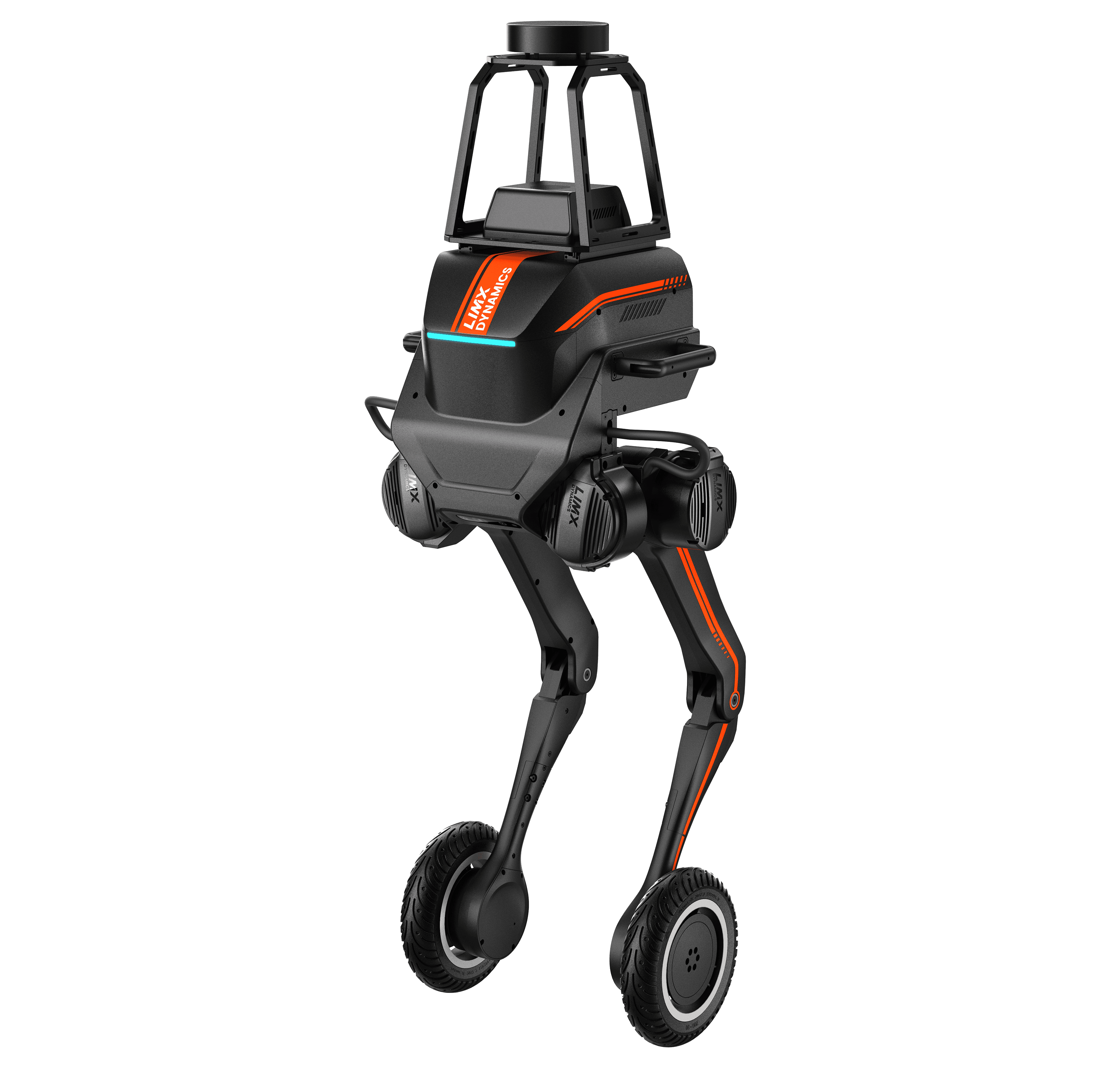
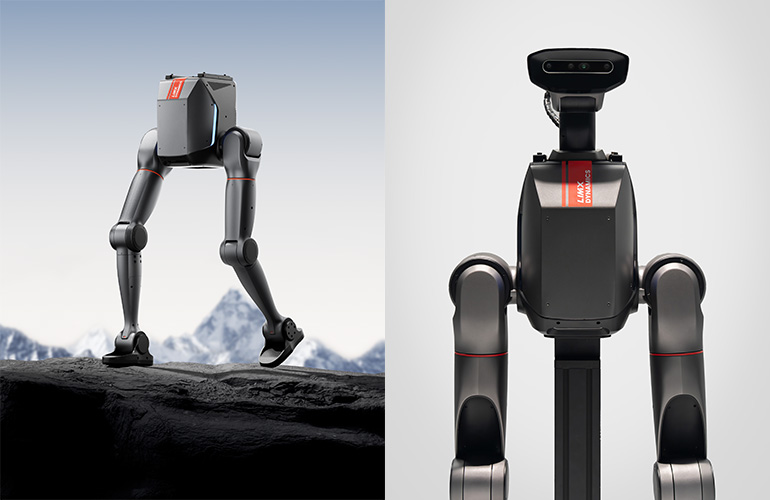
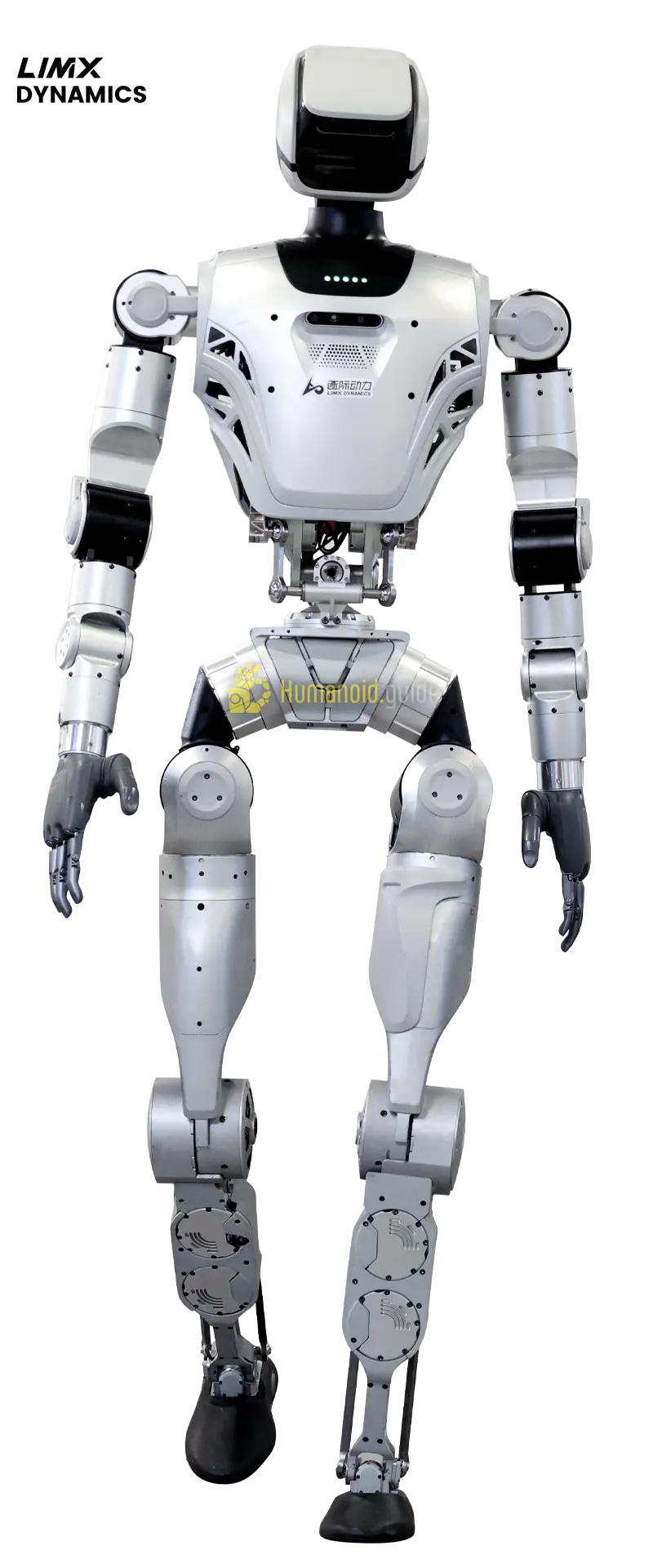
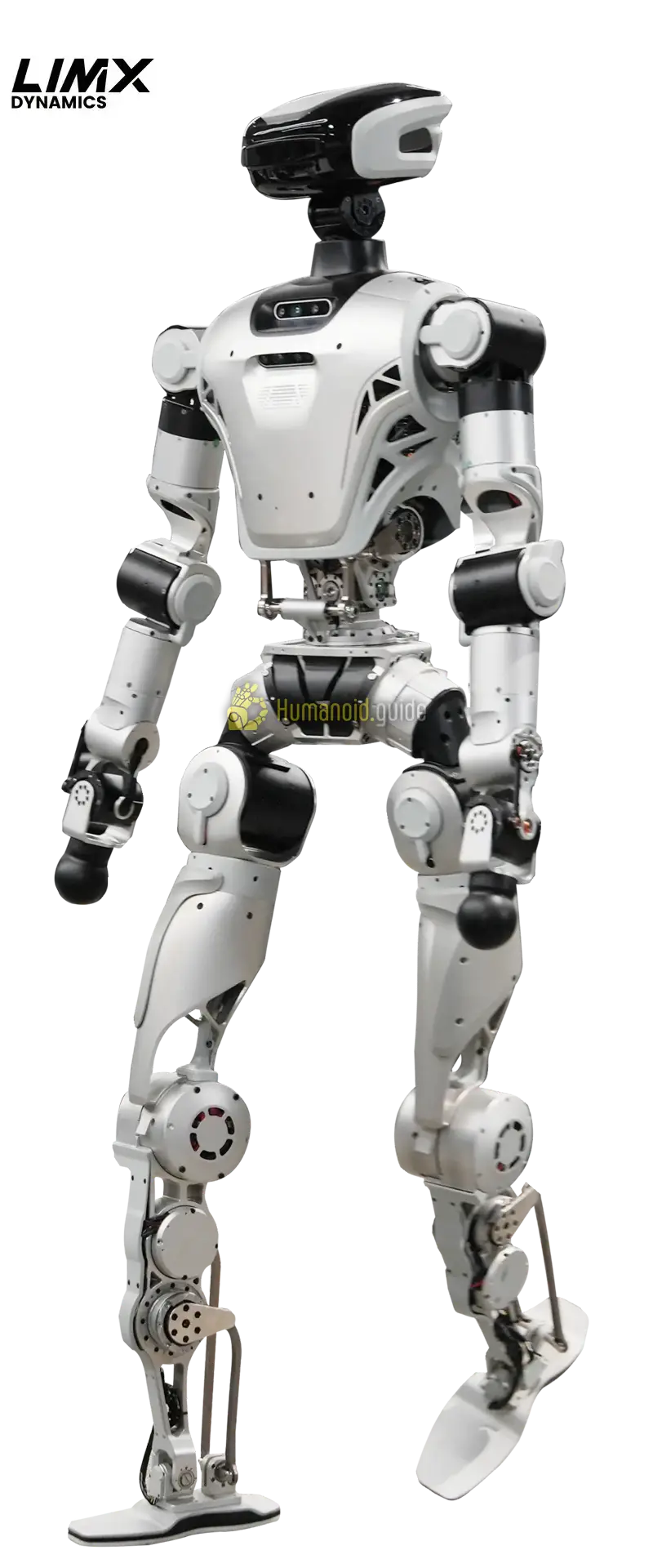
On productisation, LimX sells four named platforms with published pricing: the TRON 1 multi-modal biped from US$15,000, the TRON 2 multi-form platform from US$21,000, the Oli Edu humanoid at US$59,800, and the CL Series at roughly US$40,000 for prototype configurations, plus expansion kits for arms (US$7,000), sensing (US$3,500) and voice (US$2,500) 125. Products listed for sale with prices constitute commercial availability, which is why this report classifies the company as Fully Commercial rather than pre-commercial.
On locomotion, the demonstrated capability is consistent and independently observed across multiple community posts: stair climbing, slope descent, indoor and outdoor walking, real-time gait adjustment, and walking over construction debris 12131415. This is the strongest technical evidence in the dossier and it is genuinely non-trivial. Bipedal locomotion over unstructured terrain remains a hard problem, and LimX appears to have solved a meaningful slice of it.
The ambiguity is cognition. LimX frames its roadmap around deploying "thousands of fully autonomous humanoid robots" and an agentic operating system, COSA 0.5, that claims to unify high-level cognition with whole-body motion control through a three-layer architecture and a System 0 foundation model 671116. No supplied source, however, demonstrates a LimX system autonomously performing a real end-user task without a human. Community observers describe the showcased behaviour as "a set of scripted actions, not a robot reacting to requests or the environment in real time" 11. The reconciled autonomy verdict for this report is therefore unknown, not "fully autonomous" and not "teleoperated". Neither claim is supported.
The investment thesis that emerges is uncomfortable but clear. LimX has raised like a platform company, prices like a research-tools company, and demonstrates like a locomotion company. Whether the cognition layer catches up before the capital is consumed is the central question, and it is not answerable from public evidence today.
Latest news
- ‘Listing is a must’: China’s LimX raises $200m as the humanoid IPO race heats upThe Next Web·2026-07-14GENERAL
- Chinese robot startup LimX Dynamics raises $200m to improve autonomyBiztoc.com·2026-07-14GENERAL
- 'Listing is a must': Chinese humanoid startups are rushing to launch IPOsBiztoc.com·2026-07-14GENERAL
- 'Listing is a must': Chinese humanoid startups are rushing to launch IPOsCNBC·2026-07-14GENERAL
02The LimX Story
LimX Dynamics is headquartered in Shenzhen, a fact confirmed both by the company's own newsroom self-description and by independent news reporting 678. The company positions itself as an embodied-AI and general-purpose humanoid robotics firm, a framing that places it in the same narrative category as Unitree, Figure, Agility and the broader humanoid cohort, while its actual commercial footprint places it closer to the research-platform vendors that supply university labs.
The public record supplied here does not include founding date, founding team biographies, or a funding history prior to the Pre-IPO round. That is a genuine gap and this report will not manufacture a narrative to fill it. What can be established is the shape of the last six months: a company that has moved from relative obscurity in Western coverage to a US$2B valuation on the back of a US$400M raise, with a product line already listed for sale through Western retailers 12 and a software story (COSA) attached to the funding announcement 711.
The strategic logic visible in the record is a two-track approach. Track one is hardware: sell biped and humanoid platforms to buyers who need them now, which in practice means education and research institutions. Track two is software: build and market an agentic operating system that, if it works, converts the hardware from a research instrument into a general-purpose worker. The funding announcement explicitly ties the two together, describing COSA 0.5 and System 0 as the mechanism by which the company will scale "beyond staged demos and pilots" 67.
That phrase, "beyond staged demos and pilots", is doing significant work. It is an admission, embedded in the company's own language, that the current state is staged demos and pilots. This report treats that admission as the most honest sentence in the entire dossier. It is also the sentence that the "fully autonomous" framing elsewhere in the same announcements quietly contradicts.
The company's stated ambition is to "accelerate the deployment of thousands of fully autonomous humanoid robots" 68. Read carefully, this is a forward-looking deployment goal, not a capability claim. The distinction matters because secondary coverage frequently collapses the two, reporting the goal as if it described present capability. It does not. On the supplied evidence, LimX today is a company that has built a credible biped locomotion stack, packaged it into four sellable products, raised substantial capital against a cognition roadmap, and has not yet publicly demonstrated the cognition.
03Product Portfolio: What LimX Actually Sells
LimX sells four platforms and a set of expansion kits. The pricing is unusually transparent for the humanoid sector, which is itself informative: these are products aimed at buyers who compare specifications and budgets, not at strategic partners signing bespoke integration contracts.
| Product | Form factor | Entry price | Primary buyer (inferred) | Evidence |
|---|---|---|---|---|
| TRON 1 | Multi-modal biped | US$15,000 | University labs, individual researchers | 12 |
| TRON 2 | Multi-form platform | US$21,000 | Research groups, early industrial pilots | 12 |
| Oli Edu | Full-size humanoid | US$59,800 | Teaching institutions, robotics programmes | 3 |
| CL Series | Full-size humanoid | ~US$40,000 (prototype) | Research labs, pilot factories | 5 |
| Arm expansion kit | Add-on | US$7,000 | Existing platform owners | 12 |
| Sensor expansion kit | Add-on | US$3,500 | Existing platform owners | 12 |
| Voice expansion kit | Add-on | US$2,500 | Existing platform owners | 12 |
Three observations follow from this table.
First, the price ladder is coherent and deliberately segmented. TRON 1 at US$15,000 undercuts most credible biped competitors and is priced to be bought by a single lab's equipment budget rather than a procurement committee. Oli Edu at US$59,800 sits in the range where a university department can justify a purchase as a teaching asset. The CL Series at roughly US$40,000 for prototype configurations is positioned between the two, and the word "prototype" in the pricing source 5 is a meaningful qualifier: this is not yet a volume product.
Second, the expansion-kit strategy is a revenue-multiplier play. A TRON 1 buyer who adds arms, sensing and voice spends an additional US$13,000, nearly doubling the initial transaction. This is standard platform economics and it is a rational way to grow average order value without raising the headline price. It also tells you something about the base configuration: the entry-level TRON 1 at US$15,000 is not a complete manipulation platform, and buyers who want to do anything beyond locomotion must pay to get there.
Third, the product names and pricing are consistent with an education-and-research target market, not a factory-floor target market. Nothing in the supplied commerce listings or product guides describes a production-line integration, a throughput guarantee, a safety certification, or an industrial service contract 125. The product-guide note about seeding university labs and pilot factories 5 confirms the direction of travel while confirming that the destination has not been reached.
What the portfolio does not include, on the supplied record, is any product sold with a demonstrated autonomous task capability. Every platform is sold as a hardware and software development environment. That is not a criticism; it is a description. It also means the revenue model is closer to that of a robotics-tooling company than a labour-replacement company, and should be valued accordingly until evidence changes.
Products & versions
04Technology Stack: Strengths and the Work That Remains
The LimX technology stack, as described in the supplied record, has two layers: a locomotion and whole-body control layer that is demonstrably strong, and a cognition layer that is claimed but not independently evidenced.
The locomotion layer is the company's genuine asset. The demonstrated behaviours, consistently reported across multiple independent community posts, include real-time perceptive stair climbing 12, real-time gait adjustment 14, walking over construction debris 13, and general indoor and outdoor walking 15. These are not trivial demonstrations. Perceptive stair climbing in particular requires terrain estimation, foothold planning and balance recovery under uncertainty, and doing it in real time on a biped is a meaningful engineering achievement. The fact that multiple independent observers describe the same behaviours lends this evidence more weight than a single company video would carry.
The cognition layer is COSA 0.5. The company describes it as an agentic operating system with three layers and a System 0 foundation model for whole-body motion control, claimed to unify high-level cognition with whole-body motion control 71116. The framing, "the first physical-world-native agentic OS" 1116, is a marketing construction rather than a technical specification. The supplied record contains no architecture paper, no benchmark results, no latency figures, no task-completion rates, and no independent evaluation of COSA. It is, on this evidence, a COMPANY CLAIM.
The gap between the two layers is the central technical question about LimX. Locomotion is a control problem that the company has demonstrably solved to a useful degree. Cognition is a generalisation problem, and the community critique is precise on this point: the showcased behaviour is "a set of scripted actions, not a robot reacting to requests or the environment in real time" 11. If that critique is accurate, then COSA's high-level layer is not yet closing the loop between perception, decision and action in unstructured conditions. The locomotion layer handles terrain. The cognition layer has not been shown to handle tasks.
| Capability | Evidence status | What would change the assessment |
|---|---|---|
| Bipedal locomotion on flat ground | VERIFIED (multiple independent observations) 121415 | Nothing; this is established |
| Perceptive stair climbing | VERIFIED (multiple independent observations) 12 | Nothing; this is established |
| Walking over debris | VERIFIED (community observation) 13 | Independent replication outside demo settings |
| Real-time gait adjustment | VERIFIED (community observation) 14 | Quantified performance under perturbation |
| COSA agentic OS | COMPANY CLAIM 71116 | Architecture disclosure, benchmark results, third-party evaluation |
| Autonomous task completion | UNKNOWN | Any independent demonstration of a real task completed without a human |
| Whole-body manipulation | UNKNOWN | Demonstration of dexterous manipulation integrated with locomotion |
The honest summary is that LimX has built a strong body and has not yet publicly demonstrated a mind. The company's own funding language, promising to move "beyond staged demos and pilots" 6, concedes the point. The work that remains is the work that the valuation is priced against.
05Research, Papers, Authors and Labs
The supplied dossier contains no peer-reviewed papers, no arXiv preprints, no named academic authors, no affiliated laboratories, and no public code repositories or datasets attributed to LimX Dynamics. This is a notable absence for a company that describes itself as an embodied-AI firm and markets an operating system with a foundation model at its core.
The absence should be stated plainly rather than softened. A company claiming a "System 0 foundation model" 7 would ordinarily be expected to publish at least a technical report describing the model architecture, the training data, the training objective and the evaluation methodology. None appears in the record. A company claiming an agentic operating system would ordinarily be expected to release an API specification, a developer preview, or a benchmark suite. None appears in the record.
This does not prove that such material does not exist. It may be held privately, published in Chinese-language venues outside the supplied dossier, or released after the coverage date. But within the evidence available, LimX's research posture is closed rather than open, and that has consequences for how its claims should be weighted. Closed research is not inherently weaker than open research, but it is harder to verify, and in a sector where multiple competitors publish extensively, the asymmetry is worth noting.
The practical implication for buyers and investors is that COSA and System 0 should be treated as unverified until either technical documentation or independent evaluation appears. The locomotion work, by contrast, is verified through independent observation even without papers, because the behaviour is visible and has been reported by multiple unaffiliated observers 12131415.
<!-- module: papers --> <!-- module: authors-labs --> <!-- module: repos --> <!-- module: datasets -->06Media Evidence Library: What the Videos Prove
The media evidence in the dossier is thin and skewed toward community reposts rather than primary company footage. What exists clusters around locomotion, and the pattern is consistent enough to be treated as reliable evidence of capability in that domain.
| Demonstration | Claimed capability | What it actually proves | Source |
|---|---|---|---|
| Stair climbing | Real-time perceptive stair ascent | Terrain perception and foothold planning work on stairs in the demonstrated conditions | 12 |
| Gait adjustment | Real-time gait modification | The controller can alter gait parameters dynamically | 14 |
| Debris walking | Traversal of construction debris | Balance recovery over irregular ground in the demonstrated conditions | 13 |
| General walking | Indoor and outdoor locomotion | Stable bipedal walking across environments | 15 |
| Oli pre-order | Product availability | The Oli platform is orderable, not that it performs tasks | 3 |
| COSA announcement | Agentic OS capability | That LimX has announced an OS, not that it works | 1116 |
The critical discipline here is distinguishing what a video proves from what it is presented as proving. A stair-climbing video proves stair climbing under the conditions shown. It does not prove stair climbing under all conditions, it does not prove the robot decided to climb the stairs, and it does not prove the robot can do anything else once it reaches the top. The community critique that the behaviour is scripted 11 is consistent with the video evidence: a scripted stair climb and an autonomous stair climb look identical in a single unedited clip.
What the media library does not contain, on the supplied record, is any video of a LimX system performing a real end-user task: no warehouse pick, no lab assistant task, no inspection round, no manipulation sequence integrated with locomotion. The absence is the finding. For a company valued at US$2B, the public evidence of task capability is empty.
Media library
07Commercial Reality
The commercial picture that emerges from the supplied record is of a company with real products, real prices, and unverified customers.
What is verified. Products are listed for sale through Western retailers 12, prices are published 125, and the Oli humanoid is available for pre-order 3. This establishes commercial availability, which is why the lifecycle classification is Fully Commercial. It does not establish sales volume, revenue, or customer satisfaction.
What is claimed. The product guide notes that LimX is seeding university labs and pilot factories 5. This is a COMPANY CLAIM about go-to-market activity. Seeding is not selling, and a seeded lab is not a paying customer. The distinction matters because seeding programmes are commonly reported as customer wins in this sector.
What is unknown. The supplied record contains no named paying customer, no deployment count, no revenue figure, no unit-shipment number, no contract value, and no renewal or expansion data. Every one of these is UNKNOWN. The report will not estimate them.
| Commercial question | Status | Evidence |
|---|---|---|
| Are products available to buy? | VERIFIED | Retail listings with prices 125 |
| Is there a named paying customer? | UNKNOWN | None in the record |
| Is there a disclosed deployment count? | UNKNOWN | None in the record |
| Is there disclosed revenue? | UNKNOWN | None in the record |
| Is there a disclosed unit-shipment figure? | UNKNOWN | None in the record |
| Are there industrial service contracts? | UNKNOWN | None in the record |
| Is the target market education and research? | EDITORIAL INFERENCE | Consistent with pricing, product naming and product-guide note 5 |
The editorial inference that LimX's near-term revenue is education-and-research-led rests on three signals: the price points are calibrated to institutional equipment budgets rather than industrial ROI calculations, the product names (Oli Edu) explicitly signal the education segment, and the product guide describes lab and pilot-factory seeding rather than production deployment 5. This is a reasoned conclusion, not a disclosed fact, and it should be weighted accordingly.
The commercial reality, stated bluntly, is that LimX has a product business whose customers are not publicly named and whose revenue is not publicly disclosed, funded by US$400M of capital raised against a cognition roadmap that is not publicly demonstrated. That is not a fraud; it is a bet. But it is a bet whose current commercial base is much narrower than the valuation implies, and the gap between the two is the risk that any assessment of this company must confront.
Customers & deployments
Sections 8 through 14 follow: Markets and Use Cases, Competitive Landscape, Geopolitical Context and Constraints, The Hype the Real and the Ugly, Future Scenarios, What to Watch, and Sources and Methodology.
08Markets and Use Cases
LimX sells into a market that is real, funded, and structurally smaller than the humanoid narrative implies. The reconciled evidence places the company's target market squarely in education and research, with stated ambitions toward university labs and pilot factories 57. That is not a criticism dressed as a fact; it is the single most important commercial constraint on everything else in this report. Education and research buyers purchase platforms to do research, to teach, and to publish. They do not purchase platforms to perform productive work at scale, and they rarely purchase in volumes that justify a manufacturing ramp. A university lab that buys one TRON 1 or one Oli Edu is a customer, but it is a customer whose lifetime value is bounded by grant cycles and departmental budgets, not by operational ROI.
The pricing structure confirms the positioning. TRON 1 starts at US$15,000, TRON 2 at US$21,000, the CL Series prototype at roughly US$40,000, and Oli Edu at US$59,800, with expansion kits priced separately at US$7,000 for an arm, US$3,500 for a sensor package, and US$2,500 for voice 125. These are research-instrument prices, not fleet-deployment prices. A factory that wanted to deploy humanoids at any meaningful scale would need unit economics an order of magnitude lower, plus integration, safety certification, maintenance contracts, and a demonstrated task library. None of that is in evidence. The expansion-kit model is itself revealing: LimX is selling modular capability upgrades to individual buyers, which is the commercial signature of a platform vendor serving experimenters, not a solutions vendor serving operations.
The education and research segment: real but capped
Education and research is a legitimate beachhead. It generates revenue, it seeds familiarity among the engineers who will later specify robots in industry, and it produces the publication record that sustains credibility. LimX's own product-guide language about seeding labs and factories 5 is a reasonable statement of this strategy. The problem is that the segment does not scale into the numbers implied by a US$2 billion valuation. The global market for research humanoids is measured in thousands of units per year at most, spread across dozens of vendors. Even generous assumptions about LimX's share do not produce the revenue trajectory that a US$2 billion post-money valuation requires.
There is a second, subtler issue. Research buyers are sophisticated and price-sensitive in ways that consumer or industrial buyers are not. They compare specifications, they read papers, they talk to each other on forums, and they are unusually sensitive to whether a platform's claimed capabilities are reproducible. The community commentary in the dossier is exactly this kind of buyer talking: observers describing the showcased behaviour as "a set of scripted actions, not a robot reacting to requests or the environment in real time" 1116. That critique circulates in the same channels where LimX's prospective customers congregate. It does not kill the education business, but it caps the premium LimX can charge and slows the word-of-mouth that platform vendors depend on.
Pilot factories: ambition without evidence
The stated ambition toward pilot factories is where the gap between narrative and evidence is widest. A pilot factory deployment is a specific, checkable thing: a named site, a named task, a defined operating window, a measured output. The dossier contains none of these. There is no named factory customer, no described task, no productivity figure, no deployment duration. The phrase "pilot factories" appears in product-guide language as a forward-looking ambition 5, and the company's funding announcements speak of scaling "beyond staged demos and pilots" 678. That phrasing is doing a lot of work: it acknowledges that the current state is staged demos and pilots while promising to move past it. It is a roadmap statement, not a deployment record.
This matters because industrial buyers do not purchase on roadmap statements. They purchase on references. The absence of a single named industrial customer in the supplied evidence is the most consequential commercial unknown in this report. It is possible that such customers exist and are covered by NDAs, which is common in early industrial deployments. It is also possible that they do not exist yet. The evidence cannot distinguish between these, and the honest position is to record the unknown rather than resolve it in either direction.
Use cases the platform can plausibly serve today
Setting aside the deployment ambitions, what can a LimX platform actually do for a buyer in 2026? The demonstrated capability set is locomotion: stair climbing, slope descent, indoor and outdoor walking, real-time gait adjustment, and walking over construction debris 12131415. For a research lab, that is a genuinely useful capability set. Locomotion research is a live field, legged platforms are expensive to build from scratch, and a platform that reliably walks over debris and adjusts gait in real time is a credible instrument for studying control, perception, and terrain adaptation. The COSA operating system, described as a three-layer agentic OS with a System 0 foundation model for whole-body motion control 711, is likewise a plausible research target: labs can study how high-level task specification maps onto whole-body control, even if the mapping is not yet robust.
For an industrial buyer, the same capability set is not yet a use case. Walking over debris is a prerequisite for inspection tasks in construction and disaster response, but it is not the task itself. Stair climbing is a prerequisite for multi-floor logistics, but it is not the task itself. The gap between "can traverse this terrain" and "can perform this work reliably for eight hours" is where most humanoid deployments fail, and the dossier contains no evidence that LimX has crossed it.
Market sizing: what the valuation implies
A US$2 billion post-money valuation on a company selling research platforms at US$15,000 to US$60,000 per unit implies an extraordinary forward revenue curve. If we assume a generous 30 percent gross margin on hardware (typical for low-volume robotics), the company would need to sell on the order of several thousand units per year at current prices to approach the revenue that would justify the valuation on conventional multiples. The education and research market cannot absorb that volume at those prices. The valuation is therefore a bet on the industrial and commercial market materialising, not a reflection of the current business. That is a legitimate bet for a venture investor to make, but it should be labelled as such. The funding round is evidence of investor belief in the roadmap, not evidence that the roadmap has been realised.
The honest summary of the market position
LimX has a real, funded, defensible position in education and research humanoids. It has a credible locomotion capability and a plausible software story. It does not have, in the supplied evidence, a single named industrial customer, a single measured productive deployment, or a single independent demonstration of autonomous task completion. The market it currently serves is smaller than its valuation implies, and the market it needs to serve to justify that valuation is one it has not yet demonstrably entered. Everything in the following sections should be read against that frame.
Customers & deployments
09Competitive Landscape
The humanoid robotics field in 2026 is crowded, capital-intensive, and increasingly segmented by go-to-market strategy. LimX competes in at least three distinct arenas simultaneously: the research-platform market, the general-purpose humanoid market, and the embodied-AI software market. It is not the leader in any of them, and in two of the three it is a challenger with a fraction of the resources of the incumbents. Understanding where LimX actually sits requires separating these arenas rather than treating "humanoid robotics" as a single race.
Arena one: research platforms
In the research-platform arena, LimX's direct competitors are Unitree, Booster Robotics, and a handful of smaller vendors selling legged and humanoid platforms to universities. Unitree is the dominant player by volume and by price aggression, with a product line that spans quadrupeds and humanoids and a reputation for shipping at scale. Booster Robotics has positioned itself similarly in the education and research segment. LimX's differentiation in this arena is its locomotion capability, particularly the debris-traversal and real-time gait adjustment demonstrations 121314, and its COSA software story 711. The pricing is broadly comparable to Unitree's humanoid offerings, which means LimX cannot win on price. It must win on capability, software, or support.
The honest assessment is that LimX's locomotion demonstrations are competitive but not uniquely so. Unitree has demonstrated comparable stair and terrain capabilities. The debris-traversal demonstration is striking, but it is a demonstration, and the community critique that such behaviours are scripted 1116 applies with equal force to every vendor in this arena. The research-platform market rewards reproducibility and documentation as much as raw capability, and the dossier does not contain evidence about LimX's documentation quality, SDK maturity, or support responsiveness. Those are the variables that actually determine share in this segment, and they are unknown.
Arena two: general-purpose humanoids
In the general-purpose humanoid arena, LimX is a small player against vastly better-capitalised competitors. The field includes Figure, Tesla Optimus, Agility Robotics, Apptronik, 1X, and a long tail of Chinese entrants including Unitree, UBTech, Fourier, and others. These companies have raised hundreds of millions to billions of dollars, have signed named industrial customers, and in several cases have deployed robots in paid operational roles. LimX's US$400 million total raise over six months 67810 is substantial but not exceptional in this field, and its US$2 billion valuation is mid-pack.
The critical asymmetry is not capital but evidence. Competitors in this arena have published named-customer deployments, measured task performance, and in some cases multi-year operational data. LimX has none of these in the supplied evidence. That does not mean LimX cannot compete; it means LimX is currently competing on demonstrations and roadmap rather than on deployment record. In a market where industrial buyers increasingly demand references, that is a structural disadvantage that capital alone does not fix.
Arena three: embodied-AI software
The COSA operating system positions LimX in the embodied-AI software arena, competing against NVIDIA's Isaac and GR00T stack, Google DeepMind's robotics work, and a growing set of foundation-model-for-robotics efforts. This is the arena where LimX's claims are boldest and its evidence thinnest. COSA is described as a three-layer agentic OS with System 0 as a foundation model for whole-body motion control 711, and the company frames it as unifying high-level cognition with whole-body control. That is precisely the problem the entire field is trying to solve, and no vendor has solved it. LimX claiming to have done so, without published benchmarks, without peer-reviewed results, and without independent replication, places it in a crowded field of unverified claims.
The competitive reality in this arena is that NVIDIA has the developer ecosystem, the compute platform, and the simulation infrastructure. DeepMind has the research depth. Any startup claiming a physical-world-native agentic OS is competing against these advantages with a fraction of the resources. That does not make the claim false, but it makes it unproven, and it means LimX's software story should be treated as a differentiator-in-progress rather than a moat.
Comparative positioning table
| Dimension | LimX position | Strongest competitor position | Assessment |
|---|---|---|---|
| Research platform pricing | US$15k–US$60k 125 | Unitree broadly comparable | No price advantage |
| Locomotion demos | Stairs, slopes, debris, gait adjustment 121314 | Unitree comparable; others catching up | Competitive, not unique |
| Named industrial customers | None in supplied evidence | Figure, Agility, Apptronik have named deployments | Structural disadvantage |
| Capital raised | ~US$400M over six months 678 | Figure, Tesla, others far higher | Mid-pack, not leading |
| Software platform | COSA 0.5, System 0 711 | NVIDIA Isaac/GR00T, DeepMind | Unproven against ecosystem leaders |
| Published research | Not in supplied evidence | DeepMind, ETH, Stanford publish extensively | Unknown, likely weak |
| Valuation | ~US$2B 678 | Figure ~US$2.6B+; others higher | Mid-pack |
What the competitive picture actually means
LimX is a credible challenger in research platforms, a small player in general-purpose humanoids, and an unproven claimant in embodied-AI software. Its strongest asset is its locomotion capability, which is genuinely good and independently observed. Its weakest position is in the arena where its valuation and narrative place the most weight: general-purpose autonomous humanoids for productive work. The competitive gap there is not primarily about technology; it is about evidence. Competitors have deployment records. LimX has demonstrations. Until that changes, LimX's competitive position is best described as promising but unproven, and the burden of proof sits with the company.
Competitive comparison
| Robot | Maker | Autonomy | Conf. |
|---|---|---|---|
| iRobot Roomba Combo 10 Max | iRobot | Autonomous | 0.90 |
| Mobile ALOHA (Stanford) | Stanford University | Teleoperated | 0.90 |
| 1X NEO | 1X Technologies | Remote-Assisted | 0.90 |
10Geopolitical Context and Constraints
LimX is a Shenzhen-headquartered company operating in the most geopolitically charged technology sector of the decade. This is not a peripheral consideration; it shapes LimX's addressable market, its supply chain, its investor base, and its access to talent and customers. Any serious assessment of the company must account for the constraints that its jurisdiction imposes, and must do so without either exaggerating the constraints into a fatal flaw or dismissing them as irrelevant.
The export-control environment
Humanoid robotics sits at the intersection of advanced manufacturing, AI, and dual-use technology, which places it squarely within the scope of US and allied export controls. The direction of travel since 2022 has been toward tighter restrictions on advanced semiconductors, AI compute, and increasingly on robotics components and systems. LimX's products depend on advanced chips, sensors, and actuators, some of which are subject to export controls or supply-chain chokepoints. The dossier does not disclose LimX's specific supply chain, which is a significant unknown: a company that depends on restricted components faces a different risk profile from one that has localised its supply chain.
The investor list is relevant here. The round includes IDG Capital, Lens Technology, GGG Group, Redstone VC, WestSummit Capital, Hefei Binhu Industry Development Group, Vitalbridge Capital, CoStone Capital, Nanshan SEI Investment, Shangqi Capital, and NIO Capital 6. This is a predominantly Chinese investor base with some cross-border participation. WestSummit Capital and IDG Capital have historically had US-linked limited partners, which creates exposure to US outbound-investment rules if those rules extend to robotics. The direction of US policy on outbound investment in Chinese AI and robotics is toward restriction, not liberalisation, and LimX's investor base is therefore a potential vulnerability as well as a strength.
Market access asymmetry
The most concrete geopolitical constraint is market access. LimX sells primarily to education and research buyers 5, and the largest and best-funded research market in the world is the United States. US universities and research institutions face increasing scrutiny over the procurement of Chinese-origin robotics platforms, particularly those with AI software stacks, network connectivity, and sensor suites. Even where procurement is not formally prohibited, institutional risk committees and funding agencies are increasingly cautious. This means LimX's addressable research market is effectively smaller than the global research market, and its growth in the segment most likely to buy its products is constrained by factors outside its control.
The mirror image is that LimX benefits from a large and growing domestic market. Chinese universities, research institutes, and state-supported pilot programmes are actively procuring humanoid platforms, and Chinese policy explicitly supports the sector. The Hefei Binhu Industry Development Group's participation in the round 6 is a signal of local-government support, which typically comes with procurement access and land or facility support. For a company at LimX's stage, domestic demand can sustain growth even if Western market access narrows.
The dual-use perception problem
Humanoid robots are inherently dual-use. The same locomotion capability that walks over construction debris can traverse rubble in a disaster zone or a conflict zone. The same whole-body control that enables stair climbing enables military logistics. LimX's public positioning is civilian and research-oriented, but the technology category carries a dual-use perception that affects export licensing, customer risk assessment, and investor due diligence. The dossier contains no evidence that LimX is pursuing military applications, and the honest position is that there is no such evidence. But the category-level perception is a constraint regardless of the company's actual intentions, and it is likely to tighten rather than loosen.
Talent and knowledge flows
LimX operates in a talent market that is increasingly bifurcated. Chinese robotics talent is abundant and increasingly well-trained, and the domestic ecosystem benefits from strong university programmes and state investment. But the cutting edge of embodied AI research remains concentrated in US and European institutions, and cross-border collaboration is becoming harder. Conference participation, joint publications, and researcher mobility are all affected by visa regimes and political friction. For a company whose software story depends on staying at the frontier of embodied AI, reduced access to the global research community is a real constraint. The dossier does not contain evidence about LimX's publication record or international collaborations, which is itself a data point: a company deeply integrated into the global research community would likely have a visible footprint, and none is in evidence.
What the geopolitical frame does and does not explain
It is tempting to attribute LimX's evidence gaps to geopolitical constraints, and there is some truth to that: a Chinese company faces different disclosure pressures and different customer-confidentiality norms than a US one. But geopolitics does not explain the absence of published benchmarks, the absence of named customers, or the community critique of scripted demonstrations. Those are company-level choices and company-level gaps. The geopolitical frame explains why LimX's market access is constrained and why its investor base looks the way it does. It does not explain why the autonomy evidence is thin. Both things are true, and conflating them would be a mistake.
11The Hype, the Real and the Ugly
This section separates what LimX has demonstrated from what it has claimed, and what the gap between the two reveals. The company is not a fraud and its demonstrations are not fabricated; the locomotion capability is real and independently observed. But the distance between the demonstrated capability and the narrative built on top of it is large, and that distance is the central fact about LimX as an investment or partnership proposition.
The hype
The strongest hype claim is the autonomy framing. LimX states an intent to "accelerate the deployment of thousands of fully autonomous humanoid robots" and to scale "beyond staged demos and pilots" 67810. The phrase "fully autonomous" is doing enormous work. It is a forward-looking deployment goal, not a demonstrated capability, and the company's own language acknowledges that the current state is "staged demos and pilots." A reader who encounters only the funding headlines would reasonably conclude that LimX has autonomous humanoids in deployment. The evidence does not support that conclusion.
The second hype claim is the COSA operating system. Described as "the first physical-world-native agentic OS" 1116, COSA is positioned as unifying high-level cognition with whole-body motion control. The superlative "first" is unverifiable and almost certainly false in a field where NVIDIA, DeepMind, and dozens of research groups are working on the same problem. The substantive claim, that COSA provides a working agentic layer, is unproven: there are no published benchmarks, no independent evaluations, and no demonstrations of COSA performing a real task. The community response to the COSA announcement was notably skeptical, with observers describing the showcased behaviour as scripted rather than reactive 1116.
The third hype vector is the valuation itself. A US$2 billion post-money valuation on a company whose demonstrated capability is locomotion and whose customer base is education and research is a bet on a future that has not yet materialised. That is not unusual in venture markets, and it is not a criticism of the investors, who are making a calculated bet on a large market. But it is a fact that should be stated plainly: the valuation reflects belief, not evidence.
The real
The locomotion capability is real. Multiple independent community sources describe the same demonstrations: stair climbing, slope descent, indoor and outdoor walking, real-time gait adjustment, and walking over construction debris 12131415. These are not trivial achievements. Walking over debris requires perception, planning, and whole-body control working together in real time, and the fact that independent observers describe the same behaviours lends credibility. The CL-1's real-time gait adjustment 14 is a genuine technical achievement in a field where most platforms still struggle with robust locomotion.
The funding is real. Nearly US$200 million in a Pre-IPO round, US$400 million total over six months, at a reported RMB 15 billion post-money valuation, is confirmed across the company's newsroom and multiple independent outlets 678910. The investor list is credible and includes both new and existing backers 6. The company is not a shell or a concept; it has capital, products, and a team.
The products are real. TRON 1, TRON 2, Oli Edu, and the CL Series are listed for sale with published pricing 125, and the Oli humanoid is available for pre-order 3. A company that lists products for sale and takes orders is a company with manufacturing capability and a supply chain, which is more than many humanoid startups can claim.
The ugly
The ugly part is the evidence gap on autonomy, and the way the company's language obscures it. The reconciled autonomy verdict in the dossier is "unknown" [dossier], and that is the correct characterisation. No supplied source demonstrates a LimX system autonomously performing a real end-user task without a human. The company's "fully autonomous" language appears only in its own funding and deployment announcements. The community's characterisation of the demonstrations as scripted is better supported by the available evidence than the company's framing.
This is not a trivial gap. Autonomy is the entire value proposition of a humanoid robot. A humanoid that walks over debris but cannot perform a task autonomously is a research platform, not a workforce. The company's valuation and narrative are built on the workforce framing, while its evidence supports the research-platform framing. That mismatch is the ugly part, and it is not resolved by more funding or more demonstrations of locomotion.
Claim-versus-evidence table
| Claim | Source | Evidence status | Assessment |
|---|---|---|---|
| "Thousands of fully autonomous humanoid robots" | Company funding announcements 678 | No independent evidence of autonomous task completion | Forward-looking goal, not demonstrated capability |
| "First physical-world-native agentic OS" | Company/community framing 1116 | No published benchmarks or independent evaluation | Unverifiable superlative; substantive claim unproven |
| Real-time perceptive stair climbing | Community video descriptions 12 | Multiple independent observers describe same behaviour | Supported as a demonstration |
| Walks over construction debris | Community video descriptions 13 | Multiple independent observers describe same behaviour | Supported as a demonstration |
| Real-time gait adjustment | Community video descriptions 14 | Multiple independent observers describe same behaviour | Supported as a demonstration |
| COSA unifies cognition and whole-body control | Company description 711 | No independent demonstration | Unproven |
| Products available for purchase | Retailer listings 125 | Published pricing, pre-order availability 3 | Verified |
| US$200M Pre-IPO, US$400M total, ~US$2B valuation | Company and independent news 678910 | Consistent across multiple sources | Verified |
The honest bottom line
LimX is a real company with real products, real funding, and a real locomotion capability. It is also a company whose public narrative runs substantially ahead of its public evidence on the dimension that matters most: autonomous task performance. The demonstrations are genuine but scripted; the autonomy claims are aspirational but unproven; the valuation is a bet on a future that has not yet arrived. None of this makes LimX a bad company. It makes LimX a company whose claims should be discounted to match its evidence, and whose progress should be judged on whether it closes the autonomy gap rather than on whether it raises more capital or posts more locomotion videos.
Claim tracker
Multiple independent community posts [12][13][14][15] describe the same locomotion demonstrations, though these are staged demos rather than verified field deployments.
The 'fully autonomous' phrasing appears only in LimX's own funding/deployment announcements [6][8][10], while independent community observers describe the showcased behavior as 'scripted actions, not a robot reacting to requests or the environment in real time' [11][16].
COSA is described in LimX's own newsroom [6] and repeated by independent outlets [7], but no independent test or demonstration shows the OS autonomously executing real tasks.
Independent retailer listings [1][2] and a product-guide page [5] confirm published prices and availability, though the CL Series is listed as a ~$40,000 prototype.
Independent retailer descriptions [1][2] and a product-guide note [5] confirm the education/research target market, though factory deployment remains aspirational.
The funding figures are consistently reported across LimX's newsroom [6] and multiple independent outlets [7][8][10], though valuation remains a reported figure not independently audited.
No supplied source demonstrates a LimX system autonomously completing a real end-user task, and the only concrete independent evidence is locomotion demos [12][13][14].
The claim appears only in LimX's own announcements [6][8], while independent evidence shows only staged locomotion demos and no verified real-world deployment [12][13][14][15].
12Future Scenarios
The following scenarios are editorial inferences from the available evidence, not predictions. They are intended to bound the range of plausible outcomes and to identify the observable signals that would distinguish between them. Each scenario is assigned a rough subjective probability based on the current evidence, with the caveat that the evidence base is thin and the probabilities should be treated as indicative rather than precise.
Scenario A: The research-platform consolidation (probability ~40%)
In this scenario, LimX consolidates its position as a leading supplier of humanoid and biped platforms to education and research buyers, grows revenue steadily but not explosively, and eventually either IPOs at a modest valuation or is acquired by a larger industrial or technology company. The autonomy gap persists but does not matter much, because research buyers do not require autonomous task performance; they require a capable, well-documented, well-supported platform. COSA matures into a useful research tool without becoming a general-purpose agentic OS. The company becomes a solid mid-cap robotics vendor with a defensible niche.
Signals that would confirm this scenario: continued product refreshes in the TRON and Oli lines; growing publication record from customer labs; expansion of the SDK and documentation; no major industrial customer announcements; steady but unspectacular revenue growth.
Scenario B: The industrial breakthrough (probability ~20%)
In this scenario, LimX lands one or more named industrial customers with measured deployments, demonstrates autonomous task performance in a real operational setting, and begins the transition from research-platform vendor to industrial solutions provider. The autonomy gap closes, at least for a narrow task set. The valuation is justified by the emergence of a scalable industrial business. This is the scenario the investors are betting on, and it is plausible but not evidenced.
Signals that would confirm this scenario: a named factory or logistics customer with a described task and measured output; a published benchmark or independent evaluation of COSA; a demonstration of autonomous task completion without a human in the loop; a partnership with a systems integrator or industrial automation vendor.
Scenario C: The funding-and-fade (probability ~25%)
In this scenario, LimX continues to raise capital and post demonstrations but never closes the autonomy gap or lands a significant industrial customer. The research-platform market proves too small to justify the valuation, the industrial market proves too demanding, and the company either stalls, downsizes, or is acquired at a valuation below its last round. The demonstrations continue but the narrative loses credibility as competitors with real deployments pull ahead.
Signals that would confirm this scenario: repeated funding rounds without customer announcements; continued reliance on locomotion demonstrations as the primary evidence of capability; departure of key technical staff; failure to publish benchmarks or independent evaluations; competitors announcing deployments that LimX cannot match.
Scenario D: The geopolitical squeeze (probability ~15%)
In this scenario, tightening export controls, outbound-investment restrictions, or market-access barriers materially constrain LimX's access to components, capital, or customers. The company survives on domestic demand but its growth is capped, and its valuation is marked down. This scenario is largely outside the company's control and is driven by US-China policy dynamics rather than by LimX's execution.
Signals that would confirm this scenario: new US or allied restrictions on robotics components or Chinese robotics companies; withdrawal or write-down of cross-border investors; loss of access to US or European research customers; supply-chain disruptions affecting production.
Scenario interactions and the base case
These scenarios are not mutually exclusive. The most likely outcome is a blend: LimX consolidates in research platforms (Scenario A) while continuing to pursue industrial opportunities (Scenario B) under geopolitical constraints (Scenario D), with the risk of funding-and-fade (Scenario C) if the industrial breakthrough does not materialise within the next 24 to 36 months. The base case, in my assessment, is a research-platform company with a strong locomotion capability, a promising but unproven software story, and a valuation that assumes an industrial future it has not yet demonstrated. That is a defensible position for a venture-backed company, but it is not the position the funding headlines describe.
What would change the assessment
The single most important signal would be a named industrial customer with a measured deployment. That would move Scenario B from speculative to plausible and would justify a substantial reassessment. The second most important signal would be an independent evaluation of COSA, whether through a published benchmark, a peer-reviewed paper, or a credible third-party test. The third would be a demonstration of autonomous task completion without a human in the loop, ideally in an operational rather than a staged setting. Absent these signals, the assessment should remain where the evidence places it: a promising research-platform company with an unproven autonomy story.
13What to Watch: A Live Monitoring Checklist
The following checklist is designed for ongoing monitoring. Each item is a specific, observable signal that would either confirm or challenge the current assessment. The list is ordered by importance, with the most decision-relevant items first. Items should be checked against primary sources where possible, and any change should be recorded with a date and a source.
Tier 1: Signals that would materially change the assessment
-
Named industrial customer with a described task. Watch for a specific company name, a specific task, a deployment site, and ideally a measured output or duration. A press release that names a customer but describes no task is not sufficient. A pilot announcement without a named site is not sufficient. The bar is: who, where, doing what, for how long, with what result.
-
Independent evaluation of COSA. Watch for peer-reviewed papers, third-party benchmarks, or credible independent testing of the COSA operating system. A company-produced video is not an independent evaluation. A customer testimonial without technical detail is not an independent evaluation. The bar is: a source with no commercial relationship to LimX reporting a reproducible result.
-
Autonomous task completion without a human in the loop. Watch for a demonstration, ideally in an operational setting, of a LimX system performing a real task autonomously. The bar is: a task with a defined success criterion, performed without teleoperation or scripting, observed by someone other than the company.
-
Published research from LimX or its customers. Watch for peer-reviewed publications describing the platform's capabilities, the COSA architecture, or the locomotion control stack. A strong publication record would be evidence of genuine technical depth and would partially address the evidence gap. The bar is: peer-reviewed venues, reproducible methods, honest limitations sections.
Tier 2: Signals that would refine the assessment
-
Product line evolution. Watch for new products, price changes, and capability upgrades. A move toward lower-cost, higher-volume platforms would signal industrial ambition. A move toward higher-cost, more specialised platforms would signal continued research focus. The bar is: official product documentation with specifications and pricing.
-
Customer disclosures. Watch for customer names in case studies, conference talks, or academic acknowledgements. Even research customers are informative: a growing list of named university labs would confirm the education strategy is working. The bar is: named institutions, not anonymous "leading universities."
-
Investor and funding developments. Watch for new rounds, IPO filings, or changes in the investor base. A successful IPO would provide liquidity and public disclosure obligations, which would improve the evidence base. A down round or a failed IPO would be a negative signal. The bar is: regulatory filings or official announcements.
-
Geopolitical developments. Watch for new export controls, outbound-investment restrictions, or market-access barriers affecting Chinese robotics companies. These are largely exogenous but materially affect LimX's addressable market. The bar is: official government announcements or credible policy reporting.
Tier 3: Signals that would challenge the assessment
-
Continued reliance on locomotion demonstrations. If, 12 months from now, the primary evidence of LimX's capability is still locomotion videos, that is a negative signal. It would suggest the autonomy gap is not closing and the company is substituting demonstration volume for capability depth.
-
Departure of key technical staff. Watch for the departure of founders, chief scientists, or senior engineers. In deep-tech companies, key-person risk is significant, and departures can signal internal problems or a shift in strategy. The bar is: confirmed departures with named individuals.
-
Competitor deployments that LimX cannot match. Watch for competitors announcing named industrial deployments, published benchmarks, or independent evaluations. If the competitive gap widens, LimX's position weakens regardless of its own progress.
-
Community sentiment shifts. Watch the research and robotics communities for changes in how LimX is discussed. The current sentiment is skeptical of the autonomy claims 1116. A shift toward credibility would be positive; a shift toward dismissal would be negative. The bar is: sustained change across multiple independent channels, not a single post.
Monitoring cadence
Tier 1 items should be checked monthly. Tier 2 items should be checked quarterly. Tier 3 items should be checked semi-annually, with the exception of competitor deployments, which should be checked quarterly. Any Tier 1 signal should trigger a full reassessment of this report's conclusions. The current assessment should be considered valid until a Tier 1 signal is observed.
14Sources and Methodology
Methodology
This report was produced from a research dossier compiled on 21 September 2026, containing five commerce sources, five news sources, six community sources, and zero official, research, or video sources. The dossier's overall confidence was assessed at 0.62, reflecting a moderate evidence base with significant gaps. The report separates verified facts from company claims, editorial inference, and unknowns, and it does not treat choreographed demonstrations as proof of autonomous work, shipments as proof of productive deployment, or partnership announcements as proof of paid customers.
The evidence labels used throughout are:
| Label | Definition | Example in this report |
|---|---|---|
| Verified fact | Confirmed by regulatory filings, official product documentation, named-customer confirmation, peer-reviewed research, or multiple independent sources | The US$200M Pre-IPO round, confirmed across company newsroom and multiple independent outlets 678910 |
| Company claim | Stated by the company, not independently verified | "Thousands of fully autonomous humanoid robots" 678 |
| Editorial inference | Reasoned conclusion drawn from public evidence | The assessment that the research-platform market is too small to justify the valuation |
| Unknown | Not publicly disclosed | LimX's supply chain, documentation quality, and support responsiveness |
The autonomy verdict is "unknown" at a confidence of 0.55. The supplied evidence establishes strong locomotion capability and a claimed agentic OS, but contains no independent evidence of a LimX system performing a real task autonomously, under active supervision, or via teleoperation. The "fully autonomous" phrasing appears only in the company's own funding and deployment announcements, while community evidence characterises the demonstrations as scripted. With neither proven autonomous task execution nor evidence of a human driving the task, no autonomy level can be defensibly assigned.
Limitations
The dossier contains no official sources, no research sources, and no video sources. This is a significant limitation: the report relies on commerce listings, news coverage, and community commentary, which means the evidence base is skewed toward secondary and tertiary sources. The absence of official product documentation limits the precision of the product analysis. The absence of research sources limits the assessment of LimX's technical depth. The absence of video sources means the media evidence analysis in §6 relies on community descriptions of videos rather than direct observation.
The dossier also contains no named industrial customers, no measured deployments, and no independent evaluations of COSA. These gaps are not artefacts of the research process; they reflect the state of publicly available evidence about LimX. Where the dossier is thin, this report says so plainly rather than padding.
Sources
1 Limx Dynamics — https://www.usrobotstore.com/collections/limx-dynamics?srsltid=AU7gw4VKNhfL9IzQ1iydHgeAkQdV_bIwWdveqqgCvx4o4nGyJ3M2M26e
2 Limx Dynamics — https://www.robotshop.com/collections/limx-dynamics?srsltid=AU7gw4Vn2aYEIC04aVWg7ikOjqNZwsbiqWwHT2ILfcnWL6CiWEMhktnT
3 The New LimX Oli Humanoid Robot is Available for Pre-Order ... — https://www.youtube.com/watch?v=FM4DPeniHqg
4 LIMX Stock Price and Chart — OTC:LIMX — https://www.tradingview.com/symbols/OTC-LIMX/
5 Limx Dynamics LimX CL Specs & Price — https://humanoid.guide/product/limx-cl-series/
6 LimX Dynamics Closes US$200 Million Pre-IPO Round — https://www.limxdynamics.com/en/news/BK000064
7 LimX Dynamics raises $200M Pre-IPO round — https://humanoid.guide/limx-dynamics-200m-pre-ipo-cosa-0-5/
8 LimX Dynamics Raises Nearly $200 Million In Pre-IPO ... — https://pulse2.com/limx-dynamics-raises-nearly-200-million-in-pre-ipo-funding-to-scale-humanoid-robots/
9 LimX Dynamics has successfully secured nearly $200 million in ... — https://www.facebook.com/bazaartimes/videos/limx-dynamics-has-successfully-secured-nearly-200-million-in-funding-bringing-th/1291128059764386/
10 LimX Dynamics Raises Nearly $200 Million in Pre-IPO Funding — https://autonews.gasgoo.com/articles/news/seeds-limx-dynamics-raises-nearly-200-million-in-pre-ipo-funding-2077013414738968577
11 Meet LimX COSA|The First Physical-world-native Agentic OS for ... — https://www.reddit.com/r/singularity/comments/1qb1zs0/meet_lim