LG
US$0.99 unlocks one Word + one PDF download. The full report is free to read on this page.
LG
The world's most capable robotics company that has not yet decided to be a robotics company.
| Report status | Coverage date | Company stage | Editorial standard |
|---|---|---|---|
| Premium deep report, first edition | Evidence gathered 19 September 2026 | Multi-business conglomerate; robotics at research and development stage only | Verified facts separated from company claims, editorial inference and unknowns; no demo treated as deployment |
How to Read This Report
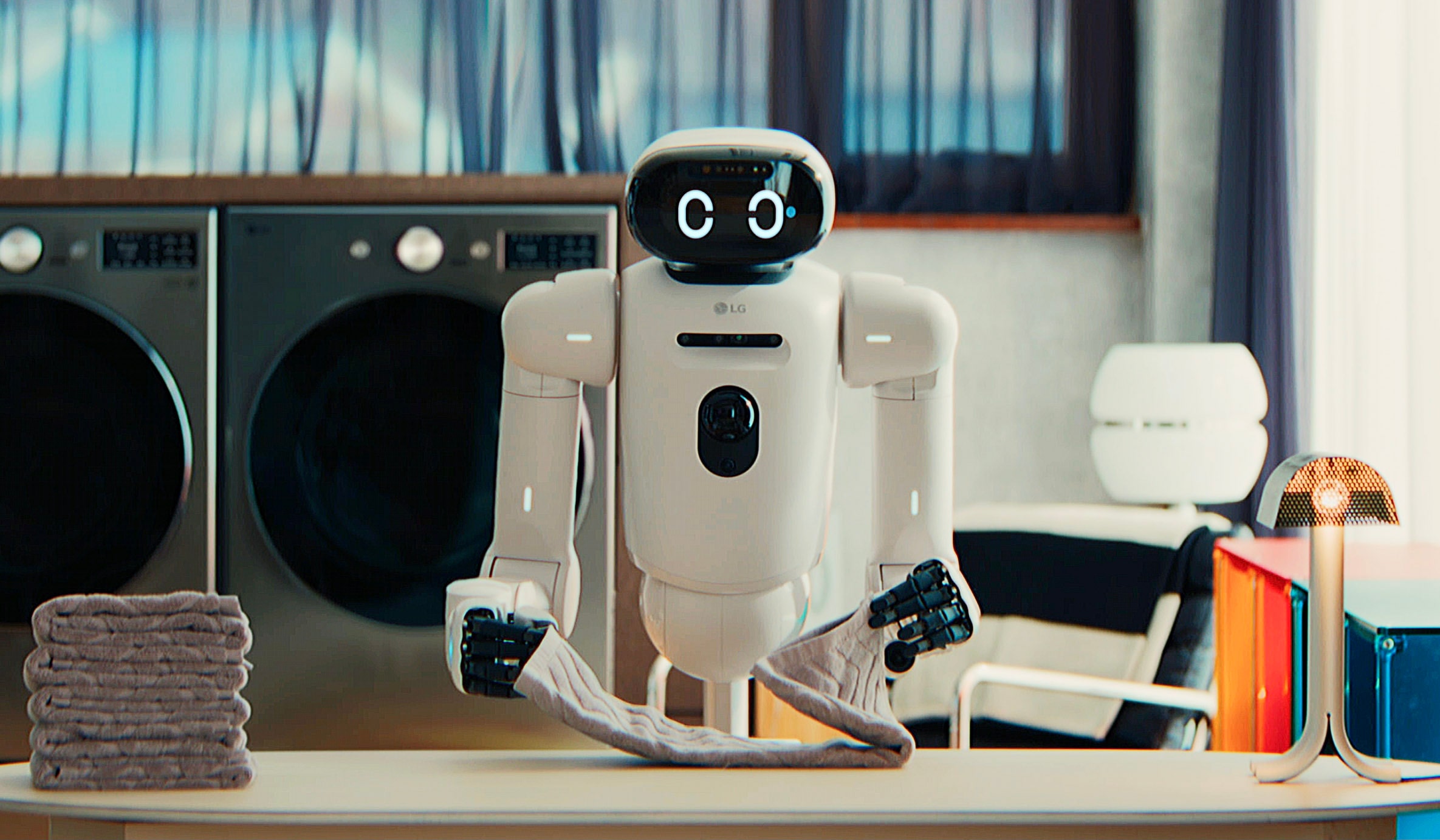
LG is not a robotics company in the sense that Unitree, Boston Dynamics or even Amazon Robotics are robotics companies. It is a South Korean industrial conglomerate whose revenue is dominated by televisions, home appliances, batteries and, increasingly, AI data-centre infrastructure. Robotics appears in the public record in exactly two forms: a cluster of research papers on language-guided navigation and manipulation, and a single news mention that LG Electronics is developing a home robot called CLoiD, trained in Nvidia's Isaac Sim and Isaac Lab simulation environments 11. That is the entire evidentiary basis for treating LG as a robotics subject at all.
This report therefore does something unusual for a Max Robotics deep dive: it spends most of its length establishing what LG actually is, because the gap between LG's public identity as a consumer-electronics giant and its thin, largely academic robotics footprint is itself the story. The honest summary is that LG has world-class manufacturing scale, a genuinely interesting research bench, a plausible strategic reason to enter home robotics, and no demonstrated ability to put an autonomous robot into a customer's home. Readers looking for a deployment verdict will find "unknown" and should treat that as the finding, not a gap in our research.
The evidence base for this edition is unusually weak. The dossier contains zero official robotics product documents, five commerce sources (all consumer electronics), four research sources (all arXiv), thirteen news items (mostly AI data-centre and battery investment), six videos (all consumer hardware reviews and teardowns) and six community threads (all appliance and TV complaints). No source in the dossier shows an LG robot performing a task. Confidence in the overall picture is 0.35, and that number is driven by the fragmentation of the evidence rather than by any single disputed fact.
Evidence labels used throughout
| Label | Meaning | Example in this report |
|---|---|---|
| VERIFIED FACT | Regulatory filing, official product documentation, named-customer confirmation, peer-reviewed or primary research, or corroborated by multiple independent sources | LG Energy Solution's Lansing plant began production on 18 August 2026 with more than 35 GWh annual capacity 9 |
| COMPANY CLAIM | Stated by LG or an LG-affiliated entity, not independently verified | LG markets its OLED G6 as delivering improved brightness and processing 23 |
| EDITORIAL INFERENCE | Reasoned conclusion drawn from public evidence, flagged as ours | LG's AI-factory investment is best read as infrastructure for physical-AI training, not as a robotics product commitment |
| UNKNOWN | Not publicly disclosed | Whether any LG robot has ever operated autonomously in a customer environment |
A note on sourcing discipline. Every bracketed citation in this report maps to the numbered dossier in §14. Where the dossier is silent, we say so rather than reaching for adjacent evidence. Where a vendor video and an independent community report conflict, we preserve the conflict rather than adjudicating it, because neither a promotional video nor a self-selected Reddit thread is decisive.
01Executive Overview
LG is a conglomerate with the balance sheet, the manufacturing depth and the distribution reach to become a serious robotics player, and almost none of the public evidence that it has decided to become one. The dossier's reconciled facts describe a company whose visible activity is spread across streaming subscriptions for televisions 12, appliance care plans 5, OLED television launches 2325, battery-plant commissioning in Michigan 9, and a 381.4 billion won (roughly $262 million) purchase of Nvidia AI servers for an LG Group AI factory 68. Robotics appears only as four arXiv research contributions on language-guided navigation and manipulation 18192021 and one Nvidia blog statement that LG Electronics is developing CLoiD home robots trained in Isaac Sim and Isaac Lab 11.
The autonomy verdict is unknown, with confidence 0.4. No fact in the dossier demonstrates any LG robot performing a task autonomously, under active supervision, via remote assistance, or via teleoperation. This is not a case where the evidence is contested; it is a case where the evidence does not exist in public form. A choreographed demonstration video would not have settled the question either, but LG has not even produced one that the dossier captures.
Three findings matter more than the rest. First, LG's AI infrastructure spending is real, large and corroborated by multiple independent outlets 681013, and it is explicitly framed by Nvidia as advancing "physical AI" 11. That framing is the strongest available signal that LG intends robotics to be a downstream consumer of its AI investment. Second, LG's research output is legitimate but benchmark-stage: LG-VLN is a zero-shot vision-and-language navigation framework for continuous environments 18, and the related work on language-guided Monte Carlo tree search and task-and-motion planning 192021 sits squarely in the academic literature rather than in product documentation. Third, LG's consumer business, which would be the distribution channel for any home robot, is generating mixed-to-negative independent sentiment on delivery, component reliability and customer service 28293133. A home robot sold through a channel that Reddit users describe as the worst customer service they have experienced is a strategic problem, not just a marketing one.
The competitive picture is unforgiving. Home robotics has attracted well-capitalised entrants with shipping products, and LG's CLoiD is described only as "developing" 11. LG's advantages are real: appliance distribution, brand recognition in the home, semiconductor and battery supply chains, and now a large domestic AI compute cluster. Its disadvantages are equally real: no demonstrated autonomy, no named robotics customer, no shipping robot product, and a research portfolio that has not visibly crossed into engineering.
Editorial inference. LG is best understood as a company that has bought the compute layer of physical AI and has not yet built the embodiment layer. The AI factory is a bet that training infrastructure will be the scarce input; CLoiD is a hedge that home form factors will be the valuable output. Neither bet is wrong. Neither is evidence of a robotics business today.
Latest news
- ‘AI could kill us all’ warning brings back Baba Vanga’s old prediction on automation: What did the Bulgarian mystic say about AI takeoverThe Times of India·2026-09-13GENERAL
- ETMarkets Smart Talk| From floor trading to AI algos: Why India’s retail traders are entering the automation era, says Shruti JainThe Times of India·2026-09-13GENERAL
- LG Electronics' strong 2Q26 underscores push into robotics and AI infrastructureDigitimes·2026-07-31GENERAL
- GigaromAI Launches No-Code Agentic AI Trading Platform, Bringing Institutional-Grade Automation to Individual InvestorsFinancial Post·2026-07-30GENERAL
- Samsung, LG showcase AI-era displays for humanoid robotsDigitimes·2026-07-24GENERAL
- Honor Robot Phone makes an unexpected appearance at the World Cup final - GSMArena.comSlashdot.org·2026-07-20GENERAL
- South Korean Embodied Robots Deployed, Hyundai Motor Sets the Exampleautonews.gasgoo.com·2026-07-12GENERAL
- Celebrating the world’s robotics guru Barth Nnaji @70Vanguard·2026-07-12GENERAL
02The LG Story
LG's corporate history is a story of repeated reinvention across consumer hardware, and the robotics question is whether home robots are the next reinvention or a research sideline that never ships. The dossier does not contain a corporate history, so this section is necessarily an interpretation of the evidence that does exist: a company whose identity is consumer electronics and industrial manufacturing, now repositioning around AI infrastructure.
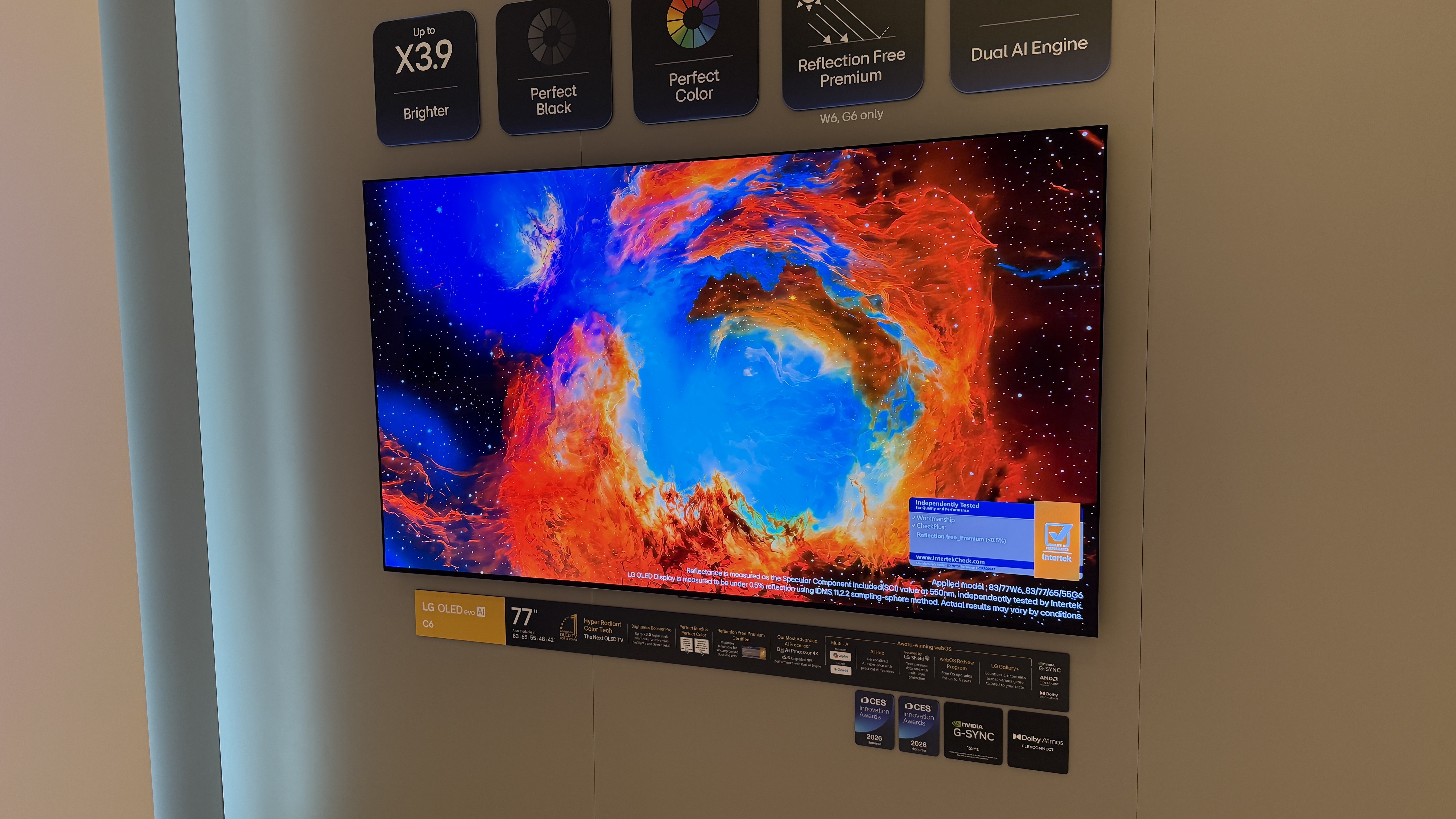
The consumer-electronics identity is well documented. LG sells OLED televisions across the B6, C6, C6H and G6 lines with the Alpha 11 Gen 3 processor 2325, operates a streaming hub on its webOS platform and has run promotional "Streaming Week" subscription deals 1, and has attracted criticism for pushing subscriptions onto television buyers 2. It sells home appliances with premium care plans and ownership programmes 35, and it has experimented with subscription models for televisions themselves, a move covered by specialist press as a way to lower upfront cost 4. It made smartphones, including the swivel-form-factor LG Wing 2226 and the LG G6 and V30 2427, before exiting that business. The smartphone era matters for this report only as a cautionary precedent: LG has previously built technically interesting hardware with distinctive form factors and failed to convert that into a durable franchise.
The industrial identity is documented through batteries. LG Energy Solution announced the start of production at its all-new Lansing, Michigan plant on 18 August 2026, with more than 35 GWh of annual capacity, 1,700 employees, LFP cells for energy storage and NMC cells for Toyota 9. Michigan state press materials record an earlier 1.7 billion dollar investment and 1,200 jobs in Holland, Michigan 17. This is a company that can build and staff a gigafactory on schedule. That capability is directly relevant to any future robot manufacturing programme.
The newest identity is AI infrastructure. LG CNS agreed to buy 381.4 billion won of Nvidia AI servers for an LG Group AI factory 6, a figure corroborated by Korean technology press reporting a roughly 380 billion won bet 8. Nvidia's own blog describes the collaboration as building an AI factory to advance physical AI 11, and Data Center Dynamics reports the deployment 10. LG's chairman has publicly stressed "prompt, tenacious execution" in AI investment 13, which is the kind of language a company uses when it believes it is behind. LG CNS has also signed a three-year memorandum of understanding with Pasqal to integrate neutral-atom quantum processing units into AI data-centre infrastructure 7, and LG Technology Ventures has made a strategic investment in WeaveGrid 15, indicating an active corporate venture posture toward energy and grid software. LG NOVA, the company's innovation arm, maintains a CES presence 16.
Editorial inference. The through-line is a company that repeatedly enters new hardware categories with scale and exits them when margins fail. Robotics is the category LG has not yet entered at scale. The AI-factory investment is the first time LG has committed capital at a level that would be rational for a company planning to train embodied models rather than merely license them. Whether that inference survives contact with LG's actual roadmap is unknown, because no roadmap has been published.
03Product Portfolio: What LG Actually Sells
This section is deliberately blunt: LG does not sell a robot. The dossier contains no robotics product page, no specification sheet, no price, no availability date and no customer for any LG robot. What LG sells, according to the evidence, is televisions, appliances, subscriptions and batteries. We document that portfolio because it defines the distribution channel any future robot would use, and because the gap between the portfolio's maturity and the robotics programme's immaturity is the central fact of this report.
| Category | Products evidenced | Evidence type | Robotics relevance |
|---|---|---|---|
| OLED televisions | B6, C6, C6H, G6 with Alpha 11 Gen 3 processor 2325 | Company video, commerce | None directly; webOS is a potential home-hub surface |
| Television subscriptions | Streaming Week deals, webOS subscription bundles 124 | Company commerce, independent press, community | Recurring-revenue model that could extend to robot services |
| Home appliances | Appliance range with Premium Care plans and MyLG Ownership Programme 35 | Company commerce | Distribution channel and service network for home robots |
| Smartphones (legacy) | LG Wing 2226, LG G6 24, LG V30 27 | Video reviews, teardowns | Precedent for novel form factors; business since exited |
| Batteries | Lansing, Michigan plant, >35 GWh, LFP and NMC cells 9 | Company press release, corroborated | Power systems for robots and grid-scale storage |
| AI infrastructure | 381.4bn won Nvidia server purchase; Paju 200MW and Busan 60MW data centres 6810 | Multiple independent news | Training compute for embodied AI |
| Home robot | CLoiD, described as in development, trained in Isaac Sim/Lab 11 | Single Nvidia blog mention | The only robotics product claim in the dossier |
The television line is the most heavily evidenced product family, and the evidence is mixed in a way that matters for how LG understands its own customers. LG's own promotional material presents the 2026 G6 OLED as a meaningful improvement 23, and a comparative shootout video pits the 2026 G6, C6 and B6 against the 2025 G5, C5 and B5 25. Independent community reporting is considerably less generous: one LG OLED owner describes the G5 as a disappointing experience after two months 28, another thread collects real-life G4 experiences 30, and a separate thread advises buyers not to order directly from LG 31. A thread titled "Don't Panic" suggests a community managing anxiety about a product issue 32. None of this is decisive, and all of it is anecdotal and self-selected, but the pattern is consistent enough to note: LG's premium consumer positioning is not uniformly matched by customer experience.
The appliance business shows the same pattern. LG markets premium care and ownership programmes 35, while community threads ask whether LG is the most competent home appliance business 29 and describe it as the worst appliances and customer service the author has experienced 33. Again: anecdotal, self-selected, and preserved as a conflict rather than resolved.
Editorial inference. The portfolio tells us two things about LG's robotics prospects. Positively, LG has an installed base of homes, a service network, a subscription billing relationship and a brand that consumers already associate with the home. Negatively, the customer-experience signal in the independent evidence is poor enough that a home robot, which raises the stakes of service failure dramatically, would be launching into a channel with a trust deficit. A robot that fails is not a television that disappoints; it is a safety and liability event. LG has not published anything addressing that asymmetry.
Products & versions




04Technology Stack: Strengths and the Work That Remains
LG's robotics-relevant technology stack, as evidenced, has three layers: training infrastructure, research methods, and embodiment. The first is well funded and corroborated. The second is academically credible. The third is essentially undocumented.
Training infrastructure. The clearest technology commitment in the dossier is compute. LG CNS's 381.4 billion won purchase of Nvidia AI servers 6, corroborated at roughly 380 billion won by Korean technology press 8, is being directed at an LG Group AI factory that Nvidia describes as advancing physical AI 11. Data Center Dynamics reports the deployment 10, and LG's chairman has framed execution speed as the priority 13. The reconciled facts record a 200 MW Paju data centre due in 2027 and a planned 60 MW Busan facility. This is the layer of the stack where LG's commitment is unambiguous.
Research methods. LG's published research addresses language-guided navigation and manipulation, which is precisely the capability set a home robot needs. LG-VLN is described as a zero-shot vision-and-language navigation framework with LangGraph state orchestration for continuous environments 18. Related work covers language-guided Monte Carlo tree search for rearrangement 19, zero-shot object-goal navigation 20, and visually grounded robot task-and-motion planning with large language models 21. The TAMP framework in particular is the kind of system that converts a natural-language instruction into a sequence of feasible motions, which is the core engineering problem for a household manipulator.
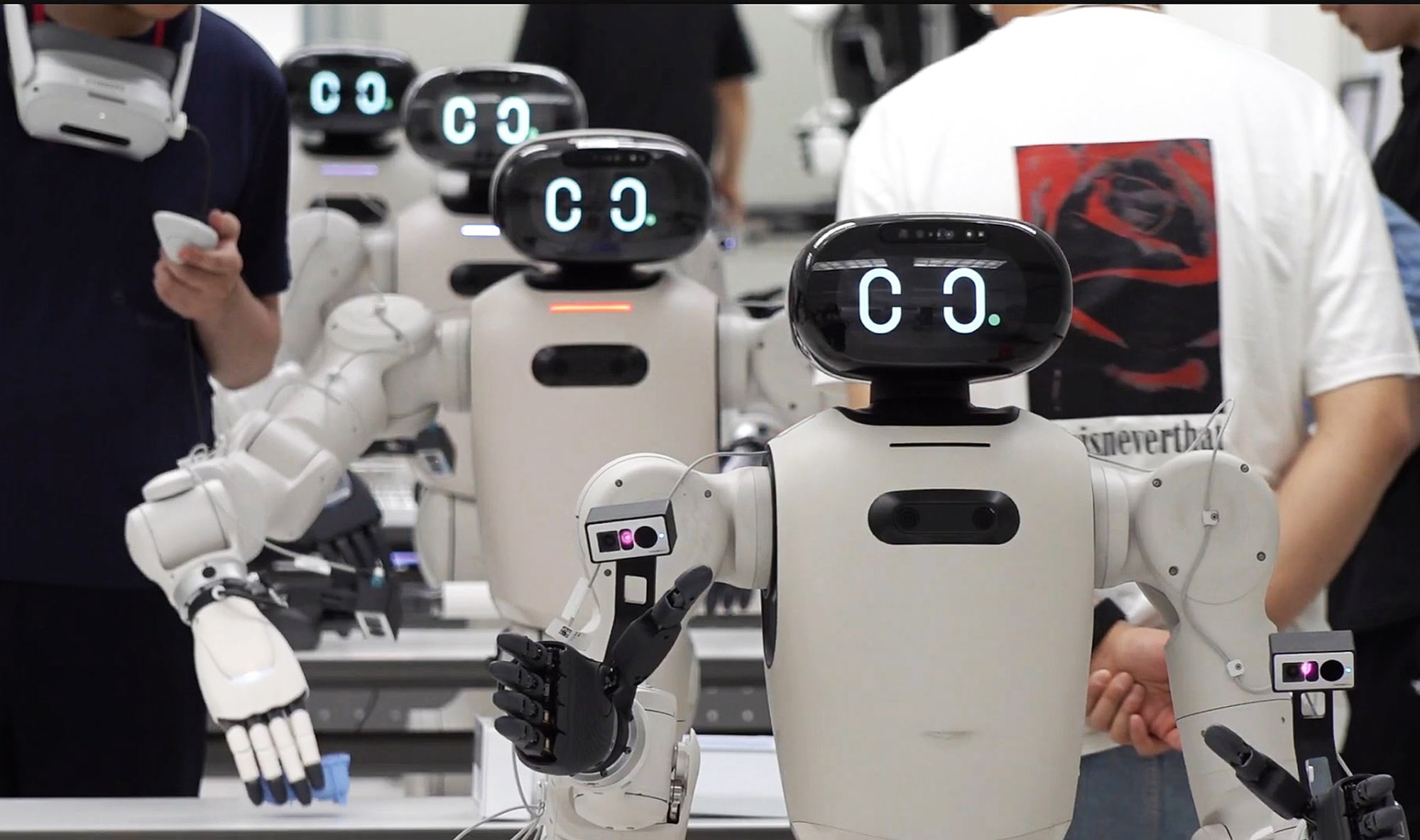
Embodiment. Here the evidence stops. The only statement about an LG robot body is that LG Electronics is developing CLoiD home robots for indoor household tasks, trained via Nvidia Isaac Sim and Isaac Lab 11. There is no published specification, no degree-of-freedom count, no payload, no battery life, no manipulation capability, no safety certification and no deployment timeline. The reconciled facts are explicit that no supplied fact demonstrates any LG robot performing a task autonomously, supervised, remotely assisted or teleoperated.
| Stack layer | Evidence strength | What is proven | What remains |
|---|---|---|---|
| Training compute | Strong | Large Nvidia server purchase; AI factory; 200 MW Paju and 60 MW Busan plans 681011 | Whether any of this compute is allocated to robotics rather than language models |
| Navigation research | Moderate | Zero-shot VLN-CE and object-goal navigation frameworks published 1820 | Sim-to-real transfer, hardware integration, safety cases |
| Manipulation research | Moderate | Language-guided MCTS rearrangement and TAMP frameworks published 1921 | Grasping reliability, force control, household object diversity |
| Embodiment | Weak | CLoiD described as in development, trained in simulation 11 | Everything: hardware, autonomy, safety, cost, availability |
| Autonomy | None | Nothing | Any demonstrated autonomous task performance |
Editorial inference. The stack has a shape that is consistent with a company that has decided to buy compute first and build bodies later, which is a defensible sequencing if the compute is genuinely fungible across language and embodied models. The risk is that simulation-trained home robots have a well-documented sim-to-real gap, and LG has published no evidence of closing it. Training in Isaac Sim and Isaac Lab 11 is a starting condition, not an achievement. The work that remains is the entire hard part: contact-rich manipulation, failure recovery, human safety in unstructured homes, and the unglamorous reliability engineering that separates a paper from a product.
05Research, Papers, Authors and Labs
LG's research contribution in the dossier is four arXiv items, all in the language-guided robotics space. We treat these as the strongest independent evidence that LG has genuine robotics capability, while noting that publication is not productisation.
| Paper | Topic | Venue/source | Relevance to home robotics |
|---|---|---|---|
| LG-VLN 18 | Zero-shot vision-and-language navigation in continuous environments with LangGraph state orchestration | arXiv 2609.15098 | Directly applicable to instructing a home robot to move to a described location |
| Language-guided MCTS rearrangement 19 | Monte Carlo tree search for object rearrangement guided by language | arXiv PDF 2309.15821 | Applicable to tidying and placing tasks |
| Zero-shot Object Goal Navigation 20 | Navigating to a specified object without task-specific training | arXiv PDF 2303.03480 | Applicable to fetch tasks |
| LLM-GROP / TAMP framework 21 | Visually grounded robot task and motion planning with large language models | arXiv HTML 2511.07727 | The instruction-to-motion bridge required for any household manipulator |
The methodological thread across these papers is zero-shot generalisation: the goal is to build systems that follow language instructions without task-specific training data. That is the correct research bet for household robotics, where the diversity of homes, objects and instructions makes bespoke training data impractical. It is also the hardest bet, because zero-shot systems fail in ways that are difficult to predict and therefore difficult to certify.
UNKNOWN. The dossier does not identify the authors, the labs, the institutional affiliations or the funding sources behind these papers. We cannot say whether the work is concentrated in an LG AI research organisation, distributed across LG Electronics and LG CNS, or conducted with academic partners. We also cannot say whether any of these methods has been integrated into the CLoiD programme 11 or whether they are parallel efforts. Repository activity, dataset releases and author-level publication records are not present in the dossier. Readers should treat the research as evidence of capability, not as evidence of a roadmap.
Editorial inference. Four papers in the language-guided navigation and manipulation space is a credible but not exceptional output for a conglomerate of LG's size. What would change our assessment is a paper that reports hardware results on a physical platform, or a repository that shows the methods running on LG-built hardware. Neither appears in the dossier. The gap between "we published a zero-shot VLN framework" and "our robot navigates a real home" is where most robotics programmes die, and LG has not shown us which side of that gap it is on.
<!-- module: papers --> <!-- module: authors-labs --> <!-- module: repos --> <!-- module: datasets -->06Media Evidence Library: What the Videos Prove
The dossier contains six videos, and not one of them shows a robot. This is worth stating plainly because media libraries are where robotics claims are usually made and usually overstated. LG's captured video evidence is entirely consumer hardware: a teardown of the LG Wing's swivel mechanism 22, a promotional look at the 2026 G6 OLED 23, a first look inside the LG G6 smartphone 24, a six-television OLED shootout using a NASA demo reel 25, a hands-on with the LG Wing 26, and a teardown of the LG V30 camera hardware 27.
| Video | Subject | Evidential value for robotics | What it does prove |
|---|---|---|---|
| LG Wing teardown 22 | Swivel phone mechanism | None | LG can engineer unusual mechanical form factors |
| LG 2026 G6 OLED 23 | Television, promotional | None | LG's marketing claims about display improvement |
| LG G6 smartphone first look 24 | Legacy handset | None | Historical product design |
| OLED 2026 vs 2025 shootout 25 | Six televisions compared | None | Comparative display performance, third-party framed |
| LG Wing hands-on 26 | Swivel phone in use | None | Form-factor usability |
| LG V30 teardown 27 | Camera hardware | None | Historical component engineering |
Two of these are teardowns, which are the most evidentially useful genre in the set because they show internals rather than marketing. Neither teardown concerns a robot. The OLED comparison video 25 is the closest thing to independent testing, and it is a display shootout, not a robotics demonstration.
Editorial inference. The absence of robotics video is itself a finding. Companies with shipping robots produce demonstration footage constantly, and companies with credible near-term robots produce carefully staged footage. LG has produced neither, at least not within the dossier's capture. If CLoiD exists as a physical prototype, LG has chosen not to show it publicly in any form that reached this evidence base. That is consistent with a programme in early development and inconsistent with a product launch in the near term.
Media library
07Commercial Reality
The commercial reality of LG robotics is that there is no commercial reality. The dossier contains no named robotics customer, no paid deployment, no pilot agreement, no letter of intent and no revenue figure for any robot. The reconciled facts record the autonomy verdict as unknown and the lifecycle status as inactive or unknown, with no deployed or shipping robot product evidenced.
What LG does have commercially is substantial and verifiable in adjacent businesses. The Lansing battery plant began production on 18 August 2026 with more than 35 GWh of annual capacity and 1,700 employees, producing LFP cells for energy storage and NMC cells for Toyota 9. That is a named customer, a shipping product and a hard production date. The AI infrastructure programme has a 381.4 billion won server purchase 6, corroborated by independent Korean press 8, with data-centre capacity plans reported at 200 MW in Paju and 60 MW in Busan. LG Technology Ventures has made a strategic investment in WeaveGrid 15, which is a financial rather than operational commitment but indicates an appetite for energy-sector bets.
| Commercial question | Answer from evidence | Confidence |
|---|---|---|
| Does LG sell a robot? | No product evidenced | High |
| Does LG have a named robotics customer? | No | High |
| Has any LG robot been deployed? | No deployment evidenced | High |
| Is LG investing in robotics-adjacent infrastructure? | Yes, AI factory and compute 681011 | High |
| Is LG developing a home robot? | CLoiD described as in development 11 | Moderate |
| Does LG have robotics revenue? | Not disclosed | High (that it is undisclosed) |
The customer-sentiment picture in LG's existing consumer business is relevant to commercial prospects and is mixed-to-negative in the independent evidence. Community threads describe delivery cancellations and poor warehouse communication 31, component failures 29, and customer service described as the worst the author has experienced 33. These are self-selected anecdotes and we do not treat them as representative, but they are the only independent customer-experience evidence in the dossier, and they do not describe a channel ready to absorb a high-stakes home robot.
Editorial inference. LG's commercial strength is in businesses where the product is manufactured at scale and the failure mode is inconvenience. Robotics in the home has a different failure mode, and LG has not demonstrated that it has built the service, safety and support infrastructure that would require. The company's most credible path to robotics revenue runs through industrial or commercial applications where LG already has enterprise relationships, not through the consumer channel where its brand is strongest but its service reputation is weakest.
Customers & deployments
LG Energy Solution's Lansing plant produces NMC cells for Toyota.
08Markets and Use Cases
The evidence base for LG's robotics activity is too thin to support a market-by-market analysis of deployed systems. What follows therefore separates three things that are routinely conflated in coverage of LG: markets where LG has verified commercial scale (batteries, AI infrastructure, consumer electronics), markets where LG has a stated but unverified robotics intent (home robotics via CLoiD), and markets where LG's only footprint is research-stage method development (language-guided navigation and manipulation). The distinction matters because LG's aggregate revenue and industrial credibility are frequently borrowed to lend plausibility to robotics claims that the underlying evidence does not carry.
8.1 Markets with verified commercial scale
Grid-edge software and demand flexibility. LG Technology Ventures made a strategic investment in WeaveGrid, a company working on electric-vehicle and grid integration software 15. This is a financial investment, not a product line, and the dossier does not disclose the ticket size, the stake, or any commercial terms. It is nonetheless one of the few robotics-adjacent items in the dossier that sits in a genuine commercial market rather than a research benchmark. Editorial inference: LG's interest here is more plausibly tied to its battery and energy-storage business than to robotics, since vehicle-grid integration is a natural adjacency for LG Energy Solution's cell business.
Stationary energy storage and automotive cells. The Lansing, Michigan plant began production on 18 August 2026 with more than 35 GWh of annual capacity and approximately 1,700 employees, producing LFP cells for energy-storage systems and NMC cells for Toyota 9. This is the single best-evidenced operational fact in the entire dossier. It is also, strictly speaking, not robotics. It matters to a robotics readership for two reasons: it demonstrates LG's capacity to industrialise complex manufacturing at scale, and it establishes a real, named automotive customer relationship (Toyota) that is qualitatively different from the partnership announcements that dominate robotics press releases.
AI data-centre infrastructure. LG CNS is investing 381.4 billion won (approximately USD 262 million) in Nvidia next-generation GPU infrastructure, described in the sources as Vera Rubin-class, in support of an LG Group and Nvidia "AI factory" 681011. A 200 MW data centre in Paju is due in 2027, with a 60 MW facility planned in Busan 610. LG CNS has also signed a three-year memorandum of understanding with Pasqal to integrate neutral-atom quantum processing units into AI data-centre infrastructure 7. The MoU is a memorandum, not a purchase order, and should be read as intent rather than revenue. The GPU purchase, by contrast, is reported with a specific figure by multiple outlets and is the strongest evidence of LG's seriousness about compute.
Consumer electronics and subscriptions. LG sells OLED televisions across the B6, C6, C6H and G6 lines with the Alpha 11 Gen 3 processor, and operates subscription and care programmes including the MyLG Ownership Program, LG Premium Care and LG Flex 1345. The smartphone line, including the Wing and the G6/V30 generations, appears in the dossier only through teardown and hands-on video content 22242627, which is a historical rather than current market signal.
8.2 Markets with stated but unverified robotics intent
Home robotics. The only robotics product claim in the dossier is that LG Electronics is developing CLoiD home robots for indoor household tasks, trained using Nvidia Isaac Sim and Isaac Lab 11. The Nvidia blog is the source, and it describes development, not deployment. There is no disclosed specification, no price, no launch date, no named customer, and no task-performance evidence. The market for home robots is real and contested, but LG's position in it is, on this evidence, a development programme.
Physical AI as a strategic frame. Nvidia and LG Group describe their AI factory collaboration as advancing "physical AI" 11. This is the connective tissue between LG's compute investment and its robotics ambition: simulation and training infrastructure for embodied systems. Editorial inference: the AI factory is best understood as LG buying the capability to train and simulate robots at scale, not as evidence that it has robots to train. The distinction is important because compute procurement is frequently reported as though it were a robotics milestone.
8.3 Markets where LG's footprint is research only
Four research artefacts in the dossier describe methods rather than products:
| Method | Stated capability | Evidence type | Commercial signal |
|---|---|---|---|
| LG-VLN | Zero-shot vision-and-language navigation in continuous environments (VLN-CE) with monocular input and LangGraph state orchestration 18 | arXiv preprint | None disclosed |
| LGMCTS | Language-guided Monte Carlo tree search for rearrangement tasks 19 | arXiv preprint | None disclosed |
| LGX | Zero-shot Object Goal Navigation 20 | arXiv preprint | None disclosed |
| TAMP framework | Task and motion planning for mobile manipulation, related to LLM-GROP work 21 | arXiv preprint | None disclosed |
None of these is described in the dossier as productised, licensed, or deployed. They are benchmark-stage contributions. The gap between a zero-shot navigation result on a VLN-CE benchmark and a robot navigating a customer's home is not a matter of engineering polish; it is a matter of robustness, safety, cost, support and liability, none of which appear anywhere in the evidence.
8.4 What the market picture actually supports
Reading the three tiers together, the honest summary is that LG is a company with substantial verified industrial and consumer businesses, a credible and well-funded compute strategy, and a robotics programme that exists in the public record only as research papers and a development-stage mention. Any market-sizing exercise that treats LG as a robotics competitor on the strength of its conglomerate scale would be importing credibility from the battery and appliance businesses into a domain where LG has not yet demonstrated a product.
09Competitive Landscape
Competitive analysis of LG in robotics is constrained by the same problem that affects the rest of this report: LG does not have a verified robotics product, so it cannot be compared on product terms. What can be compared is strategic position, and here the comparison is genuinely informative, because LG's approach differs structurally from that of the pure-play robotics companies it is sometimes grouped with.
9.1 The comparison set
Three groups are relevant.
Pure-play humanoid and mobile robot vendors. These companies sell robots. They publish specifications, take orders, ship units, and in some cases disclose named customers. Their weakness is capital and manufacturing scale. LG's relationship to this group is not competitive on product but potentially competitive on distribution and manufacturing if LG ever productises CLoiD.
Consumer-electronics peers with robotics programmes. This is the closest analogue. Companies with appliance and home-electronics franchises have repeatedly announced home robot programmes, and the pattern of announcement-to-product conversion in this category is poor. LG sits here on the evidence available.
Compute and simulation platform providers. Nvidia is not a competitor to LG; it is a supplier, and the relationship is asymmetric. LG CNS is buying Nvidia infrastructure 6, and LG Electronics is training CLoiD in Nvidia's Isaac Sim and Isaac Lab 11. This means LG's robotics capability is, at present, partly rented. That is a normal arrangement and not a criticism, but it does mean LG's robotics progress is legible through its Nvidia relationship, which is a useful monitoring channel.
9.2 Where LG's structural advantages are real
Manufacturing at scale. The Lansing plant demonstrates LG can stand up a 35 GWh, 1,700-employee facility and start production on schedule 9. Very few robotics companies can do anything comparable. If home robots become a manufacturing problem rather than a research problem, LG's position improves materially.
Capital and patience. The 381.4 billion won GPU commitment and the 200 MW Paju data centre indicate willingness to spend at a scale that pure-play robotics firms cannot match 610.
Distribution and brand in the home. LG already sells into the home at scale, with subscription and care programmes that create recurring customer relationships 1345. A home robot sold through an existing appliance channel is a materially easier go-to-market than a home robot sold by a startup.
9.3 Where LG's structural disadvantages are equally real
No demonstrated autonomy. The autonomy verdict for LG is unknown, with no fact in the dossier showing any LG robot performing a task autonomously, under supervision, via remote assistance, or via teleoperation. Competitors that publish task-performance video with disclosed conditions have an evidence advantage that LG's brand cannot substitute for.
Research-to-product gap. Four research frameworks 18192021 and one development mention 11 do not constitute a product roadmap. The dossier contains no disclosed timeline, no target specification, and no named launch partner.
Customer-experience drag. Community reports on LG appliances and televisions are mixed-to-negative, citing delivery cancellations, poor warehouse communication, component failures, slow interfaces and advertising in the UI 282930313233. These are anecdotal and self-selected, and they should not be treated as representative. But a home robot is a far more service-intensive product than a television, and a company whose after-sales reputation is contested in its core category faces a harder path in a category where service is the product.
9.4 The honest competitive verdict
LG should not currently be modelled as a robotics competitor. It should be modelled as a large, well-capitalised industrial and consumer company that has bought the compute to train embodied systems, published research on navigation and manipulation, and stated that it is developing a home robot. That is a starting position, not a market position. The competitive question is not whether LG can out-research pure-play robotics firms; it is whether LG converts its manufacturing, distribution and capital advantages into a shipped product before the pure-plays accumulate the manufacturing and channel capability that LG already has.
Competitive comparison
| Robot | Maker | Autonomy | Conf. |
|---|---|---|---|
| iRobot Roomba Combo 10 Max | iRobot | Autonomous | 0.90 |
| Mobile ALOHA (Stanford) | Stanford University | Teleoperated | 0.90 |
| 1X NEO | 1X Technologies | Remote-Assisted | 0.90 |
10Geopolitical Context and Constraints
LG's robotics ambitions sit inside a geopolitical environment that shapes them more than any technical factor. Three constraints dominate.
10.1 The Nvidia dependency and export-control exposure
LG CNS's purchase of 381.4 billion won of Nvidia AI servers for the LG Group AI factory 68, the 200 MW Paju and 60 MW Busan data-centre plans 10, and the Nvidia-LG Group AI factory collaboration 11 together place LG's physical-AI training capability inside the United States' advanced-compute export-control perimeter. This is a structural dependency with two consequences.
First, LG's ability to train embodied models at scale is contingent on continued access to Nvidia's most advanced accelerators. Any tightening of export controls affecting South Korea, or any change in Nvidia's allocation priorities, propagates directly into LG's robotics timeline. Second, the dependency is asymmetric in the way all supplier relationships are: Nvidia benefits from LG's commitment regardless of whether CLoiD ever ships.
The dossier does not disclose whether LG has sought or obtained any diversification of its accelerator supply. That is an unknown, and it is a material one.
10.2 South Korea's position in the AI and robotics supply chain
South Korea is a treaty ally of the United States with a substantial domestic semiconductor and battery industry, and LG's investments are framed by Korean political leadership as execution-critical. The Korea Times reports LG's chairman stressing "prompt, tenacious execution" in AI investment 13, which is a signal that the AI factory programme carries domestic political weight as well as commercial intent. This cuts both ways: political salience can accelerate approvals and capital allocation, and it can also lock LG into announced commitments that are difficult to walk back if the technology underdelivers.
10.3 Manufacturing geography and the battery precedent
The Lansing plant is a case study in how geopolitics shapes LG's industrial footprint. The plant started production on 18 August 2026 with more than 35 GWh of annual capacity and roughly 1,700 employees, making LFP cells for energy storage and NMC cells for Toyota 9. Michigan state government had earlier announced 1,200 new jobs from an LG Energy Solution expansion in Holland 17. This is onshoring driven by a combination of customer proximity, subsidy structures and trade policy.
Editorial inference: if LG ever manufactures home robots for the North American market, the same logic will apply. Robotics manufacturing is likely to follow the battery pattern, with local assembly driven by policy and customer proximity rather than by pure cost optimisation. That is a slow, capital-intensive path, and it favours LG over smaller competitors, but it also means any LG robot would arrive later and more expensively than a China-manufactured equivalent.
10.4 What is not disclosed
The dossier contains no information on LG's robotics supply chain, no disclosure of component sourcing, no statement on data residency for home robot data, and no regulatory engagement on the safety certification that a home robot would require in any major market. These are all unknowns, and they are the constraints that will determine whether CLoiD becomes a product.
11The Hype, the Real and the Ugly
This section separates what LG and its partners say from what independent evidence supports, and identifies where the gap is widest.
11.1 The hype
"Physical AI" as a framing device. The Nvidia-LG Group announcement describes an AI factory built to advance physical AI 11. The phrase does a great deal of work in that sentence. It connects a GPU procurement to a robotics future without asserting that any robot exists. Read carefully, the announcement is about compute, and the robotics content is a forward-looking rationale.
CES presence. LG NOVA's CES 2026 highlights page 16 is a marketing artefact. It is included in the dossier as a source, and it should be treated as a statement of intent and positioning, not as evidence of capability.
Promotional product video. The LG 2026 TV video 23 is LG-sponsored content describing the G6 OLED as improved in brightness, processing and design. It is a vendor claim. Independent community reporting on LG OLEDs is less flattering, citing crushed shadow detail, tinting, lower brightness on lower-end models, and one report describing a G5 as disappointing after two months 2830. The conflict is preserved rather than resolved: the vendor source is promotional, and the community sources are independent but anecdotal and self-selected.
11.2 The real
The battery plant. Production started, capacity is stated, headcount is stated, and the customer (Toyota) is named 9. This is the most verifiable operational fact in the dossier.
The compute commitment. A specific figure, 381.4 billion won, reported by multiple outlets, with named data-centre sites and dates 6810.
The research. Four arXiv preprints describing specific methods with named benchmarks 18192021. These are real contributions to the literature. They are not products.
The customer-experience record. Community reports are numerous and specific about failures 282930313233. They are anecdotal, self-selected, and cannot be generalised into a defect rate. They are nonetheless the only independent customer-voice evidence in the dossier, and they should be read as a signal about service intensity rather than as a measurement.
11.3 The ugly
The autonomy vacuum. The single most important finding in this report is an absence. No fact in the dossier demonstrates any LG robot performing a task autonomously, under active supervision, via remote assistance, or via teleoperation. The autonomy verdict is unknown. Every downstream claim about LG as a robotics company inherits that gap.
The evidence asymmetry. LG's robotics presence in the public record is research papers and a development mention. Its non-robotics presence is enormous and well-evidenced. This asymmetry creates a persistent risk that analysts and journalists will attribute the credibility of the battery and appliance businesses to the robotics programme, which has not earned it.
11.4 Claim-versus-evidence table
| Claim | Source type | What the evidence actually supports | Verdict |
|---|---|---|---|
| LG is developing CLoiD home robots trained in Isaac Sim/Lab 11 | Partner blog (Nvidia) | A development programme exists; no spec, date, price or customer | Company claim, unverified |
| LG Group is building an AI factory for physical AI 11 | Partner blog | GPU procurement and data-centre plans are corroborated 6810 | Verified for compute; inference for robotics |
| LG-VLN achieves zero-shot VLN-CE 18 | arXiv preprint | A method and benchmark result are described | Research claim, not independently replicated in dossier |
| LG OLED G6 is improved in brightness and processing 23 | Vendor video | A promotional description | Company claim, contested by community reports 2830 |
| LG appliances and service are poor 33 | Reddit community | Anecdotal, self-selected negative reports | Independent but non-representative |
| LG has a robotics product | No source in dossier | Nothing | Unsupported |
Claim tracker
Only an Nvidia blog states LG is 'developing' CLoiD in simulation; no independent source shows a working prototype, task demo, or deployment.
The dossier contains no fact of any LG robot performing a task autonomously, supervised, or teleoperated — autonomy is explicitly recorded as unknown.
No deployment, unit count, customer, or shipping evidence exists; robotics appears only as arXiv research frameworks and a development-stage CLoiD mention.
These are arXiv papers/benchmark results authored by LG-affiliated researchers, not independently reproduced or productized, so real-world capability remains unverified.
Multiple independent outlets (Seoul Economic Daily, DCD, Korea Times, Nvidia blog) corroborate the investment figure and data-center plans, though construction completion is future-dated.
LG Energy Solution's own press release plus Michigan business/government coverage corroborate plant details, though the source is largely vendor-originated.
Vendor marketing pages assert premium service, while independent Reddit reports describe delivery cancellations, component failures, and poor customer service — the conflict is unresolved.
The G6 claim rests on an LG-sponsored promotional video, while independent community reports describe lower-end OLEDs as dim with crushed shadow detail and tinting.
12Future Scenarios
The following scenarios are editorial constructions, not forecasts. They are offered to make the monitoring checklist in §13 actionable. Probabilities are qualitative and reflect the thinness of the evidence base.
Scenario A: Compute-first, robotics-later (most likely)
LG completes the Paju and Busan data centres, continues buying Nvidia capacity, and uses the AI factory primarily for its existing businesses: appliances, displays, batteries, and enterprise AI services. Robotics research continues to be published. CLoiD remains in development or is quietly repositioned. No consumer robot ships in the near term.
Under this scenario, LG is a credible AI-infrastructure and industrial company with a research robotics programme, and the "physical AI" framing in the Nvidia announcement 11 is retrospectively understood as positioning rather than roadmap. This is the scenario most consistent with the evidence, because every verified fact in the dossier concerns compute, batteries or consumer electronics, and none concerns a shipped robot.
Scenario B: Supervised home robot pilot
LG converts CLoiD into a limited pilot, most plausibly in Korea, with disclosed operating conditions: supervised operation, defined task set, bounded environment. This would be a genuine milestone and would move the autonomy verdict from unknown to something assignable, provided the pilot is documented with task-performance evidence rather than a choreographed demonstration.
The trigger to watch is not a product page but a disclosure of operating conditions. A robot that works under supervision in a defined environment is a real achievement; a video of a robot carrying a tray is not.
Scenario C: Platform play
LG positions the AI factory as a training and simulation platform for third-party robotics companies, selling compute and simulation capacity rather than robots. This would leverage the Nvidia relationship 11 and the data-centre investment 610 without requiring LG to solve the hard product problems of home robotics. It is a plausible and lower-risk path, and it would make LG a supplier to the robotics industry rather than a competitor in it.
Scenario D: Acquisition
LG acquires a robotics company with a shipping product and integrates it into its appliance channel. The dossier contains no evidence of acquisition activity in robotics, so this is speculation. It is included because LG's capital position and distribution make it a natural acquirer, and because the WeaveGrid investment 15 demonstrates that LG Technology Ventures is active in adjacent markets.
Scenario E: Programme wind-down
The robotics research output continues but never converts, and the physical-AI framing is quietly dropped as the AI factory is justified on enterprise-AI grounds. This is not a failure scenario in business terms; it is simply the outcome where robotics was never the point.
Scenario comparison
| Scenario | Key trigger | Evidence today | Plausibility |
|---|---|---|---|
| A: Compute-first | Data centres delivered on schedule; no robot product | Strong for compute, absent for robotics | High |
| B: Supervised pilot | Disclosed operating conditions and task evidence | None | Low to moderate |
| C: Platform play | Third-party robotics customers named for AI factory | None | Moderate |
| D: Acquisition | Announced robotics acquisition | None | Low |
| E: Wind-down | Robotics language removed from AI factory messaging | None | Moderate |
13What to Watch: A Live Monitoring Checklist
The purpose of this checklist is to convert the gaps identified above into observable events. Each item specifies what would count as evidence and what would not.
13.1 Robotics product evidence
- A disclosed specification for CLoiD. Watch for payload, runtime, degrees of freedom, sensor suite, price and availability. A specification sheet is a stronger signal than a video. A video alone is not evidence of autonomy.
- Task-performance evidence with disclosed conditions. The operative question is always: under what supervision, in what environment, with what failure rate? A demonstration that does not state these is a demonstration, not a result.
- Safety certification. Any home robot sold in a major market will require regulatory clearance. A certification filing is a hard, dated, verifiable signal and is far more informative than a press release.
- Named customers or pilot partners. A named customer with a stated deployment is evidence. A memorandum of understanding is not.
13.2 Compute and infrastructure evidence
- Paju 200 MW data centre delivery against the 2027 date 610. Slippage here is informative about execution capacity.
- Busan 60 MW facility progress 10.
- Further Nvidia procurement disclosures 68. Additional purchases would indicate the AI factory is scaling; absence would suggest the initial commitment was a one-off.
- Pasqal MoU conversion 7. Watch for a purchase order or a deployed QPU. An MoU that remains an MoU after three years is a signal.
13.3 Research-to-product signals
- Follow-on papers with hardware. A paper describing a method on a real platform with disclosed failure modes is a step toward product. A benchmark-only paper is not.
- Patent filings in home robotics, manipulation and navigation. The dossier contains no patent data; this is a gap worth closing.
- Hiring signals. Robotics engineering job postings with specific platform responsibilities would indicate a product team rather than a research group. Not disclosed in the dossier.
13.4 Customer and service signals
- Independent, representative service data. Community reports 282930313233 are anecdotal. Watch for warranty-claim rates, return rates, or third-party reliability surveys. These would convert a contested anecdotal picture into a measurable one.
- Subscription programme economics 1345. If LG's subscription and care programmes scale, they establish the recurring-revenue channel through which a home robot could be sold.
13.5 What would change this report's conclusions
| Observation | Effect on conclusions |
|---|---|
| CLoiD ships with disclosed spec and named customers | Autonomy verdict moves from unknown; LG becomes a robotics competitor |
| Supervised pilot with published task-performance data | Autonomy verdict becomes assignable at a supervised level |
| Third-party robotics firms named as AI factory customers | Platform scenario gains support; LG becomes a supplier rather than a competitor |
| No robotics product disclosure within 24 months | Compute-first scenario confirmed; robotics framing retrospectively downgraded |
| Independent reliability data on LG appliances | Resolves the vendor-versus-community conflict in §11 |
14Sources and Methodology
14.1 Methodology
This report was produced from a supplied research dossier gathered on 19 September 2026, comprising 34 numbered sources across official, commerce, research, news, video and community categories. No sources outside the dossier were consulted, and no source numbers were invented. Where the dossier was silent, this report says so explicitly rather than inferring.
Evidence was classified into four labels, applied consistently throughout:
| Label | Definition | Example in this report |
|---|---|---|
| Verified fact | Regulatory filing, official product documentation, named-customer confirmation, peer-reviewed or primary research, or multiple independent sources | Lansing plant production start, capacity and named Toyota customer 9 |
| Company claim | Stated by the company or a partner, not independently verified | CLoiD home robot development 11; G6 OLED improvements 23 |
| Editorial inference | Reasoned conclusion drawn from public evidence, labelled as such | The AI factory is best understood as buying training capability rather than evidencing robots |
| Unknown | Not publicly disclosed | Autonomy level; robotics supply chain; patent position; hiring |
Three disciplines were applied without exception. A choreographed demonstration video was not treated as proof of autonomous work. A shipment or production start was not treated as proof of productive deployment in a downstream application. A partnership or memorandum announcement was not treated as proof of a paid customer.
The autonomy verdict for LG is unknown, with a confidence of 0.4, because no fact in the dossier demonstrates any LG robot performing a task autonomously, under active supervision, via remote assistance, or via teleoperation. Overall confidence in this report is 0.35, reflecting an evidence base that is fragmented across unrelated business lines and contains no operational robotics deployment data.
14.2 Known limitations
The dossier contains no official LG robotics product documentation, no regulatory filings relating to robots, no patent data, no hiring data, and no independent task-performance evidence. The robotics content rests on four arXiv preprints and one partner blog post. Community sentiment sources are self-selected and cannot be generalised. The vendor-versus-independent conflicts on product quality are preserved rather than resolved, because neither side of either conflict is decisive on the available evidence.
14.3 Sources
1 Streaming Week 2025 – Subscription Deals on LG TVs — https://www.lg.com/us/webos/lg-streaming-week?srsltid=AU7gw4UdU3EH17fll9orWxRl8Mn4lR5w1nUDn-DDHJTB-7mG2ABY33gR
2 LG wants you to buy its TVs then subscribe to its built-in ... — https://www.reddit.com/r/gadgets/comments/152cjue/lg_wants_you_to_buy_its_tvs_then_subscribe_to_its/
3 MyLG Ownership Program Bundle Offers – Pro Plans — https://www.lg.com/us/mylg-ownership-program/pro?srsltid=AU7gw4VyNjSNNRgZM5vQ36WAANtSqu5A_154GcKu3ZjOkDckqrs6TpaV
4 Put off by an OLED's upfront cost? This new LG ... — https://www.whathifi.com/tv-home-cinema/put-off-by-an-oleds-upfront-cost-this-new-lg-subscription-could-be-a-worthwhile-solution
5 Home & Kitchen Appliance Savings - LG Premium Care Plan — https://www.lg.com/us/promotions/home-kitchen-appliance-premium-care-savings?srsltid=AU7gw4Xj5sIPJxi7pQHATC53keyclOindk6aMOYLQ8WkBtLjT_CXtgj6
6 LG CNS Buys 381.4 Billion Won of Nvidia AI Servers for AI Factory - Seoul Economic Daily — https://en.sedaily.com/technology/2026/09/11/lg-cns-buys-3814-billion-won-of-nvidia-ai-servers-for-ai
7 Pasqal and LG CNS Sign Three-Year MoU to Integrate Neutral-Atom QPUs into AI Data Center Infrastructure - Quantum Computing Report — https://quantumcomputingreport.com/pasqal-and-lg-cns-sign-three-year-mou-to-integrate-neutral-atom-qpus-into-ai-data-center-infrastructure/
8 LG CNS Accelerates Group's 'AI Investment' Execution... 'Betting' 380 Billion Won — https://en.topdaily.kr/articles/14768
9 LG Energy Solution Announces Start of Production at All-New Lansing Battery Plant – LG Energy Solution — https://news.lgensol.com/company-news/press-releases/5163/
10 South Korea's LG to deploy Nvidia AI factory - DCD — https://www.datacenterdynamics.com/en/news/south-koreas-lg-to-deploy-nvidia-ai-factory/
11 NVIDIA and LG Group Build an AI Factory to Advance Physical AI ... — https://blogs.nvidia.com/blog/nvidia-and-lg-group-ai-factory/
12 Press Release | Media | LG — https://www.lgcorp.com/media/release/30470
13 LG chairman stresses 'prompt, tenacious execution' in AI investment - The Korea Times — https://www.koreatimes.co.kr/business/companies/20260917/lg-chairman-stresses-prompt-tenacious-execution-in-ai-investment
14 NEWS | LG NEWSROOM | LG Global — https://www.lg.com/global/newsroom/news/
15 WeaveGrid Announces Strategic Investment from LG ... — https://www.weavegrid.com/news/weavegrid-announces-strategic-investment-from-lg-technology-ventures
16 LG NOVA at CES 2026 — https://www.lgnova.com/ces2026-highlights
17 Gov. Whitmer Announces 1200 New Jobs Resulting from ... — https://www.michiganbusiness.org/press-releases/2022/03/whitmer-announces-1200-new-jobs-from-lg-energy-solutions-$1.7-billion-investment-expansion-holland
18 [2609.15098] LG-VLN: A Zero-Shot Vision-and-Language Navigation Framework with LangGraph State Orchestration — https://arxiv.org/abs/2609.15098
19 https://arxiv.org/pdf/2309.15821 — https://arxiv.org/pdf/2309.15821
20 https://export.arxiv.org/pdf/2303.03480v1.pdf — https://export.arxiv.org/pdf/2303.03480v1.pdf
21 LLM-GROP: Visually Grounded Robot Task and Motion Planning with Large Language Models — https://arxiv.org/html/2511.07727
22 LG Wing Teardown! - HOW DOES IT WORK?! — https://www.youtube.com/watch?v=fxGI8r8vAFk
23 LG 2026 TVs – G6 OLED Just Got Better! — https://www.youtube.com/watch?v=mKkhLinMlAY
24 First Look INSIDE the LG G6 Smartphone — https://www.youtube.com/watch?v=KX0nd8VwiVw
25 LG OLED 2026 vs 2025: 6 TVs Shootout! (G6, C6, B6 vs G5, C5, B5) | 4K NASA Demo - YouTube — https://www.youtube.com/watch?v=pJ6Y6FGZ9bY
26 LG Wing hands-on: really flipping fun — https://www.youtube.com/watch?v=AUWbtrG5IKI
27 LG V30 Teardown - Best Cell Phone Camera Hardware Ever?! — https://www.youtube.com/watch?v=dKk7F9uEWJ8
28 LG G5.... My (disappointing) experience after 2 months. - Reddit — https://www.reddit.com/r/LGOLED/comments/1n4yloh/lg_g5_my_disappointing_experience_after_2_months/
29 Is it just me, or is LG the most competent home appliance business ... — https://www.reddit.com/r/Appliances/comments/1eqyi8k/is_it_just_me_or_is_lg_the_most_competent_home/
30 Real Life Experiences/Reviews of the LG G4? : r/LGOLED - Reddit — https://www.reddit.com/r/LGOLED/comments/1dzvuhc/real_life_experiencesreviews_of_the_lg_g4/
31 Do not order from LG. : r/LGOLED - Reddit — https://www.reddit.com/r/LGOLED/comments/1pe3y6t/do_not_order_from_lg/
32 Don't Panic : r/LGOLED - Reddit — https://www.reddit.com/r/LGOLED/comments/1kk0tx5/dont_panic/
33 LG is the worst appliances and customer service I've ever experienced — https://www.reddit.com/r/Appliances/comments/1p7pagp/lg_is_the_worst_appliances_and_customer_service/