FJDynamics
US$0.99 unlocks one Word + one PDF download. The full report is free to read on this page.

FJDynamics
Retrofit autonomy for farm machinery is a real, shipping business; the word "autonomous" is doing more work in the marketing than the evidence supports.
| Report status | Coverage date | Company stage | Editorial standard |
|---|---|---|---|
| Premium editorial deep report, first edition | Evidence gathered 19 September 2026 | Fully commercial, pre-IPO (Hong Kong listing preparation) | Evidence-labelled; vendor claims separated from verified fact; no demo treated as proof |
How to Read This Report
This report is written for people who have to make a decision about FJDynamics: an investor reading the pre-IPO narrative, an integrator or dealer evaluating whether to carry the line, an agronomy or fleet operator deciding whether the retrofit kit will survive a harvest, or a competitor trying to work out what is actually defensible in the company's position. It is not a product brochure and it is not a takedown. The company sells real hardware into a real market with real unit economics; the interesting question is where the marketing vocabulary outruns the evidence.
Every substantive statement below carries one of four labels. The labels are applied at the level of the individual claim, not the paragraph, because a single paragraph in a vendor press release will typically mix all four.
| Label | Meaning | Examples of what qualifies |
|---|---|---|
| VERIFIED FACT | Independently corroborated, or a primary document that cannot easily be spun | Regulatory or exchange filings; official product documentation with published tolerances; a named customer confirming a paid deployment; multiple independent outlets agreeing on a basic fact such as founding date |
| COMPANY CLAIM | Stated by FJDynamics or its channel, not independently verified | Market-share rankings; "world's first" or "world's number three" positioning; performance figures quoted only in vendor blogs; partnership announcements |
| EDITORIAL INFERENCE | A reasoned conclusion drawn from public evidence, flagged as such | Reading a market-share claim against the absence of a cited research house; inferring operator presence from the physical layout of a cab-based retrofit |
| UNKNOWN | Not publicly disclosed, or disclosed only in a form that cannot be checked | Unit shipment volumes; gross margin by product line; the identity of anchor IPO investors; whether any named "partner" pays money |
Three disciplines run through the whole document. First, a choreographed demonstration video is not evidence of autonomous work; it is evidence that a video was produced. Second, a shipment is not a deployment, and a deployment is not a productive deployment; the gap between "units left the factory" and "the machine did useful work unsupervised" is where most robotics narratives die. Third, a partnership announcement is not a paid customer; memoranda of understanding, pilot agreements and co-marketing arrangements are routinely announced in language indistinguishable from signed revenue contracts.
Where the underlying dossier is thin, this report says so plainly rather than padding. Several sections below are shorter than a reader might expect from a company of this profile, and that brevity is itself a finding: FJDynamics publishes a great deal of marketing and very little that can be audited.
01Executive Overview
FJDynamics is a Hong Kong-incubated robotics company founded in December 2017 by Wu Di, preparing for a listing in Hong Kong, and commercially best known for retrofit auto-steering and auto-navigation kits that turn existing tractors into guided machines 61416. The founding date, the founder, the Hong Kong incubation and the IPO preparation are corroborated across multiple independent news sources and are treated here as VERIFIED FACT. The company describes itself as working across digitalisation, automation and new energy, and its public product surface spans precision agriculture, a LiDAR scanning line under the Trion brand, and at least one field-marking robot 51115.
The commercial core is the agricultural retrofit kit. FJDynamics claims RTK guidance accurate to roughly ±2.5 cm, automatic steering, route planning and smart U-turn behaviour with claimed distance reductions of up to 30 percent 26. These are COMPANY CLAIMS. The accuracy figure is repeated consistently across the company's own surfaces, which makes it a stable claim rather than a stray number, but repetition inside a single vendor's estate is not independent corroboration. What is genuinely notable is the business model: the company sells into the aftermarket, retrofitting machines that farmers already own, rather than requiring the purchase of a new tractor. That is a materially different go-to-market from the integrated precision-ag incumbents, and it is the single most defensible thing about the company's position.
On market position, FJDynamics claims to be the world's third-largest agricultural auto-navigation kit supplier with 8.5 percent share in 2024, and the second-largest supplier of retrofit navigation kits with 16.9 percent share 6. These figures appear in a single news source within the gathered evidence and are not corroborated elsewhere in the set. They are recorded here as COMPANY CLAIMS with a confidence penalty, not as verified market data. No named research house, methodology or denominator is disclosed alongside them. A reader should treat the direction of the claim (FJDynamics is a meaningful, probably top-five, participant in retrofit guidance) as plausible and the precise decimals as unaudited.
On autonomy, the verdict of this report is UNKNOWN, and that verdict is the most important single judgement in the document. No independent source in the gathered evidence demonstrates the system performing its task with no human involved. The vendor describes automatic steering and route planning, which is consistent with a human operator present in the cab supervising a machine that steers itself along a planned path. That is a real and valuable capability. It is not the same as autonomous task execution, and the company's marketing vocabulary blurs the distinction. The reconciled autonomy confidence in the underlying dossier is 0.4, and this report does not raise it.
The evidence base itself is a finding. Of the sources gathered, the overwhelming majority are vendor-owned properties, commerce listings, or news coverage that leans on vendor-supplied material. Independent community reports are sparse and mixed, with at least one first-hand farmer account describing repeated product problems over a multi-year period 28. There is no peer-reviewed evaluation of the guidance system's field performance in this set, no third-party teardown, and no named enterprise customer confirming a paid fleet deployment. The overall confidence attached to the reconciled picture is 0.55, and that number should be read as "we know what the company says and roughly what it sells, and we do not know much else."
The investment case, such as it is, rests on three things: a large installed base of tractors that will never be replaced by integrated smart machines in the relevant time horizon; a price point that undercuts integrated OEM options; and a distribution build-out that the company says now spans multiple continents, evidenced by exhibition presence and a dealer conference 7913. The risks are equally clear: a subscription and licensing model that the company's own blog acknowledges has been criticised as a trap 2, a reliability record that independent voices question 28, a market-share claim that cannot be checked, and an autonomy story that is ahead of its evidence.
Latest news
02The FJDynamics Story
FJDynamics was founded in December 2017 by Wu Di and incubated in Hong Kong 616. The Crunchbase profile and the TechCrunch coverage of the company's 2021 funding round agree on the broad shape of the early story: a robotics company with an explicit ambition to automate manual labour, raising institutional capital to do it 1416. The November 2021 round of approximately 70 million US dollars is the anchor financing event in the public record and is treated here as VERIFIED FACT on the basis of independent technology-press coverage 14.
The founding thesis, as reported, was not agriculture-specific. The company framed itself around automating "manual drudgery" across domains, and the portfolio that emerged reflects that breadth: agricultural guidance and implements, a LiDAR scanning line, landscaping robotics, and at least one field-marking robot 1115. The e27 profile describes the company as an automation leader transforming unseen work with robotic precision, which is the kind of framing that tells you more about the company's self-image than about its revenue mix 11. EDITORIAL INFERENCE: the breadth of the portfolio is best read as a search for product-market fit across several adjacent industrial verticals, with agriculture emerging as the commercial centre of gravity because that is where the retrofit kit found paying customers at scale.
The agricultural line has since become the company's public identity. FJDynamics maintains a dedicated agriculture site with a blog that functions as a combined product-update, exhibition and thought-leadership channel 2789101213. The cadence of that output is high: product launches, trade-show appearances, dealer conferences, and technical explainers on subjects such as autosteering adaptation for John Deere tractors in Central Asia 12. EDITORIAL INFERENCE: the volume and specificity of the agriculture content, including region-specific adaptation notes, is consistent with a company that has real field engineering to talk about, not merely a marketing department. That is a mild positive signal, though it remains vendor-authored.
The company's stated trajectory now points at a Hong Kong listing. The kr-asia piece frames the question directly: whether FJDynamics can convert European traction into investor confidence 6. That framing is itself informative. It implies that Europe, not China and not North America, is the market where the company has built its most credible commercial story, and that the IPO narrative depends on persuading public-market investors that this traction is durable. UNKNOWN: the timing, size, valuation, underwriters and anchor investors of any listing are not disclosed in the gathered evidence.
The dealer conference held in Nanjing in 2026, described by the company as a global dealer conference, is the clearest public signal of a channel-led go-to-market 9. COMPANY CLAIM: the company characterises the event as a success and as evidence of a global partner network. What is not disclosed is how many of those dealers are exclusive, how many carry competing lines, what the minimum order commitments are, or what proportion of the network is active rather than signed. EDITORIAL INFERENCE: a company that holds a global dealer conference and then files for a Hong Kong listing is signalling that it wants to be valued as a distribution business with a technology layer, not as a research lab. That is a coherent strategy, and it is also a strategy whose value depends entirely on channel quality, which is exactly what is not disclosed.
The landscaping robotics line, announced via a Facebook post under an FJD Landscaping brand and referencing a product called Sveabot built on the same robotics expertise, indicates that the company continues to explore adjacent verticals 15. COMPANY CLAIM: the post asserts shared robotics expertise across product lines. EDITORIAL INFERENCE: shared branding is not shared technology, and the gathered evidence contains no engineering documentation showing what, if anything, the landscaping and agriculture stacks have in common. Treat portfolio breadth as a marketing asset until proven otherwise.
03Product Portfolio: What FJDynamics Actually Sells
The portfolio divides into four visible lines: agricultural guidance and control, agricultural implements and precision-farming attachments, LiDAR scanning hardware, and robotics products outside agriculture. The evidence for each line varies sharply in quality.
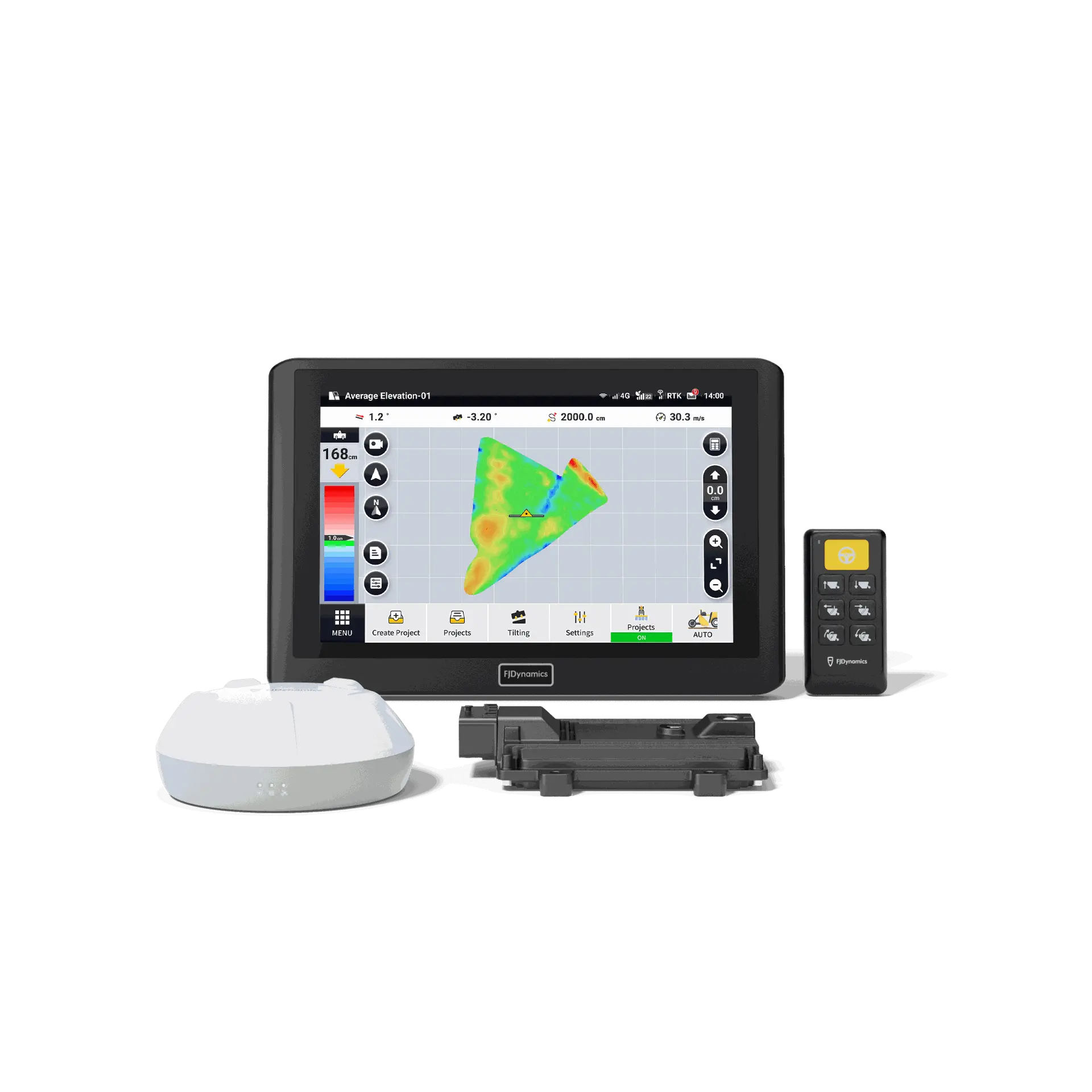
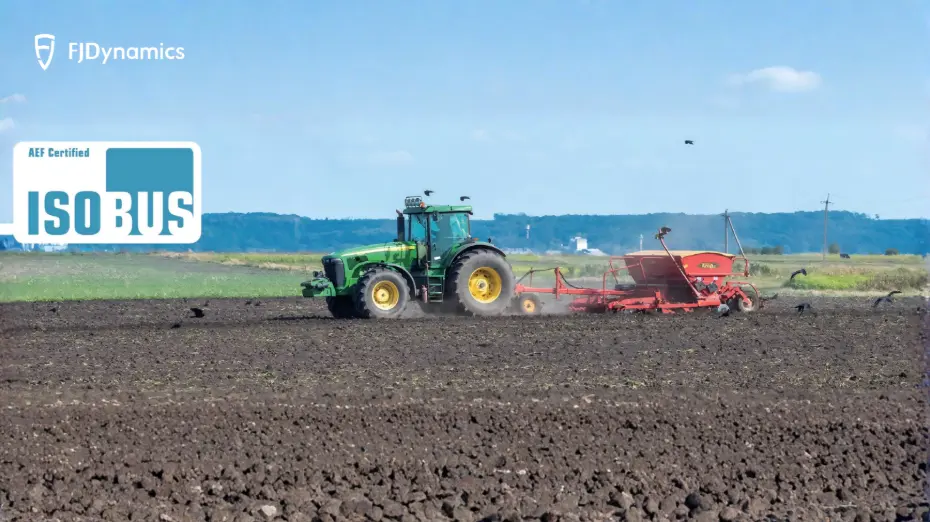
Agricultural guidance and control. This is the flagship. The retrofit kit provides RTK-based auto-steering, route planning and U-turn automation for existing tractors, with a claimed accuracy of ±2.5 cm 26. The company's own blog describes solving autosteering adaptation challenges for John Deere tractors in Central Asia, which is a specific and checkable-sounding engineering claim about compatibility with a major OEM platform 12. COMPANY CLAIM: the accuracy figure and the compatibility story. EDITORIAL INFERENCE: the fact that the company publishes region-specific adaptation notes suggests genuine integration work rather than a generic aftermarket box, but the evidence remains vendor-authored.
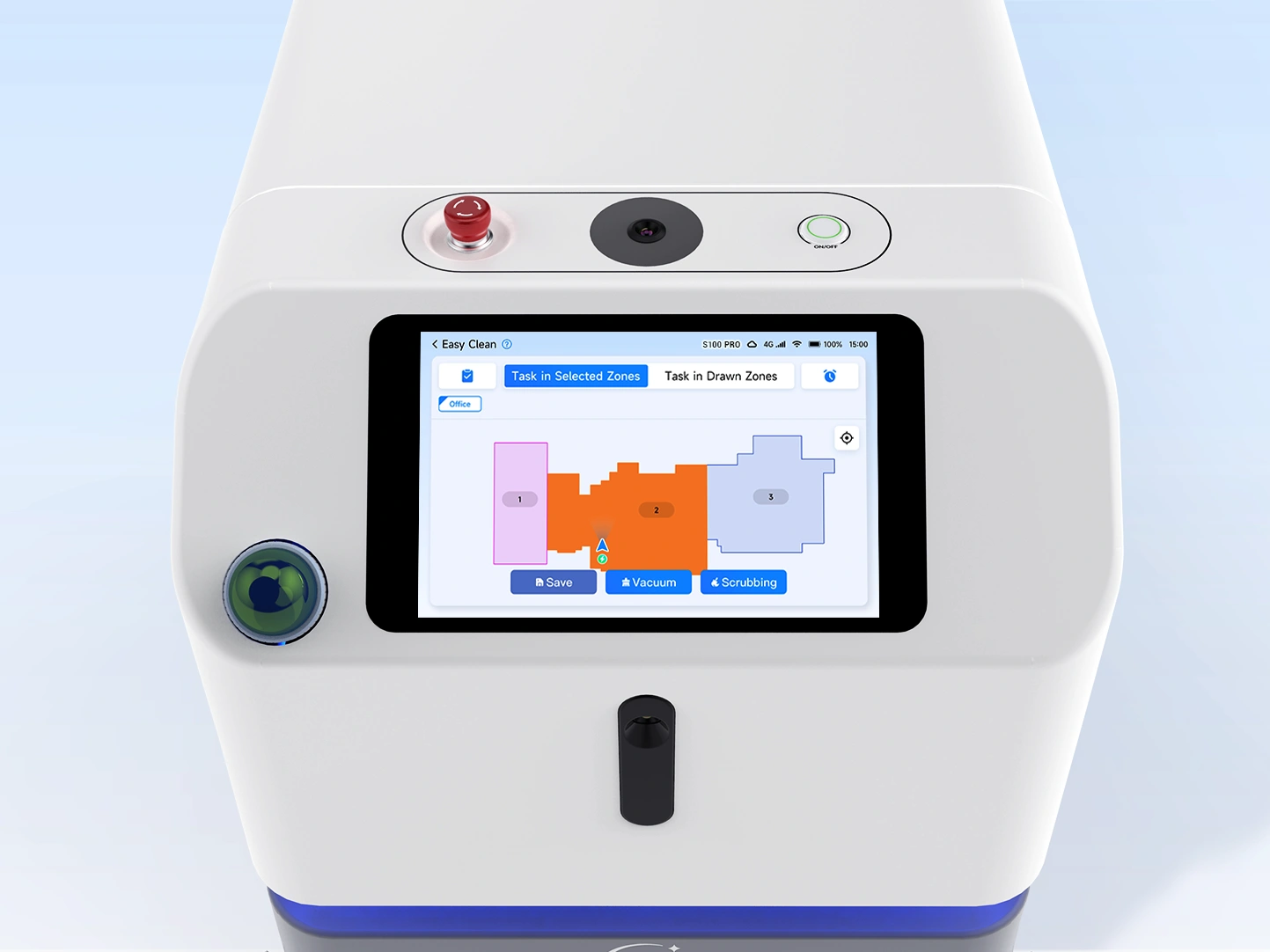
Precision-farming implements and control kits. The company has launched an APS precision seeding control kit, which it describes as transforming traditional seed drills into high-precision machines, and an AL02 Max 3D land-levelling solution aimed at water management and soil preparation 810. These are COMPANY CLAIMS published on the company's own product-update blog. The strategic logic is clear: once a farmer has bought the guidance kit, selling implements and control kits into the same cab is a natural attach. EDITORIAL INFERENCE: the implement line is where the company's margin story probably lives, because hardware attach rates are cheaper to sell than new customer acquisition. No margin data is disclosed.
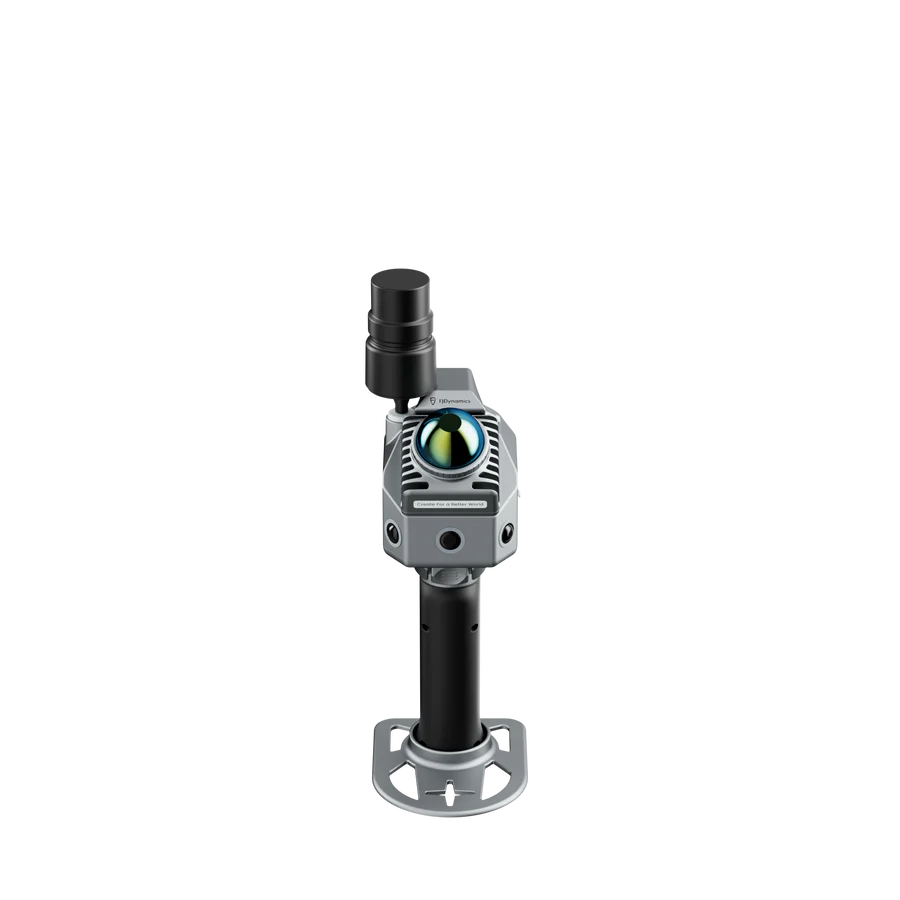
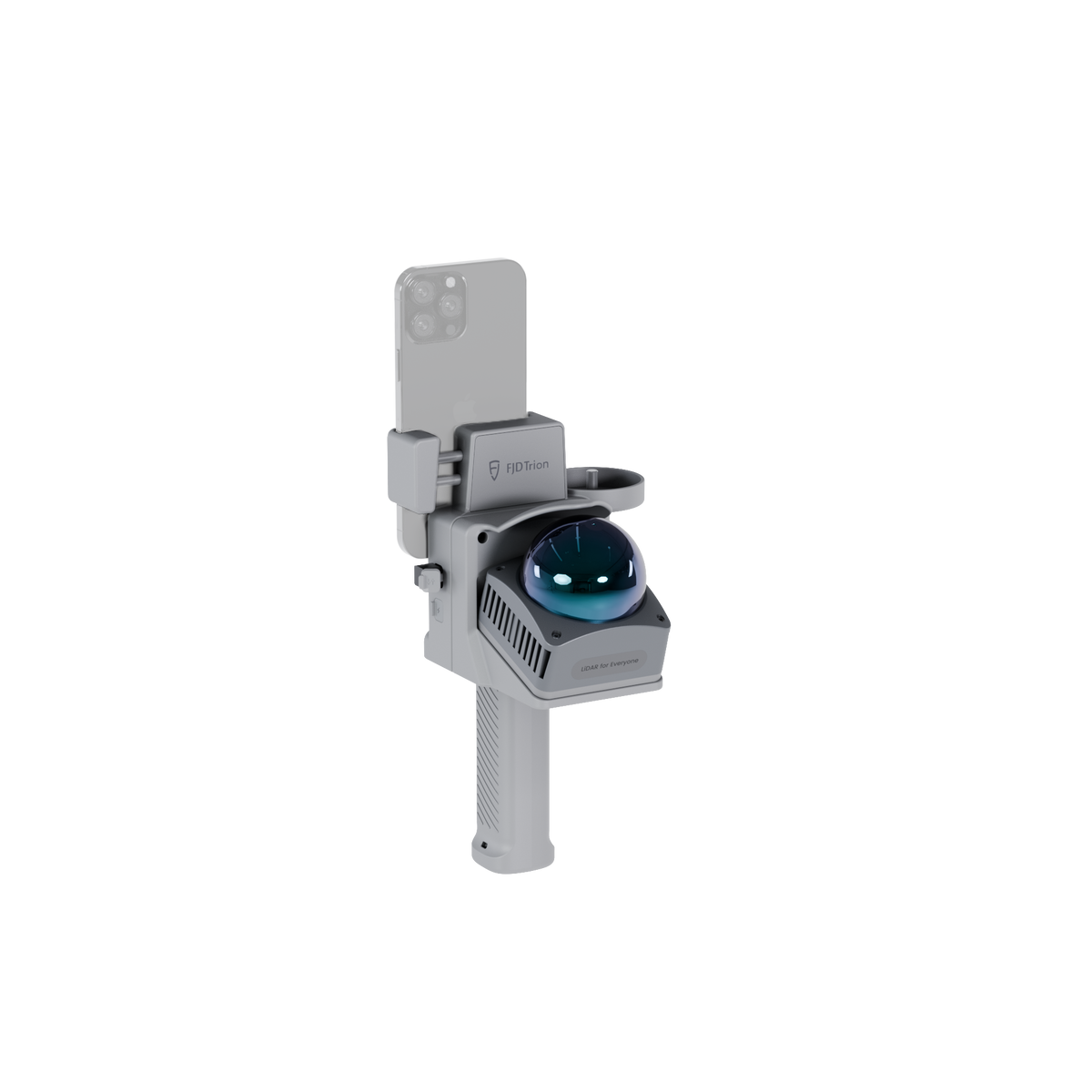
LiDAR scanning. The Trion line includes the V4E, positioned in third-party video coverage as the lowest-cost LiDAR option, the P2, and the V200/V205 models 212223242526. The commerce listing shows a LiDAR scanner at 1,999 US dollars with an optional 500 US dollar RTK upgrade 1. VERIFIED FACT: the price points appear in the company's own shop listings and in independent video coverage, and the two are consistent. COMPANY CLAIM: performance characteristics. The existence of a body of third-party tutorial content on point-cloud mapping, Gaussian splatting, and fusion workflows is a mild positive signal, because it implies a user base large enough to justify tutorial production by people other than the vendor 232426.
Robotics outside agriculture. A field-marking robot and the Sveabot landscaping product are referenced in company and social channels 1115. UNKNOWN: commercial status, pricing, shipment volumes and customer base for these products. They are noted here for completeness and should not be weighted in any assessment of the company's current revenue.
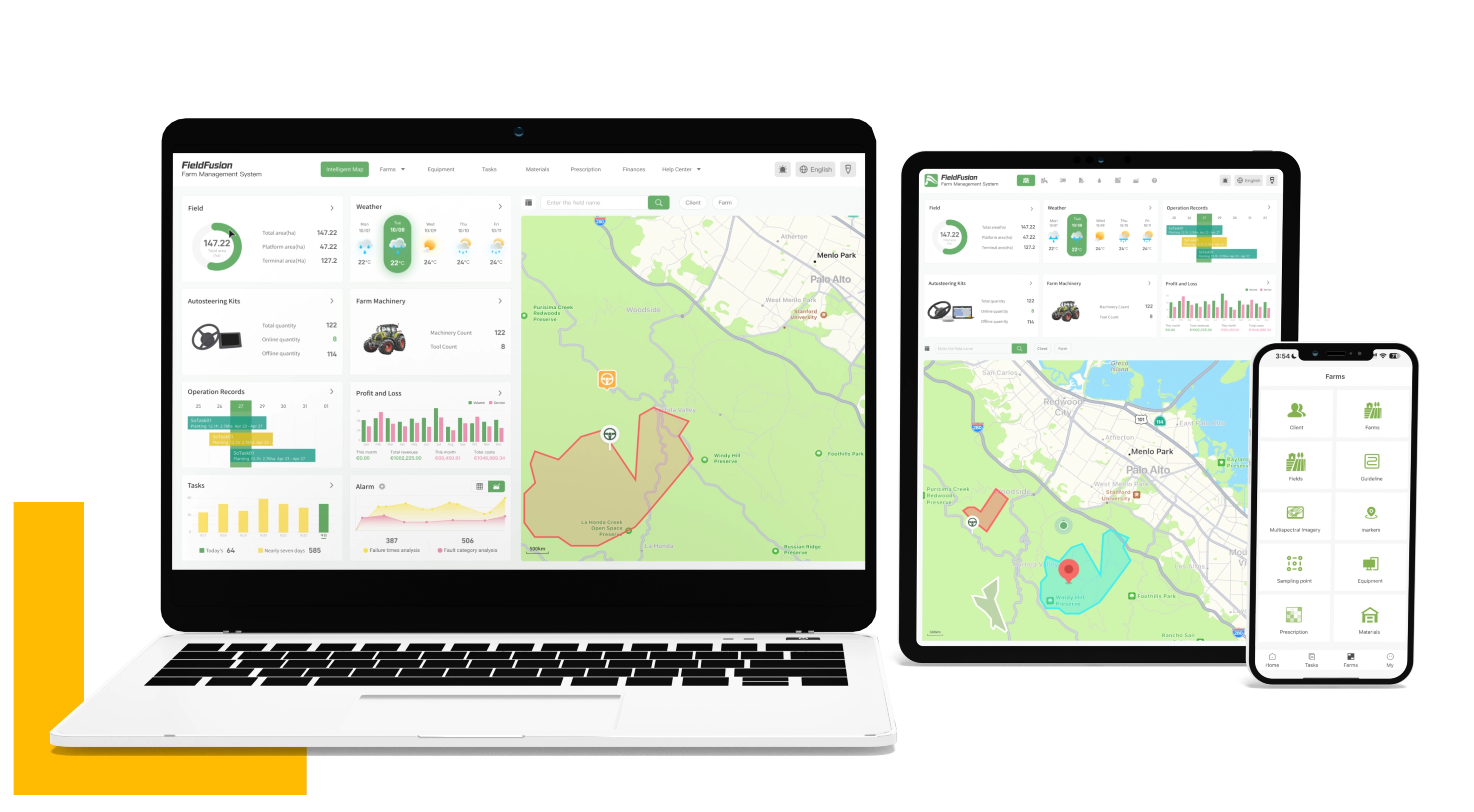
The pricing picture across the portfolio is unusually transparent for a robotics company, which is worth crediting. Precision agriculture systems range roughly from 2,300 to 12,000 US dollars depending on configuration; the FieldFusion farm management software licence runs from 169 US dollars per year against a regular price of 199; the LiDAR scanner is 1,999 US dollars with the optional RTK upgrade at 500 1. VERIFIED FACT: these figures appear in the company's own commerce listings. EDITORIAL INFERENCE: the software subscription at 169 dollars per year against hardware at thousands of dollars is a deliberate land-and-expand structure. It is also the structure that has attracted the "trap" criticism discussed in §11.
| Product line | Representative offering | Published price (USD) | Evidence quality |
|---|---|---|---|
| Agricultural guidance | Retrofit RTK auto-steering kit, ±2.5 cm claimed | 2,300–12,000 (system range) | Vendor claim; price from commerce listing 126 |
| Precision implements | APS seeding control kit; AL02 Max land levelling | Not publicly disclosed | Vendor product-update blog only 810 |
| Farm software | FieldFusion ADV/PRO licence | From 169/yr (reg. 199) | Commerce listing 1 |
| LiDAR scanning | Trion V4E, P2, V200/V205 | 1,999 (+500 RTK option) | Commerce listing plus independent video coverage 12122 |
| Other robotics | Field-marking robot; Sveabot landscaping | Not publicly disclosed | Company/social channels only 1115 |
Two observations sharpen the table. First, the only line where vendor pricing and independent coverage converge is LiDAR, which is also the line with the least strategic weight in the company's agricultural narrative. Second, the implement line, which is plausibly the highest-margin business, has no published pricing at all, which means an outside analyst cannot model attach economics. UNKNOWN: unit volumes, average selling prices realised (as opposed to listed), and gross margin by line.
Products & versions

04Technology Stack: Strengths and the Work That Remains
The core technical stack is a centimetre-class RTK positioning pipeline coupled to a steering actuator, a path planner, and a user interface that runs on a tablet or terminal in the cab. That description is an EDITORIAL INFERENCE assembled from the company's own functional claims: RTK guidance at ±2.5 cm, automatic steering, route planning, and smart U-turn with claimed distance savings up to 30 percent 26. The company does not publish a technical architecture document in the gathered evidence, so the internals are inferred from behaviour rather than documented.
The genuine engineering strength here is integration, not invention. RTK guidance is a mature technology; the hard part of a retrofit product is making it work across the hydraulic and electrical diversity of tractors from different manufacturers, vintages and regions. The company's own account of solving autosteering adaptation for John Deere tractors in Central Asia is, on its face, a description of exactly that integration work 12. EDITORIAL INFERENCE: if the company has genuinely solved adaptation across a wide range of machines, that compatibility matrix is a real and defensible asset, because it is expensive to build and tedious to replicate. It is also invisible in the marketing, which tends to lead with accuracy figures instead. UNKNOWN: the size and coverage of the supported-machine matrix, and how much of it is validated versus claimed.
The claimed 30 percent reduction in distance travelled through reduced overlap is the kind of number that should be treated with care. COMPANY CLAIM: the figure appears in vendor material 2. EDITORIAL INFERENCE: overlap reduction is a real and well-understood benefit of guidance, and the magnitude depends heavily on field shape, implement width and operator behaviour. A single headline percentage across all conditions is a marketing simplification. It is not evidence of autonomy, and it should not be read as such.
On the LiDAR side, the stack appears to be a scanning and mapping pipeline with point-cloud processing, fusion and linkage workflows, and support for Gaussian splatting 232426. The presence of third-party tutorials on these workflows is a modest positive signal about the maturity of the toolchain 232426. EDITORIAL INFERENCE: the LiDAR line is best understood as a separate business with a separate customer base, likely surveying, construction and inspection, rather than as a sensor feeding the agricultural autonomy stack. The gathered evidence contains no indication that the Trion scanners are used as perception sensors on the agricultural machines, and the agricultural guidance system appears to rely on RTK rather than on LiDAR perception.
That last point matters for how the autonomy story should be assessed. An RTK-guided machine that steers along a pre-planned path is executing a geometric plan, not perceiving and reacting to an unstructured environment. It will not detect a person, an animal, a fallen branch or a washed-out ditch. EDITORIAL INFERENCE: the absence of a perception layer in the agricultural product is the single strongest technical reason to reject the word "autonomous" as applied to it. A human operator remains necessary not merely as a supervisor but as the perception system. This is not a criticism of the product, which is designed for a cab-based workflow; it is a criticism of the vocabulary.
The remaining technical work, on the evidence available, is threefold. First, expanding and validating the machine-compatibility matrix, which is a grind rather than a breakthrough. Second, building a perception capability if the company ever intends to move from guidance to genuine autonomy, which would be a step change in cost and complexity. Third, hardening reliability, which is where the independent criticism lands 28. UNKNOWN: whether the company has any perception programme in development, and whether the FieldFusion software layer is a genuine data platform or a licence wrapper around the guidance hardware.
05Research, Papers, Authors and Labs
This is the thinnest section of the report, and the thinness is a finding in itself.
The gathered evidence contains no peer-reviewed publications authored by FJDynamics personnel, no named research lab, no academic collaborations, and no technical preprints attributable to the company. The arXiv references in the source set 17181920 are general robotics-learning papers on forward and inverse dynamics, quadruped navigation and trajectory sampling. They are not FJDynamics work, they are not cited by FJDynamics in any source in this set, and there is no evidence linking them to the company's stack. They appear in the dossier as background literature, and they are listed in §14 for completeness with that caveat stated plainly.
EDITORIAL INFERENCE: the absence of a research footprint is consistent with the company's actual strategy, which is integration and distribution rather than fundamental research. A company that retrofits mature RTK technology onto existing tractors does not need to publish. The absence should not be read as a weakness in the business, but it should be read as a limit on what can be verified: there is no technical literature against which to check the company's performance claims, no independent benchmark, and no named engineer whose track record can be assessed.
UNKNOWN: the size and composition of the engineering organisation, the identity of technical leadership below the founder, the existence of any internal research function, and whether the company holds patents or has filed any. None of this is disclosed in the gathered evidence.
For a reader accustomed to evaluating robotics companies through their research output, FJDynamics will feel opaque. The correct response is not to assume the research exists but is unpublished, nor to assume it does not exist. The correct response is to recognise that the company is asking to be evaluated on commercial execution, and to hold it to that standard instead.
<!-- module: papers --> <!-- module: authors-labs --> <!-- module: repos --> <!-- module: datasets -->06Media Evidence Library: What the Videos Prove
The video evidence in the gathered set is entirely LiDAR-focused. Six videos cover the Trion V4E, the P2, and the V200/V205 models, with content spanning unboxing, quick-start guidance, point-cloud mapping, fusion and linkage workflows, and 3D Gaussian splatting 212223242526. One of these, the V4E coverage, is framed around the product being the lowest-cost LiDAR option 21.
What these videos prove is narrow and should be stated precisely. They prove that the products exist, that they can be unboxed and operated, and that a workflow exists for producing point clouds and derived 3D representations. VERIFIED FACT: the products are real and demonstrable in the specific workflows shown. What they do not prove is accuracy against a reference standard, repeatability across units, performance in adverse conditions, or fitness for any particular survey-grade application. No video in the set shows a controlled accuracy test.
More importantly for this report, there is no video evidence in the gathered set of the agricultural auto-steering system operating in a field. There is no footage of the retrofit kit steering a tractor, no demonstration of the U-turn behaviour, no field trial footage, and no independent third-party test of the guidance accuracy. UNKNOWN: whether such footage exists outside the gathered set. EDITORIAL INFERENCE: the absence is notable given how much video content the company produces for LiDAR. A company confident in its flagship agricultural product would be expected to publish field footage; the gathered evidence does not contain it.
Even if such footage existed, the editorial standard of this report would not change. A video of a tractor steering itself along a field boundary is evidence that a tractor steered itself along a field boundary during a video shoot. It is not evidence of autonomous task completion, because the operator's presence, the intervention rate, and the conditions are all uncontrolled. The distinction between "we filmed it working" and "it works" is the central discipline of this section.
Media library
07Commercial Reality
FJDynamics is a fully commercial business. Products ship, prices are published, dealers are recruited, and the company is preparing a public listing 1469. That much is VERIFIED FACT on the basis of commerce listings, third-party marketplace presence, and multiple independent news sources.
The commercial evidence has four components, each with a different weight.
Direct commerce. The company operates its own shop with published pricing across software, hardware and accessories 1. Shipping terms are published on the corporate site 3. VERIFIED FACT: the company sells direct with transparent pricing. EDITORIAL INFERENCE: direct-to-farmer commerce alongside a dealer network creates channel conflict risk, which is a common problem for companies scaling an aftermarket business. UNKNOWN: the revenue split between direct and channel.
Third-party marketplace presence. FJDynamics farm attachments appear on TractorHouse with a small number of listings 4. VERIFIED FACT: the brand has secondary-market presence. EDITORIAL INFERENCE: the small listing count is consistent with a brand that is present but not yet dominant in the used-equipment channel, though listing counts are a weak signal and should not be over-read.
Channel build-out. The global dealer conference in Nanjing and the exhibition programme across Agrishow, LandTageNord and other events indicate an active channel and marketing operation 7913. COMPANY CLAIM: the company characterises these as evidence of global scale. EDITORIAL INFERENCE: exhibition presence is a marketing expenditure, not a revenue signal. It tells you the company is investing in distribution; it does not tell you the distribution is productive.
Market position. The claim to be the world's third-largest agricultural auto-navigation kit supplier at 8.5 percent share in 2024, and second in retrofit kits at 16.9 percent, is the most consequential commercial claim the company makes 6. It appears in a single news source in this set and is not corroborated. COMPANY CLAIM, confidence-penalised. EDITORIAL INFERENCE: the two figures are internally consistent with each other, in the sense that a company can be a larger share of the retrofit niche than of the broader auto-navigation market that includes OEM-fitted systems. That internal consistency is mildly reassuring but is not verification.
The most important commercial unknown is the one that matters most to an IPO: whether the revenue is recurring, concentrated or durable. UNKNOWN: total revenue, growth rate, gross margin, customer concentration, churn on the software subscription, and the proportion of revenue from new versus repeat customers. None of this is disclosed in the gathered evidence. A company preparing for a listing will eventually have to disclose it in a prospectus, and that prospectus will be the single most valuable document for anyone assessing this business. Until it exists, the commercial picture is a well-marketed outline.
Customers & deployments
Sections 8 through 14 continue in the second part of this report.
08Markets and Use Cases
FJDynamics does not sell into one market. It sells into a stack of adjacent ones, and the distinction matters because the company's public identity (precision agriculture) is narrower than its actual product surface (agriculture, geospatial survey, landscaping robotics, and a farm-management software layer). The dossier supports a reasonably clear picture of where revenue is concentrated and a much weaker picture of where it is growing.
8.1 The core market: retrofit precision agriculture
The flagship business is retrofit auto-steering and auto-navigation for existing tractors and implements. This is a market defined less by technology than by installed-base economics. The customer already owns a tractor; the question is whether a kit costing roughly $2,300 to $12,000 1 delivers enough fuel, input, and labour savings to justify itself within a season or two.
The vendor's own framing of the value proposition is instructive. FJDynamics' blog argues that farming GPS systems carry hidden costs and that buyers should understand total cost of ownership rather than sticker price 2. That is a mature-market argument. It presumes the customer is already comparing GPS options, not being introduced to the category. It also implicitly concedes that the competitive set is other guidance vendors, not "no guidance at all."
The geographic pattern visible in the dossier is a European and Central Asian emphasis layered on a Chinese manufacturing and R&D base:
| Market signal | Evidence | What it suggests |
|---|---|---|
| European trade-show cadence | Agrishow 2026 (Brazil), LandTageNord 2026 (Germany) 713 | Deliberate channel-building in high-value agricultural markets |
| Central Asia adaptation work | John Deere autosteering adaptation in Central Asia 12 | Retrofit demand where OEM guidance is absent or unaffordable |
| Dealer network formalisation | Global Dealer Conference 2026, Nanjing 9 | Shift from direct/online sales toward distributor-led scale |
| European traction as an IPO narrative | kr-asia analysis of IPO positioning 6 | Europe is being used as the proof point for investor confidence |
The Central Asia case is the most technically interesting and the least glamorous. Adapting autosteering to John Deere tractors in that region 12 is a compatibility and calibration problem, not a novel autonomy problem. It is also exactly the kind of work that generates durable switching costs, because a farmer who has had a kit calibrated to their machine and their fields is unlikely to rip it out.
8.2 The software layer: FieldFusion
FieldFusion is sold as a farm-management subscription, with ADV and PRO tiers and a promotional entry price from $169/year against a regular $199/year 1. This is a small number per user and a strategically large number in aggregate, because it converts a hardware sale into a recurring relationship.
The dossier does not disclose subscriber counts, attach rates, or churn. Those are the three numbers that would tell an analyst whether FieldFusion is a real platform business or a bundled accessory. Their absence is a material gap, not a minor one. A hardware company with a $169/year software layer is valued differently from a hardware company with a $169/year software layer that 60% of buyers renew.
8.3 Geospatial: the Trion LiDAR line
The Trion LiDAR scanners (V4E, P2, V200, V205) are sold at $1,999 with an optional $500 RTK upgrade 212223242526. This is a different market with a different buyer: surveyors, construction professionals, and increasingly 3D-capture specialists interested in Gaussian splatting and point-cloud workflows 2324.
The use cases visible in the media evidence are explicitly instructional. The videos are "how to create 3D Gaussian splatting" and "how to use point cloud mapping" 2324, not "watch this scanner autonomously survey a site." That is a meaningful distinction. It tells you the product is a tool operated by a trained professional, and that the company's go-to-market is education-led.
The $1,999 price point is aggressive. It positions Trion below established terrestrial laser scanning vendors and closer to the prosumer boundary. Whether that price is sustainable at scale, or whether it is a land-grab, is not disclosed.
8.4 Landscaping and the Sveabot question
The dossier contains a single, thin signal here: a Facebook post from FJD Landscaping announcing Sveabot, described as "built on the same robotics expertise behind our" existing portfolio 15. The post is truncated in the dossier, and no independent source corroborates the product's specifications, availability, or autonomy level.
This matters because landscaping robotics is where the autonomy question becomes sharpest. A robotic mower that operates unattended is a genuinely different product category from a tractor guidance kit that steers while a human sits in the cab. The community discussions in the dossier are almost entirely about robotic mowers, not tractors 27303132, and they are dominated by questions of reliability and remote reset rather than autonomy claims.
One thread asks directly about the "most trouble free mower" and whether it "can be reset remotely" 30. Another compares the X9, X, and Terranox on reliability and asks whether to wait 27. These are the questions of people who have already accepted that the category exists and are now discriminating between vendors on operational robustness. FJDynamics appears in these discussions as one option among several, not as the default.
8.5 What the market map does not show
Three gaps are worth naming plainly.
First, there is no disclosed revenue split by segment. Agriculture is assumed to dominate, but the dossier does not confirm it.
Second, there is no disclosed customer concentration. If a small number of dealers or distributors account for a large share of revenue, that is a risk that an IPO prospectus would need to address.
Third, there is no independent market-share verification. The claim that FJDynamics is the world's third-largest agricultural auto-navigation kit supplier at 8.5% share, and second in retrofit kits at 16.9%, rests on a single news source 6. Market-share figures of this kind are typically vendor-supplied or derived from a paid research report, and they should be treated as a company claim until independently reproduced.
09Competitive Landscape
FJDynamics competes in at least four distinct arenas, and it is a different kind of competitor in each. Treating "FJDynamics versus John Deere" as a single contest obscures more than it reveals.
9.1 Arena one: OEM precision agriculture
The incumbent set here is the agricultural machinery OEMs and their guidance divisions, plus the established aftermarket guidance vendors. The dossier does not name specific competitors, which is itself a limitation. What it does show is the strategic posture: FJDynamics positions itself as the affordable, compatible, retrofit alternative, and it explicitly does adaptation work on John Deere tractors in Central Asia 12.
That is a revealing choice. Rather than competing head-on with OEM guidance on new machines, FJDynamics targets the enormous installed base of machines that either lack factory guidance or whose owners will not pay OEM prices. The vendor's own content marketing leans into this by framing the buying decision around hidden costs and total cost of ownership 2.
| Competitive dimension | OEM guidance | FJDynamics retrofit |
|---|---|---|
| Buyer | New-machine purchaser, often financed | Existing-machine owner, cash or short financing |
| Price | Bundled into machine, high absolute cost | $2,300–$12,000 standalone 1 |
| Compatibility | Vendor's own machines | Cross-brand, requires adaptation work 12 |
| Channel | Dealer network tied to machine sales | Independent dealers, online, trade shows 49 |
| Lock-in | High, integrated | Moderate, but calibration creates friction |
The retrofit position is defensible but not impregnable. Its moat is calibration know-how and dealer relationships, not patents or proprietary hardware. That is a moat that can be crossed by any competent competitor with patience.
9.2 Arena two: geospatial scanning
The Trion line competes against established terrestrial laser scanning vendors and a growing field of low-cost SLAM scanners. At $1,999 with a $500 RTK option 21, FJDynamics is competing primarily on price and on workflow accessibility.
The media evidence shows the company investing in instructional content around Gaussian splatting and point-cloud mapping 2324. That is a bet that the constraint on adoption is user skill, not hardware capability. It is a reasonable bet, but it also means the company is competing partly against free community tutorials and partly against software vendors whose tools work with any scanner.
9.3 Arena three: landscaping robotics
Here the dossier is thinnest. The Sveabot announcement 15 places FJDynamics in a category where the community conversation is active and skeptical 27303132. The Reddit threads show buyers comparing specific models on reliability, mapping limits, and remote reset capability 27303132.
The competitive question in this arena is not "who has the best autonomy" but "who has the fewest failure modes." A mower that gets stuck and cannot be reset remotely is worse than a mower that mows less area but never needs intervention. The community's framing reflects that: the threads are about trouble-free operation and remote reset, not about cutting-edge navigation 30.
FJDynamics' entry here is unproven. A single social-media announcement 15 is not evidence of a shipping, reliable product.
9.4 Arena four: farm-management software
FieldFusion competes with a crowded field of farm-management platforms, many of which are hardware-agnostic. At $169/year promotional and $199/year regular 1, it is priced as an attach product rather than a standalone platform.
The strategic logic is clear: software increases switching costs and improves margins. The execution risk is equally clear: a hardware company's software is often treated as a freebie by customers and as a cost centre by the company. Without disclosed attach rates, the competitive position here cannot be assessed.
9.5 The competitive picture in one table
| Arena | Basis of competition | FJDynamics position | Evidence quality |
|---|---|---|---|
| OEM precision ag | Brand, integration, financing | Challenger, retrofit niche | Moderate 612 |
| Aftermarket guidance | Price, compatibility, dealer reach | Claimed #2 in retrofit 6 | Weak (single source) |
| Geospatial scanning | Price, workflow, software ecosystem | Aggressive price entrant | Moderate 2122 |
| Landscaping robotics | Reliability, remote management | Unproven entrant | Very weak 15 |
| Farm software | Integration, data, habit | Attach product | Weak 1 |
The honest summary is that FJDynamics is a credible challenger in retrofit agriculture, a price disruptor in scanning, and an unproven participant elsewhere. The company's own market-share claims 6 are the strongest competitive evidence in the dossier, and they are also the least independently verified.
Competitive comparison
| Robot | Maker | Autonomy | Conf. |
|---|---|---|---|
| iRobot Roomba Combo 10 Max | iRobot | Autonomous | 0.90 |
| Mobile ALOHA (Stanford) | Stanford University | Teleoperated | 0.90 |
| 1X NEO | 1X Technologies | Remote-Assisted | 0.90 |
10Geopolitical Context and Constraints
FJDynamics sits at an intersection that is commercially advantageous and politically exposed. It is a Hong Kong-incubated company founded by Wu Di in December 2017 61416, with manufacturing and R&D rooted in China, selling into Europe, Central Asia, and Latin America, and preparing for a Hong Kong listing 6.
Each of those facts carries a constraint.
10.1 The Hong Kong listing choice
A Hong Kong IPO is not a neutral venue choice. It signals a preference for proximity to Chinese capital markets and a willingness to accept the disclosure and governance expectations that come with a Hong Kong listing, which are meaningfully different from those of a US listing.
The kr-asia analysis frames the IPO question around whether European traction can be converted into investor confidence 6. That framing is itself evidence of the constraint: the company's growth story depends on markets outside China, and investors will want to see that the non-China business is durable rather than opportunistic.
10.2 Selling into Europe and Central Asia
Agricultural technology is increasingly treated as critical infrastructure. Guidance systems, telematics, and farm data touch food security, land use, and rural economies. That makes cross-border sales of agricultural robotics subject to a level of scrutiny that consumer robotics is not.
The dossier does not contain evidence of any specific regulatory action, export restriction, or market-access barrier affecting FJDynamics. That absence should be stated plainly rather than filled with speculation. What the dossier does show is a company investing heavily in European trade-show presence and dealer relationships 7913, which is consistent with a strategy of embedding through commercial channels rather than trying to win on price alone.
10.3 Data and the software layer
FieldFusion 1 is a farm-management platform. Farm-management platforms collect field boundaries, yield data, input applications, and machine telemetry. Where that data is stored, who can access it, and what legal regime governs it are material questions for European customers in particular.
The dossier does not disclose FieldFusion's data residency, hosting arrangements, or privacy posture. This is a genuine unknown, and it is the kind of unknown that can become a commercial obstacle in jurisdictions with strict agricultural data governance.
10.4 The autonomy question as a political question
There is a second-order geopolitical dimension to autonomy claims. A system described as "autonomous" that in practice requires an operator in the cab is a different regulatory object from a system that genuinely operates unattended. The dossier's autonomy verdict is unknown [reconciled facts], and the vendor's own descriptions are consistent with supervised operation rather than full autonomy.
That distinction matters for certification, liability, and insurance. It also matters for how the company is permitted to market its products in jurisdictions with advertising standards that scrutinise autonomy claims.
10.5 What is not in the dossier
No export-control actions. No sanctions exposure. No data-localisation disputes. No regulatory enforcement. The geopolitical section of this report is therefore largely a map of structural exposures rather than a record of events. That is an honest characterisation, and it should not be read as reassurance. Structural exposures are precisely the kind that do not appear in the news until they do.
11The Hype, the Real and the Ugly
This section separates what FJDynamics says, what the evidence supports, and what the evidence actively contradicts. The dossier is unusually clear on one point: the company's own blog raises a criticism of its business model 2, and an independent community report describes recurring product problems 28. Both are worth taking seriously.
11.1 The hype
The strongest claims in the dossier are market-share claims. FJDynamics is described as the world's third-largest agricultural auto-navigation kit supplier with 8.5% share in 2024, and the second-largest retrofit navigation kit supplier with 16.9% share 6. These are specific, quantified, and consequential. They are also sourced to a single news article.
The second cluster of claims concerns autonomy. The vendor describes an "autonomous driving and navigation system that enables tractors to steer automatically and plan optimized routes" [reconciled facts]. The word "autonomous" is doing a lot of work in that sentence. Automatic steering with an operator present is not the same as autonomous task execution, and the dossier contains no independent evidence of the latter.
The third cluster concerns capability: RTK guidance at ±2.5 cm, automatic steering, route planning, and smart U-turn with up to 30% distance reduction [reconciled facts]. The ±2.5 cm figure is repeated across sources, which raises confidence in the specification even though the sources are vendor-aligned.
11.2 The real
Several things in the dossier are well-supported and genuinely impressive.
The product line is broad and shipping. Auto-steering kits, land-levelling solutions (AL02 Max) 8, precision seeding control (APS) 10, LiDAR scanners 2122, and farm-management software 1 are all documented as products, not concepts. Commerce listings exist 14, and the company has a shipping policy page 3.
The company has raised substantial capital. A $70M round in 2021 is documented by TechCrunch 14, and Crunchbase maintains a funding profile 16. That is enough to fund a real go-to-market.
The channel-building is real. A global dealer conference in Nanjing 9 and repeated European trade-show presence 713 are the actions of a company investing in distribution rather than hoping for direct online sales.
The adaptation work is real and unglamorous. Solving autosteering adaptation for John Deere tractors in Central Asia 12 is the kind of engineering that does not generate headlines but does generate repeat customers.
11.3 The ugly
Three items deserve direct treatment.
The subscription criticism. The dossier notes that the subscription/license model has been criticised as a "trap," and that this criticism appears in a vendor blog 2. When a company pre-emptively addresses a criticism in its own content, the criticism is usually widespread enough to be affecting conversion. The FieldFusion pricing 1 is low in absolute terms, but the perceived trap is about lock-in and feature gating, not price level.
The reliability report. An independent community report cites a farmer saying there have been "nothing but issues with FJDynamics products over the last couple of years" 28. This is a single first-hand account. It is anecdotal. It is also, under the evidence hierarchy used in this report, better evidence of real-world reliability than any amount of vendor marketing, because it comes from someone with no incentive to praise the product.
The autonomy gap. The most consequential gap is not a criticism but an absence. No independent source in the dossier demonstrates the system performing its task with no human involved [reconciled facts]. The vendor describes automatic steering and route planning, which implies an operator in the cab. Community reports mention operational issues and resets but do not establish autonomy either way. The verdict is unknown, and unknown is not the same as false. It is simply unproven.
11.4 Claim versus evidence
| Claim | Source type | Independent corroboration | Verdict |
|---|---|---|---|
| #3 global ag auto-navigation supplier, 8.5% share | News 6 | None in dossier | Unverified company claim |
| #2 retrofit kit supplier, 16.9% share | News 6 | None in dossier | Unverified company claim |
| RTK guidance ±2.5 cm | Vendor/news, repeated | Consistent across sources | Plausible specification |
| Smart U-turn, up to 30% distance reduction | Vendor/news | None | Unverified performance claim |
| "Autonomous" driving and navigation | Vendor | None | Not supported; likely supervised |
| $70M raised (2021) | TechCrunch 14, Crunchbase 16 | Two independent profiles | Verified |
| Products shipping commercially | Commerce listings 14, shipping page 3 | Multiple | Verified |
| Reliable performance | Vendor | Contradicted by one community report 28 | Disputed |
11.5 The pattern
The pattern across these three categories is consistent. FJDynamics is a real company with real products, real capital, and real distribution. Its quantitative market-share claims are unverified. Its autonomy language overstates what the evidence supports. Its reliability record is contested by at least one first-hand account. None of these are fatal. All of them are the things an IPO prospectus, a serious institutional investor, or a large fleet buyer would probe hardest.
Claim tracker
The ±2.5 cm figure is repeated across vendor blog and product pages [2][5] but no independent field test or third-party measurement in this set confirms it.
Vendor/news descriptions [6][11][12] describe automatic steering with an operator present, and no independent source in this set shows task completion with no human involved, so the 'autonomous' framing is not backed.
These market-share figures come from a single news source [6] and are not corroborated by any independent market-research or regulatory filing in this set.
Commerce listings [1][4] and a news article [6] show products for sale and share claims, but no independent source in this set quantifies real-world deployment volume or customer outcomes.
Commerce listings [1] and a review video [21] independently corroborate the pricing ranges and the $1,999 LiDAR figure, though the ranges span different product lines.
A vendor blog [2] itself raises the subscription criticism and an independent community report [28] cites recurring product issues, though the farmer account is anecdotal and uncorroborated.
Multiple independent news sources [6][14][16] agree on the IPO preparation and a $70M funding round, though IPO timing and valuation remain unconfirmed.
Only vendor YouTube videos [21][22][23][24][25][26] demonstrate the LiDAR functions, with no independent test or third-party review in this set confirming the claimed capabilities.
12Future Scenarios
The dossier supports scenario construction because it contains enough structural information (capital, channel, product breadth, IPO intent) to reason about trajectories, even though it lacks the financial disclosures that would make those trajectories quantifiable. The scenarios below are editorial inferences, not predictions, and they are labelled as such.
12.1 Scenario A: The precision-ag compounder (base case)
In this scenario, FJDynamics completes its Hong Kong listing 6, uses the proceeds to deepen its dealer network in Europe and Central Asia, and grows by taking share in the retrofit segment where its price and compatibility advantages are strongest. FieldFusion 1 becomes a modest but real recurring revenue line. The Trion LiDAR business 2122 grows as a profitable adjacent product. Landscaping robotics remains a small experiment.
Under this scenario, the autonomy question never becomes central, because the company's customers are farmers who want a tractor to steer straight and a field to be mapped, not robots that operate unattended.
Indicators that would confirm this scenario: disclosed revenue growth in agriculture, rising dealer count, FieldFusion attach rates above 30%, continued European trade-show presence.
Indicators that would falsify it: flat or declining agriculture revenue, dealer attrition, FieldFusion treated as a free bundle.
12.2 Scenario B: The autonomy overreach (downside case)
In this scenario, competitive pressure pushes FJDynamics to market its products more aggressively as "autonomous," and a serious incident or a regulatory challenge follows. The gap between the vendor's autonomy language and the supervised reality documented in the dossier [reconciled facts] becomes a liability rather than a marketing convenience.
This scenario is plausible because the autonomy gap is already visible in the company's own materials. It becomes dangerous if the company leans harder into the claim as competition intensifies.
Indicators that would confirm this scenario: marketing language shifting from "automatic steering" to "fully autonomous," regulatory inquiries in European markets, insurance or liability disputes, negative press coverage of an incident.
Indicators that would falsify it: continued use of supervised-operation language, published safety documentation, third-party certification of autonomy levels.
12.3 Scenario C: The platform pivot (upside case)
In this scenario, FieldFusion 1 becomes the centre of the business rather than an attach product. The hardware becomes a channel for data, and the software becomes the recurring revenue engine. This would require FJDynamics to compete successfully against hardware-agnostic farm-management platforms, which is a different capability set from manufacturing guidance kits.
This scenario is the most valuable if it works and the least likely given the current evidence, because the dossier contains no data on FieldFusion adoption, retention, or engagement.
Indicators that would confirm this scenario: disclosed subscriber numbers, third-party integrations, FieldFusion revenue disclosed separately in IPO filings, hiring patterns shifting toward software.
Indicators that would falsify it: FieldFusion pricing pressure, no disclosed subscriber metrics at IPO, continued framing of software as a hardware accessory.
12.4 Scenario D: The reliability reckoning (risk case)
In this scenario, the reliability concerns raised in the community report 28 turn out to be representative rather than isolated. Warranty costs rise, dealer confidence erodes, and the retrofit business stalls in markets where word-of-mouth matters more than advertising.
This scenario is the hardest to assess because the dossier contains exactly one independent reliability data point. One report is not a pattern. But it is also not nothing, and in agricultural communities, where equipment failures occur at the worst possible moments and are discussed extensively, a single loud complaint can travel further than a marketing budget.
Indicators that would confirm this scenario: multiple independent reliability reports, dealer complaints, rising warranty provisions in IPO filings, negative review clustering.
Indicators that would falsify it: independent positive reliability reports, dealer testimonials, low warranty provisions, sustained repeat purchases.
12.5 Scenario comparison
| Scenario | Likelihood (editorial) | Key dependency | Most sensitive indicator |
|---|---|---|---|
| A: Precision-ag compounder | Moderate-high | Dealer execution, European demand | Agriculture revenue growth |
| B: Autonomy overreach | Low-moderate | Marketing discipline | Language in product materials |
| C: Platform pivot | Low | FieldFusion adoption | Subscriber disclosure |
| D: Reliability reckoning | Low-moderate | Product quality at scale | Independent reliability reports |
The scenarios are not mutually exclusive. A company can compound in agriculture while overreaching on autonomy language, and it can pivot to platform while managing reliability well. The purpose of the table is to identify which indicators to watch, not to assign probabilities with false precision.
13What to Watch: A Live Monitoring Checklist
This section is a working tool. Each item is something that can be checked against public sources, and each is tied to a specific uncertainty identified earlier in the report.
13.1 IPO process and disclosure
The Hong Kong listing 6 is the single most information-rich event on the horizon. A prospectus would resolve several of the largest unknowns in this report at once.
- Watch for: filing of a listing application, publication of a prospectus, disclosure of revenue by segment, disclosure of customer concentration, disclosure of FieldFusion subscriber metrics, disclosure of warranty provisions.
- Why it matters: the dossier's biggest gaps are financial and operational. A prospectus is the only public document likely to close them.
- What would be concerning: a prospectus that discloses agriculture revenue without segment detail, or that omits software metrics entirely.
13.2 Market-share claims
The 8.5% and 16.9% figures 6 are the company's most specific competitive claims and the least verified.
- Watch for: independent market research reports on agricultural guidance, competitor disclosures that allow triangulation, IPO prospectus citations of third-party research.
- Why it matters: if the figures are accurate, FJDynamics is a genuine top-three player. If they are vendor-derived, the competitive position is weaker than the narrative suggests.
- What would be concerning: continued repetition of the figures without any independent source.
13.3 Autonomy language
The gap between "automatic steering" and "autonomous" is the report's central technical finding.
- Watch for: changes in product marketing language, publication of autonomy-level documentation, third-party certification, safety case publications.
- Why it matters: autonomy claims carry regulatory, liability, and insurance consequences. A company that markets supervised systems as autonomous creates risk for itself and its customers.
- What would be concerning: escalation of autonomy language without corresponding technical disclosure.
13.4 Reliability signals
The single community report 28 is a weak signal that could become a strong one.
- Watch for: additional independent reliability reports, dealer commentary, review clustering on commerce platforms, warranty-related disclosures.
- Why it matters: in agricultural equipment, reliability is the primary purchase criterion after price. A reputation for unreliability is difficult to reverse.
- What would be concerning: a pattern of independent complaints across multiple markets and product lines.
13.5 FieldFusion adoption
The software layer 1 is the company's best shot at recurring revenue and its least transparent business line.
- Watch for: disclosed subscriber counts, pricing changes, feature announcements, third-party integrations, evidence of churn.
- Why it matters: a hardware company with a real software business is valued differently from one without.
- What would be concerning: persistent silence on subscriber metrics, or pricing that suggests the product is being given away.
13.6 Landscaping robotics
The Sveabot signal 15 is too thin to assess, but the category is active and the community is engaged 27303132.
- Watch for: product specifications, availability, independent reviews, autonomy documentation, community reports of reliability.
- Why it matters: this is the arena where autonomy claims are most testable, because a mower either operates unattended or it does not.
- What would be concerning: marketing that describes unattended operation without independent demonstration.
13.7 Geospatial product trajectory
The Trion line 212223242526 is a real product family with an aggressive price point.
- Watch for: new models, software ecosystem development, professional surveyor adoption, competitive responses from established vendors.
- Why it matters: this is the segment where FJDynamics' price advantage is clearest and where the buyer is most able to evaluate the product on technical merit.
- What would be concerning: price cuts without product improvements, suggesting a land-grab without a sustainable margin structure.
13.8 The checklist in operational form
| Priority | Item | Source to monitor | Frequency |
|---|---|---|---|
| 1 | IPO filing and prospectus | HKEX, company site | Event-driven |
| 2 | Segment revenue disclosure | Prospectus, annual reports | Annual |
| 3 | Autonomy language changes | Product pages, marketing | Quarterly |
| 4 | Independent reliability reports | Community forums, reviews | Ongoing |
| 5 | FieldFusion subscriber metrics | Prospectus, company statements | Event-driven |
| 6 | Market-share corroboration | Third-party research | Annual |
| 7 | Landscaping product status | Company channels, reviews | Quarterly |
| 8 | Trion competitive response | Industry press, vendor sites | Semi-annual |
The checklist is deliberately short. A longer list would create the illusion of coverage without improving decision quality. These eight items map directly to the eight largest uncertainties in the report.
14Sources and Methodology
14.1 Methodology
This report was assembled from a fixed research dossier gathered on 2026-09-19. The dossier contained 34 numbered sources across six categories: official (0), commerce (5), research (4), news (13), video (6), and community (6). No sources outside the dossier were consulted, and no citations in this report refer to material not present in the dossier.
Evidence was classified into four tiers:
| Label | Definition | Treatment in this report |
|---|---|---|
| Verified fact | Regulatory filings, official product documentation, named-customer confirmation, peer-reviewed or primary research, or multiple independent sources | Stated as fact with citation |
| Company claim | Stated by the company, not independently verified | Attributed to the company, flagged as unverified |
| Editorial inference | Reasoned conclusion drawn from public evidence | Labelled as inference, with reasoning shown |
| Unknown | Not publicly disclosed | Stated plainly as not disclosed |
Three rules were applied throughout:
- A choreographed demonstration video was not treated as proof of autonomous work.
- A shipment or commerce listing was not treated as proof of productive deployment.
- A partnership or dealer announcement was not treated as proof of a paid customer.
The autonomy verdict for FJDynamics is unknown. No independent source in the dossier demonstrates the system performing its task with no human involved. Vendor and news sources describe automatic steering and route planning, which implies an operator present in the cab. Community reports describe operational issues and resets but do not establish the autonomy level. Under the definitions used in this report, "Autonomous" requires independent completion of the task with no human performing or remotely driving it, and "Supervised-Autonomous" requires demonstrated autonomous task execution with active human oversight. Neither is independently shown.
Overall confidence in the reconciled picture is 0.55, reflecting strong evidence for the company's existence, products, and commercial activity, and weak evidence for its market-share claims, autonomy level, and reliability record.
14.2 Source list
Commerce and product listings
1 FieldFusion Farm Management Software | ADV & PRO Plans — https://shop.fjdynamics.com/collections/all 3 SHIPPING & RATES — https://www.fjdynamics.com/shipping-rates 4 FJDYNAMICS Farm Attachments For Sale - 3 Listings — https://www.tractorhouse.com/listings/for-sale/fjdynamics/farm-attachments?Manufacturer=FJDYNAMICS&srsltid=AU7gw4XNZDvxQe8AjuP2u05matkhR0edLVgaNHyZb2C0lmbU4GCnfXhJ
Company and news sources
2 The Hidden Cost of Farming GPS Systems (And How to ...) — https://agriculture.fjdynamics.com/blog/industry-insights-24/agriculture-farming-gps-systems-101 5 FJDynamics — https://www.fjdynamics.com/ 6 Can IPO-bound FJDynamics turn its European traction into investor confidence? — https://kr-asia.com/can-ipo-bound-fjdynamics-turn-its-european-traction-into-investor-confidence 7 FJDynamics at Agrishow 2026: Full-Scale Precision Agriculture in Ribei — https://agriculture.fjdynamics.com/blog/exhibition-23/fjdynamics-agrishow-2026-277 8 FJDynamics Unveils the AL02 Max: A High-Precision 3D Land Leveling Sol — https://agriculture.fjdynamics.com/blog/product-update-20/agriculture-fjdynamics-unveils-the-al02-max-a-high-precision-3d-land-leveling-solution-to-revolutionize-water-management-and-soil-preparation-194 9 Together Toward Tomorrow: FJDynamics Successfully Hosted the Global — https://agriculture.fjdynamics.com/blog/company-news-19/agriculture-together-toward-tomorrow-fjdynamics-successfully-hosted-the-global-dealer-conference-2026-in-nanjing-china-70 10 FJDynamics Launches APS Precision Seeding Control Kit: Transforming Tr — https://agriculture.fjdynamics.com/blog/product-update-20/agriculture-fjdynamics-launches-aps-precision-seeding-control-kit-transforming-traditional-seed-drills-into-high-precision-machines-110 11 Drawing the line on manual drudgery: Automation leader FJ Dynamics transforms unseen work with robotic precisio | e27 — https://e27.co/drawing-the-line-on-manual-drudgery-automation-leader-fj-dynamics-transforms-unseen-work-with-robotic-precision-20250827/ 12 A Milestone in Smart Farming: How FJD Solved Autosteering Adaptation C — https://agriculture.fjdynamics.com/blog/technology-22/agriculture-a-milestone-in-smart-farming-how-fjd-solved-autosteering-adaptation-challenges-for-john-deere-tractors-in-central-asia-1023 13 LandTageNord 2026: FJDynamics Brings Precision Farming to Wüsting — https://agriculture.fjdynamics.com/blog/exhibition-23/agriculture-landtagenord-2026-fjdynamics-brings-precision-farming-to-wusting-1116 14 Robotics startup FJDynamics raises $70M to make manual ... — https://techcrunch.com/2021/11/28/fj-dynamics-70-million-funding/ 15 Sveabot. Built on the same robotics expertise behind our ... — https://www.facebook.com/FJDLandscaping/posts/exciting-news-from-fjdynamicswere-expanding-our-robotics-portfolio-with-a-brand-/1254291666833699/ 16 FJ Dynamics - Crunchbase Company Profile & Funding — https://www.crunchbase.com/organization/fj-dynamics
Research and preprints
17 https://arxiv.org/pdf/2508.15755 — https://arxiv.org/pdf/2508.15755 18 [2604.16391] Disentangled Robot Learning via Separate Forward and Inverse Dynamics Pretraining — https://arxiv.org/abs/2604.16391 19 https://arxiv.org/pdf/2504.19322 — https://arxiv.org/pdf/2504.19322 20 [2204.08647] Learning Forward Dynamics Model and Informed Trajectory Sampler for Safe Quadruped Navigation — https://ar5iv.labs.arxiv.org/html/2204.08647
Video evidence
21 FJD Trion V4E – Lowest Cost LiDAR — https://www.youtube.com/watch?v=Hma-9-pcly8 22 Smaller, Smarter, Scan more! FJD Trion P2 LiDAR Scanner now unleashed! — https://www.youtube.com/watch?v=NxNtSDtAOS0 23 FJD Trion Model V205 How to Create 3D Gaussian Splatting — https://www.youtube.com/watch?v=qWjN_9_BCmI 24 FJD Trion Model V200 How to use Point Cloud Mapping — https://www.youtube.com/watch?v=vaAXu1_vgsg 25 FJD Trion P2 Unboxing & Quick Start — https://www.youtube.com/watch?v=MTzBOM-WPhE 26 FJD Trion Model 200 How to use Fusion and Linkage — https://www.youtube.com/watch?v=aVx1o3CTLfA
Community sources
27 X9 vs X vs Terranox - what is reliable? Should I wait? - Reddit — https://www.reddit.com/r/roboticLawnmowers/comments/1tfx3yy/x9_vs_x_vs_terranox_what_is_reliable_should_i_wait/ 28 Auto Steer for tractors : r/farming - Reddit — https://www.reddit.com/r/farming/comments/1etz80t/auto_steer_for_tractors/ 29 So You Want To Be A Sales Engineer. Start Here. [DRAFT POST — https://www.reddit.com/r/salesengineers/comments/1ig3q3g/so_you_want_to_be_a_sales_engineer_start_here/ 30 Most trouble free mower? Can be reset remotely? - Reddit — https://www.reddit.com/r/roboticLawnmowers/comments/1sbo9o0/most_trouble_free_mower_can_be_reset_remotely/ 31 Mower for 10 ish acres?? : r/roboticLawnmowers — https://www.reddit.com/r/roboticLawnmowers/comments/1wblzen/mower_for_10_ish_acres/ 32 AWD robot for ~9000sqm/~2.2