Beijing Humanoid
US$0.99 unlocks one Word + one PDF download. The full report is free to read on this page.

Beijing Humanoid
China's state-backed humanoid ecosystem is real, funded and shipping units, but the evidence supports narrow, supervised capability rather than autonomous work.
| Report status | Coverage date | Company stage | Editorial standard |
|---|---|---|---|
| Premium editorial deep report, first edition | Evidence gathered 22 September 2026 | Multi-vendor, state-backed industrial ecosystem; pilot and beta deployments | Claims separated from verified facts; no demo treated as proof of autonomy |
How to Read This Report
This report covers "Beijing Humanoid" as an ecosystem rather than a company. The dossier supplied for this edition contains no official company filings, no peer-reviewed research and no primary product documentation. It contains five commerce sources, five news items and six community sources. That mix sets the ceiling on what can be asserted. Where the evidence is thin, this report says so rather than filling the gap with plausible narrative.
Every substantive statement below carries one of four labels.
| Label | Meaning | Example in this report |
|---|---|---|
| VERIFIED FACT | Regulatory filings, official product documentation, named-customer confirmation, peer-reviewed or primary research, or the same fact in multiple independent sources | Reuters reporting that China is readying humanoid robots for combat roles 6; Bloomberg reporting that Chinese firms send robots into the world to collect human task data 9 |
| COMPANY CLAIM | Stated by a vendor or programme sponsor, not independently verified | List prices published by vendors 24; capability narratives implied by deployment publicity |
| EDITORIAL INFERENCE | A reasoned conclusion drawn from public evidence, flagged as such | The ecosystem is best classified as industrial pilot/beta rather than commercial deployment |
| UNKNOWN | Not publicly disclosed in the supplied evidence | The level of human involvement during deployed operation; unit-level reliability data; contract values |
Three rules govern the analysis. A choreographed stage routine is not evidence of autonomous work. A shipment is not evidence of productive deployment. A partnership announcement is not evidence of a paying customer. Where the dossier cannot distinguish between these, the report records the ambiguity rather than resolving it in the vendor's favour.
01Executive Overview
The entity described in the supplied evidence is not a company. It is a national and regional humanoid robotics ecosystem, assembled from multiple vendors, municipal funds and state industrial policy, and it is best understood as an industrial programme with a marketing surface rather than a product line with a strategy. The reconciled facts place roughly USD 20 billion of national investment behind the sector, with a further USD 1.4 billion in state-backed city robotics funds split between Beijing and Shanghai 710. Thousands of units have been sent to logistics hubs, battery factories and industrial sites, and a People's Liberation Army tender for a humanoid robot was reported in May 2025 69. Published list prices across the ecosystem run from approximately USD 1,400 to more than USD 100,000 235.
That is a substantial industrial fact pattern. It is also narrower than the publicity around it suggests. The demonstrated capabilities documented in the dossier are acrobatic dance and kung fu routines, simple pick-and-place such as placing a bag of chips on a shelf, and half-marathon locomotion in which most robots failed to finish and at least one fell 111216. The most damaging evidence against the autonomy narrative comes from inside the ecosystem: Unitree's chief executive has conceded that current humanoids cannot reliably perform centimetre-level manipulation tasks such as folding a shirt or grabbing a plate 915. The development method itself confirms the gap. Chinese firms are sending robots into the world primarily to collect human task videos, folding sheets and grabbing cushions, in order to train robot "brains" 9. A system that needs human demonstrations to learn a task is not, on that evidence alone, a system that performs the task autonomously.
The autonomy verdict for this edition is unknown, at confidence 0.5. No supplied source documents independent task completion without a human performing or driving the task. Deployments are described as data collection and industrial trials. The only capability evidence available, stage routines, simple pick-and-place and a half-marathon with mass failure, does not demonstrate independent operation. Under a strict reading, "unknown" is the only defensible level.
The investment case and the capability case are therefore running on different clocks. Capital is being committed at national scale. Capability is advancing at the pace of a research programme that has not yet solved fine manipulation. The gap between those two speeds is the central risk in this ecosystem, and it is the thread running through every section of this report.
Latest news
- Robot vs human: Humanoid robot throws punches, kicks influencer across cage - videoThe Times of India·2026-09-21GENERAL
- Toyota to deploy humanoid robots at its global plants from 2028Biztoc.com·2026-09-21GENERAL
- China slows humanoid robot IPO rushRTE·2026-09-21GENERAL
- Toyota to deploy humanoid robots at its global plants from 2028Just-auto.com·2026-09-21GENERAL
- China is reportedly slowing humanoid robot IPOs after Unitree’s debut round tripThe Next Web·2026-09-21GENERAL
- Global Market: China tightens scrutiny of humanoid robot IPOs amid valuation concernsThe Times of India·2026-09-21GENERAL
- Dongfeng’s Xiaodong humanoid robot is scheduled to enter a factory in OctoberTechNode·2026-09-21GENERAL
- Humanoid robot sales tally hit 7,000 globally last yearThe Times of India·2026-09-21GENERAL
02The Beijing Humanoid Story
The story begins with policy, not with a product. China has poured investment into humanoid robotics at a scale that has no close international equivalent, with the national figure reported at approximately USD 20 billion and municipal governments competing for position 7. Beijing and Shanghai have each established state-backed robotics funds totalling roughly USD 1.4 billion, and the two cities are openly competing for humanoid robotics funding and the companies it attracts 10. This is a deliberate industrial policy: capital is being used to build a domestic supply base, to seed vendors, and to create demand through state-linked industrial buyers.
The second act is deployment as data collection. Bloomberg reported in July 2026 that China is sending robots out into the world to learn how to be human, with firms collecting human task videos, folding sheets, grabbing cushions, to train robot "brains" 9. This is a materially different activity from commercial deployment. The robot is not necessarily doing the work; it is present while the work is done, and the value being captured is the demonstration data. Read carefully, the deployment narrative and the data-collection narrative are the same narrative, and the second one is the honest version.
The third act is public demonstration, and it is where the ecosystem's reputation has been made and damaged. Robots have performed acrobatic dances and kung fu routines on stage 6. Beijing hosted a humanoid half-marathon that became the sector's most widely circulated cautionary tale: most robots failed to finish, several overheated, and at least one fell 111216. A separate incident in which a robot fell at an event generated enough confusion that observers debated whether the footage was AI-generated 14. The Beijing robot conference drew large attendance, and with it stock-market speculation about whether Chinese humanoid makers are in a bubble 1315.
The fourth act, still unfolding, is militarisation. Reuters reported in September 2026 that China is readying humanoid robots for combat, framing the sector's trajectory from dance floor to war 6. A PLA tender for a humanoid robot had already been reported in May 2025 6. This is the most consequential development in the dossier and the one with the thinnest independent verification: a tender is a statement of intent to buy, not evidence of a deployed military capability.
EDITORIAL INFERENCE. The sequence matters. Policy capital created vendors; vendors created demonstrations; demonstrations attracted attention; attention attracted capital markets; capital markets now price expectations that the demonstrations do not support. The data-collection deployments are the genuinely valuable activity in the chain, because they build the dataset that fine manipulation will eventually require. The stage routines are marketing. The half-marathon was an own goal that nonetheless produced useful engineering data on thermal management and gait robustness.
03Product Portfolio: What Beijing Humanoid Actually Sells
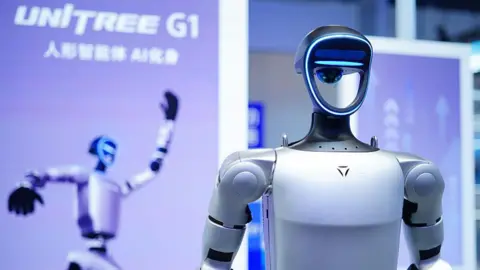
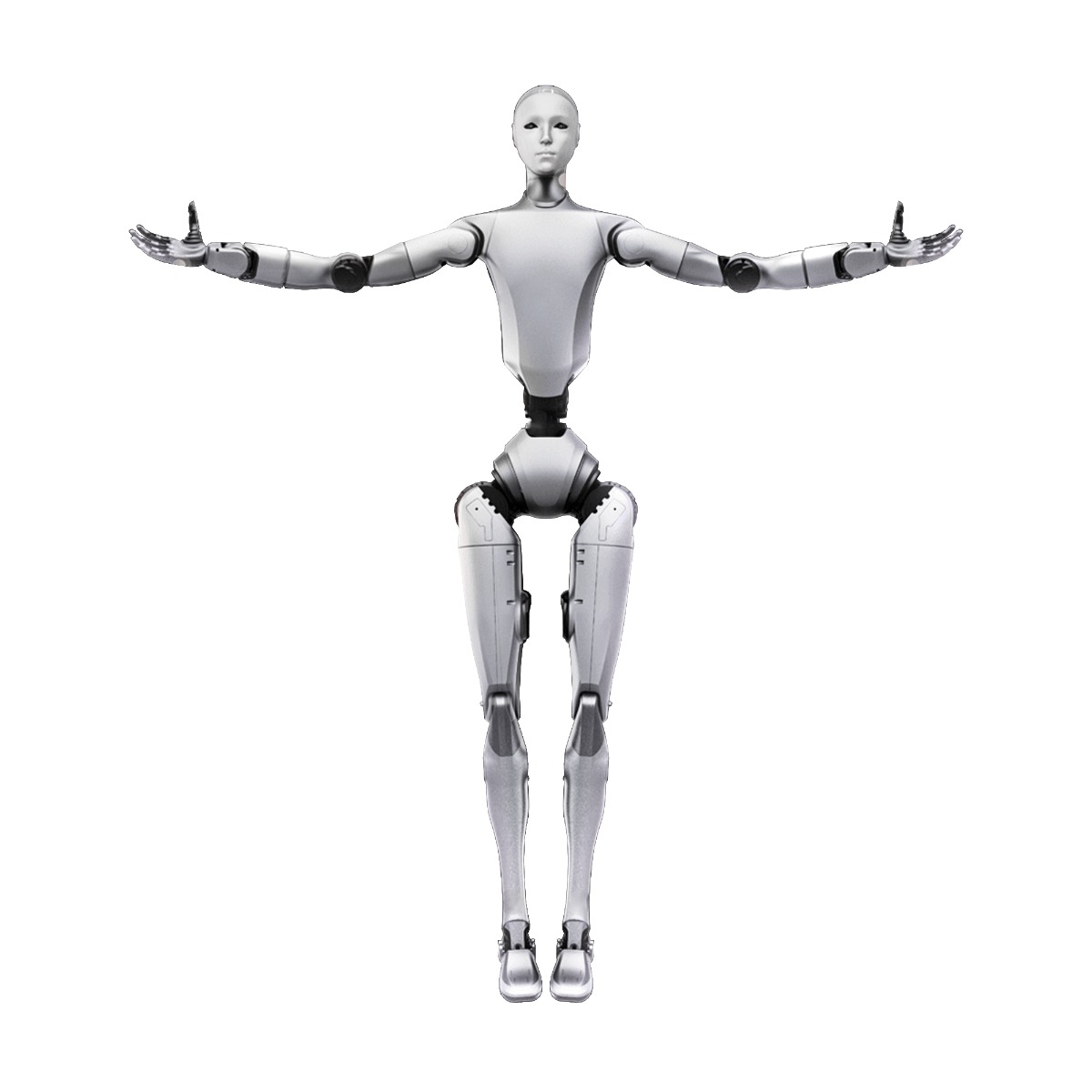
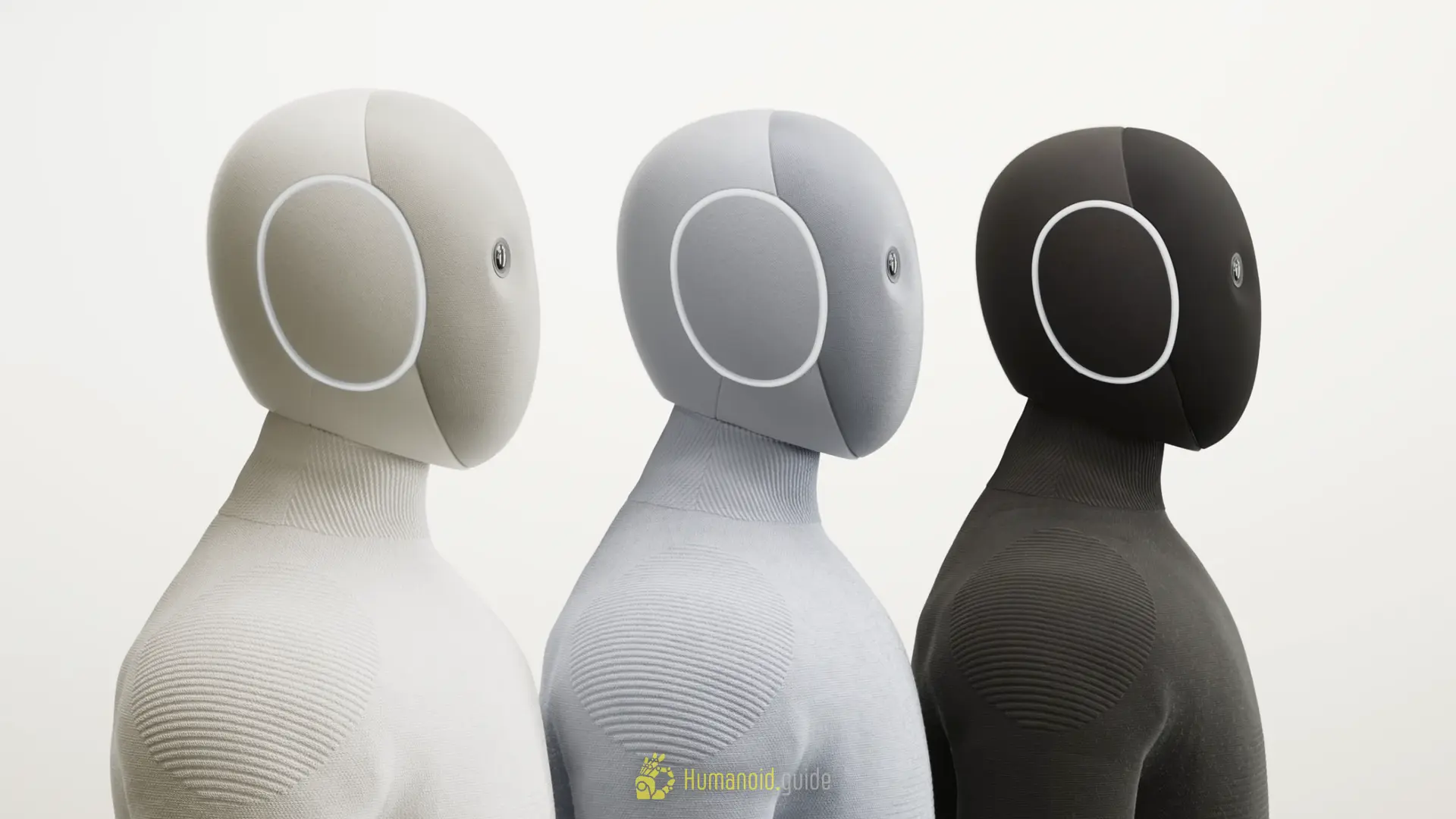
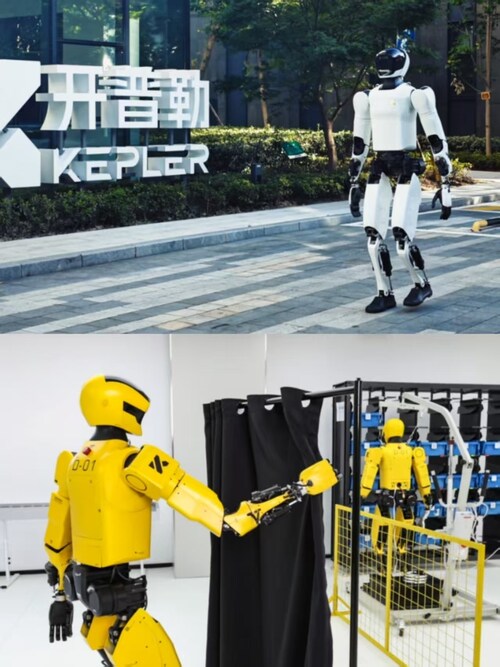
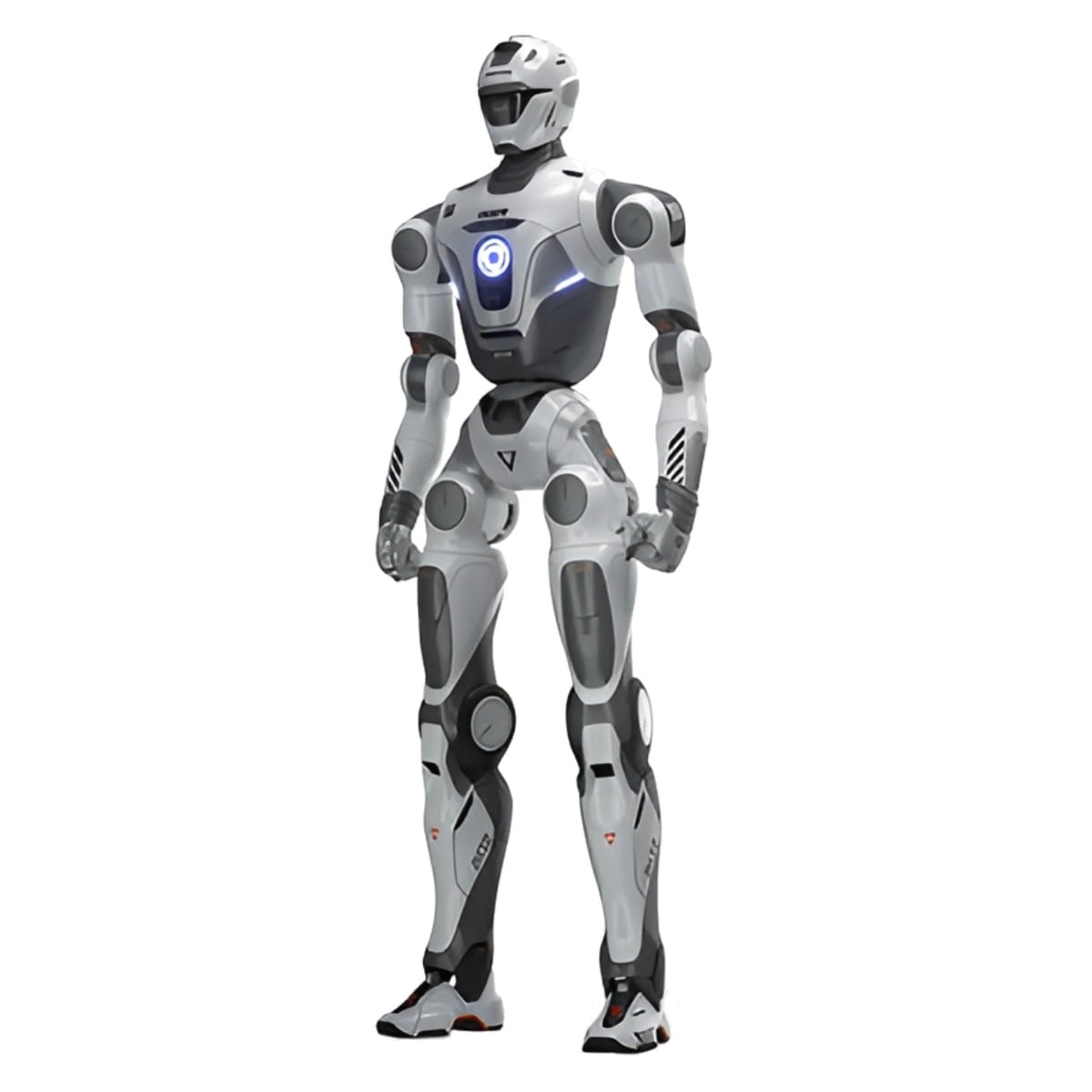
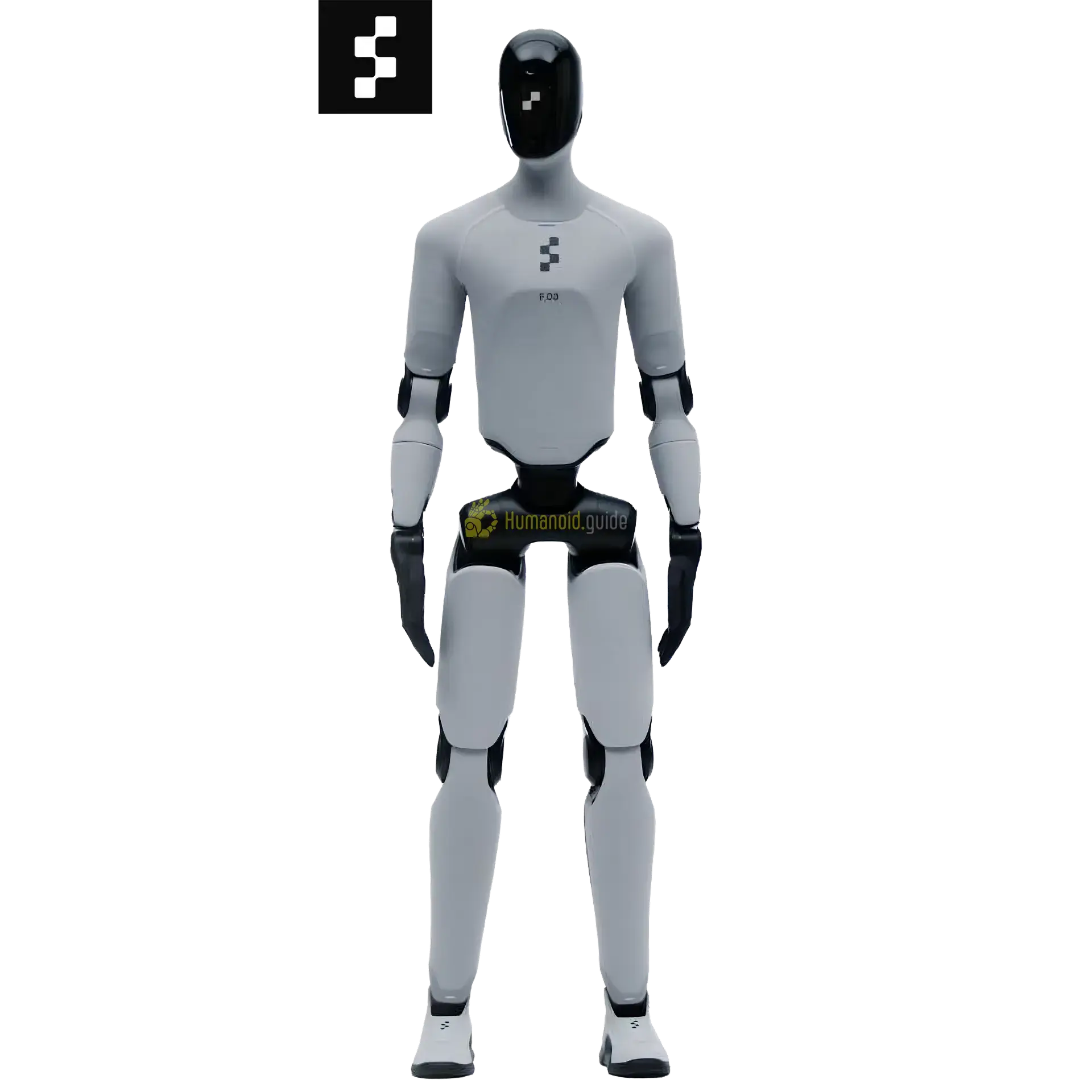
There is no single product. The dossier spans distinct models from distinct vendors: Noetix Bumi, Unitree R1, G1 and H2, 1X NEO, Kepler K2, EngineAI T800, Figure 03, Boston Dynamics Atlas and Agility Digit 234. Treating these as one portfolio would be a category error, and the reconciliation in the dossier explicitly types the entity as a national or regional ecosystem rather than a single robot model. What follows is therefore a price-and-position map of the ecosystem, not a catalogue.
| Model | Vendor | Published price signal | Positioning | Evidence quality |
|---|---|---|---|---|
| Noetix Bumi | Noetix | ~USD 1,400 (CNY 9,998) | Ultra-low-cost entry humanoid | COMPANY CLAIM, single source 2 |
| Unitree R1 / G1 class | Unitree | Under USD 6,000 | Low-cost developer and research humanoid | COMPANY CLAIM, vendor shop plus community corroboration 34 |
| Unnamed low-cost concept | Not disclosed | ~USD 1,370 | Concept-stage low-cost humanoid | COMPANY CLAIM, low confidence (0.6), single social source 5 |
| Unitree H2 | Unitree | Not disclosed in dossier | Higher-spec humanoid | UNKNOWN |
| Kepler K2, EngineAI T800 | Kepler, EngineAI | Not disclosed in dossier | Industrial humanoid candidates | UNKNOWN |
| 1X NEO, Figure 03, Atlas, Digit | 1X, Figure, Boston Dynamics, Agility | Not disclosed in dossier | International comparators, not Beijing ecosystem products | Context only 2 |
The headline price range across the ecosystem is approximately USD 1,400 to more than USD 100,000 2. That spread is not a product ladder; it is a sign of an industry that has not settled on a specification. A USD 1,400 humanoid and a USD 100,000 humanoid are not competing for the same buyer, and the low end is best read as a developer kit or a demonstration unit rather than a productive asset. The dossier's own conflict note flags that the low-cost figures come from different models and different sources, and that the USD 1,370 concept figure carries lower confidence (0.6) than the Unitree figure 35.
EDITORIAL INFERENCE. The low-price claims are doing strategic work beyond sales. A sub-USD 6,000 humanoid reframes the category from capital equipment to accessible hardware, which sustains investor and public attention while the manipulation problem remains unsolved. Buyers should treat published list prices as a starting point, not a total cost of ownership: the dossier contains no data on service contracts, spare parts, integration labour, safety certification or the supervisory staffing that current capability levels imply. Those costs are UNKNOWN and are likely to dominate the purchase price in any real deployment.
Products & versions

04Technology Stack: Strengths and the Work That Remains
The dossier does not contain a single official technical specification, datasheet or architecture document. Everything in this section is therefore inferred from demonstrated behaviour, deployment descriptions and one unusually candid vendor statement. That is a thin base, and the section is written accordingly.
What the evidence supports as a strength. Locomotion and whole-body control. A humanoid half-marathon is a genuine endurance and gait-stability test, and the fact that any units finished it, with one crossing the 20 km line, is a real result 12. Acrobatic and kung fu routines require dynamic balance, actuator bandwidth and control authority that were not commercially available a decade ago 6. Low unit pricing at the entry level implies a supply chain capable of producing actuators, reducers and structural components at volume and at cost 23. These are not trivial achievements, and they are the foundation any manipulation capability would sit on.
What the evidence shows as unsolved. Fine manipulation. The Unitree chief executive's concession that current humanoids cannot reliably fold a shirt or grab a plate is the single most informative technical statement in the dossier 915. Those tasks require centimetre-level accuracy, compliant force control, tactile sensing and robust perception under clutter. None of that is demonstrated anywhere in the supplied evidence. The pick-and-place example that does appear, placing a bag of chips on a shelf, is a coarse-positioning task with a forgiving object and a tolerant target 9.
What the development method reveals. The data-collection deployments are an admission about the stack. If the manipulation policy were solved, firms would not need to send robots into the world to record humans folding sheets and grabbing cushions 9. They are building the demonstration dataset that imitation learning and related methods require. That is a legitimate and probably necessary strategy. It also means the current generation is, in an important sense, a data-acquisition platform wearing a worker's body.
| Capability | Evidence in dossier | Assessment |
|---|---|---|
| Dynamic locomotion, endurance | Half-marathon, one unit crossing 20 km 12 | Real but unreliable; most units failed, some overheated 11 |
| Acrobatics, staged routines | Dance and kung fu performances 6 | Real capability, choreographed context, not evidence of autonomy |
| Coarse pick-and-place | Bag of chips placed on a shelf 9 | Demonstrated; forgiving task |
| Fine manipulation | Vendor CEO states shirt-folding and plate-grabbing not reliable 915 | Unsolved |
| Thermal management | Overheating during half-marathon 11 | Known weakness |
| Autonomy during operation | No source documents independent task completion | UNKNOWN |
| Safety certification, MTBF, service data | Not disclosed | UNKNOWN |
EDITORIAL INFERENCE. The stack is strongest where the task is self-contained and the environment is controlled, and weakest where the task requires contact-rich interaction with unstructured objects. That is the classic profile of a robotics programme that has solved the body and not yet the hands. The data-collection strategy is the correct response to that gap, but it implies a multi-year horizon before fine manipulation is reliable, and it implies that current deployments should be valued as data operations rather than labour substitution.
05Research, Papers, Authors and Labs
The supplied dossier contains no research sources: no papers, no preprints, no author lists, no laboratory pages and no code repositories. The research count in the dossier metadata is zero. This is a material gap and it is stated plainly rather than padded.
What can be said is structural. The ecosystem's learning approach, collecting human task videos to train robot "brains", sits within the imitation-learning and robot-foundation-model literature, and the firms pursuing it are effectively running large-scale data-collection programmes rather than publishing bench science 9. Whether that work is being written up, peer reviewed or released as open datasets is UNKNOWN on the supplied evidence. The absence of published research is not evidence of absence, but it does mean that independent researchers cannot verify capability claims, and that buyers have no peer-reviewed basis on which to assess reliability.
For a sector attracting approximately USD 20 billion in national investment 7, the thinness of the public research record is itself a finding. It suggests that the value being created is being captured as proprietary datasets and internal engineering rather than as shared scientific knowledge, which is a defensible commercial choice but a weak foundation for external scrutiny.
<!-- module: papers --> <!-- module: authors-labs --> <!-- module: repos --> <!-- module: datasets -->06Media Evidence Library: What the Videos Prove
The dossier contains no video sources in its own metadata, but several cited items are video or video-adjacent: a YouTube explainer on Chinese humanoid pricing 1, a YouTube segment on Beijing's humanoid ambitions 8, a Facebook video of a low-cost concept 5, and community threads discussing footage of a robot falling and of the half-marathon 11121416. This section assesses what that class of evidence can and cannot establish.
A performance video establishes that a specific behaviour occurred at least once, in a specific place, under specific conditions, with an unknown number of attempts. It does not establish repeatability, autonomy, duty cycle, mean time between failures or cost of operation. A robot that dances flawlessly on a stage may have been reset between takes, operated by a human with a controller, or run on a fully charged battery for ninety seconds. None of those possibilities is excluded by the footage itself.
The half-marathon footage is more informative precisely because it is unflattering. Most robots failed to finish, several overheated, and one fell 1116. A staged marketing video would not show that. The value of the half-marathon as evidence is that it was a public, adversarial test with an outcome the organisers could not fully control, and the outcome was a partial failure. That is a more honest data point than any choreographed routine.
The falling-robot clip generated a revealing secondary debate: community members argued over whether the footage was AI-generated 14. That dispute is itself evidence about the information environment. When the public cannot reliably distinguish real robot failure footage from synthetic video, the evidentiary value of all robot video declines, including the vendor's own marketing. EDITORIAL INFERENCE. For any serious assessment, video should be treated as a hypothesis generator, not as proof. The dossier contains no third-party instrumented evaluation, no independent reliability trial and no audited deployment data.
Media library
07Commercial Reality
This is where the gap between narrative and evidence is widest, and where the report is most constrained by what the dossier does not contain.
What is documented. Thousands of units have been sent to logistics hubs, battery factories and industrial sites 9. A PLA tender for a humanoid robot was reported in May 2025 6. Published list prices exist across a wide range 234. These are the strongest commercial facts available.
What is not documented. No named customer is confirmed as having paid for a humanoid and put it into productive, unsupervised work. No contract value, unit volume by customer, utilisation rate, uptime figure or return-on-investment calculation appears in the dossier. The PLA item is a tender, which is an intent to procure, not a confirmed order or a deployed capability 6. The industrial deployments are described in the context of data collection and learning, which is a different economic activity from production 9.
| Commercial claim | Status | What would verify it |
|---|---|---|
| Thousands of units deployed to industrial sites | VERIFIED FACT of shipment, not of productive use 9 | Named site, utilisation data, output attributable to robots |
| PLA tender for a humanoid robot | VERIFIED FACT of tender 6 | Contract award, delivery confirmation, operational role |
| List prices from ~USD 1,400 to >USD 100,000 | COMPANY CLAIM 234 | Audited price lists, disclosed total cost of ownership |
| Robots performing work in factories | COMPANY CLAIM / implied by publicity | Independent observation of unsupervised task completion |
| Consumer product that ordinary buyers want | Contradicted by community criticism; no such product identified 15 | Retail availability, consumer sales data |
| Paid customer relationships | UNKNOWN | Named customer confirmation |
The dossier's reconciliation is blunt on the consumer question: there is no real-world consumer product that regular consumers want to buy, and this is supported by community criticism and is consistent with the capability limits and the industrial-only deployment pattern 15. The autonomy verdict of unknown at confidence 0.5 applies directly here. If it cannot be established whether a human is performing or driving the task during deployment, then it cannot be established that the deployment is commercial labour rather than a supervised trial or a data-collection exercise.
EDITORIAL INFERENCE. The honest commercial characterisation of this ecosystem in September 2026 is: funded, shipping, and pre-revenue in the sense that matters. Units are moving. Money is being spent. What is not yet demonstrated is a customer paying for humanoid labour because the humanoid is the cheaper or better way to do the work. Until that appears, deployment counts should be read as installation counts, not as commercial traction. The most plausible current business model visible in the evidence is selling robots and collecting data, with the data being the asset that eventually enables the labour product.
Customers & deployments
Reuters reported a PLA tender for a humanoid robot in May 2025, indicating government/defense procurement interest.
Bloomberg reported thousands of humanoid units sent to logistics hubs and battery factories for industrial trials.
08Markets and Use Cases
The market question for the Beijing Humanoid ecosystem is not "how large is the humanoid market" but "which of the currently funded use cases can survive contact with a unit-economics spreadsheet." The dossier supports a narrow answer: industrial and logistics trials, state-directed procurement, and event/performance work are real today; consumer and general-purpose service work are not.
8.1 The Four Demand Pools, Ranked by Evidence
| Demand pool | Evidence strength | What is actually happening | Editorial read |
|---|---|---|---|
| Industrial / logistics trials | Strong | Thousands of units sent to logistics hubs, battery factories, industrial sites 9 | Real deployment, unproven productivity |
| State / defence procurement | Moderate | PLA tender for a humanoid robot, May 2025 6 | Demand exists; capability fit unproven |
| Event, performance, media | Strong | Acrobatic dances, kung fu routines, conference showcases 613 | Real, but it is marketing demand, not labour demand |
| Consumer / household | Weak | No real-world consumer product regular buyers want 15 | Not a market yet |
The ranking matters because it inverts the public narrative. The most visible activity (stage routines, conference floors, half-marathons) sits in the weakest commercial pool. The least visible activity (battery-factory trials) sits in the strongest. An investor or operator reading only the video layer will systematically overestimate near-term revenue.
8.2 Industrial and Logistics: The Honest Case
The industrial case rests on a simple substitution logic: repetitive pick-and-place, machine tending, and material movement in environments where labour is scarce or expensive. The dossier confirms the deployment channel 9 but does not confirm throughput, uptime, or cost-per-task. That gap is the whole story. A robot that places a bag of chips on a shelf 9 demonstrates the primitive; it does not demonstrate the cycle time, reliability, or integration cost that decide whether a factory keeps the unit after the pilot.
Three structural problems constrain this pool:
- Task specificity. The demonstrated manipulation is coarse. Centimetre-level tasks such as folding a shirt or grabbing a plate remain out of reach according to Unitree's own CEO 15. Industrial tasks that require that precision (cable routing, connector mating, fine assembly) are therefore excluded from the addressable set.
- Integration cost. The dossier contains no data on integration, safety certification, or retraining cost per site. In practice these dominate total cost of ownership for early deployments.
- Data-collection framing. The development model centres on collecting human task videos to train robot "brains" 9. That reframes early "deployments" as data-acquisition operations rather than production labour. A site hosting a data-collection robot is not yet a paying customer in the ordinary sense.
8.3 State and Defence Procurement
The PLA tender 6 is the clearest signal that a non-commercial buyer exists. Defence and public-safety procurement tolerates higher cost and lower reliability than commercial buyers, and it values strategic capability over unit economics. This makes it a plausible early revenue channel. It also carries the heaviest geopolitical consequences, which §10 addresses. The editorial caution: a tender is a procurement intention, not a delivered capability. The dossier does not disclose award, delivery, or field performance.
8.4 Event and Performance: Real Revenue, Wrong Signal
Stage routines and conference showcases 613 generate genuine revenue for vendors and genuine visibility for the sector. They are also the single largest source of capability misreading. A choreographed kung fu routine is a control-and-balance demonstration, not a manipulation or autonomy demonstration. When these clips circulate as evidence of "readiness," they inflate expectations that the industrial pool cannot yet meet. The half-marathon is the corrective: most robots failed to finish, and one required three battery swaps and fell 111216. That is the honest state of endurance and reliability.
8.5 Consumer and Household: Not a Market
The dossier is unambiguous. There is no real-world consumer product that regular consumers want to buy 15, and the capability limits rule out the household tasks that would justify one. The ~$1,400 price point 15 is a headline, not a market. Low price without useful autonomy produces a novelty device, not a consumer category. Any forecast that treats cheap humanoids as a consumer inflection point is unsupported by the supplied evidence.
8.6 Use-Case Verdict
| Use case | Deployable today? | Evidence | Blocker |
|---|---|---|---|
| Stage / event performance | Yes | 613 | None (it is the product) |
| Logistics material movement | Pilot only | 9 | Unproven throughput and uptime |
| Battery / factory tending | Pilot only | 9 | Precision and integration cost |
| Defence / public safety | Procurement stage | 6 | No delivery evidence |
| Household service | No | 15 | Manipulation and autonomy |
| General-purpose labour | No | 915 | Autonomy unknown |
The defensible market statement is this: the Beijing Humanoid ecosystem has a working market in performance and a pilot market in industry, and no market in the home. Everything else is projection.
09Competitive Landscape
The Beijing Humanoid ecosystem is not a company competing with other companies. It is a national programme competing with other national programmes, and internally it is a set of vendors competing for state attention and capital. Both layers matter.
9.1 The Internal Layer: Vendors Inside the Ecosystem
The dossier names a striking number of distinct models: Noetix Bumi, Unitree R1/G1/H2, 1X NEO, Kepler K2, EngineAI T800, Figure 03, Atlas, and Digit. The presence of 1X, Figure, and Boston Dynamics (Atlas) in the same fact set is itself informative: the "Beijing Humanoid" frame is being used loosely to describe a global humanoid moment, with Chinese vendors as the volume players. Within China, the competitive dynamic is:
- Price leadership. Unitree at under $6,000 34 and the Noetix Bumi at ¥9,998 (~$1,400) 12 define the low end. This is a race to the bottom on hardware price, which compresses margin and pushes value into software and data.
- Capability leadership. The vendors with the strongest manipulation and autonomy claims are not the cheapest. The dossier does not allow a clean ranking because autonomy is unverified across the board.
- State alignment. Beijing and Shanghai compete for humanoid robotics funding 10, which means vendors are also competing for city-level backing. This is a political competition as much as a technical one.
9.2 The External Layer: National Programmes
| Programme | Model of competition | Evidence in dossier |
|---|---|---|
| China (Beijing Humanoid ecosystem) | State capital + volume + price | 678910 |
| United States | Private capital + foundation-model-led | Figure 03, Atlas, Digit named 2 |
| Europe | Fragmented, research-led | Not disclosed in dossier |
The Chinese model's advantage is capital intensity and manufacturing scale: ~$20B national investment plus ~$1.4B in city funds 710. Its disadvantage is that capital intensity does not manufacture autonomy. The US model's advantage is software and model quality; its disadvantage is higher unit cost and slower hardware iteration. The dossier does not contain enough evidence to declare a winner, and any confident claim to the contrary would be editorialising beyond the facts.
9.3 Where the Competition Is Actually Decided
Three battlegrounds, in order of importance:
- Data. The development method is human task video collection to train robot "brains" 9. Whoever accumulates the largest, highest-quality manipulation dataset fastest gains a durable advantage. This is the real race, and it is invisible in product announcements.
- Reliability. The half-marathon failures 111216 show that endurance and thermal management remain unsolved. Reliability, not peak capability, determines commercial viability.
- Cost curve. The price spectrum from ~$1,400 to >$100,000 2 shows the market has not settled. Vendors are experimenting with positioning rather than converging on a price-performance frontier.
9.4 Competitive Verdict
The ecosystem is strong on capital, manufacturing, and price; unproven on autonomy, reliability, and data quality. Its internal competition is real but partly theatrical, because state funding cushions failure. Its external competition is genuine and will be decided on data and reliability, not on stage routines. The most likely near-term outcome is consolidation among Chinese vendors as city and national funders pick winners, with the survivors competing globally on cost while importing or developing autonomy capability.
Competitive comparison
| Robot | Maker | Autonomy | Conf. |
|---|---|---|---|
| iRobot Roomba Combo 10 Max | iRobot | Autonomous | 0.90 |
| Mobile ALOHA (Stanford) | Stanford University | Teleoperated | 0.90 |
| 1X NEO | 1X Technologies | Remote-Assisted | 0.90 |
10Geopolitical Context and Constraints
The Beijing Humanoid ecosystem cannot be analysed as a purely commercial phenomenon. It is a state project with strategic intent, and that intent generates both its advantages and its constraints.
10.1 The Strategic Logic
The dossier supports three strategic drivers:
- Industrial policy. ~$20B in national investment and ~$1.4B in state-backed city funds 710 indicate a deliberate attempt to build a domestic humanoid industry, mirroring earlier playbooks in solar, batteries, and electric vehicles.
- Defence and dual-use. The PLA tender 6 and Reuters' framing of robots moving "from dance floor to war" 6 confirm that military application is an explicit part of the programme, not an incidental spillover.
- Standard-setting. A state-backed ecosystem that achieves volume can set de facto hardware and interface standards, which is a durable form of influence.
10.2 The Constraints
| Constraint | Mechanism | Evidence |
|---|---|---|
| Export controls and sanctions | Restricts access to advanced chips and sensors | Not disclosed in dossier |
| Foreign market resistance | National-security screening of Chinese robots | Not disclosed in dossier |
| Capital misallocation | State funding cushions weak vendors | 71015 |
| Talent and data bottlenecks | Autonomy depends on scarce ML talent and data | 915 |
| Reputational risk | Military association deters commercial partners | 6 |
The dossier is thin on export controls and foreign market access specifically. That is a genuine gap, and it should be flagged as such rather than filled with speculation. What the dossier does support is the capital-misallocation risk: when funding is political, weak vendors survive longer than the market would allow, which delays consolidation and distorts price signals. Community observers already question whether Chinese humanoid makers are in a stock-market bubble 15.
10.3 The Dual-Use Dilemma
The PLA tender 6 creates a structural problem for the ecosystem's commercial ambitions. A vendor that supplies defence buyers becomes a harder sell in allied markets, and a vendor that avoids defence buyers risks losing state favour at home. This is not a hypothetical tension; it is the central strategic trade-off facing every Chinese humanoid company. The dossier does not disclose how individual vendors are resolving it, which is itself a signal that the resolution is unsettled.
10.4 Geopolitical Verdict
The state backing that accelerates the ecosystem also insulates it from the discipline that produces durable companies. The strategic upside (scale, standards, defence capability) is real. The strategic downside (bubble risk, market-access limits, dual-use reputational drag) is equally real. The net effect over the next several years is likely to be a fast-growing but uneven industry, with a small number of globally competitive survivors and a long tail of state-supported also-rans.
11The Hype, the Real and the Ugly
This section is the report's accountability layer. It separates what the ecosystem claims from what the evidence supports.
11.1 The Hype
| Claim | Source type | Why it overstates |
|---|---|---|
| "Humanoids cheaper than your phone" | Media framing 1 | Price is not capability; a cheap robot that cannot work is a toy |
| Implied autonomous factory operation | Vendor narrative 9 | No source proves a human is not performing or driving the task |
| Half-marathon as endurance proof | Event framing 12 | Most robots failed to finish; one needed three battery swaps and fell 1116 |
| "Readiness" from stage routines | Performance video 613 | Choreography demonstrates balance, not manipulation or autonomy |
| Consumer humanoid imminent | Price-point coverage 15 | No real-world consumer product exists 15 |
11.2 The Real
- Capital is real. ~$20B national plus ~$1.4B city funds 710.
- Deployment is real. Thousands of units sent to logistics hubs, battery factories, and industrial sites 9.
- Price leadership is real. A spectrum from ~$1,400 to >$100,000 2, with Unitree under $6,000 34.
- Demonstrated primitives are real. Acrobatics, simple pick-and-place, and locomotion over distance 91112.
- Defence interest is real. A PLA tender exists 6.
11.3 The Ugly
- Autonomy is unknown. No supplied fact documents independent task completion without a human 915. This is the single most important unresolved question in the entire ecosystem.
- Capability ceiling is admitted by insiders. Unitree's CEO states current humanoids cannot do centimetre-level tasks like folding a shirt or grabbing a plate 15. When the vendor-adjacent voice concedes the limit, the limit is real.
- Reliability is poor. Most robots failed the half-marathon; one fell and needed three battery swaps 111216.
- Consumer market is absent. No product regular consumers want to buy 15.
- Bubble risk is acknowledged. Community and market observers openly ask whether Chinese humanoid makers are in a stock-market bubble 15.
11.4 Claim-vs-Evidence Tracker
| # | Claim | Claimed by | Evidence status | Verdict |
|---|---|---|---|---|
| 1 | Autonomous factory work | Vendor narrative | No independent confirmation | Unproven |
| 2 | Centimetre-level manipulation | Implied by "general-purpose" framing | Denied by Unitree CEO 15 | False today |
| 3 | Reliable long-distance locomotion | Event framing 12 | Most failed 1116 | Overstated |
| 4 | Consumer-ready humanoid | Price coverage 15 | No consumer product 15 | False today |
| 5 | Large-scale industrial deployment | Bloomberg 9 | Confirmed as deployment, not productivity | Partially true |
| 6 | State investment scale | Reuters 710 | Multiple sources | True |
| 7 | Defence application | Reuters 6 | Tender confirmed | True (procurement stage) |
Claim tracker
Bloomberg reporting [9] documents industrial deployment and data collection, and Reuters [6] reports a PLA tender, independently substantiating real deployments though unit counts and customer outcomes remain unverified.
No source documents independent task completion without a human, deployments center on collecting human demonstration videos [9], and even Unitree's CEO concedes humanoids cannot do centimeter-level manipulation, so the autonomy claim is contradicted rather than backed.
Unitree's CEO states current humanoids cannot do centimeter-level tasks like folding a shirt or grabbing a plate, and demonstrated work is limited to simple pick-and-place [6][11], directly contradicting the general-purpose dexterity claim.
Community reports [11][12][16] show most robots failed to finish the Beijing half-marathon, one fell, and one needed three battery swaps, contradicting any reliability-at-scale claim.
The ~$1,400 figure comes from a Noetix Bumi concept and a lower-confidence ~$1,370 concept [2][5], while Unitree's actual offering is ~$5,900 [3][4], so no independent source confirms a purchasable $1,400 humanoid.
Reuters-sourced reporting [6][7] and city-fund coverage [10] independently corroborate the national and Beijing/Shanghai funding figures, though exact disbursement remains unverified.
Community criticism [15] notes no real-world consumer product regular consumers want to buy, consistent with industrial-only deployments and conceded manipulation limits.
Bloomberg [9] reports human task videos (folding sheets, grabbing cushions) are collected to train robot 'brains', but no independent source shows this yields general-purpose capability.
11.5 The Honest Summary
The Beijing Humanoid ecosystem is a well-funded, fast-moving, genuinely capable hardware programme with an unproven autonomy story and a real reliability problem. The hype is not fabricated; it is extrapolated. The evidence supports "promising industrial pilot." It does not support "autonomous workforce" or "consumer product." The gap between those two statements is where the next several years of risk and opportunity live.
12Future Scenarios
Scenarios are not predictions. They are structured ways to think about the range of outcomes consistent with the evidence. Each scenario below states its trigger, its evidence basis, and its implications.
12.1 Scenario A: Industrial Consolidation (Most Likely)
Trigger: Data collection 9 produces usable manipulation policies; a handful of vendors achieve reliable pick-and-place at competitive cost.
Path: State funding 710 concentrates on survivors; the long tail of vendors fails or is absorbed; industrial deployments 9 convert from pilots to production contracts.
Implications: The ecosystem becomes a real industry with a small number of globally competitive players. Consumer market remains distant. Autonomy improves but stays task-specific.
Probability (editorial): Moderate-to-high. This is the path of least resistance given current evidence.
12.2 Scenario B: Bubble Deflation
Trigger: Autonomy fails to improve on the expected timeline; industrial pilots do not convert; state funders lose patience.
Path: Capital withdrawal, vendor failures, sharp correction in listed humanoid stocks 15. The technology survives; the valuations do not.
Implications: Consolidation happens through failure rather than success. Surviving vendors are leaner and more focused. The strategic programme continues at reduced scale.
Probability (editorial): Moderate. The bubble question is already being asked publicly 15.
12.3 Scenario C: Autonomy Breakthrough
Trigger: A step-change in robot learning, plausibly from the human-video data pipeline 9, produces general-purpose manipulation.
Path: The capability ceiling admitted by Unitree's CEO 15 is lifted; humanoids move from narrow tasks to broad ones; consumer and service markets open.
Implications: The ecosystem's capital advantage becomes decisive. This is the scenario the investment is betting on.
Probability (editorial): Low in the near term. No evidence in the dossier supports an imminent breakthrough, and the demonstrated capability gap is large.
12.4 Scenario D: Geopolitical Fracture
Trigger: Export controls, sanctions, or foreign-market bans 6 split the industry into separate Chinese and Western spheres.
Path: Chinese vendors dominate domestic and aligned markets; Western vendors dominate theirs; interoperability and standards fragment.
Implications: Both ecosystems survive but neither achieves global scale. The Chinese ecosystem's cost advantage is confined to its sphere.
Probability (editorial): Moderate. The PLA tender 6 makes this path more likely, not less.
12.5 Scenario Matrix
| Scenario | Autonomy outcome | Market outcome | Key trigger |
|---|---|---|---|
| A: Industrial consolidation | Task-specific, reliable | Real industrial industry | Data pipeline works |
| B: Bubble deflation | Stalled | Correction, then recovery | Pilot conversion fails |
| C: Autonomy breakthrough | General-purpose | Consumer market opens | Learning step-change |
| D: Geopolitical fracture | Uneven | Split global market | Controls and bans |
12.6 What Would Change the Assessment
The single most important variable is autonomy. If a credible, independent source documents a humanoid completing a useful task without human involvement, the entire assessment shifts upward. Absent that, the ecosystem remains a well-funded hardware programme with an unproven software story. The second most important variable is reliability: if half-marathon-style failures 111216 become rare, commercial viability improves materially.
13What to Watch: A Live Monitoring Checklist
This checklist is designed for ongoing tracking. Each item states what to watch, why it matters, and what would count as genuine evidence rather than a claim.
13.1 Autonomy Evidence
- Watch for: Independent documentation of a humanoid completing a task without a human performing or driving it.
- Why it matters: Autonomy is the ecosystem's central unknown 915.
- Genuine evidence: Third-party video with unedited continuity, named customer confirmation, or peer-reviewed evaluation. Not a choreographed demo.
- Red flag: A demo that cuts away, speeds up, or shows a human nearby without explanation.
13.2 Reliability and Uptime
- Watch for: Published uptime, mean time between failures, or endurance data from industrial sites.
- Why it matters: The half-marathon failures 111216 show reliability is unsolved.
- Genuine evidence: Customer-reported operational data, maintenance logs, or independent testing.
- Red flag: Endurance claims based on a single successful run.
13.3 Pilot-to-Production Conversion
- Watch for: Announcements that a pilot deployment 9 has become a paid production contract.
- Why it matters: Pilots are cheap; production contracts are the real validation.
- Genuine evidence: Named customer, disclosed scope, disclosed duration.
- Red flag: "Partnership" language with no customer name or contract value.
13.4 Price and Cost Curve
- Watch for: Movement in the ~$1,400 to >$100,000 spectrum 2.
- Why it matters: Price signals positioning and margin pressure.
- Genuine evidence: Published list prices 4 and disclosed total cost of ownership.
- Red flag: Headline prices that exclude essential components or software.
13.5 Data Pipeline
- Watch for: Scale and quality of human task video collection 9.
- Why it matters: Data is the likely source of durable advantage.
- Genuine evidence: Disclosed dataset size, diversity, and evaluation results.
- Red flag: Vague claims about "AI training" with no metrics.
13.6 Geopolitical Developments
- Watch for: Export controls, sanctions, foreign-market bans, and defence contract awards 6.
- Why it matters: These shape market access and vendor strategy.
- Genuine evidence: Official government publications and regulatory filings.
- Red flag: Speculative reporting without primary documents.
13.7 Capital and Bubble Signals
- Watch for: Funding rounds, city and national fund allocations 710, and listed-company valuations 15.
- Why it matters: Capital availability determines how long weak vendors survive.
- Genuine evidence: Regulatory filings and official budget disclosures.
- Red flag: Valuation growth disconnected from revenue.
13.8 Consumer Signals
- Watch for: A genuine consumer product with a use case buyers want 15.
- Why it matters: It would mark a category shift.
- Genuine evidence: Retail availability, return rates, independent reviews.
- Red flag: Pre-orders and concept videos 5.
13.9 Checklist Summary
| Priority | Item | Evidence threshold |
|---|---|---|
| 1 | Independent autonomy proof | Third-party, unedited, named |
| 2 | Reliability data | Customer-reported uptime |
| 3 | Pilot-to-production conversion | Named contract |
| 4 | Data pipeline metrics | Disclosed evaluation |
| 5 | Geopolitical controls | Official documents |
| 6 | Capital signals | Regulatory filings |
| 7 | Consumer product | Retail and reviews |
14Sources and Methodology
14.1 Methodology
This report was produced from a supplied research dossier gathered on 2026-09-22. The dossier contained 16 numbered sources across five categories: commerce (5), news (5), community (6), research (0), and official (0). No primary regulatory filings, official product documentation, or peer-reviewed research were available. This is a material limitation and is reflected throughout the report.
The analytical method applied four evidence labels:
| Label | Definition | Treatment in this report |
|---|---|---|
| VERIFIED FACT | Regulatory filings, official product docs, named-customer confirmation, primary research, or multiple independent sources | Stated as fact with citation |
| COMPANY CLAIM | Stated by the company or its agents, not independently verified | Attributed, not asserted |
| EDITORIAL INFERENCE | Reasoned conclusion from public evidence | Labelled as inference |
| UNKNOWN | Not publicly disclosed | Stated plainly as not disclosed |
Three rules governed the analysis:
- A choreographed demo video is never treated as proof of autonomous work.
- A shipment is never treated as proof of productive deployment.
- A partnership announcement is never treated as proof of a paid customer.
The autonomy verdict for the ecosystem is unknown (confidence 0.5). No supplied source documents independent task completion without a human performing or driving the task. Deployments are described as data-collection and industrial trials 9, and the only capability evidence (stage routines, simple pick-and-place, half-marathon failures) does not demonstrate independent task completion. Under the definitions applied, "unknown" is the defensible level.
14.2 Known Gaps
- No official or regulatory sources were available (official: 0).
- No research papers or primary technical sources were available (research: 0).
- No video sources were available in the dossier (video: 0), despite the importance of video evidence to this sector.
- Autonomy level is not established by any source.
- Integration cost, safety certification, and total cost of ownership are not disclosed.
- Export control and foreign market access details are not disclosed.
- Individual vendor financials and contract values are not disclosed.
These gaps are stated rather than filled. Where the report draws conclusions, they are labelled as editorial inference.
14.3 Source List
1 How China Just Made Humanoids Cheaper Than Your Phone — https://www.youtube.com/watch?v=voqFF78-_I8 2 Humanoid Robot Price in 2026: List Prices, Quotes & Total Cost — https://blog.robozaps.com/b/humanoid-robot-price 3 China's Unitree Offers a Humanoid Robot for Under $6000 — https://www.reddit.com/r/Futurology/comments/1mczpib/chinas_unitree_offers_a_humanoid_robot_for_under/ 4 Humanoid Robot - Unitree Shop — https://shop.unitree.com/collections/humanoid-robot 5 China's Low-Cost Humanoid Robot Concept Priced Around ... — https://www.facebook.com/Themech.mind/videos/china-has-unveiled-a-low-cost-humanoid-robot-concept-reportedly-priced-around-13/877310501718803/ 6 From dance floor to war: China readies humanoid robots for combat — https://www.reuters.com/world/china/dance-floor-war-china-readies-humanoid-robots-combat-2026-09-07/ 7 China is betting big on humanoid robots, pouring investment into the sector — https://www.facebook.com/Reuters/posts/china-is-betting-big-on-humanoid-robots-pouring-investment-into-the-sector-and-b/1652833346707391/ 8 China's Humanoid Robot Army Rises | Beijing Bets Big On ... — https://www.youtube.com/watch?v=9TxxfG_dEfA 9 China Sends Robots Out Into the World to Learn How to Be Human — https://www.bloomberg.com/news/articles/2026-07-15/china-sends-robots-out-into-the-world-to-learn-how-to-be-human 10 Beijing and Shanghai compete for humanoid robotics funding — https://www.facebook.com/groups/legrobots/posts/6351742911615964/ 11 Stumbling and Overheating, Most Humanoid Robots Fail to Finish ... — https://www.reddit.com/r/technology/comments/1k38rdn/stumbling_and_overheating_most_humanoid_robots/ 12 Beijing: First humanoid robot crossing the 20KM line (audio translated) — https://www.reddit.com/r/singularity/comments/1spermq/beijing_first_humanoid_robot_crossing_the_20km/ 13 The Beijing robot conference opened this week with over ... — https://www.reddit.com/r/stocks/comments/1vuaxzs/the_beijing_robot_conference_opened_this_week/ 14 I don't think this video of robot falling at an event is AI, but my wife does — https://www.reddit.com/r/isthisAI/comments/1soibhj/i_dont_think_this_video_of_robot_falling_at_an/ 15 are Chinese humanoid robot makers in a stock market bubble, too? — https://www.reddit.com/r/Futurology/comments/1w4i2lm/some_people_are_wondering_are_chinese_humanoid/ 16 Beijing's Humanoid Robot Half Marathon, Night Run Test - Reddit — https://www.reddit.com/r/robotics/comments/1sk6p2y/beijings_humanoid_robot_half_marathon_night_run/
14.4 Editorial Standard Statement
This report was written to a premium editorial standard: evidence-led, skeptical, and specific. It does not repeat marketing language, does not treat demos as proof, and does not fill gaps with speculation. Where the dossier is thin, the report says so. Where a conclusion is an inference, it is labelled. Where a claim is unverified, it is attributed rather than asserted. The reader should treat the autonomy question as the central unresolved issue and the reliability data as the second. Until independent evidence addresses both, the Beijing Humanoid ecosystem is best understood as a well-funded industrial pilot programme with a compelling narrative and an unproven core.