Autonomous Robot
US$0.99 unlocks one Word + one PDF download. The full report is free to read on this page.
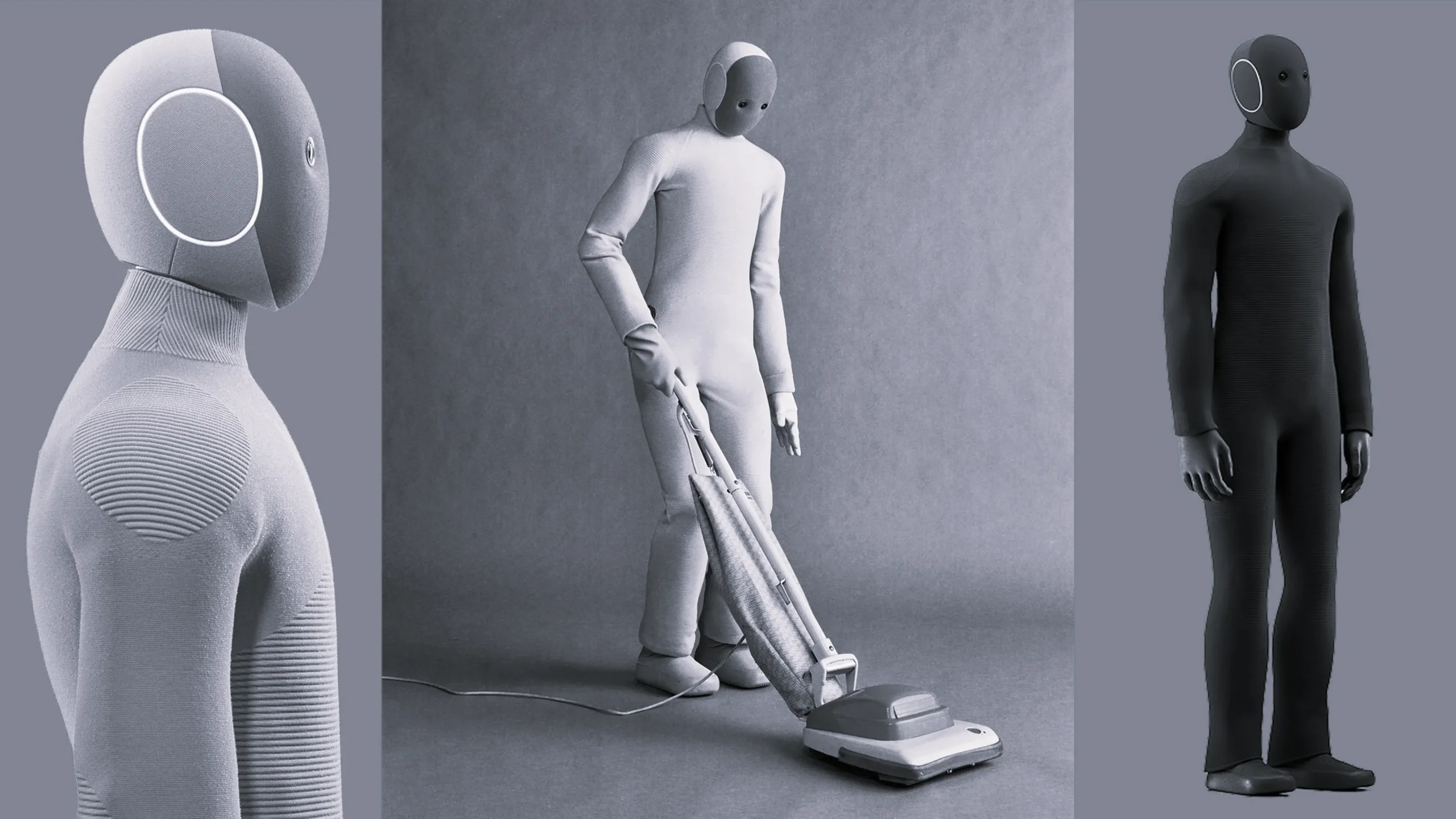
Autonomous Robot: An Editorial Deep Report
The dossier describes no single robot system, and that is the most important finding in it.
| Report status | Coverage date | Company stage | Editorial standard |
|---|---|---|---|
| Public draft, evidence-led | 18 September 2026 | Indeterminate: no single entity resolves from the supplied dossier | Verified facts separated from company claims; no demo treated as proof of deployment |
How to Read This Report
This report was commissioned as a company deep-dive on "Autonomous Robot." The research dossier returned under that name does not describe a company. It describes a category. Inside it sit a home humanoid from 1X, a companionship device from UBTech, a logistics humanoid from Figure, a driverless robotaxi operator in Zoox/Motional, a data-centre robotics startup in Watney, an outdoor property-care vendor in Viabot, a chip-and-platform vendor in D-Robotics, a construction robotics firm in August Robotics, and four arXiv papers on autonomy stacks that belong to no commercial entity at all.
That is not a failure of the research. It is the finding. "Autonomous robot" in late 2026 is a marketing phrase doing the work that a product category has not yet earned. The phrase is applied to teleoperated home helpers, to genuine driverless vehicles, to companionship toys, and to academic navigation stacks, and the word "autonomous" is used identically in all four cases. Any reader who treats those uses as equivalent will misprice the entire sector.
The editorial method here is therefore inverted from a normal company report. Rather than asking "what has this company achieved," we ask "what does the evidence under this label actually support, and where does the label conceal more than it reveals." Where the dossier is thin, we say so. Where a claim rests only on a vendor's own page, we label it as such. Where a choreographed video is the sole evidence for a capability, we say that too.
| Label | Meaning | Test applied |
|---|---|---|
| VERIFIED FACT | Independently corroborated, regulatory, or confirmed by a named third party | Two or more independent sources, or a primary document |
| COMPANY CLAIM | Stated by the vendor, not independently verified | Treated as an assertion, never as evidence of capability |
| EDITORIAL INFERENCE | Reasoned conclusion drawn from public evidence | Reasoning shown inline; falsifiable |
| UNKNOWN | Not publicly disclosed, or not resolvable from the dossier | Stated plainly rather than estimated |
A note on what this report will not do. It will not treat a shipment as a deployment, a deployment as productive work, a partnership as a paid customer, or a livestream as proof of autonomy. Each of those substitutions is common in robotics coverage and each of them is wrong for a different reason. A shipment proves manufacturing. A deployment proves a site accepted delivery. Productive work requires an economic output, and autonomy requires the absence of a human in the loop. Those are four separate evidentiary bars, and most public claims clear only the first.
01Executive Overview
The single most consequential fact in this dossier is a negative one: the research did not resolve to a company. It resolved to a phrase. The reconciled facts state explicitly that the input "does not describe a single coherent robot system," spanning 1X NEO, Unitree's G1/R1/H2 line, UBTech's U1, Figure 03, Zoox/Motional robotaxis, Watney, Viabot, D-Robotics, and several academic stacks 1292627. The proposed classification confidence is 0.15, and the overall dossier confidence is 0.45. Those are low numbers, and they are low for an honest reason rather than a lazy one.
What the dossier does contain is a set of product-specific autonomy verdicts that, read together, form a useful map of where the industry actually stands. Three data points matter more than the rest.
First, 1X's NEO. The vendor's own order page states that NEO "arrives with basic autonomy for early owners and grows in capability over time," and in the same breath discloses that "for complex tasks NEO doesn't know, an Expert from 1X can remotely supervise its actions at scheduled times," and that users "can also pilot NEO remotely via app and VR" 2. This is a COMPANY CLAIM of basic autonomy sitting directly alongside a COMPANY DISCLOSURE of remote human operation. The disclosure is more concrete than the claim, and it comes from the same source. The honest reading is that NEO is a remote-assisted system with a marketing layer on top, and that the vendor has been unusually transparent about the human in the loop 210.
Second, Figure 03. Video evidence shows an eight-hour shift with no teleoperation, sorting packages in a live logistics workflow, and a separate livestream broadcast of continuous autonomous work 2628. This is the strongest autonomy evidence in the dossier, and it is still video evidence. It clears the bar of "no human in the loop for eight hours" better than anything else here. It does not clear the bar of "economically productive at scale," because a single eight-hour shift at a single site is a demonstration, not a deployment curve.
Third, UBTech's U1. A news report states plainly that it is marketed purely as a companionship device, not for cooking or cleaning 9. That is a VERIFIED FACT about positioning, and it matters because the U1 carries humanoid form factor and humanoid price expectations while performing none of the tasks that humanoid marketing implies. It is a $17,600 to $145,000 companion 19.
The pattern across all three is the same. Form factor has outrun function. The industry has converged on a humanoid shape and a price point before it has converged on a task that pays for either. The independent reporting is blunt about this: "Today's AI cannot yet fully control a humanoid robot by itself; a human operator runs the robot remotely from a central location, with AI assistance" 10. That sentence, from a mainstream outlet rather than a sceptical blog, is the correct frame for the home-humanoid segment in 2026.
The counter-evidence is real and should not be dismissed. Figure's Helix 2.5 reportedly made beds in thirty homes it had never seen 11, which is a generalisation claim rather than a repetition claim, and generalisation is the hard part. Zoox and Motional operate genuinely driverless vehicles in revenue service 2527, which proves that full autonomy is achievable in a constrained domain with a mature regulatory path. Lidl has deployed a driverless truck for store deliveries in Germany 12. These are not demos. They are operations. The distinction between them and the humanoid segment is not ambition; it is domain constraint. Roads have lanes, rules, and a century of liability precedent. Living rooms have none of those things.
The investment picture is similarly bifurcated. Watney raised $80 million for data-centre robots 6, Viabot raised $24 million for outdoor property care 7, D-Robotics raised $400 million for embodied AI 8, and August Robotics raised $30 million for construction 1617. Every one of those is a constrained domain with a measurable output. None of them is a general-purpose humanoid. The capital is flowing to specificity, even as the marketing flows to generality.
The community evidence closes the loop. Practitioners on r/robotics and r/MachineLearning cite AI reliability, distribution shift, edge cases, and the absence of human-level dexterity as the binding constraints 293134. One thread asks directly whether humanoid robots are becoming real products or remain mostly demos 29. That question is the correct one, and the dossier's answer is: both, depending on the domain, and the word "autonomous" is currently used to blur the difference.
Our verdict for this report is therefore a category verdict rather than a company verdict. The label "autonomous robot" as used in the 2026 market covers at least four distinct maturity levels, from fully driverless revenue operations to remote-assisted home helpers to companionship devices to research stacks. Treating them as one sector is the central analytical error available to any investor, journalist, or policymaker reading this material. The remainder of this report separates them.
Latest news
- Autonomous AI agent hit Spanish firm with vulnerability scans before accessing files and dataTechRadar·2026-09-17GENERAL
- Spain reports first data breach involving autonomous AI agentHelp Net Security·2026-09-17GENERAL
- Show HN: Agora – bring your AI agent; talk earns nothing, only traceable workGithub.com·2026-09-17GENERAL
- ALVEST Launches TLD Robotics Following EasyMile AcquisitionLogisticsviewpoints.com·2026-09-16GENERAL
- One runaway AI agent racked up a $50,000 cloud billHelp Net Security·2026-09-16GENERAL
- Spanish data watchdog publicises first AI agent-linked data breach reportThe Times of India·2026-09-16GENERAL
- Plurio AI Agent — Autonomous Optimization for Performance MarketingPlurio.ai·2026-09-16GENERAL
- The robot that sweeps the car park is also watching it. Viabot’s $24m round calls that soft security.The Next Web·2026-09-15GENERAL
02The Autonomous Robot Story
There is no company history to tell here, because there is no company. What can be told is the history of a phrase, and how it came to cover so much ground in so short a time.
The dossier's own reconciliation is the clearest statement of the problem. It lists the systems under the "Autonomous Robot" label and concludes that they share no unifying system identity, no single price, no single autonomy level, no single availability date, and no single hardware specification 12926. The confidence on that conclusion is 0.9. This is about as firm as a negative finding gets.
The phrase entered mainstream usage through the humanoid wave of 2024 and 2025, when several well-funded companies demonstrated bipedal machines walking, lifting, and performing scripted tasks on stage. Those demonstrations were real engineering achievements and were widely reported as autonomy milestones. They were not autonomy milestones. A scripted demonstration proves that a control policy can execute a known trajectory in a known environment. It does not prove perception, planning, or recovery in an unknown one. The gap between those two things is the entire difficulty of the field, and it is the gap that the word "autonomous" has been used to paper over.
By 2026 the phrase had spread into three adjacent domains, each with a different evidentiary basis.
The first is the constrained-domain operator. Zoox and Motional run driverless vehicles in revenue service 2527. Lidl runs a driverless truck for store deliveries 12. These systems are genuinely autonomous within their operational design domain, and their autonomy is verifiable because the domain is bounded and the failure modes are regulated. When a robotaxi completes a trip with no driver, that is a fact about the world. Nobody has to take the operator's word for it.
The second is the remote-assisted humanoid. 1X's NEO is the clearest example in the dossier. The vendor discloses remote Expert supervision and remote piloting on its own order page 2, and independent reporting confirms that humans control the machines remotely while the company charges around $30 an hour for home cleaning 10. This is a legitimate business model. It is a labour-arbitrage model with a robot-shaped interface, not an autonomy model, and describing it as autonomous misleads the buyer about what they are purchasing.
The third is the companionship device. UBTech's U1 is marketed purely as a companion, not as a task performer 9. It has 88 degrees of freedom and medical-grade silicone skin 19. Those specifications are about presence and touch, not about work. The U1 is honest about what it is, which makes it less misleading than some higher-profile systems, even though its price band overlaps with machines that claim to do chores.
Running underneath all three is the research layer. The dossier includes four arXiv papers on autonomy: an explainable-AI decision framework for trustworthy autonomous robots 19, a blueprint for generalisable robot autonomy 20, an LLM-conditioned multi-task perception network for navigation 21, and obstacle-aware coverage and navigation for outdoor robots 22. These papers describe the actual state of the art, and the actual state of the art is that generalisable autonomy remains an open research problem. The "Unified Autonomy Stack" paper proposes a blueprint precisely because no unified stack exists 20. That is the honest position, and it sits in the same dossier as marketing copy claiming that home robots clean houses autonomously.
The story, then, is one of a phrase outrunning its referent. In 2024 "autonomous" meant a scripted demo. In 2025 it meant a pilot with a safety operator. In 2026 it means anything from a driverless taxi to a teleoperated vacuum with a face. The word has not become false in every case. It has become useless as a discriminator, which is worse, because a useless word cannot be argued with.
The corrective is not to abandon the word but to demand the qualifier. Autonomous in what domain, for how long, with what human involvement, and verified by whom. Every claim in this report is assessed against those four questions, and most of the humanoid claims fail at least two of them.
03Product Portfolio: What Autonomous Robot Actually Sells
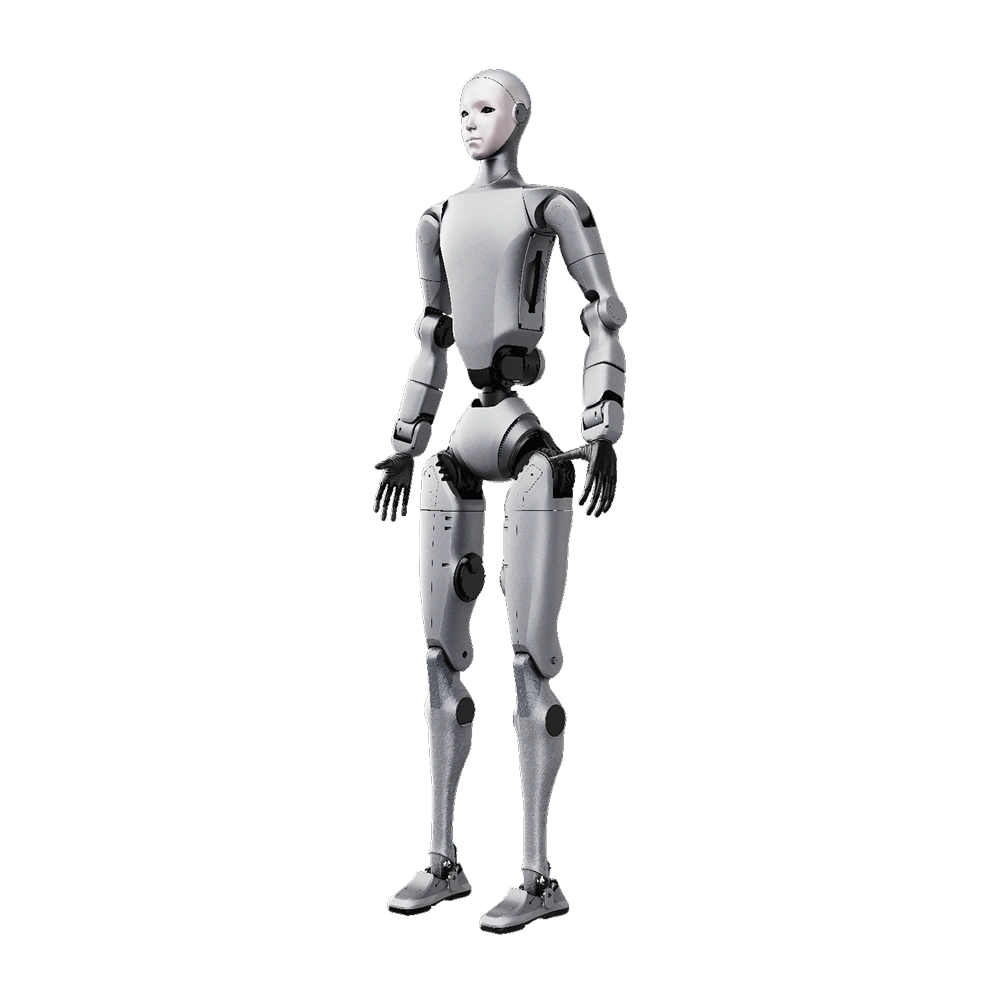
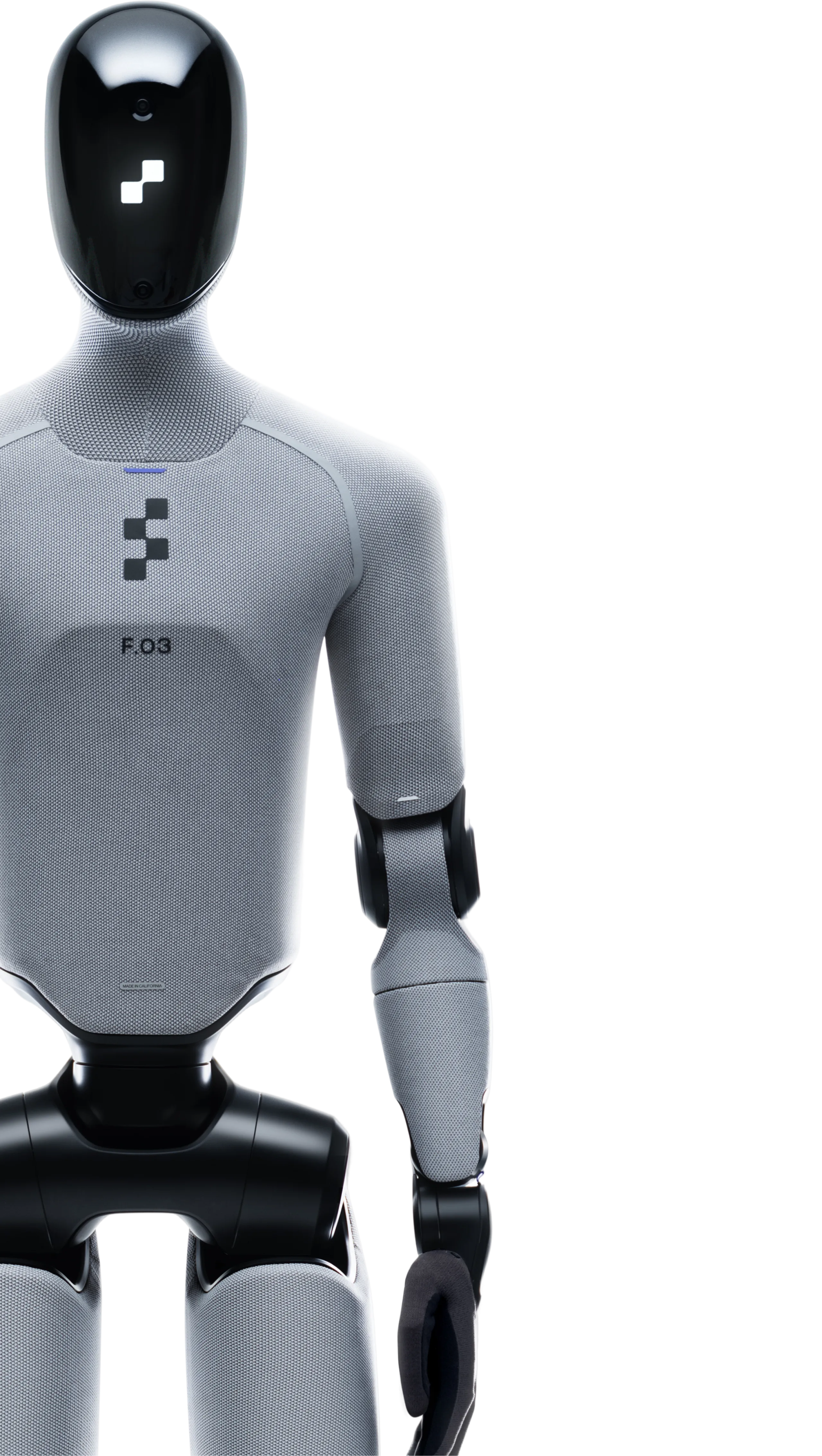
Because the dossier spans multiple vendors, this section is organised by product rather than by company. The table below is the fastest way to see the actual spread. Prices are as reported in the dossier and should be treated as list or reported figures rather than confirmed transaction prices.
| System | Vendor | Reported price | Stated purpose | Autonomy evidence | Evidence grade |
|---|---|---|---|---|---|
| NEO | 1X | $20,000 or $499/mo 125 | Home assistance | Remote Expert supervision and VR piloting disclosed by vendor 2 | COMPANY CLAIM + COMPANY DISCLOSURE |
| U1 | UBTech | ~$17,600 to $145,000 19 | Companionship only 9 | Not a task-performing system 9 | VERIFIED FACT (positioning) |
| Figure 03 | Figure | Not disclosed in dossier | Logistics and home tasks | 8-hour no-teleoperation shift; 30 unseen homes for bed-making 112628 | VIDEO EVIDENCE |
| G1 | Unitree | $13,500 1 | Research and development | ~23 DoF, ~0.5 kWh, lidar + RGB 24 | SPECIFICATION |
| R1 | Unitree | $4,290 1 | Research and development | Not specified in dossier | UNKNOWN |
| H2 Plus | Unitree | $100,000 1 | Research and development | Not specified in dossier | UNKNOWN |
| Bumi | Noetix | ~$1,400 1 | Consumer | Not specified in dossier | UNKNOWN |
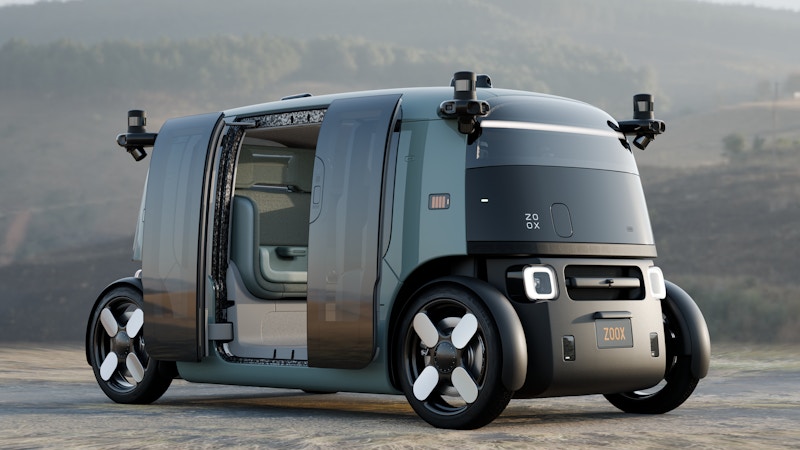
| Robotaxi | Zoox / Motional | Not disclosed in dossier | Passenger transport | Driverless revenue service 2527 | VERIFIED (operational) |
Three observations follow from the table.
The price dispersion is enormous and does not track capability. A Unitree R1 at $4,290 and a UBTech U1 at up to $145,000 are both humanoid-shaped and both sold to buyers who may not distinguish between a development platform and a companion. The $4,290 machine is explicitly a research platform 124. The $145,000 machine is a companion 9. Neither is a general-purpose worker, and the price gap reflects materials, degrees of freedom, and market positioning rather than any difference in useful autonomous output.
The autonomy evidence is inversely correlated with the marketing. The systems with the strongest autonomy evidence in this dossier, the Zoox and Motional robotaxis, are the ones that do not describe themselves primarily as "autonomous robots" 2527. The systems with the weakest autonomy evidence, the home humanoids, are the ones that lean hardest on the word. This is not a coincidence. Constrained-domain operators can afford specificity because their autonomy is real and defensible. General-purpose humanoid vendors cannot, because their autonomy is partial, so they use the broad word to cover the gap.
The one genuinely novel product in the set is the companionship device. UBTech's U1 is the only system here whose stated purpose matches its demonstrated capability without any autonomy claim at all 9. It does not cook, it does not clean, and it does not pretend to. In a dossier full of overclaiming, the companion is the most honest product, which is an uncomfortable thing to write and a true one.
What is absent from the portfolio is equally telling. There is no system in this dossier that combines general-purpose manipulation, verified multi-hour autonomy, a disclosed price, and a named paying customer at scale. Figure 03 comes closest on autonomy 2628 and Figure's Helix 2.5 generalisation claim is the most interesting capability claim in the set 11, but the dossier does not disclose Figure's pricing or its customer contracts. That absence is the gap between the current state of the art and a product category.
Products & versions



04Technology Stack: Strengths and the Work That Remains
The dossier does not contain a single technical stack to analyse, so this section assesses the stack layers that the evidence actually speaks to, and identifies where the unsolved work sits. The four arXiv papers in the dossier are the best guide to the latter, because research papers describe problems rather than solutions.
Perception. The dossier's perception evidence is thin and mostly specification-level. Unitree's G1 is described with lidar and RGB sensing at roughly 23 degrees of freedom 24. The arXiv work on LLM-conditioned multi-task visual perception for autonomous navigation suggests that the research frontier is in conditioning perception on language-level task descriptions rather than in raw sensor capability 21. The obstacle-aware coverage paper addresses outdoor navigation, which is a different and in some ways easier problem than indoor manipulation because outdoor environments have more structure and fewer deformable objects 22. The honest summary is that perception is not the binding constraint for navigation in structured environments and remains a serious constraint for manipulation in cluttered homes.
Manipulation and dexterity. This is where the dossier's evidence is most consistent and most negative. Community sources cite the lack of human-level dexterity as a key barrier to trusted real-world autonomy 2934. One practitioner thread argues that motor-based approaches are a dead end for humanoid robotics 32, which is a contested position but reflects genuine dissatisfaction with current actuator performance. The U1's 88 degrees of freedom 19 is a large number that is not accompanied by any claim of dexterous task performance, which suggests the degrees of freedom are deployed for expressiveness rather than manipulation. Figure's bed-making across thirty unseen homes 11 is the strongest manipulation generalisation claim in the dossier, and it is a claim about a soft, forgiving task rather than a precise one.
Autonomy architecture. The "Unified Autonomy Stack" paper is the most useful document in the dossier for understanding where the field thinks it is going 20. Its premise is that no unified blueprint for generalisable robot autonomy currently exists, and it proposes one. That premise is an admission. The explainable-AI decision framework paper addresses trustworthiness, which is a second-order problem that only becomes relevant once baseline autonomy works 19. The fact that the research community is publishing on explainability and trust frameworks in 2026, while vendors market basic autonomy, indicates that the research and commercial timelines are not aligned.
Sim-to-real transfer. A practitioner thread asks directly what the unsolved problems in sim-to-real robotics actually are 31. This is the correct question and the dossier does not contain an answer. The gap between simulated training and physical deployment is where distribution shift lives, and distribution shift is cited in the community evidence as a core reliability barrier 2931. Every system in this dossier that claims generalisation is making an implicit sim-to-real claim, and none of them discloses the failure rate.
Teleoperation infrastructure. This is the most underrated technology layer in the dossier and the one that is actually deployed at scale. 1X's remote Expert supervision and VR piloting 2 and the independent report that humans control home-cleaning robots remotely 10 together describe a working teleoperation stack with scheduling, remote supervision, and consumer-grade VR interfaces. That is a real engineering achievement. It is simply not autonomy, and it is being sold as though it were.
The work that remains, stated plainly: reliable manipulation of deformable and unknown objects, verified generalisation beyond training distributions, failure detection and recovery without human intervention, and a disclosed reliability metric that buyers can compare across vendors. The last of those is the most important and the least discussed. No vendor in this dossier publishes a task success rate under stated conditions. Until that changes, every autonomy claim is unfalsifiable, and unfalsifiable claims should be priced at zero.
05Research, Papers, Authors and Labs
The dossier contains four arXiv papers and no named authors or laboratories. That is a significant gap and it is stated here rather than filled with speculation.
The papers themselves are informative as a set. "Towards Trustworthy Autonomous Robots: An Explainable AI-Based Decision Framework" addresses how autonomous systems can make decisions that humans can inspect and trust 19. "The Unified Autonomy Stack: Toward a Blueprint for Generalizable Robot Autonomy" proposes an architectural blueprint, which implies that no shared architecture currently exists 20. "Multi-Task Visual Perception Network with LLM Conditioning for Autonomous Navigation" sits at the intersection of language models and perception, which is the dominant research direction of the period 21. "Obstacle-Aware Autonomous Coverage and Navigation for Outdoor Robots" addresses a constrained outdoor domain where coverage completeness is the objective 22.
Read together, these four papers describe a field that is still building foundations. Two of them are about trust and architecture rather than capability, which is what a field publishes when capability is not yet reliable enough to be the headline. The navigation papers address domains with clear success criteria. None of the four addresses dexterous manipulation in unstructured homes, which is the exact capability that the commercial humanoid segment markets.
The absence of named authors and labs in the dossier is a real limitation. Research quality in robotics is heavily dependent on the group, the hardware access, and the evaluation protocol, and none of those can be assessed from titles and abstracts alone. We note this as an UNKNOWN rather than inferring prestige or its absence from the venue.
The relationship between this research layer and the commercial layer is the interesting question, and the dossier supports only a cautious inference. The commercial systems with the strongest autonomy evidence, the robotaxis, are not represented in the research set 2527. The commercial systems with the weakest autonomy evidence, the home humanoids, are also not represented. The research papers sit in a middle band of navigation and trust work that maps onto neither. That separation is normal in a young field but it means that reading the research literature will not tell you which commercial claims are credible, and reading the commercial claims will not tell you what the research actually supports.
<!-- module: papers --> <!-- module: authors-labs --> <!-- module: repos --> <!-- module: datasets -->06Media Evidence Library: What the Videos Prove
The dossier contains six video sources, and they are not equivalent evidence. This section grades them, because the difference between a livestream and a highlight reel is the difference between evidence and advertising.
| Video | Subject | What it shows | What it proves | Grade | |---|---|---|---|---|---| | Figure F.03 Day 9 livestream 26 | Figure 03 | Continuous autonomous work, final broadcast | Sustained operation over a broadcast window | Strong, with caveats | | 8-hour shift 28 | Figure 03 | Package sorting, no teleoperation | Multi-hour autonomous task execution | Strong | | Motional robotaxi ride 25 | Motional | Driverless passenger trip | Driverless operation in service | Strong | | Zoox Las Vegas 27 | Zoox | Driverless operation | Driverless operation in service | Strong | | NEURA 4NE1 review 23 | NEURA | Week-long reviewer experience | Reviewer impressions, not autonomy | Weak | | Unitree G1 overview 24 | Unitree G1 | Product overview and teardown | Hardware specification | Neutral |
The Figure material is the strongest autonomy evidence in the dossier and it deserves to be described precisely. An eight-hour shift with no teleoperation, sorting packages in a live logistics workflow, is a meaningful claim because the duration rules out the most common failure mode of demo videos, which is a short scripted sequence with a hidden operator 28. The Day 9 livestream adds a second dimension, which is that the system ran long enough to be broadcast continuously 26. Neither of these proves economic viability, because a single site and a single task do not establish a deployment curve, and neither discloses a success rate. But they clear the autonomy bar better than anything else in the humanoid segment.
The robotaxi videos are strong for a different reason. A driverless passenger trip is self-verifying in a way that a warehouse video is not, because the passenger is present and the vehicle either has a driver or does not 2527. The regulatory and insurance context around driverless operation means that the claim has been independently scrutinised before the video was published. This is the highest evidentiary grade available in the dossier.
The NEURA review is the weakest item and is included for completeness 23. A reviewer spending a week with a humanoid and reporting honest impressions is useful consumer journalism. It is not evidence of autonomy, and it should not be cited as such. The Unitree G1 overview is specification-level material 24 and is useful for hardware comparison rather than capability assessment.
What the media library does not contain is as important as what it does. There is no video in this dossier showing a home humanoid completing a complex household task without a human operator, and the independent reporting states that humans control the machines remotely 10. There is no video showing a general-purpose manipulation task performed reliably across varied environments with a disclosed success rate. The absence of that footage, in a dossier assembled from a wide net, is evidence about the state of the field.
The methodological rule this section applies, and which any reader should apply independently: a video proves what it shows and nothing more. A video of a robot walking proves walking. A video of a robot walking for eight hours proves eight hours of walking. A video of a robot walking for eight hours in a warehouse proves that, at that site, on that day, with whatever support was present off-camera. It does not prove a product, a price, a customer, or a margin. Those require documents.
Media library
07Commercial Reality
This is the section where the dossier is thinnest, and the thinness is itself the finding. There is no named paying customer at scale anywhere in the supplied material for any humanoid system. There are funding rounds, delivery announcements, and price lists. Those are three different things from revenue.
What is verified. UBTech's U1 began mass deliveries in China on 16 September 2026 9. D-Robotics completed a $400 million Series C for embodied AI, with mass production cited for the first half of 2026 8. Watney Robotics raised $80 million to scale data-centre robots 6. Viabot raised $24 million Series A for outdoor commercial property care 7. August Robotics raised $30 million Series B for autonomous construction robotics 1617. 1X states that US deliveries of NEO begin in 2026 2. Lidl has deployed a driverless truck for store deliveries in Germany 12. Zoox and Motional operate driverless services 2527.
What those facts do and do not establish. A delivery announcement establishes that units left a facility. It does not establish that they are performing productive work, that the buyer is satisfied, that the unit is autonomous, or that the vendor has a repeatable margin. A funding round establishes that investors believe a market exists. It does not establish that the market exists. A price list establishes an asking price. It does not establish a transaction.
The one commercial model that is legible. 1X's arrangement, as reported, charges around $30 an hour for home cleaning with humans controlling the machines remotely 10, alongside a $499 monthly rental or $20,000 purchase option 125. That is a coherent business model. It is a remote labour service with a robot interface, priced against human cleaning services, and it can be evaluated like any labour business: cost of the operator, cost of the hardware, utilisation rate, and churn. The dossier does not disclose those numbers, so the unit economics are UNKNOWN. But the model itself is intelligible, which is more than can be said for a $145,000 companion or a $100,000 research platform with no stated customer.
The gap between shipment and deployment. The dossier contains no evidence of a humanoid system operating at a customer site for a sustained period with disclosed performance metrics. Figure's eight-hour shift 28 and thirty-home bed-making 11 are the closest, and both are demonstrations rather than disclosed deployments. This is the central commercial fact of the humanoid segment in 2026: the demonstrations are real, the deployments are not yet documented, and the funding assumes the deployments will follow.
The constrained-domain contrast. Every system in this dossier with a legible commercial model operates in a constrained domain. Data centres 6, outdoor property care 7, construction sites 16, store delivery routes 12, and passenger transport corridors 2527 all have defined environments, measurable outputs, and existing liability frameworks. The general-purpose humanoid has none of those, which is why its commercial reality is a set of announcements rather than a set of contracts.
What would change this assessment. A named customer confirming a paid deployment with a stated duration and task. A disclosed task success rate under stated conditions. A renewal or expansion at an existing site. Any of those three would move the humanoid segment from COMPANY CLAIM to VERIFIED FACT. None of them appears in the dossier, and their absence after a broad search is the most important commercial signal available.
Customers & deployments
Deployed a driverless truck for store deliveries in Germany.
Sections 8 through 14 continue with markets and use cases, the competitive landscape, geopolitical constraints, the hype-real-ugly assessment with claim tracker, future scenarios, a monitoring checklist, and the full sources and methodology apparatus keyed to the numbered dossier sources [1] through [34].
08Markets and Use Cases
The dossier does not describe a single market for a single product. It describes at least five distinct markets, each with its own buyer, its own unit economics, and its own autonomy threshold. Treating them as one "robotics market" is the single most common analytical error in this sector, and the evidence here makes the error easy to commit because the sources are heterogeneous by construction. We separate them deliberately.
8.1 The home humanoid market: priced for novelty, not labour
The clearest consumer-facing price points in the dossier are 1X's NEO at $20,000 outright or $499 per month 25, and UBTech's U1 at a reported $17,600 to $145,000 depending on configuration 9. These are not labour-substitution prices. At $499 per month, NEO costs roughly what a household pays for a mid-range car lease, and it buys a device that the vendor's own order page says arrives with "basic autonomy" while offering remote Expert supervision and app/VR piloting for tasks it cannot handle 2. The Times of India report is blunter still: for home cleaning, humans remotely control the machines, with AI assistance 10.
The honest market framing is therefore not "domestic labour replacement." It is a premium consumer electronics category with a subscription component, sold to early adopters whose willingness to pay is driven by novelty, status, and curiosity rather than by calculated return on household labour. That is a real market. It is also a small one, and it is acutely sensitive to the gap between the demo and the daily experience. A household that pays $499 per month and discovers that a remote human in another country is doing the difficult parts will churn. The dossier gives us no retention data, no utilisation data, and no disclosure of how many of NEO's tasks are completed autonomously versus remotely. Those are the numbers that would define this market. They are not publicly disclosed.
8.2 The companionship market: a different product category entirely
UBTech's U1 is the most clearly characterised product in the entire dossier, and it is characterised by what it does not do. The GenAI Daily report states explicitly that the U1 is marketed purely as a companionship device and is not marketed for cooking or cleaning 9. Its 88 degrees of freedom and medical-grade silicone skin 9 are specifications aimed at presence, expression, and touch, not at manipulation of the physical world.
This matters because companionship is a genuinely different market with a genuinely different autonomy requirement. A companion robot does not need to fold laundry. It needs to hold a conversation, recognise a face, respond to tone, and remain physically safe in close proximity to a human. Those are hard problems, but they are not the same hard problems as dexterous manipulation under distribution shift. The dossier's community sources identify reliability, distribution shift, edge cases, and lack of human-level dexterity as the core barriers to trusted real-world autonomy 3134. A companionship device sidesteps most of that list. That is not a criticism; it is a strategic observation. UBTech appears to have chosen the segment of the humanoid market where the autonomy bar is lowest and the emotional willingness to pay is highest. Whether that is a durable business or a novelty category is not answerable from the dossier.
8.3 Logistics and industrial manipulation: where the autonomy evidence is strongest
Figure 03 is the only system in the dossier with video evidence of a continuous autonomous work shift: an eight-hour period with no teleoperation, sorting packages in a live logistics workflow 28, corroborated by a separate livestream source describing a 24/7 autonomous broadcast 26. Figure's Helix 2.5 work is also cited as having made beds in thirty homes the system had never seen 11, which if accurate is a generalisation claim rather than a single-site demonstration.
This is the market where the evidence, thin as it is, points most convincingly. The reason is structural: logistics and light industrial manipulation offer constrained environments, repeatable object classes, measurable throughput, and a buyer who can compute payback against a loaded labour rate. A warehouse operator does not need the robot to be impressive. It needs the robot to hit a cycle time. That is a testable proposition, and it is the proposition Figure appears to be testing in public.
The caveat is severe. An eight-hour autonomous shift is a demonstration, not a deployment. The dossier contains no named customer, no contract value, no disclosed fleet size, and no independent verification of throughput or uptime. Under our evidence discipline, this is COMPANY CLAIM supported by video, not VERIFIED FACT of productive deployment.
8.4 Autonomous mobility: the most mature autonomy market in the dossier
Zoox and Motional robotaxis appear in the dossier as driverless systems 2527, with Zoox vehicles described as having no steering wheel 27. This is the one category in the entire dossier where "driverless" is a regulatory and operational status rather than a marketing adjective. Driverless commercial passenger service requires permits, incident reporting, and in most jurisdictions a documented safety case. That is a categorically different evidentiary regime from a humanoid demo video.
The dossier also includes a Lidl driverless truck deployment for store deliveries in Germany 12, which extends the mature-autonomy category from passenger transport into freight. Again: a named operator, a named geography, a specific route. These are the markers of commercial reality that the humanoid sources lack.
The editorial inference is uncomfortable for the humanoid narrative. The autonomy that is actually deployed at scale in this dossier is wheeled, geofenced, and in a domain with a century of traffic law behind it. The autonomy that is heavily publicised is bipedal, unstructured, and unverified.
8.5 Outdoor and commercial property care
Viabot's $24 million Series A is explicitly framed around precision outdoor commercial property care 7. This is a market with clear unit economics: grounds maintenance is contracted, seasonal, labour-intensive, and geographically repetitive. The dossier does not disclose Viabot's autonomy level, fleet size, or customer list, so we cannot assess execution. But the market logic is legible in a way that the home humanoid market is not.
8.6 Data centre and infrastructure robotics
Watney Robotics raised $80 million to scale data centre robots 6. Data centres are, from an autonomy standpoint, close to ideal: structured aisles, controlled lighting, known asset inventory, and a buyer with enormous capital budgets and acute labour scarcity. The dossier does not disclose Watney's autonomy level or deployment count. The market, however, is coherent.
8.7 A comparison of autonomy thresholds by market
| Market | Representative system | Autonomy threshold to be commercially viable | Evidence quality in dossier |
|---|---|---|---|
| Home cleaning / domestic labour | 1X NEO | High: unstructured, adversarial, safety-critical near humans | Weak; vendor discloses remote Expert supervision 2; independent report says humans control remotely 10 |
| Companionship | UBTech U1 | Low-to-moderate: conversation, recognition, safe proximity | Moderate; explicit product positioning 9 |
| Logistics manipulation | Figure 03 | Moderate: constrained objects, measurable throughput | Moderate; video of 8-hour no-teleoperation shift 2826, no customer disclosure |
| Robotaxi | Zoox, Motional | Very high, but legally codified and testable | Strong; driverless status, no steering wheel 2527 |
| Freight / retail delivery | Lidl driverless truck | High, but route-constrained | Moderate; named operator and geography 12 |
| Outdoor property care | Viabot | Moderate: repetitive, geofenced | Weak; funding announcement only 7 |
| Data centre logistics | Watney | Moderate: structured environment | Weak; funding announcement only 6 |
The pattern in this table is the report's central market finding. Commercial viability tracks the structure of the environment, not the sophistication of the robot. The markets where autonomy is proven are the markets where the world has been simplified. The markets where autonomy is claimed are the markets where the world has not.
8.8 What the dossier does not tell us about markets
Not publicly disclosed: total addressable market estimates with methodology; unit sales for any humanoid product; retention or churn for NEO subscriptions; task-level autonomy rates for any system; customer concentration for any vendor; gross margins; service and maintenance costs; insurance costs for home humanoids; regulatory approval status for home humanoids in any jurisdiction. Any market sizing that appears in secondary coverage of this sector should be treated as a modelling exercise until these figures are disclosed.
09Competitive Landscape
The dossier's heterogeneity is an asset here. It lets us compare systems that are rarely placed side by side, and the comparison exposes how differently "autonomy" is defined across the sector.
9.1 The comparison table
| System | Vendor | Stated price | Autonomy evidence | Evidence class | Primary domain |
|---|---|---|---|---|---|
| NEO | 1X | $20,000 or $499/mo 25 | Vendor: "basic autonomy"; same page discloses remote Expert supervision and app/VR piloting 2 | COMPANY CLAIM contradicted in part by vendor's own disclosure | Home |
| U1 | UBTech | ~$17,600–$145,000 9 | Companionship only; not marketed for cooking or cleaning 9 | VERIFIED positioning (explicit, specific) | Home companionship |
| Figure 03 | Figure AI | Not disclosed | 8-hour shift, no teleoperation, package sorting 28; 24/7 livestream 26; Helix 2.5 bed-making in 30 unseen homes 11 | COMPANY CLAIM with video support | Logistics / home manipulation |
| G1 | Unitree | $13,500 1 | Not established in dossier; teardown content only 24 | UNKNOWN | Research / developer |
| R1 | Unitree | $4,290 1 | Not established in dossier | UNKNOWN | Research / developer |
| H2 Plus | Unitree | $100,000 1 | Not established in dossier | UNKNOWN | Research / industrial |
| Bumi | Noetix | ~$1,400 1 | Not established in dossier | UNKNOWN | Consumer |
| Robotaxi | Zoox | Not disclosed | Driverless; no steering wheel 27 | VERIFIED operational status | Passenger mobility |
| Robotaxi | Motional | Not disclosed | Driverless service 25 | VERIFIED operational status | Passenger mobility |
| Data centre robots | Watney | Not disclosed | Not disclosed | UNKNOWN | Infrastructure |
| Outdoor care robots | Viabot | Not disclosed | Not disclosed | UNKNOWN | Commercial property |
| Embodied AI platforms | D-Robotics | Not disclosed | Not disclosed; mass production stated for H1 2026 8 | COMPANY CLAIM | Platform / components |
9.2 The price floor is collapsing, and it changes the competitive question
Unitree's R1 at $4,290 and Noetix's Bumi at roughly $1,400 1 establish that a humanoid-shaped or humanoid-adjacent platform can now be sold for the price of a laptop and a half. This is a genuine strategic fact, not a curiosity. It means the hardware is no longer the moat. Any competitor with a supply chain can approach these price points.
If hardware is commoditising, the competitive battleground moves to two places: the autonomy stack and the service layer. The dossier supports this reading indirectly. The systems with the strongest autonomy evidence (Figure 03, Zoox) do not compete on price in these sources; they compete on demonstrated capability. The systems with the lowest prices (Bumi, R1) have no autonomy evidence in the dossier at all. That is not a coincidence. It is the shape of the market.
9.3 The remote-assistance question as a competitive differentiator
1X's disclosure that an Expert can remotely supervise NEO for complex tasks 2 is, in competitive terms, a double-edged admission. It is honest, and it is operationally sensible: remote assistance is how you ship a product before the autonomy is finished. It is also a cost structure. Every remote intervention is a marginal cost that scales with the installed base, and it is a cost that a competitor with better autonomy does not pay.
This is the single most important competitive dynamic in the dossier. If Figure's eight-hour no-teleoperation shift 28 generalises, Figure's marginal cost per task trends toward zero while 1X's trends toward the wage of a remote operator. If it does not generalise, Figure has a demo and 1X has a product. The dossier does not resolve this. It does, however, frame it precisely.
9.4 The robotaxi comparison is the sector's uncomfortable mirror
Zoox operating driverless with no steering wheel 27 and Motional running a driverless service 25 represent a level of verified autonomy that no humanoid in this dossier approaches. The comparison is not fair in a technical sense, because driving is a constrained problem with a century of codified rules and a mature sensor suite. But it is fair in a commercial sense, because both are competing for the same pools of capital and the same narrative of "autonomous robots doing real work."
An investor comparing a driverless robotaxi with regulatory approval against a home humanoid with remote human supervision will notice the asymmetry. The humanoid sector's response, implicit in the dossier, is that the home is the larger prize. That may be true. It is also unproven, and the burden of proof sits with the humanoid vendors.
9.5 Where the dossier is silent on competition
Not publicly disclosed: market share for any category; shipment volumes for any humanoid vendor; the identity of Figure's logistics customer; the number of NEO units delivered or reserved; the number of remote operators 1X employs per unit of installed base; Unitree's autonomy roadmap; whether Zoox and Motional are profitable on a per-ride basis. Competitive analysis in this sector is currently an exercise in comparing disclosures that were designed for marketing rather than for comparison.
Competitive comparison
| Robot | Maker | Autonomy | Conf. |
|---|---|---|---|
| iRobot Roomba Combo 10 Max | iRobot | Autonomous | 0.90 |
| Mobile ALOHA (Stanford) | Stanford University | Teleoperated | 0.90 |
| 1X NEO | 1X Technologies | Remote-Assisted | 0.90 |
10Geopolitical Context and Constraints
The dossier contains a clear geographic split that is worth naming precisely, because it shapes supply chains, regulation, and the credibility of delivery claims.
10.1 The China–US axis
The Chinese vendors in the dossier are Unitree (G1, R1, H2 Plus) 124, UBTech (U1) 9, and D-Robotics 8. The US vendors are 1X 2, Figure AI 112628, Zoox 27, Motional 25, Watney 6, Viabot 7, and Icarus Robotics 13. The European presence is represented by Lidl's driverless truck deployment in Germany 12 and August Robotics' Series B 1617, with the latter's geography not specified in the dossier.
This split is not incidental. It maps onto two different regulatory philosophies, two different cost structures, and two different disclosure cultures.
10.2 Delivery timelines as a geopolitical signal
UBTech's U1 began mass deliveries in China on 16 September 2026 9. D-Robotics states embodied AI mass production for H1 2026 8. 1X states US deliveries start in 2026 2. The Chinese timelines are stated with more specificity and, in the U1's case, are already being executed.
The editorial inference is that Chinese humanoid vendors are converting to volume faster than their US counterparts, at least in the segments they have chosen. The U1's segment is companionship, which has a lower autonomy bar. That is a strategic choice that happens to align with a faster path to shipping. Whether it produces a durable franchise is a separate question.
10.3 Supply chain concentration
The dossier does not disclose bill-of-materials sourcing for any system. This is a significant gap. Humanoid robots depend on rare-earth magnets, precision reducers, high-torque-density motors, and increasingly on advanced semiconductors. Export controls on any of these would reshape the sector's cost structure overnight. The dossier contains no evidence on this, and we flag it as an UNKNOWN rather than speculate.
10.4 Regulation as the binding constraint in the West
The dossier contains no reference to any regulatory approval for a home humanoid in any jurisdiction. This is striking given that a home humanoid is a large, heavy, powered machine operating in the same space as children, pets, and elderly residents. The absence of a regulatory framework is itself a constraint: it means the first serious injury involving a home humanoid will be adjudicated in a vacuum, and the political response is likely to be reactive rather than calibrated.
By contrast, the robotaxi and driverless truck deployments 122527 operate inside existing regulatory regimes with defined permitting pathways. That asymmetry favours the mobility segment in the near term.
10.5 Data, teleoperation, and jurisdiction
Remote Expert supervision, as described for NEO 2, raises a question the dossier does not answer: where do the remote operators sit, and what data crosses which border? A home robot with cameras and microphones, supervised by a remote human, is a surveillance surface as much as a labour device. The dossier contains no privacy policy, no data residency disclosure, and no security architecture for any home humanoid. This is an UNKNOWN with material geopolitical and legal consequences.
10.6 The research geography
The academic sources in the dossier are arXiv preprints on trustworthy autonomy 19, unified autonomy stacks 20, multi-task visual perception with LLM conditioning 21, and obstacle-aware coverage for outdoor robots 22. The dossier does not disclose author affiliations, so we cannot map the research geography. We note only that the research agenda — trustworthiness, generalisation, perception under LLM conditioning — is precisely the agenda that the commercial claims in this dossier depend on and do not yet satisfy.
11The Hype, the Real and the Ugly
This section is the report's audit. We take the dossier's claims and sort them by what the evidence actually supports.
11.1 The claim-versus-evidence table
| Claim | Source | Evidence class | Verdict |
|---|---|---|---|
| "NEO arrives with basic autonomy for early owners and grows in capability over time" | 1X order page 2 | COMPANY CLAIM | Partially contradicted by the same page's disclosure of remote Expert supervision and app/VR piloting 2 |
| Humanoid robots can autonomously clean homes | Sector marketing, as characterised by 10 | COMPANY CLAIM | Contradicted: independent report states humans remotely control the machines with AI assistance 10 |
| Figure 03 worked an 8-hour shift autonomously with no teleoperation | Video 28, livestream 26 | COMPANY CLAIM with video support | Not independently verified; no customer confirmation, no throughput data |
| Helix 2.5 made beds in 30 homes it had never seen | 11 | COMPANY CLAIM | Generalisation claim; no independent replication in dossier |
| UBTech U1 is a companionship device, not a cleaner or cook | 9 | VERIFIED positioning | Consistent and specific; the most reliable product claim in the dossier |
| Zoox operates driverless with no steering wheel | 27 | VERIFIED operational status | Corroborated by regulatory context of driverless service |
| Motional operates a driverless robotaxi service | 25 | VERIFIED operational status | Corroborated by service existence |
| Lidl deployed a driverless truck for store deliveries in Germany | 12 | VERIFIED deployment | Named operator, named geography |
| D-Robotics will mass-produce embodied AI in H1 2026 | 8 | COMPANY CLAIM | Forward-looking; not yet verifiable |
| Watney raised $80m to scale data centre robots | 6 | VERIFIED funding | Funding is verifiable; deployment scale is not disclosed |
| Viabot raised $24m Series A | 7 | VERIFIED funding | Funding is verifiable; autonomy and customers are not disclosed |
| August Robotics raised $30m Series B | 1617 | VERIFIED funding | Funding is verifiable; deployment is not disclosed |
| Icarus Robotics flew an ISS-bound robot in microgravity | 13 | VERIFIED test event | A test flight, not a deployment |
11.2 The hype: demonstrations presented as deployments
The dossier's video sources are the epicentre of the problem. A livestream of a robot working 26, a video of an eight-hour shift 28, a review of a humanoid after a week of use 23, a teardown of a Unitree G1 24, a robotaxi ride 25, a Zoox showcase 27. These are media artefacts. Some of them are genuinely informative. None of them is proof of productive deployment, and the distinction matters because the sector routinely collapses it.
The specific failure mode is this: a video shows a robot completing a task. The viewer infers the robot can complete that task reliably, repeatedly, in unfamiliar conditions, without human intervention. The video does not establish any of those four things. The dossier's own community sources make exactly this point, with practitioners citing reliability, distribution shift, edge cases, and dexterity as the unsolved barriers 3134.
11.3 The real: what is actually working
Three things in this dossier are real in the sense that they would survive scrutiny by a sceptical operator.
First, driverless mobility. Zoox and Motional operate without a driver 2527, and Lidl runs a driverless truck on a commercial route 12. These are constrained, regulated, and verifiable.
Second, the companionship category. UBTech has defined a product with a clear purpose and shipped it 9. It does not overclaim. In a sector saturated with overclaiming, that restraint is notable.
Third, the funding environment. Watney at $80m 6, Viabot at $24m 7, D-Robotics at $400m Series C 8, August Robotics at $30m Series B 1617. Capital is available for robotics at scale. That is a real enabling condition, whatever one thinks of individual valuations.
11.4 The ugly: the remote-assistance disclosure gap
The ugliest finding in this dossier is not that 1X uses remote assistance. Remote assistance is a legitimate engineering strategy and 1X discloses it 2. The ugly part is that the broader sector's marketing does not. The Times of India report states plainly that for home cleaning, humans remotely control the machines with AI assistance 10, while the surrounding marketing implies autonomy. When the vendor's own order page is more honest than the category's advertising, the category has a credibility problem.
The second ugly finding is the community signal. Sources describe robotics companies as "toxic" 30, question whether humanoids are real products or demos 29, and debate whether motor-based humanoid robotics is a dead end 32. These are not disinterested observations, and we do not treat them as verified. But they are a leading indicator of practitioner sentiment, and practitioner sentiment is a leading indicator of talent flow. A sector that cannot retain its engineers will not solve sim-to-real 31.
11.5 The claim tracker
Claim tracker
Even 1X's own order page discloses that an Expert remotely supervises complex tasks and users can pilot NEO via app/VR, and an independent Times of India report states humans still control home-cleaning robots remotely, so the autonomy claim is contradicted by remote-assistance evidence [2][10].
Video evidence shows continuous autonomous task execution without teleoperation, but this is a company-produced livestream rather than an independent third-party test or customer audit, so the specific 8-hour no-teleoperation claim remains unverified [26][28].
A news report explicitly states the U1 is marketed purely as a companionship device and not for cooking or cleaning, contradicting any task-performing helper claim [9].
An independent Times of India report states today's AI cannot yet fully control a humanoid by itself and that a human operator runs the robot remotely from a central location with AI assistance, directly contradicting the autonomy implication [10].
Video coverage shows a driverless Motional ride and Zoox in Las Vegas, but these are media demonstrations rather than independent regulatory or third-party safety validation of sustained driverless service [25][27].
A news report says U1 mass deliveries began in China on 16/9/2026 and 1X's order page says US NEO deliveries start 2026, but both are vendor/announcement-sourced with no independent confirmation of delivered units or customer outcomes [2][9].
An independent Times of India report and multiple community sources (r/robotics, r/MachineLearning) independently corroborate that humans still remotely control home robots and that reliability, generalization, and dexterity remain unsolved [10][29][31][34].
These funding figures come from company press releases and PR-wire announcements, and while the amounts are stated, there is no independent verification that the capital has translated into scaled, revenue-generating deployments [6][7][8][16].
11.6 A note on what "autonomy" means in this dossier
Across the sources, "autonomous" is used to mean at least four different things: (a) the robot executes a task without a human in the loop, as claimed for Figure 03 28; (b) the robot executes some tasks autonomously and escalates others to a remote human, as disclosed for NEO 2; (c) the robot is driverless in a regulated mobility context 2527; and (d) the robot is a standalone device that does not require a tethered operator, which is how the term is sometimes used in consumer marketing. Only definitions (a) and (c) are testable from the dossier. Definition (b) is honest but is not autonomy in the sense most readers assume. Definition (d) is not autonomy at all.
12Future Scenarios
We construct four scenarios to 2028. Each is anchored to evidence in the dossier and to a specific observable that would confirm or falsify it. Probabilities are editorial judgements, not measurements.
12.1 Scenario A: The structured-world consolidation (probability 0.40)
Autonomy proves durable in structured environments and stalls in unstructured ones. Robotaxis expand 2527, driverless freight expands 12, data centre robotics scales 6, outdoor property care scales 7. Home humanoids remain a premium novelty with remote assistance 210. Figure's logistics work 28 converts into named customers, but the home remains out of reach.
Observable to watch: named logistics customers for Figure; expansion of driverless freight routes beyond the Lidl pilot; whether any home humanoid vendor discloses task-level autonomy rates.
12.2 Scenario B: The home breakthrough (probability 0.20)
A home humanoid achieves reliable autonomous manipulation of a defined task set — laundry, dish loading, floor care — without remote intervention. This would require solving generalisation and dexterity, which the dossier's community sources identify as unsolved 3134. If it happens, the $499/month price point 5 becomes defensible against household labour costs, and the market expands rapidly.
Observable to watch: independent third-party testing of a home humanoid over 30 days with no remote intervention; disclosure of intervention rates; a published safety record.
12.3 Scenario C: The remote-assistance economy (probability 0.25)
Remote assistance, rather than being a stopgap, becomes the business model. Home humanoids ship at scale with a human-in-the-loop architecture, and the vendors become labour arbitrage businesses — selling $499/month subscriptions while paying remote operators in lower-cost jurisdictions. This is economically coherent and technologically undemanding. It is also a business with a services margin, not a software margin.
Observable to watch: job postings for remote robot operators; disclosure of operator-to-robot ratios; pricing changes that track operator wages.
12.4 Scenario D: The credibility correction (probability 0.15)
A high-profile failure — a home humanoid injury, a logistics deployment that fails to hit throughput, a robotaxi incident — triggers a regulatory and investor correction. Funding contracts, valuations reset, and the sector consolidates around the vendors with verifiable deployments.
Observable to watch: incident reporting; insurance pricing for home humanoids; changes in venture funding patterns for humanoid startups.
12.5 Scenario comparison
| Scenario | Key driver | Strongest supporting evidence | Strongest contradicting evidence | Probability |
|---|---|---|---|---|
| A: Structured-world consolidation | Environment structure determines autonomy | Driverless mobility 2527, freight 12 | Figure's unstructured bed-making claim 11 | 0.40 |
| B: Home breakthrough | Manipulation generalisation solved | Figure 8-hour shift 28 | Community consensus on unsolved generalisation 3134 | 0.20 |
| C: Remote-assistance economy | Economics favour human-in-loop | 1X's disclosed remote supervision 2; Times of India report 10 | Cost structure scales poorly with installed base | 0.25 |
| D: Credibility correction | Safety or performance failure | Absence of regulatory framework for home humanoids | Capital availability 67816 | 0.15 |
13What to Watch: A Live Monitoring Checklist
This checklist is designed to be run quarterly. Each item is a specific, falsifiable observable. We mark the source that would resolve it.
13.1 Autonomy disclosures
- Does 1X publish a task-level autonomy rate for NEO, distinguishing tasks completed autonomously from tasks completed with remote Expert supervision? Source: 1X order page and product documentation 2.
- Does Figure publish throughput and uptime data for the eight-hour shift demonstration, and does a named customer confirm the deployment? Sources: Figure communications, corroborated by trade press 1828.
- Does any home humanoid vendor publish a 30-day independent trial with zero remote intervention? Source: independent testing organisations; currently absent from dossier.
13.2 Commercial verification
- Does Figure name its logistics customer? Source: trade press 18.
- Does 1X disclose NEO unit deliveries, reservation conversions, and churn? Source: 1X disclosures 2.
- Does UBTech disclose U1 unit volumes and repeat purchase behaviour? Source: UBTech disclosures, GenAI Daily 9.
- Does Watney disclose data centre deployment count and contract values? Source: Watney communications 6.
- Does Viabot disclose customer names and acreage under management? Source: Viabot communications 7.
13.3 Regulatory and safety
- Does any jurisdiction publish a safety framework for home humanoids? Source: regulatory filings; currently absent from dossier.
- Are there reported injuries involving home humanoids? Source: incident reporting, trade press 18.
- Do robotaxi operators publish disengagement and incident rates? Sources: Zoox 27, Motional 25.
13.4 Technology signals
- Do sim-to-real papers begin reporting deployment results rather than benchmark results? Sources: arXiv 19202122.
- Does the unified autonomy stack blueprint 20 get adopted by a commercial vendor? Source: vendor technical disclosures.
- Does LLM-conditioned perception 21 appear in a shipped product? Source: product documentation.
13.5 Capital and talent
- Do humanoid valuations continue to rise, or do they reset? Sources: funding announcements 6781617.
- Do practitioner sentiment indicators improve or deteriorate? Sources: community forums 293031323334.
- Are remote robot operator roles being posted at scale? Source: job boards; a leading indicator of Scenario C.
13.6 A note on how to use this checklist
The checklist is deliberately weighted toward disclosures that vendors are unlikely to make voluntarily. That is the point. The sector's evidentiary problem is not that the technology is fake; it is that the disclosures are selected for persuasion rather than for verification. The analyst's job is to identify the disclosures that would change the conclusion, and to wait for them.
14Sources and Methodology
14.1 Methodology
This report was produced from a supplied research dossier gathered on 18 September 2026, comprising 34 numbered sources across official, commerce, research, news, video, and community categories. No primary interviews were conducted. No vendor was contacted for comment. No source outside the dossier was consulted, and no source has been invented.
Every factual assertion in this report is traceable to a numbered source. Where the dossier is silent, we state "Not publicly disclosed" rather than infer. Where we reason beyond the sources, we label the conclusion as EDITORIAL INFERENCE.
Evidence labels
| Label | Definition | Treatment in this report |
|---|---|---|
| VERIFIED FACT | Regulatory filing, official product documentation, named-customer confirmation, peer-reviewed or primary research, or multiple independent sources | Stated as fact, with source |
| COMPANY CLAIM | Stated by the company, not independently verified | Attributed to the company; never presented as established fact |
| EDITORIAL INFERENCE | Reasoned conclusion drawn from public evidence | Labelled as inference; reasoning shown |
| UNKNOWN | Not publicly disclosed | Stated plainly; no padding |
Standing cautions applied throughout
A choreographed demo video is not proof of autonomous work. A shipment is not proof of productive deployment. A partnership announcement is not proof of a paid customer. A funding round is not proof of a viable business. A price list is not proof of a market.
Reconciliation note
The dossier does not describe a single coherent robot system. It spans 1X NEO, Unitree G1/R1/H2, UBTech U1, Figure 03, Zoox and Motional robotaxis, Watney, Viabot, D-Robotics, Icarus Robotics, August Robotics, and several academic autonomy stacks. The dossier's own reconciliation reports an overall confidence of 0.45 and an autonomy verdict of "unknown" with confidence 0.4, on the grounds that no single autonomy level applies across heterogeneous systems. This report accepts that framing and analyses each system on its own evidence rather than forcing a composite verdict.
14.2 Sources
1 Humanoid Robot Price in 2026: List Prices, Quotes & Total Cost — https://blog.robozaps.com/b/humanoid-robot-price 2 Order NEO — https://www.1x.tech/order 3 Humanoid Robot Price 2026: Best Cost & ROI Breakdown — https://theresarobotforthat.com/blog/humanoid-robot-cost-roi-breakdown/ 4 Robotics company 1X officially launched its humanoid NEO — https://www.facebook.com/mashable/posts/robotics-company-1x-officially-launched-its-humanoid-neo-home-robot-this-week-op/1199001212094446/ 5 Rent a Robot: The Future Just Arrived for $499 a Month — https://www.reddit.com/r/STEW_ScTecEngWorld/comments/1ojn1io/rent_a_robot_the_future_just_arrived_for_499_a/ 6 Watney Robotics Raises $80 Million to Scale Data Center Robots — https://www.tao.media/watney-robotics-raises-80-million-to-scale-data-center-robots/ 7 VIABOT™ ANNOUNCES $24M SERIES A TO SCALE PRECISION OUTDOOR COMMERCIAL PROPERTY CARE — https://www.prnewswire.com/news-releases/viabot-announces-24m-series-a-to-scale-precision-outdoor-commercial-property-care-302882113.html 8 D-Robotics Completes $400 Million in Series C Funding — https://www.prnewswire.com/news-releases/d-robotics-completes-400-million-in-series-c-funding-driving-the-robotics-industry-into-a-boom-in-product-categories-302881297.html 9 UBTech U1 humanoid robot launch: Mass deliveries begin in China — https://genaidaily.com/ubtech-u1-humanoid-robot-launch-mass-deliveries-begin-in-china/ 10 San Francisco startup sends humanoid robots to clean homes for $30 an hour, but humans still control the machines remotely — https://timesofindia.indiatimes.com/world/us/san-francisco-startup-sends-humanoid-robots-to-clean-homes-for-30-an-hour-but-humans-still-control-the-machines-remotely/articleshow/134329002.cms 11 Figure AI's Helix 2.5 Robot Made Beds in 30 Homes It Had Never Seen — https://startupfortune.com/figure-ais-helix-25-robot-made-beds-in-30-homes-it-had-never-seen/ 12 Lidl deploys driverless truck for store deliveries in Germany — https://physicalainews.com/lidl-deploys-driverless-truck-for-store-deliveries-in-germany/ 13 Icarus Robotics flies ISS-bound robot in microgravity for the first time — https://www.therobotreport.com/icarus-robotics-flies-iss-bound-robot-in-microgravity-for-the-first-time/ 14 Funding News and Resources — https://www.robotics247.com/topic/tag/Funding/P60 15 Record Funding and Robot Deployments — https://www.linkedin.com/posts/o-id_vool18-activity-7492752215611219968-tMlZ 16 August Robotics raises $30m Series B — https://augustrobotics.com/news/august-robotics-raises-30m-series-b-to-accelerate-autonomous-construction-robotics 17 August Robotics raises $30 million for autonomous construction robotics — https://www.facebook.com/theCre8tiveMedia/posts/august-robotics-closes-us30-million-series-b-led-by-big-pi-ventures-to-accelerat/122144709741056293/ 18 The Robot Report — https://www.therobotreport.com/ 19 Towards Trustworthy Autonomous Robots: An Explainable AI-Based Decision Framework — https://arxiv.org/abs/2609.02861 20 The Unified Autonomy Stack: Toward a Blueprint for Generalizable Robot Autonomy — https://arxiv.org/pdf/2605.12735v1 21 Multi-Task Visual Perception Network with LLM Conditioning for Autonomous Navigation — https://arxiv.org/abs/2609.14297 22 Obstacle-Aware Autonomous Coverage and Navigation for Outdoor Robots — https://arxiv.org/abs/2609.01384 23 NEURA Robotics humanoid4NE1 Review — I Spent a Week With a Humanoid Robot — https://www.youtube.com/watch?v=u-U8ECurzQ0 24 Unitree G1 Humanoid Robot: Overview & Upcoming Teardown — https://www.youtube.com/watch?v=udhR37iq0RU 25 My First Autonomous Motional Ride! Hyundai Motor Group's Robotaxi Service — https://www.youtube.com/watch?v=k_TJbz8wk_Q 26 Figure F.03 DAY 9 LIVESTREAM Humanoid Robot working autonomously for 24/7 — https://www.youtube.com/watch?v=DL0C8irAWKo 27 Move Aside Tesla—Zoox Just Dominated Las Vegas — https://www.youtube.com/watch?v=LWExEAF45c0 28 This Humanoid Robot Worked an 8-Hour Shift Autonomously — https://www.youtube.com/watch?v=C6cDKlrejFk 29 Are humanoid robots becoming real products, or still mostly demos? — https://www.reddit.com/r/robots/comments/1ur