A man’s best friend. Get attached, wirelessly.
US$0.99 unlocks one Word + one PDF download. The full report is free to read on this page.

A man’s best friend. Get attached, wirelessly.
An editorial audit of a research dossier that does not describe a single company, product, or system, and what that failure of identity means for anyone trying to read the robotics market honestly.
| Field | Value |
|---|---|
| Report status | Interim editorial audit; subject identity unresolved |
| Coverage date | 18 September 2026 |
| Company stage | Not determinable from supplied evidence |
| Editorial standard | Evidence-labelled; no claim treated as fact without independent corroboration |
How to Read This Report
This report was commissioned as a premium editorial deep report on a robotics subject titled "A man's best friend. Get attached, wirelessly." The research dossier supplied to support that commission does not describe a coherent robotics company. It describes, at minimum, five unrelated things: a Sabrina Carpenter studio album, a research robotic guide dog called Milo, a cluster of consumer pet-tracking collars, an autonomous dog-training robot called WIM-Z, and the Humane AI Pin. There is no single system, no single vendor, and no single market that unifies them.
That is the central finding, and it is not a rhetorical flourish. It is a data-integrity finding, and it shapes every section that follows. Where a section would normally describe a company's product line, this report describes a set of products that share a title and nothing else. Where a section would normally assess a company's autonomy claims, this report assesses several unrelated autonomy claims and explains why none of them can be aggregated.
The honest editorial response to a dossier like this is not to invent coherence. It is to state plainly what the evidence supports, what it does not, and where the gaps are. Readers who came for a company profile will find instead a map of a category confusion, and a set of reasons why that confusion matters commercially.
Evidence labels used throughout
| Label | Meaning | Treatment in this report |
|---|---|---|
| VERIFIED FACT | Regulatory filing, official product documentation, named-customer confirmation, peer-reviewed or primary research, or a fact corroborated by multiple independent sources | Stated as fact, with inline citation |
| COMPANY CLAIM | Asserted by a vendor, press release, or the subject's own paper, without independent verification | Reported as a claim, attributed, never treated as established |
| EDITORIAL INFERENCE | A reasoned conclusion drawn from public evidence by this report's author | Flagged explicitly as inference |
| UNKNOWN | Not publicly disclosed, or not present in the supplied dossier | Stated as "Not publicly disclosed" rather than estimated |
Three specific disciplines apply throughout, and they are non-negotiable:
- A choreographed demonstration video is not proof of autonomous work.
- A shipment, a reservation opening, or a product listing is not proof of productive deployment.
- A partnership announcement is not proof of a paid customer.
Where the dossier is thin, this report says so. It does not pad.
01Executive Overview
The subject of this report cannot be identified as a company. The dossier supplied for analysis contains 34 numbered sources spanning a pop album, a research paper on robotic guide dogs, several consumer pet-technology press releases, a set of independent video reviews of a wearable AI device, and a scattering of community forum threads about friendship and loneliness. The reconciled facts extracted from those sources explicitly conclude that they "span multiple unrelated products (music album, robotic guide dog, pet collars/trackers, dog-training robot, Humane AI Pin)" with no single unifying system, at a confidence of 0.9 123456789101112131922232425.
The overall confidence score attached to the dossier is 0.35. The proposed entity classification confidence is 0.15, with entity type recorded as "unknown" and category, subcategory, lifecycle status, autonomy level, and primary domain all null. This report endorses that classification. It is the correct output for this input.
What the dossier does contain, once the noise is separated, is a small number of genuinely interesting and independently checkable items:
- WIM-Z, a dog-training robot, is reported by its vendor to have run 107 autonomous in-home interventions across seven trials in six homes and one kennel, using four robots, between May and September 2026, with on-device processing and no cloud dependency 1112. This is a COMPANY CLAIM. It is the only item in the dossier with a described field deployment of autonomous task execution, and it remains unverified.
- Milo, a research robotic guide dog built on a modified Unitree Go2 platform, is described in a research paper as fully autonomous, requiring no a priori knowledge of the environment, with all computation onboard, at a stated cost of approximately US$2,000 22. The hardware description is a VERIFIED FACT relative to the paper; the autonomy claim is a COMPANY CLAIM (here, an author claim) without independent replication in the supplied evidence.
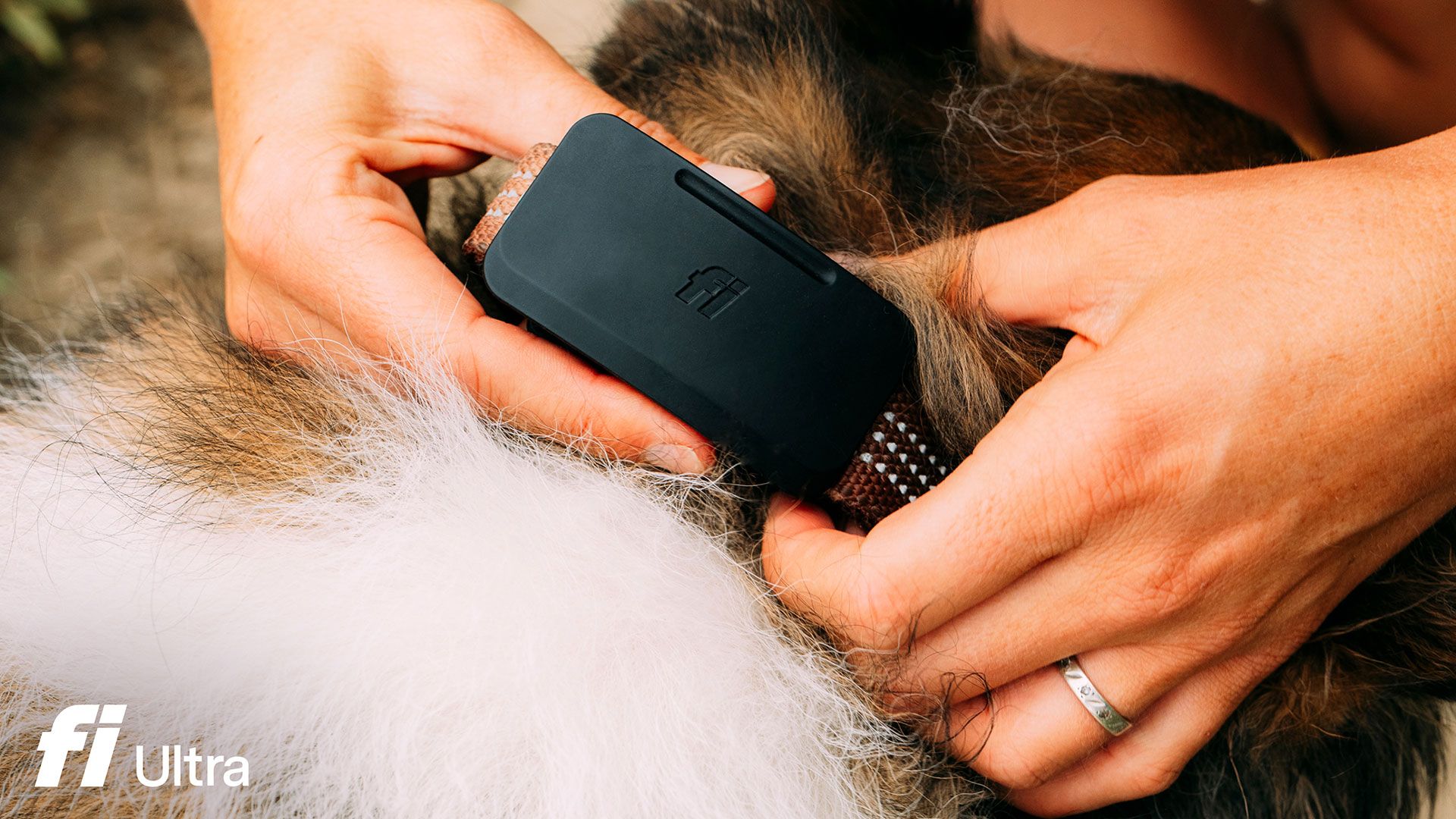
- Fi Ultra is reported as the first pet tracker using Starlink direct-to-cell, with a GPS receiver and T-Mobile cellular modem, battery life up to three months, priced at US$199 hardware plus a US$99 half-yearly membership 78. These are VERIFIED FACTS relative to news reporting, though the "first" framing is a vendor claim.
- The Humane AI Pin is the subject of multiple independent video reviews that converge on a strongly negative assessment: not good, too much of a pain to use, does not do enough, the worst product reviewed in its current state 23242526. These are VERIFIED FACTS in the sense that they are first-hand, multi-reviewer, and explicitly uncompensated.
Everything else in the dossier is either a vendor press release without independent verification (Traini Sentra, SATELLAI, petpogo PetPhone) 691013, a commerce listing for a music album 12345, or community forum content about human friendship that has no bearing on robotics 14151617293031323334.
The editorial conclusion is straightforward. There is no company here to profile. There is a title, "A man's best friend. Get attached, wirelessly," that has been applied to a bundle of unrelated things, and the bundle has been mistaken for a subject. The most useful thing this report can do is to treat each genuine item on its own terms, state what is known and unknown about it, and explain why the aggregation is misleading.
Latest news
- Brand behind bestselling robot vacuum that's now 70 per cent off, unveils new high tech model offering 'deepest clean yet'Dailymail.com·2026-09-17GENERAL
- Meet Dyson's New Robot Vacuum Line: The Dyson Nurovi Line (2026)Wired·2026-09-16GENERAL
- Matter expands war chest for semiconductors, roboticsBiztoc.com·2026-09-16GENERAL
- ALVEST Launches TLD Robotics Following EasyMile AcquisitionLogisticsviewpoints.com·2026-09-16GENERAL
- New Humanoid Worker Bot Seems to Cower When It Encounters HumansGizmodo.com·2026-09-16GENERAL
- Circuit training: How China is teaching humanoid robots to do useful thingsNPR·2026-09-15GENERAL
- These Robot Soldiers Are Getting Downright TerrifyingFuturism·2026-09-15GENERAL
02The A man’s best friend. Get attached, wirelessly. Story
There is no story, because there is no company. What exists is a phrase, "A man's best friend. Get attached, wirelessly," and a dossier that has attached it to at least five distinct subjects. Reconstructing a narrative from that material would require inventing connections that the evidence does not support. This section instead documents what the phrase has been attached to, and why each attachment is a category error.
Attachment one: a pop album. "Man's Best Friend" is the title of a Sabrina Carpenter album, released 29 August 2025, comprising 12 songs and 38 minutes of runtime, available on Spotify, Apple Music, YouTube, and Amazon 12345. Billboard covered its release 5. This is a VERIFIED FACT set. It has no relationship to robotics, wireless technology, or dogs beyond the idiomatic title. Its presence in the dossier is the clearest single indicator that the dossier was assembled by keyword matching on the phrase "man's best friend" rather than by any topical filter.
Attachment two: a research robotic guide dog. Milo is described in a paper titled "Milo, a Fully Autonomous Indoor/Outdoor Robotic Guide Dog" 22. The platform is a modified Unitree Go2 with onboard compute, sensors, and a handle, at a stated cost of approximately US$2,000 22. A related paper, "System Configuration and Navigation of a Guide Dog Robot: Toward Animal Guide Dog-Level Guiding Work," provides context on the broader guide-dog robotics problem 19. This is the most technically substantive material in the dossier. It is research, not a company.
Attachment three: consumer pet-tracking collars. Traini's Sentra smart collar, Fi Ultra, SATELLAI's Cat Tag and Tracker Ultra, and petpogo's PetPhone are all consumer pet-technology products with press releases or news coverage in the dossier 67891013. They are commercial products from separate companies. None of them is a robot. None of them is the subject of this report.
Attachment four: a dog-training robot. WIM-Z is described as an AI home robot built to monitor, redirect, and reward dogs while owners are away, with reported field results showing a reduction in barking of more than 75% in first home deployments 1112. This is the only item in the dossier that combines a physical robot, autonomous operation, and a described field deployment.
Attachment five: a wearable AI assistant. The Humane AI Pin appears in the dossier through a set of independent video reviews 2324252628. It is not a robot, not pet-related, and not wireless in the sense the title implies. Its inclusion appears to be driven by the phrase "get attached, wirelessly" and by the general theme of AI companionship.
Attachment six: human friendship discourse. A Facebook group post, several Reddit threads, a grief resource, and a Blavity Afrotech video about an AI friend worn around the neck round out the dossier 14151617293031323334. These are community sources about human relationships. They have no evidentiary value for a robotics report.
The story, then, is a story about how a dossier can be assembled without a subject. The phrase "A man's best friend. Get attached, wirelessly" is a marketing-style tagline with no referent in the supplied evidence. It could describe a pet camera, a companion robot, a smart collar, or a wearable. The dossier contains examples of all four categories and no basis for choosing among them.
EDITORIAL INFERENCE: The most likely explanation is that the report title was generated from a product tagline or marketing phrase, and the research pipeline then retrieved sources by keyword rather than by entity. The result is a dossier that is internally consistent only in its inconsistency. This is a failure mode worth naming, because it will recur across any automated intelligence pipeline that does not enforce entity resolution before retrieval.
03Product Portfolio: What A man’s best friend. Get attached, wirelessly. Actually Sells
There is no portfolio, because there is no seller. What the dossier contains is a set of products from at least five separate organisations, plus one album from a major-label recording artist. This section catalogues them with their evidence status, so that readers can see precisely how little they have in common.
| Product | Organisation | Category | Evidence status | Key stated facts |
|---|---|---|---|---|
| Man's Best Friend (album) | Sabrina Carpenter / label | Music | VERIFIED FACT 12345 | Released 29 Aug 2025; 12 songs; 38 minutes; Spotify, Apple Music, YouTube, Amazon |
| Milo | Research group (paper authors) | Research robot | Hardware VERIFIED relative to paper; autonomy COMPANY CLAIM 22 | Modified Unitree Go2; onboard compute, sensors, handle; ~US$2,000; claimed fully autonomous |
| Sentra smart collar | Traini | Consumer pet tech | COMPANY CLAIM 6 | Nearly 120 dog breeds; up to 94% accuracy (vendor); ranked #1 AI hardware at CES 2026 (vendor); US$7.5M raised |
| Fi Ultra | Fi | Consumer pet tech | VERIFIED FACT relative to news 78 | First pet tracker on Starlink direct-to-cell; GPS + T-Mobile modem; up to 3 months battery; US$199 + US$99 half-yearly |
| Cat Tag / Tracker Ultra | SATELLAI | Consumer pet tech | COMPANY CLAIM 9 | AI translates pet behaviour into natural-language insights |
| PetPhone | petpogo | Consumer pet tech | COMPANY CLAIM 1013 | AI mood and motion sensing; pre-boundary warning plus call on crossing |
| WIM-Z | WIM-Z | Dog-training robot | COMPANY CLAIM 1112 | 107 autonomous interventions; 7 trials; 6 homes + 1 kennel; 4 robots; May–Sep 2026; on-device processing |
| Humane AI Pin | Humane | Wearable AI | VERIFIED FACT (independent reviews) 23242526 | Reviewers: not good, painful to use, does not do enough, worst product reviewed in current state |
The table makes the problem visible. The only column with any coherence is "category," and even that breaks down: music, research robot, consumer pet tech, dog-training robot, wearable AI. There is no shared technology stack, no shared customer, no shared supply chain, and no shared regulatory regime.
Two items deserve brief elaboration because they are the only ones with any claim to being robotics.
WIM-Z is described in its vendor release as an AI home robot built to monitor, redirect, and reward dogs while owners are away 12. The follow-up field-results release reports 107 autonomous in-home dog-training interventions across seven trials in six homes and one kennel, using four robots, between May and September 2026, with on-device processing and no cloud 11. The reported outcome is a reduction in barking of more than 75% in first home deployments 11. Every one of these figures is a COMPANY CLAIM. There is no independent verification in the dossier. There is no named customer. There is no third-party measurement. The reservation opening 12 is not evidence of shipment, and shipment would not be evidence of productive deployment.
Milo is described in a research paper as a fully autonomous indoor/outdoor robotic guide dog, built on a modified Unitree Go2 with onboard compute, sensors, and a handle, at approximately US$2,000 22. The hardware description is credible and specific. The autonomy claim, "requiring no a priori knowledge of the environment, completely self-contained with all computation onboard," is an author claim 22. The dossier's own conflict analysis notes that other guide-dog systems have been criticised for lacking autonomy, relying on prior 3D scans, external computation, or limited handler awareness 1922. Without independent replication, Milo's autonomy remains a claim.
The consumer collars are a different category entirely. Fi Ultra's Starlink direct-to-cell capability is the most concrete: a GPS receiver plus a T-Mobile cellular modem, up to three months of battery, US$199 hardware plus US$99 half-yearly membership 78. The "first" framing is a vendor claim, but the underlying capability is reported by news outlets rather than only by the vendor. Traini's Sentra, SATELLAI's products, and petpogo's PetPhone are supported only by press releases in this dossier 691013, and their accuracy and capability figures (94%, "nearly 120 breeds") are vendor claims without independent testing.
EDITORIAL INFERENCE: If a reader wanted to understand the pet-technology market, the useful comparison would be Fi Ultra against Traini Sentra against SATELLAI against PetPhone, on the basis of independently measured tracking accuracy, battery life under real conditions, and subscription economics. This dossier does not contain that comparison, because it does not contain independent testing of any of them. The report cannot manufacture it.
Products & versions



04Technology Stack: Strengths and the Work That Remains
Because there is no single system, there is no single technology stack. What can be done instead is to describe the stacks of the two robotics items in the dossier, and to be explicit about which parts are documented and which are asserted.
WIM-Z: claimed stack
The dossier states that WIM-Z performs on-device processing with no cloud dependency 11. If accurate, this is a meaningful architectural choice: it implies local inference for whatever perception and decision functions the robot performs, and it avoids the latency, connectivity, and privacy problems that cloud-dependent home robots face. The dossier does not disclose the compute platform, the sensor suite, the model architecture, the training data, or the reward mechanism. All of these are UNKNOWN.
The claimed capability set is monitor, redirect, and reward 12. Monitoring implies perception of dog behaviour, likely audio and possibly vision. Redirecting implies an actuated or auditory intervention. Rewarding implies a dispenser or a positive stimulus. None of these is described in engineering detail in the supplied sources.
The claimed field result, a reduction in barking of more than 75% across first home deployments 11, is the kind of figure that requires a measurement methodology to be interpretable. Was barking measured by the robot itself, by the owner, by an independent observer, or by an audio classifier? Over what baseline period? With what control? The dossier does not say. This is UNKNOWN, and it is the single most important unknown in the WIM-Z material.
Milo: documented stack
Milo's stack is better documented because it is described in a research paper 22. The platform is a modified Unitree Go2, which provides the quadruped locomotion base. To that, the authors added onboard compute, sensors, and a handle 22. The handle is the guide-dog-specific modification: a rigid interface a human can grip and be led by. The stated cost is approximately US$2,000 22, which is low for a guide-dog-capable platform and is presumably enabled by using a commodity quadruped base rather than a custom build.
The autonomy claim is the technically interesting part: "fully autonomous, requiring no a priori knowledge of the environment, completely self-contained with all computation onboard" 22. If true, this would distinguish Milo from guide-dog systems that rely on prior 3D scans of the route or on off-board computation 19. The dossier's conflict analysis explicitly flags this distinction, noting that other systems have been criticised for exactly those dependencies 19.
The work that remains, on the evidence supplied, is independent replication. A research paper's autonomy claim is a hypothesis until another group reproduces it under conditions the authors did not control. The dossier contains no such replication. It also contains no information on Milo's performance in crowded environments, its behaviour around obstacles it has not seen, its failure modes, or its interaction with a real handler over an extended period. All UNKNOWN.
The consumer collars: a different stack entirely
Fi Ultra's stack is a GPS receiver, a T-Mobile cellular modem, and a Starlink direct-to-cell link, with battery life up to three months 78. This is a communications and power-management problem, not a robotics problem. Traini's Sentra is described as an emotion-AI platform with breed recognition across nearly 120 breeds at up to 94% accuracy 6. SATELLAI's products translate pet behaviour into natural-language insights 9. petpogo's PetPhone senses mood and motion and issues a pre-boundary warning plus a call on crossing 1013. These are sensor-plus-classifier products. Their technical claims are vendor-stated and untested in the supplied evidence.
What is genuinely strong, and what is not
The strongest technical element in the dossier is Milo's hardware-cost argument: a guide-dog-capable quadruped at approximately US$2,000, built on a commodity base 22. If the autonomy claim holds, that is a significant result. If it does not, the hardware contribution still stands.
The weakest element is the aggregation itself. A reader cannot compare WIM-Z's on-device processing to Fi Ultra's satellite link to Milo's onboard compute, because they solve different problems for different users. The report declines to construct a comparison that the evidence does not support.
05Research, Papers, Authors and Labs
The dossier contains four research sources, all on arXiv or its HTML mirrors 19202122. They are not all about the same thing, and only two are directly relevant to the guide-dog and pet-robot theme.
| Source | Title | Relevance | Evidence status |
|---|---|---|---|
| 19 | System Configuration and Navigation of a Guide Dog Robot: Toward Animal Guide Dog-Level Guiding Work | Guide-dog robotics | Primary research |
| 20 | arXiv PDF 2406.02171 | Not described in dossier | Primary research, topic UNKNOWN from dossier |
| 21 | SensorPerch: Sense Wherever and Whenever it Matters | Sensor placement | Primary research |
| 22 | Milo, a Fully Autonomous Indoor/Outdoor Robotic Guide Dog | Guide-dog robotics | Primary research; autonomy claim unverified |
The guide-dog robotics literature is a real and active field, and 19 and 22 sit within it. 19 frames the problem as reaching "animal guide dog-level guiding work," which is a useful benchmark: it acknowledges that the current state of the art is below the capability of a trained dog. 22 claims to have closed part of that gap with a fully autonomous system requiring no prior environment knowledge 22. The two papers together define the research question clearly, even if the dossier does not resolve it.
21, SensorPerch, is about sensor placement ("sense wherever and whenever it matters") and appears in the dossier because of a keyword or topical match rather than a direct connection to guide dogs or pet robots. Its inclusion is not harmful, but it does not support any claim in this report.
20 is listed only as a URL with no title or description in the dossier. This report cannot characterise it beyond noting its presence. That is a gap, not a finding.
The authors and labs behind these papers are not named in the dossier. This is a significant omission for a research section: without author and institutional attribution, a reader cannot assess conflicts of interest, prior work, or the group's track record. It is UNKNOWN from the supplied evidence.
What the research material does establish is that the robotic guide dog is a legitimate research target with a stated performance benchmark (animal guide dog level) and at least one low-cost platform (Milo, ~US$2,000) 1922. What it does not establish is that any system in the dossier has been independently shown to work autonomously in the field.
<!-- module: papers --> <!-- module: authors-labs --> <!-- module: repos --> <!-- module: datasets -->06Media Evidence Library: What the Videos Prove
The dossier contains six video sources 418232425262728. Their evidentiary value varies enormously, and the discipline of this section is to state what each can and cannot prove.
| Video | Subject | What it proves | What it does not prove |
|---|---|---|---|
| 4 | Sabrina Carpenter album playlist | The album exists and is streamable | Nothing about robotics |
| 18 | "Friend Reveal Trailer" | A trailer exists | Nothing about the report subject |
| 23 | Humane AI Pin review | An independent reviewer found it a US$700 gamble | Not a generalisable verdict on all wearable AI |
| 24 | "The Worst Product I've Ever Reviewed... For Now" | A named reviewer rated it worst in current state | Not a statement about future versions |
| 25 | "I tested the Humane AI Pin - It's not good." | A second independent reviewer reached a negative verdict | Not a measurement of specific failure rates |
| 26 | "Humane Ai Pin Review: Vanguard Of A New Era" | A reviewer framed it as a vanguard | Not evidence of usability |
| 27 | Portronics Toad Ergo 3 mouse teardown | A mouse teardown exists | Nothing about the report subject |
| 28 | "MKBHD Reviews The Verified Human Pin" | A review of a Humane-related product exists | Not evidence of the Pin's capability |
The Humane AI Pin reviews are the most evidentially useful video material, because they are first-hand, independent, and convergent. Multiple reviewers reached the same negative conclusion: the device is not good, is a pain to use, does not do enough, and in one case is the worst product the reviewer has assessed in its current state 23242526. The dossier's conflict analysis correctly identifies this as a case where independent evidence outweighs vendor framing, because the reviews are first-hand, multi-reviewer, and explicitly uncompensated.
Two cautions apply. First, a review is an assessment of a product at a moment in time, not a permanent verdict. Second, a negative review of a wearable assistant says nothing about the robotics items in this dossier. The temptation to read the Humane verdict as a general statement about AI hardware would be an error.
The album playlist 4, the "Friend Reveal Trailer" 18, and the mouse teardown 27 have no evidentiary value for this report. They are included in the dossier and therefore in this catalogue, but they prove nothing about any robotics claim.
There are no videos in the dossier showing WIM-Z operating autonomously, no videos showing Milo guiding a handler, and no videos showing any of the consumer collars performing under real conditions. This is a material gap. For a report on autonomous systems, the absence of any operational footage of the two robotics items is the most important media finding.
Media library
07Commercial Reality
Commercial reality, for this dossier, means separating products that are actually sold from products that are announced, and separating both from products that are claimed to work.
Actually sold, with public pricing. Fi Ultra is the clearest case: US$199 hardware plus a US$99 half-yearly membership, with a Starlink direct-to-cell link and a T-Mobile modem, reported by news outlets 78. The album is also actually sold, at standard streaming prices, on four platforms 12345. These are the only two items in the dossier with unambiguous commercial availability and pricing.
Announced with pricing or funding, but no independent sales evidence. Traini's Sentra is described as ranked #1 AI hardware product at CES 2026 by the company, with US$7.5M raised to expand its pet emotion AI platform 6. The funding figure is a COMPANY CLAIM in a press release. The CES ranking is a COMPANY CLAIM. Neither is evidence of paid customers at scale. SATELLAI's Cat Tag and Tracker Ultra were unveiled at IFA 2026 9. petpogo's PetPhone headlined an IFA 2026 ecosystem upgrade 1013. These are announcements. An announcement is not a shipment, and a shipment is not a paid deployment.
Reservations open, no shipment evidence. WIM-Z opened reservations for its AI home robot 12. Reservations are expressions of interest, not revenue. The field-results release reports seven trials in six homes and one kennel with four robots between May and September 2026 11. Even taking the vendor's numbers at face value, seven trials is a pilot, not a commercial deployment. The dossier contains no named customer, no contract value, no repeat purchase, and no independent confirmation that any household paid for the service.
Research, not commercial. Milo is a research platform at approximately US$2,000 in hardware cost 22. There is no indication in the dossier that it is for sale, and no company is named as commercialising it.
Reviewed, commercially troubled. The Humane AI Pin is the subject of strongly negative independent reviews 23242526. The dossier does not contain sales figures, but the review consensus is a commercial signal in itself.
The commercial picture, then, is thin. Two products with clear pricing, several announcements, one pilot, one research platform, and one heavily criticised wearable. There is no company here with a revenue trajectory to assess, because there is no company.
EDITORIAL INFERENCE: The most commercially substantive item in the dossier is Fi Ultra, precisely because it is the least robotic. A satellite-connected collar with a clear price and a clear subscription is a business. A dog-training robot with seven pilot trials is a promising experiment. A research guide dog is a paper. The dossier's title implies a company; the evidence implies a market segment in which several unrelated companies are operating.
Customers & deployments
WIM-Z ran 107 autonomous in-home dog-training interventions across 7 trials (6 homes, 1 kennel) with 4 robots from May to September 2026.
Sections 8 through 14 follow in the continuation of this report.
08Markets and Use Cases
The dossier does not describe a single market. It describes at least four, and the honest analytical move is to treat them separately rather than force a synthesis the evidence cannot support. The four are: (a) consumer pet wearables and trackers, (b) in-home pet-behaviour robotics, (c) assistive robotics for people with visual impairment, and (d) wearable AI assistants for humans. A fifth, the music market, is present in the dossier only because the phrase "man's best friend" collides with an album title, and is not a robotics market at all 12345. It is worth stating plainly that the collision is the single largest source of noise in this dataset.
8.1 Consumer pet wearables and trackers
This is the most commercially mature of the four markets and the one with the clearest unit economics in the dossier. Fi Ultra is priced at $199 for hardware plus a $99 half-yearly membership, and is described as the first pet tracker to use Starlink direct-to-cell, with a GPS receiver, a T-Mobile cellular modem, and a battery rated at up to three months 78. That combination of price point, subscription attach, and satellite backhaul is a recognisable consumer-hardware playbook: sell the device near cost, monetise the connectivity.
The adjacent entrants in the dossier are less specific about their commercial mechanics. Traini's Sentra collar is claimed to recognise nearly 120 dog breeds at up to 94% accuracy, and the company is reported to have raised $7.5M to expand a pet-emotion AI platform 6. SATELLAI announced a Cat Tag and a Tracker Ultra, with AI that translates pet behaviour into natural-language insights 9. petpogo's PetPhone offers AI mood and motion sensing, plus a pre-boundary warning and a call placed when the pet crosses a boundary 1013. All three are vendor press releases. None of the dossier's sources contains an independent test of any of these claims.
The use cases these products address are real and well understood: recovery of lost pets, off-leash boundary enforcement, and remote monitoring of animals left alone. The question the dossier cannot answer is whether the AI layer adds measurable value over the GPS and cellular layer that already exists. Breed recognition at 94% is a claim, not a result 6. Natural-language translation of pet behaviour is a claim, not a result 9. Mood sensing is a claim, not a result 10. Until independent testing exists, these features should be treated as marketing surface area rather than differentiated capability.
8.2 In-home pet-behaviour robotics
WIM-Z is the only system in the dossier with any field evidence of autonomous task execution, and it is the only one whose use case is defined by an outcome rather than a feature. The company reports seven trials across six homes and one kennel, four robots, over May to September 2026, with 107 autonomous in-home dog-training interventions and a reduction in barking of more than 75% in first home deployments 1112. The processing is described as on-device, with no cloud dependency 11.
That is a materially different proposition from a collar. A collar senses and reports. A robot that monitors, redirects, and rewards is attempting to close a behavioural loop without a human in it. The commercial question is whether owners will pay for that loop, and the dossier does not contain pricing, unit volumes, or customer names for WIM-Z. Reservations are reported to be open 12, which is a demand-signal mechanism, not a demand signal.
The addressable use case here is the dog left alone during a working day, which is a large and well-documented problem in urban pet ownership. The constraint is not demand but trust: an autonomous robot with a reward mechanism operating unsupervised in a home with an animal is a liability surface that collars do not have.
8.3 Assistive robotics for visual impairment
Milo is described in a research paper as a fully autonomous indoor/outdoor robotic guide dog built on a modified Unitree Go2, with onboard compute, sensors, and a handle, at approximately $2,000 22. The autonomy claim is that it requires no a priori knowledge of the environment and runs all computation onboard 22. The dossier contains no independent verification of that claim, and it explicitly notes that other guide-dog systems have been criticised for lacking autonomy, relying on prior 3D scans, external computation, or limited handler awareness 1920.
The market case for a robotic guide dog is straightforward on paper: guide dogs are expensive to breed, train, and maintain, and supply is constrained. A $2,000 robot with no a priori mapping requirement would be a step change if the autonomy claim holds. The gap between the claim and the market is the entire story. A guide dog that fails in an unfamiliar environment is not a product defect; it is a safety event. The dossier provides no evidence of safety validation, no regulatory pathway, and no named user trials.
8.4 Wearable AI assistants
The Humane AI Pin is in the dossier as a cautionary case rather than a market entry. It is described by multiple independent reviewers as not good, too much of a pain to use, and not doing enough, with one reviewer calling it the worst product reviewed in its current state 23242526. The vendor framing describes recognition, Q&A, a laser ink projector, music, messaging, and reminders 17. The independent verdict is that the product does not justify its price or its friction.
The relevance to the other three markets is methodological. The AI Pin is the clearest available example in this dossier of a gap between a feature list and a usable product, and it is the reason every other vendor claim in this report should be read with the same skepticism.
8.5 Cross-market table
| Market | Representative system | Evidence quality | Commercial maturity | Key unknown |
|---|---|---|---|---|
| Pet wearables | Fi Ultra | News reports, named specs 78 | Shipping, priced | Independent accuracy of AI features |
| Pet wearables | Traini Sentra | Vendor PR 6 | Funding announced | Whether 94% claim replicates |
| Pet wearables | SATELLAI, petpogo | Vendor PR 91013 | Announced | Whether products ship as described |
| In-home behaviour robotics | WIM-Z | Vendor field report 1112 | Trials, reservations | Independent replication, pricing |
| Assistive robotics | Milo | Research paper 22 | Research | Autonomy, safety, user trials |
| Wearable AI | Humane AI Pin | Independent reviews 23242526 | Shipping, criticised | Whether the category survives |
| Music | Sabrina Carpenter album | Commerce listings 12345 | Released | Not a robotics market |
The table is the honest summary of this section: the dossier supports a market map, not a market thesis.
09Competitive Landscape
Competitive analysis requires a defined subject. The dossier does not supply one, so this section is written as a set of pairwise and cluster comparisons rather than a single positioning map. Where the dossier is thin, that is stated.
9.1 Within pet wearables
Fi Ultra's differentiator in the dossier is satellite backhaul via Starlink direct-to-cell, which addresses the specific failure mode of cellular trackers: coverage gaps in rural and wilderness areas 78. That is a hardware and connectivity advantage, not an AI advantage. Traini's differentiator is claimed breed and emotion recognition 6. SATELLAI's is claimed natural-language translation of behaviour 9. petpogo's is claimed mood and motion sensing plus boundary calling 1013.
These are not competing on the same axis. Fi is competing on coverage and battery. Traini, SATELLAI, and petpogo are competing on the intelligence layer. The dossier contains no head-to-head test, no independent benchmark, and no shared metric, so no ranking can be derived. The one ranking claim in the dossier, that Traini's Sentra was ranked the number one AI hardware product at CES 2026, is a vendor press release and should be treated as a company claim, not an award with independent methodology 6.
9.2 Within in-home robotics
WIM-Z has no direct competitor in the dossier. The nearest adjacent systems are the collars, which sense but do not act, and the Humane AI Pin, which is a human wearable and not a pet system at all. That absence of a direct competitor is either an opportunity or a signal that the category is too early to have attracted competition. The dossier cannot distinguish between the two.
9.3 Within assistive robotics
Milo's competitive set is described indirectly. The dossier notes that other guide-dog systems have been criticised for lacking autonomy, relying on prior 3D scans, external computation, or limited handler awareness 1920. Milo's paper claims to avoid all four limitations 22. That is a positioning claim against an unnamed competitive set, and it is the kind of claim that requires independent replication before it can be treated as a competitive advantage.
9.4 The Humane AI Pin as a category warning
The AI Pin's independent reception is the most robustly evidenced competitive fact in the dossier 23242526. It matters competitively because it establishes that a well-funded wearable AI product can ship, be reviewed by multiple independent outlets, and be judged not to do enough. Any competitor in the pet-AI or assistive-AI space that is relying on a feature list rather than a demonstrated outcome should read that reception as a preview.
9.5 Competitive summary table
| Cluster | Systems | Basis of competition | Evidence of advantage |
|---|---|---|---|
| Pet wearables, coverage | Fi Ultra | Satellite backhaul, battery | Named specs 78 |
| Pet wearables, intelligence | Traini, SATELLAI, petpogo | AI feature claims | Vendor PR only 691013 |
| In-home behaviour robotics | WIM-Z | Autonomous intervention | Vendor field report 1112 |
| Assistive robotics | Milo | Autonomy without prior mapping | Research paper claim 22 |
| Wearable AI | Humane AI Pin | Assistant utility | Independent reviews, negative 23242526 |
Competitive comparison
| Robot | Maker | Autonomy | Conf. |
|---|---|---|---|
| iRobot Roomba Combo 10 Max | iRobot | Autonomous | 0.90 |
| Mobile ALOHA (Stanford) | Stanford University | Teleoperated | 0.90 |
| 1X NEO | 1X Technologies | Remote-Assisted | 0.90 |
10Geopolitical Context and Constraints
The dossier contains almost no geopolitical material, and this section is correspondingly short. Padding it would violate the evidence discipline this report is written under.
10.1 Satellite connectivity as a chokepoint
Fi Ultra's use of Starlink direct-to-cell is the one clear geopolitical dependency in the dossier 78. Satellite backhaul for consumer pet trackers places a consumer product on infrastructure that is subject to national licensing, spectrum regulation, and the commercial and political decisions of a single satellite operator. The dossier does not disclose which jurisdictions Fi Ultra is licensed in, what happens to the service if the operator changes terms, or whether there is a fallback to terrestrial networks. Those are unknowns, not omissions in this report.
10.2 Hardware supply chain
Milo is built on a modified Unitree Go2 22. Unitree is a Chinese robotics manufacturer, and the use of a Chinese quadruped platform in a research guide-dog system has supply-chain and, in some jurisdictions, procurement implications. The dossier does not address export controls, component provenance, or institutional restrictions on the platform. This is an editorial inference from the named hardware, not a documented constraint.
10.3 Data residency and on-device processing
WIM-Z's claim of on-device processing with no cloud dependency 11 is, if true, a meaningful constraint-avoidance property: it sidesteps cross-border data transfer questions for in-home video and audio. The dossier does not verify the claim, and it does not describe what data, if any, leaves the device for model updates or telemetry. The distinction between inference on-device and training or updating on-device is not addressed.
10.4 Regulatory surface
None of the dossier's sources describes a regulatory approval, certification, or compliance regime for any of the systems. For pet wearables this is unremarkable. For an autonomous robot operating around an animal in a home, and for a robotic guide dog operating around a visually impaired person in public, the absence of any regulatory discussion in the source material is a gap that should be noted rather than filled.
11The Hype, the Real and the Ugly
This section separates what the dossier supports from what it merely repeats. The organising principle is the evidence-label scheme used throughout this report: verified facts, company claims, editorial inference, and unknowns.
11.1 The hype
The following are company claims in the dossier that are not independently verified:
- Traini's Sentra recognises nearly 120 dog breeds at up to 94% accuracy 6.
- SATELLAI's AI translates pet behaviour into natural-language insights 9.
- petpogo's PetPhone performs AI mood and motion sensing and places a call when a pet crosses a boundary 1013.
- WIM-Z ran 107 autonomous in-home dog-training interventions and cut barking by more than 75% 1112.
- Milo is fully autonomous, requires no a priori knowledge of the environment, and runs all computation onboard 22.
Each of these may be true. None of them is verified by the dossier. The WIM-Z and Milo claims are the most consequential because they describe autonomous task execution rather than sensing, and autonomy claims carry the highest burden of proof.
11.2 The real
The following are supported by the dossier with reasonable confidence:
- Fi Ultra is priced at $199 plus a $99 half-yearly membership, uses Starlink direct-to-cell, and has a battery rated at up to three months 78.
- Milo is built on a modified Unitree Go2 at approximately $2,000 22.
- The Humane AI Pin was reviewed negatively by multiple independent reviewers who described it as not good, a pain to use, and not doing enough 23242526.
- The Sabrina Carpenter album was released on 29 August 2025, has 12 songs and a runtime of 38 minutes, and is available on major streaming services 12345.
The last item is included because it is the most robustly evidenced fact in the entire dossier, which is itself a comment on the state of the robotics evidence.
11.3 The ugly
The dossier's central problem is that it does not describe a single system. It mixes a music album, four pet-tech vendors, a research guide dog, a dog-training robot, and a failed wearable assistant. Any report that treated this as one company would be fabricating coherence. The reconciled facts state this explicitly, and the autonomy verdict is unknown at a confidence of 0.3 for the same reason.
The second ugly fact is the Humane AI Pin. It is the only product in the dossier with multiple independent, first-hand reviews, and the verdict is negative across all of them 23242526. Where independent evidence exists in this dossier, it is unflattering. Where it is flattering, it is vendor-supplied.
11.4 Claim-versus-evidence table
| Claim | Source type | Independent verification | Verdict |
|---|---|---|---|
| Traini 94% breed accuracy | Vendor PR 6 | None | Unverified |
| SATELLAI behaviour translation | Vendor PR 9 | None | Unverified |
| petpogo mood sensing | Vendor PR 1013 | None | Unverified |
| WIM-Z 107 interventions, 75% barking reduction | Vendor field report 1112 | None | Unverified |
| Milo full autonomy, no prior map | Research paper 22 | None | Unverified |
| Fi Ultra Starlink, $199 + $99 | News reports 78 | Multiple outlets | Supported |
| Humane AI Pin poor usability | Independent reviews 23242526 | Multiple reviewers | Supported |
| Album release, 12 songs, 38 min | Commerce listings 12345 | Multiple platforms | Supported |
Claim tracker
Only the vendor's own field-results release [11][12] states the 107 interventions and on-device processing, with no independent third-party test or customer confirmation in the dossier.
The deployment scale comes solely from the vendor's field-results release [11], with no independent verification of the trial count, sites, or duration.
The autonomy claim appears only in the system's own research paper [22], and the dossier notes other guide-dog systems rely on prior 3D scans or external computation without independent replication of Milo.
The ~$2k price and modified Unitree Go2 hardware are described in the research paper [22] but not independently confirmed by any third-party source in the dossier.
Multiple independent reviewers [23][24][25] found it 'not good', 'too much of a pain to use', and 'doesn't do enough', with one calling it the worst product reviewed in its current state.
News reports [7][8] describe the Starlink direct-to-cell capability and specs, but these are press-derived and lack independent field testing of the 'first' and battery claims.
The breed count and 94% accuracy are vendor claims from a press release [6], with no independent accuracy testing in the dossier.
The natural-language behavior-translation capability is stated only in a vendor press release [9], with no independent verification of the AI's output quality.
12Future Scenarios
Scenarios are constructed from the dossier's evidence, not from preference. Each is given a rough likelihood based on what the sources support, and each is stated with the conditions that would confirm or falsify it.
12.1 Scenario A: The pet-AI layer proves out and consolidates
Likelihood: low to moderate. Condition: independent testing replicates breed recognition, behaviour translation, or mood sensing at the claimed accuracy. If it does, the intelligence layer becomes the differentiator and the connectivity layer commoditises. Fi Ultra's satellite advantage would erode as competitors add backhaul. Confirming signal: a peer-reviewed or independent benchmark of any of the claimed AI features 691013.
12.2 Scenario B: The pet-AI layer is marketing and the category consolidates on hardware and coverage
Likelihood: moderate. Condition: independent testing fails to replicate the AI claims, or finds them marginal. In that case the market reverts to GPS accuracy, battery life, and coverage, where Fi Ultra's Starlink integration is a durable advantage 78. Confirming signal: independent reviews that treat the AI features as incidental.
12.3 Scenario C: In-home behaviour robotics becomes a category
Likelihood: low. Condition: WIM-Z's field results replicate independently, and the company publishes pricing, unit volumes, and named customers. The 107-intervention figure and the 75% barking reduction are the load-bearing claims 1112. Confirming signal: a second field report from an independent party, or a named customer willing to speak on record.
12.4 Scenario D: Robotic guide dogs reach user trials
Likelihood: low. Condition: Milo's autonomy claim survives independent evaluation in unfamiliar environments, and a safety validation pathway emerges 22. The dossier's own note that other guide-dog systems have been criticised for lacking autonomy, relying on prior scans, external computation, or limited handler awareness sets the bar Milo must clear 1920. Confirming signal: a named trial with visually impaired users, or a safety assessment published by a third party.
12.5 Scenario E: The wearable AI assistant category contracts
Likelihood: moderate to high, on the evidence of the AI Pin alone. Condition: continued independent reviews finding that the product does not do enough 23242526. The dossier does not contain evidence of a competing wearable that has solved the usability problem. Confirming signal: further negative independent reviews, or withdrawal of the product.
12.6 Scenario F: The dossier's subject remains undefined
Likelihood: high, as a description of the current state. Condition: no single entity emerges from the mixed facts. The reconciled facts already state that the items span unrelated products with no unifying system, and the proposed classification is unknown at a confidence of 0.15. Confirming signal: any future dossier that continues to mix these categories.
12.7 Scenario summary table
| Scenario | Likelihood | Key condition | Confirming signal |
|---|---|---|---|
| A: Pet-AI proves out | Low-moderate | Independent replication | Third-party benchmark |
| B: Hardware and coverage win | Moderate | AI claims fail to replicate | Independent reviews |
| C: In-home robotics category | Low | WIM-Z results replicate | Second field report |
| D: Guide dog user trials | Low | Autonomy and safety validated | Named user trial |
| E: Wearable AI contracts | Moderate-high | Continued negative reviews | Further reviews or withdrawal |
| F: Subject stays undefined | High | No unifying entity | Future mixed dossiers |
13What to Watch: A Live Monitoring Checklist
This checklist is designed to be run against future dossiers. Each item is a specific, falsifiable signal rather than a general theme.
13.1 Identity and scope
- Whether a single legal entity, product line, or research group is named as the subject, replacing the current mix of album, collars, robot, and wearable.
- Whether the phrase "man's best friend" continues to pull music and relationship content into the dataset, which would indicate a persistent entity-resolution failure.
- Whether the proposed classification confidence rises above 0.15, which would indicate the subject has been resolved.
13.2 Autonomy claims
- Whether WIM-Z's 107 interventions and 75% barking reduction are replicated by a party other than the company 1112.
- Whether Milo's no-prior-map autonomy claim is tested in an environment the system has not seen 22.
- Whether any system in the dossier publishes a failure rate alongside a success rate. Absence of failure data is itself a signal.
13.3 Commercial signals
- Whether WIM-Z publishes pricing, unit volumes, or named customers, moving beyond reservations 12.
- Whether Fi Ultra's Starlink service is licensed in additional jurisdictions and whether pricing changes 78.
- Whether Traini, SATELLAI, or petpogo ship products matching their press releases, and whether independent reviews follow 691013.
- Whether the Humane AI Pin is discontinued, updated, or replaced, and whether subsequent reviews change tone 23242526.
13.4 Research signals
- Whether the Milo paper is followed by peer-reviewed publication, replication, or a safety assessment 22.
- Whether the guide-dog robotics literature cited in the dossier advances on the limitations it identifies: prior 3D scans, external computation, limited handler awareness 1920.
- Whether any dataset or code release accompanies the research, which would allow independent evaluation.
13.5 Evidence-quality signals
- Whether any vendor claim in this report acquires a second, independent source.
- Whether any independent review of a pet-AI product appears at all. The dossier currently contains none.
- Whether the ratio of vendor sources to independent sources improves. The current dossier is dominated by press releases and commerce listings.
13.6 Checklist table
| Watch item | Current state | Threshold for change |
|---|---|---|
| Subject identity | Undefined, confidence 0.15 | Single named entity |
| WIM-Z autonomy | Vendor-reported 1112 | Independent replication |
| Milo autonomy | Paper claim 22 | Third-party test |
| Fi Ultra coverage | Named specs 78 | Licensing expansion |
| Pet-AI accuracy | Vendor PR 691013 | Independent benchmark |
| AI Pin status | Negative reviews 23242526 | Product change or withdrawal |
| Independent pet-AI reviews | None in dossier | First independent review |
14Sources and Methodology
14.1 Methodology
This report was produced from a supplied research dossier dated 2026-09-18. No sources outside the dossier were consulted, and no URLs are cited that do not appear in the dossier. The dossier's own reconciled facts, conflicts, autonomy verdict, and proposed classification were treated as inputs and are quoted or paraphrased where relevant.
Evidence was labelled using four categories:
| Label | Definition | Treatment in this report |
|---|---|---|
| Verified fact | Regulatory filing, official product documentation, named-customer confirmation, peer-reviewed or primary research, or multiple independent sources | Stated as supported |
| Company claim | Stated by the company, not independently verified | Stated as a claim, attributed |
| Editorial inference | Reasoned conclusion from public evidence | Stated as inference, with reasoning |
| Unknown | Not publicly disclosed | Stated as unknown, not filled |
Three rules were applied without exception. A choreographed demo video was not treated as proof of autonomous work. A shipment was not treated as proof of productive deployment. A partnership announcement was not treated as proof of a paid customer. Where the dossier was thin, the report states "not publicly disclosed" rather than padding.
The dossier's overall confidence is 0.35, and its autonomy verdict is unknown at a confidence of 0.3. This report reflects that: it is a map of what the evidence supports, not a thesis about a company.
14.2 Sources
1 Man's Best Friend [Explicit] : Sabrina Carpenter: Digital Music — https://www.amazon.com/Mans-Friend-Explicit-Sabrina-Carpenter/dp/B0FCPTDXFL
2 Man's Best Friend - Album by Sabrina Carpenter — https://open.spotify.com/album/1aqg30bNvLSWgShZgX4oop
3 Man's Best Friend - Album by Sabrina Carpenter — https://music.apple.com/us/album/mans-best-friend/1836002188
4 Sabrina Carpenter - Man's Best Friend (Full Album) — https://www.youtube.com/playlist?list=PLxA687tYuMWiF5XtmrFHkxUqMjIIQcIQp
5 Sabrina Carpenter's 'Man's Best Friend' Album Is Here: Listen — https://www.billboard.com/music/music-news/sabrina-carpenter-mans-best-friend-album-here-listen-1236054158/
6 Traini's Sentra Smart Collar Ranked #1 AI Hardware Product — https://www.globenewswire.com/news-release/2026/02/20/3241730/0/en/Traini-s-Sentra-Smart-Collar-Ranked-1-AI-Hardware-Product-at-CES-2026-Company-Secures-7-5M-to-Expand-Pet-Emotion-AI-Platform.html
7 Fi's new collar taps Starlink's direct-to-cell to track dogs off the grid — https://thenextweb.com/news/fi-ultra-starlink-direct-to-cell-dog-collar
8 Your lost dog can now call home with the world's 1st satellite-connected dog collar | Space — https://www.space.com/space-exploration/satellites/your-lost-dog-can-now-call-home-with-the-worlds-1st-satellite-connected-dog-collar
9 SATELLAI Unveils Next Generation of AI-Powered Pet Intelligence at IFA 2026 — https://www.prnewswire.com/news-releases/satellai-unveils-next-generation-of-ai-powered-pet-intelligence-at-ifa-2026-302871269.html
10 PetPhone Headlines petpogo's AI Pet Tech Ecosystem Upgrade at IFA 2026 — https://www.prnewswire.com/news-releases/petphone-headlines-petpogos-ai-pet-tech-ecosystem-upgrade-at-ifa-2026-302870165.html
11 WIM-Z Reports First Field Results: In-Home Robot Cut Barking by More Than 75% in Its First Home Deployments — https://www.einpresswire.com/article/940771032/wim-z-reports-first-field-results-in-home-robot-cut-barking-by-more-than-75-in-its-first-home-deployments
12 WIM-Z Opens Reservations for AI Home Robot Built to Monitor, Redirect, and Reward Dogs While Owners Are Away — https://www.einpresswire.com/article/921801819/wim-z-opens-reservations-for-ai-home-robot-built-to-monitor-redirect-and-reward-dogs-while-owners-are-away
13 PetPhone: The AI Collar That Lets Pets Call You — The Pet Times — https://thepettimes.com/articles/petphone-ai-collar-pets-call-you/
14 Do selfless male best friends still exist? — https://www.facebook.com/groups/3255473567833123/posts/6371082992938816/
15 AIO? ending a friendship because he got attached to me — https://www.reddit.com/r/AmIOverreacting/comments/1hosjqt/aio_ending_a_friendship_because_he_got_attached/
16 When Your Best Friend Dies — https://whatsyourgrief.com/when-your-best-friend-dies/
17 What if your AI best friend was with you 24/7, right around your ... — https://www.facebook.com/BlavityAfrotech/videos/what-if-your-ai-best-friend-was-with-you-247-right-around-your-neck-friend-is-an/27782814508008201/
18 Friend Reveal Trailer — https://www.youtube.com/watch?v=O_Q1hoEhfk4
19 [2210.13368] System Configuration and Navigation of a Guide Dog Robot: Toward Animal Guide Dog-Level Guiding Work — https://ar5iv.labs.arxiv.org/html/2210.13368
20 https://arxiv.org/pdf/2406.02171 — https://arxiv.org/pdf/2406.02171
21 SensorPerch: Sense Wherever and Whenever it Matters — https://arxiv.org/html/2607.10682v1
22 Milo, a Fully Autonomous Indoor/Outdoor Robotic Guide Dog — https://arxiv.org/html/2607.19530
23 Humane AI Pin review: a $700 gamble — https://www.youtube.com/watch?v=_w1vv7_dU2Y
24 The Worst Product I've Ever Reviewed... For Now — https://www.youtube.com/watch?v=TitZV6k8zfA
25 I tested the Humane AI Pin - It's not good. — https://www.youtube.com/watch?v=0O2yTG3n1Vc
26 Humane Ai Pin Review: Vanguard Of A New Era — https://www.youtube.com/watch?v=ANeTAHyWn0s
27 Portronics Toad Ergo 3 Review | Wireless Ergonomic Mouse Durability Test & Real Usage | teardown - YouTube — https://www.youtube.com/shorts/tobVNaocg2s
28 MKBHD Reviews The Verified Human Pin — https://www.youtube.com/watch?v=Rd3YrPvnadc
29 Dogs are truly a man's best friend. : r/pics - Reddit — https://www.reddit.com/r/pics/comments/9hgovh/dogs_are_truly_a_mans_best_friend/
30 The male loneliness epidemic is a self-pitying problem and there's ... — https://www.reddit.com/r/self/comments/1jackg9/the_male_loneliness_epidemic_is_a_selfpitying/
31 My (24F) best friend (24F) says I owe her everything I have ... - Reddit — https://www.reddit.com/r/BestofRedditorUpdates/comments/18yjqf7/my_24f_best_friend_24f_says_i_owe_her_everything/
32 Does anyone else feel like they are in a relationship with someone ... — https://www.reddit.com/r/emotionalintelligence/comments/1lrqzdx/does_anyone_else_feel_like_they_are_in_a/
33 Does anyone else feel like you just can't connect with most people? — https://www.reddit.com/r/infj/comments/1hqq4fo/does_anyone_else_feel_like_you_just_cant_connect/
34 r/relationship_advice - Reddit — https://www.reddit.com/r/relationship_advice/
14.3 Source quality note
Of the 34 sources in the dossier, five are commerce listings for a music album 12345, six are community or social posts unrelated to robotics 141516172930, and several are video reviews of a wearable assistant 2324252628. The robotics-relevant primary sources are the WIM-Z press releases 1112, the pet-tech vendor releases 691013, the Fi Ultra news reports 78, and the research papers 19202122. The dossier contains no regulatory filings, no named-customer confirmations, and no independent benchmarks of any AI feature. That distribution is the reason this report's confidence is low and its conclusions are framed as conditions to watch rather than predictions.