Velodyne VLP-16 (Puck)
The Velodyne VLP-16, commonly known as the Puck, is a compact 16-channel mechanical spinning LiDAR sensor that delivers a full 360° horizontal field of view. Originally developed and commercialized by Velodyne Lidar, it became one of the most widely adopted LiDAR units in robotics, autonomous vehicles, and 3D mapping applications due to its relatively small form factor and accessible price point compared to earlier high-channel sensors. Following the February 2023 merger of equals between Velodyne Lidar and Ouster, the VLP-16 product line transitioned to Ouster's portfolio. The sensor is broadly used in autonomous mobile robots (AMRs), simultaneous localization and mapping (SLAM), surveying, and mobile autonomy research, making it a reference-class component across both academic and commercial robotics ecosystems.

Overview and Use Cases
The VLP-16 (Puck) was introduced by Velodyne Lidar as a smaller, lighter, and more cost-accessible successor concept to the larger HDL-64E and HDL-32E sensors. With 16 laser channels arranged in a vertical array and a continuously rotating mechanism, it produces a dense 3D point cloud of the surrounding environment up to a reported range of approximately 100 meters (with reflectivity-dependent variation).
Key application domains include:
- Autonomous Mobile Robots (AMRs): Used for obstacle detection, navigation, and localization in warehouses, factories, and outdoor environments.
- SLAM and Mapping: A standard sensor in many open-source SLAM frameworks (e.g., LOAM, LeGO-LOAM, Cartographer) due to its well-documented ROS drivers and community support.
- Survey and Geospatial: Mounted on UAVs and ground vehicles for mobile LiDAR scanning and point-cloud generation.
- Research and Academia: Widely used in university robotics labs as an accessible entry point to 3D LiDAR perception.
Key Technical Details
The following specifications are commonly reported in public documentation; users should consult the current Ouster datasheet for authoritative values:
- Channels: 16 laser/detector pairs
- Horizontal Field of View: 360° (continuous rotation)
- Vertical Field of View: Approximately ±15°
- Reported Range: Up to ~100 m (varies by target reflectivity)
- Rotation Rate: Configurable, typically 5–20 Hz
- Point Output Rate: Reportedly up to ~300,000 points per second
- Interface: Ethernet (UDP data packets); compatible with ROS and ROS 2
- Form Factor: Compact cylindrical housing, relatively lightweight compared to earlier Velodyne models
- Operating Conditions: Rated for outdoor use; specific IP rating details should be verified in current Ouster documentation
Comparison to Related Sensors
Within the broader Ouster/Velodyne heritage lineup, the VLP-16 sits below the 32-channel VLP-32C and the 64-channel HDL-64E in terms of vertical resolution. Higher-channel sensors provide denser vertical coverage useful for passenger-vehicle autonomy, while the VLP-16's 16-channel resolution is generally considered sufficient for ground-robot navigation and mapping at moderate speeds.
Competitor sensors in a comparable tier include the Ouster OS0-16 and OS1-16 (from the same post-merger company), Livox Mid-series sensors, and Robosense RS-LiDAR-16. Solid-state and hybrid-solid-state alternatives from manufacturers such as Livox and Hesai have increasingly challenged spinning sensors on cost and longevity grounds, though spinning sensors retain advantages in uniform 360° coverage.
Market Context and Target Buyers
At its introduction, the VLP-16 was notable for bringing mechanical spinning LiDAR to a price tier accessible to research institutions and smaller robotics companies—a significant shift from the five-figure costs of earlier professional sensors. As of public reporting, it has historically been positioned as a mid-range research and light-commercial sensor.
Target buyers include:
- Robotics researchers and university labs
- AMR and AGV manufacturers requiring reliable 360° perception
- Surveying and mapping service providers
- Autonomous vehicle prototyping teams
Deployments and Ecosystem
The VLP-16 has been deployed in a broad range of documented research and commercial projects worldwide. It has appeared in numerous peer-reviewed robotics papers, DARPA challenge vehicles, and commercial AMR platforms. Its long availability and extensive ROS driver support have made it a de facto standard for LiDAR-based SLAM benchmarking. Many open-source datasets used for algorithm development (reportedly including subsets of KITTI-style benchmarks and custom indoor/outdoor datasets) were collected with VLP-16 units.
Future Outlook
Following the Velodyne–Ouster merger, Ouster has been consolidating its product lines around its digital LiDAR architecture. The long-term roadmap for the VLP-16 under Ouster's ownership—including continued production, support timelines, and potential successor products—should be confirmed directly with Ouster. Industry trends suggest continued pressure from solid-state and MEMS-based LiDAR sensors on cost and reliability, though the VLP-16's established ecosystem and broad software support are likely to sustain its relevance in existing deployments and cost-sensitive research applications for the near term.
Related entries
 Robot
RobotG1
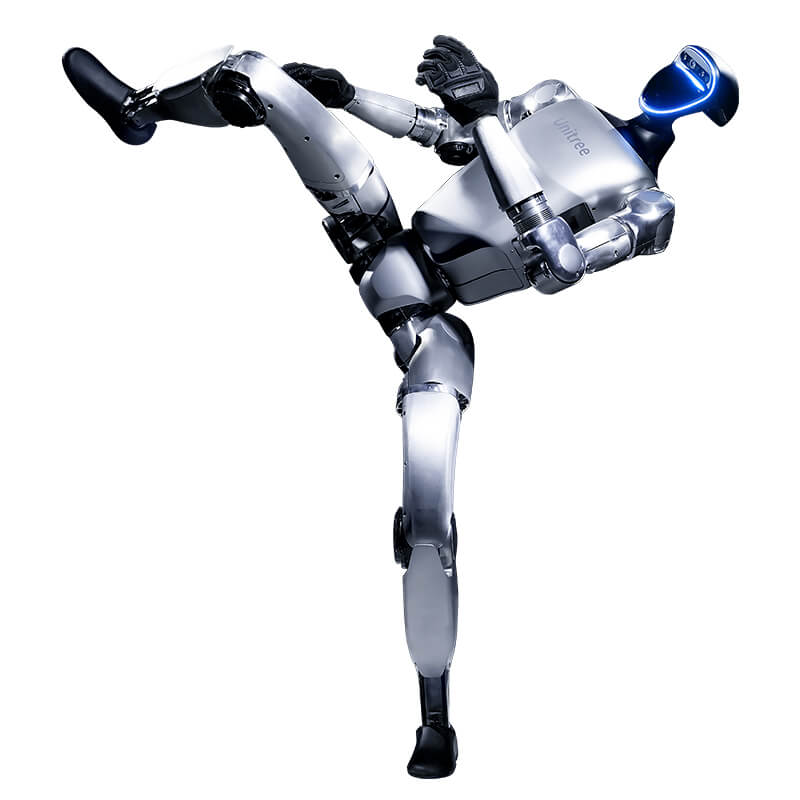
The Unitree G1 is a general-purpose humanoid robot developed by Unitree Robotics, a Chinese robotics company headquartered in Hangzhou. Standing approximately 1.32 meters tall and weighing around 35 kilograms, the G1 features 23 degrees of freedom and is capable of walking, running, recovering from falls, and performing dexterous manipulation tasks. It ships with SDK access, making it accessible to researchers and small-business operators seeking an affordable entry point into humanoid robotics. The G1 is widely regarded as one of the most competitively priced serious humanoid platforms available as of public reporting, positioning Unitree as a disruptive force in a market historically dominated by far more expensive systems. Its combination of mobility, recoverability, and open software access has attracted attention from academic institutions, robotics developers, and automation-focused startups worldwide.
5,835 views
 Robot
RobotUniversal Robots UR5e
The Universal Robots UR5e is a six-axis collaborative robot arm (cobot) belonging to Universal Robots' e-Series product line. Designed for light-to-medium industrial and laboratory tasks, it is widely used in assembly, pick-and-place, machine tending, quality inspection, and lab automation workflows. Universal Robots, a Danish company and a subsidiary of Teradyne, is one of the most recognized names in the collaborative robotics market. The UR5e is programmed using Universal Robots' PolyScope graphical interface on a teach pendant, making it accessible to operators without deep robotics expertise. Its built-in force/torque sensing, tool-center-point control, and a broad ecosystem of certified end-effectors and accessories (the UR+ platform) have made it a popular mid-range cobot choice across manufacturing, electronics, food handling, and research sectors.
5,181 views
 Robot
RobotQuicktron M100
The Quicktron M100 is a heavy-duty autonomous mobile robot (AMR) belonging to Quicktron Robotics' M-Series product line. It is designed for demanding material handling tasks in warehouses, distribution centers, and manufacturing environments, using an integrated lift mechanism to transport shelves and pallets autonomously across facility floors. Quicktron Robotics, a company with roots in China and a global commercial presence, positions the M100 as a high-capacity solution for operations that require moving heavier loads than lighter AMR models can accommodate. The M100 targets logistics operators and manufacturers seeking to automate goods-to-person or pallet-movement workflows at scale.
601 views
 Robot
RobotNVIDIA Jetson Orin NX
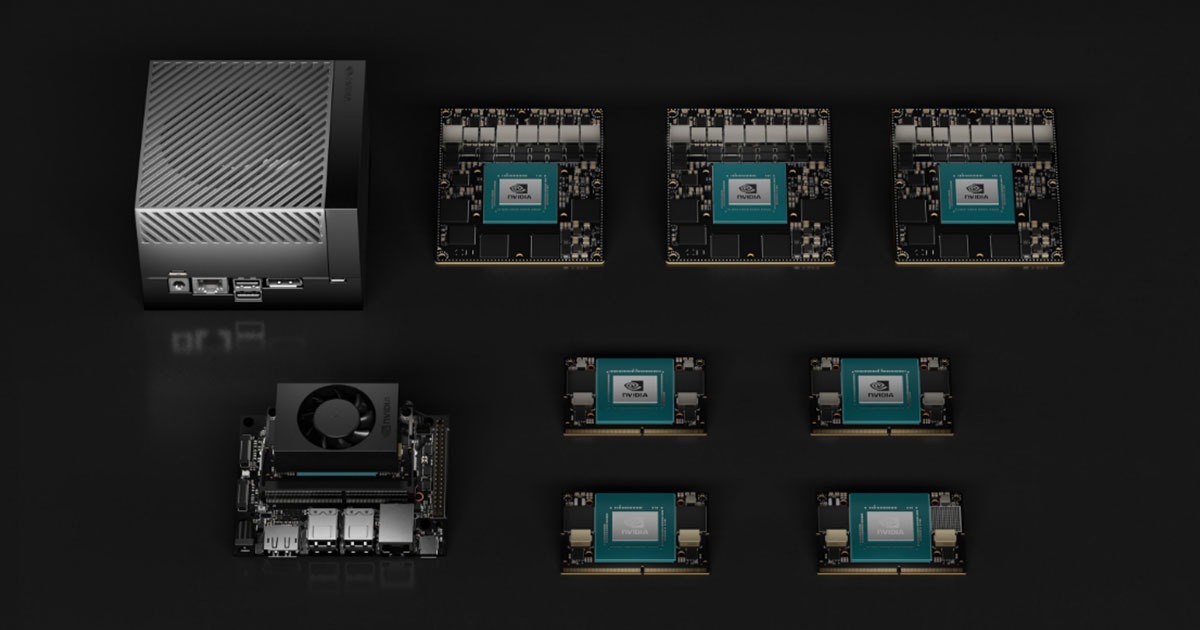
The NVIDIA Jetson Orin NX is a compact, SO-DIMM form-factor edge AI compute module designed for robotics, autonomous machines, and embedded vision applications. Manufactured by NVIDIA, it is available in 8 GB and 16 GB memory configurations and pairs an Ampere-architecture GPU with an 8-core Arm Cortex-A78AE CPU to deliver high-throughput on-device inference without relying on cloud connectivity. Positioned within NVIDIA's broader Jetson Orin family, the Orin NX targets developers and system integrators who need a balance of performance and power efficiency in a small footprint. It is commonly used in applications such as industrial inspection, autonomous mobile robots (AMRs), drone navigation, and smart edge devices where real-time AI inference is critical.
531 views