T10
The Keenon Robotics T10 is a premium food-running robot designed for mid-to-high-end full-service restaurants. It features four detachable trays, SLAM-based autonomous navigation, voice prompts, and a 10-inch interactive display styled as an expressive face, enabling it to offload runner labor in demanding dining environments. Manufactured by Keenon Robotics, one of China's leading service-robot companies, the T10 sits at the upper end of the brand's DINERBOT-series lineup. Its detachable tray design and interactive interface distinguish it from entry-level delivery robots, targeting operators who prioritize guest experience alongside operational efficiency.

Overview and Use Cases
The Keenon Robotics T10 is a hospitality-category autonomous delivery robot engineered specifically for food running in full-service restaurant settings. Unlike simpler cart-style robots, the T10 is positioned as a premium solution intended to complement front-of-house staff rather than replace them entirely. Its primary role is transporting dishes from the kitchen pass to guest tables, freeing human servers to focus on higher-value interactions such as order-taking, upselling, and guest relations.
Typical deployment environments include mid-to-high-end Chinese and international restaurants, hotel dining rooms, and large banquet facilities where consistent, timely food delivery across multiple tables is operationally challenging.
Key Technical Features
- Four Detachable Trays: The T10's defining hardware feature is its stack of four independently removable trays, allowing servers to unload individual courses without disturbing other dishes in transit.
- SLAM Navigation: The robot uses Simultaneous Localization and Mapping (SLAM) technology to build and update a map of its environment, enabling obstacle avoidance and reliable path-finding without requiring floor markers or fixed infrastructure.
- 10-Inch Interactive Face Display: A front-mounted 10-inch screen renders animated facial expressions and contextual graphics, giving the robot a approachable, branded presence on the dining floor.
- Voice Prompts: Onboard audio cues guide guests through dish retrieval and signal arrival at the table, reducing the need for staff intervention during delivery.
- Sensor Suite: As is common across Keenon's DINERBOT lineup, the T10 reportedly incorporates LiDAR, depth cameras, and ultrasonic sensors for multi-layer obstacle detection, though exact sensor configurations are not fully disclosed in public documentation.
Comparison to Sibling Models
Within Keenon's hospitality portfolio, the T10 occupies a distinct niche:
- DINERBOT T9 / T9 Pro: The T9 and T9 Pro are closely related food-delivery robots from the same maker. The T10's four-tray detachable system and larger interactive display suggest a step up in capacity and guest-facing presentation compared to the T9 series, though precise payload differences are not publicly confirmed.
- BUTLERBOT W3: The W3 is oriented toward concierge and in-room delivery tasks in hotel environments, featuring a enclosed compartment design rather than open trays — a different use-case philosophy from the T10's open dining-floor model.
- Competitor Context: Competing products in the premium food-running segment include robots from Bear Robotics (Servi), Pudu Robotics (BellaBot), and Orion Star. The T10's detachable tray mechanism and expressive face display are broadly comparable to the BellaBot's cat-themed interface approach, both targeting operators who view the robot as a guest-experience asset as well as a labor tool.
Market Context and Target Buyers
The T10 is positioned in the mid-to-premium tier of the service-robot market. Its target buyers are restaurant groups and hotel F&B operators who require a robot that can operate reliably in complex, dynamic dining environments while maintaining an aesthetic consistent with an upscale brand. As of public reporting, Keenon Robotics distributes its products across China and in international markets through regional partners, though specific pricing for the T10 is not publicly listed.
Deployments and Adoption
Keenon Robotics as a company has reported deployments of its hospitality robots across tens of thousands of locations globally, spanning restaurants, hotels, and entertainment venues. The T10 specifically has been marketed toward full-service restaurant chains and independent fine-dining operators seeking to address labor shortages and improve delivery consistency. Notable customer segments reportedly include large Chinese restaurant chains and international hotel groups operating in Asia, though named customer references for the T10 model specifically are limited in public sources.
Future Outlook
The food-running robot segment continues to grow as the hospitality industry faces persistent labor cost pressures. The T10's combination of multi-tray capacity, expressive interaction design, and SLAM-based navigation positions it well for environments where both operational throughput and guest experience matter. Future iterations across Keenon's lineup are likely to incorporate improved AI-driven interaction, deeper POS system integration, and enhanced multi-robot fleet coordination — trends already visible across the broader service-robot industry.
Related videos

Related entries
 Robot
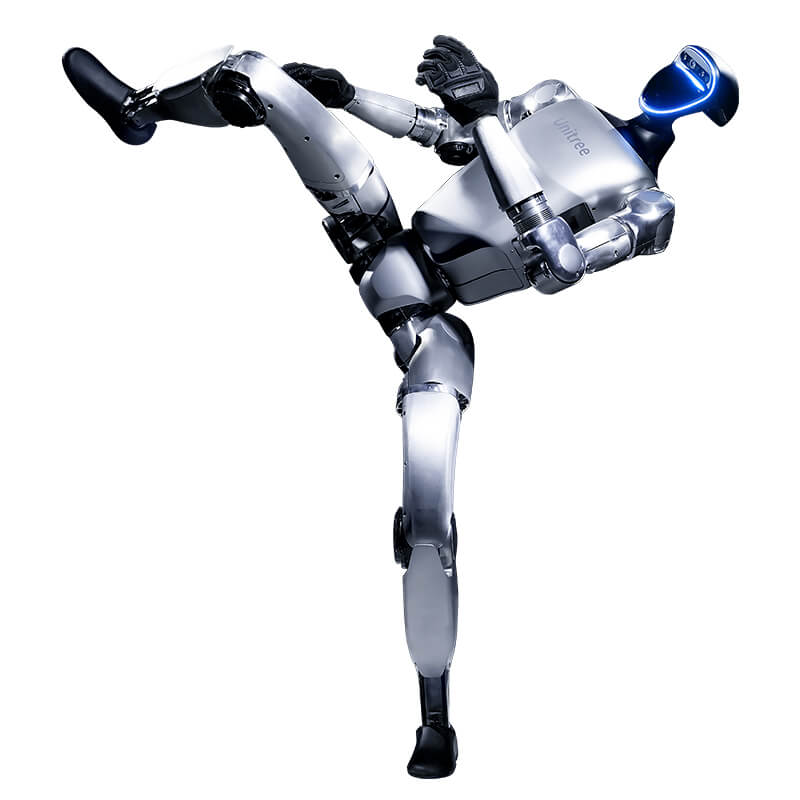
RobotG1
The Unitree G1 is a general-purpose humanoid robot developed by Unitree Robotics, a Chinese robotics company headquartered in Hangzhou. Standing approximately 1.32 meters tall and weighing around 35 kilograms, the G1 features 23 degrees of freedom and is capable of walking, running, recovering from falls, and performing dexterous manipulation tasks. It ships with SDK access, making it accessible to researchers and small-business operators seeking an affordable entry point into humanoid robotics. The G1 is widely regarded as one of the most competitively priced serious humanoid platforms available as of public reporting, positioning Unitree as a disruptive force in a market historically dominated by far more expensive systems. Its combination of mobility, recoverability, and open software access has attracted attention from academic institutions, robotics developers, and automation-focused startups worldwide.
5,834 views
 Robot
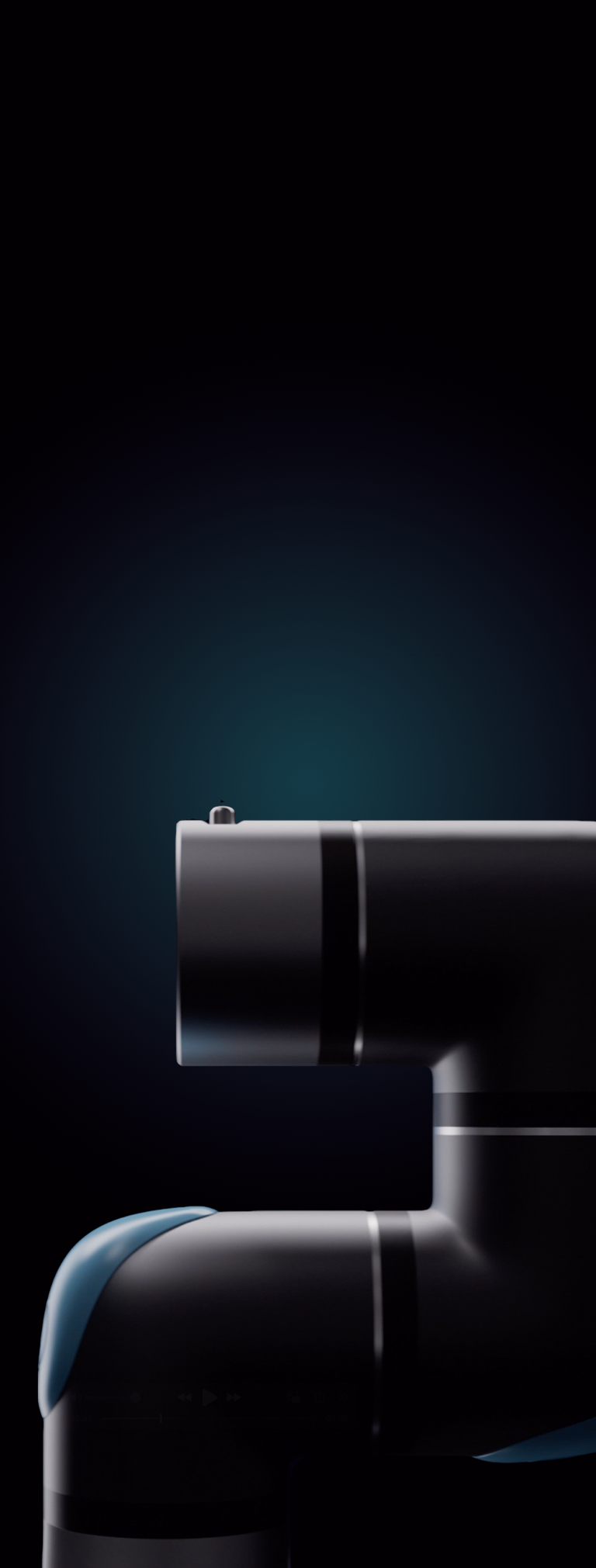
RobotUniversal Robots UR5e
The Universal Robots UR5e is a six-axis collaborative robot arm (cobot) belonging to Universal Robots' e-Series product line. Designed for light-to-medium industrial and laboratory tasks, it is widely used in assembly, pick-and-place, machine tending, quality inspection, and lab automation workflows. Universal Robots, a Danish company and a subsidiary of Teradyne, is one of the most recognized names in the collaborative robotics market. The UR5e is programmed using Universal Robots' PolyScope graphical interface on a teach pendant, making it accessible to operators without deep robotics expertise. Its built-in force/torque sensing, tool-center-point control, and a broad ecosystem of certified end-effectors and accessories (the UR+ platform) have made it a popular mid-range cobot choice across manufacturing, electronics, food handling, and research sectors.
5,180 views
 Robot
RobotQuicktron M100
The Quicktron M100 is a heavy-duty autonomous mobile robot (AMR) belonging to Quicktron Robotics' M-Series product line. It is designed for demanding material handling tasks in warehouses, distribution centers, and manufacturing environments, using an integrated lift mechanism to transport shelves and pallets autonomously across facility floors. Quicktron Robotics, a company with roots in China and a global commercial presence, positions the M100 as a high-capacity solution for operations that require moving heavier loads than lighter AMR models can accommodate. The M100 targets logistics operators and manufacturers seeking to automate goods-to-person or pallet-movement workflows at scale.
601 views
 Robot
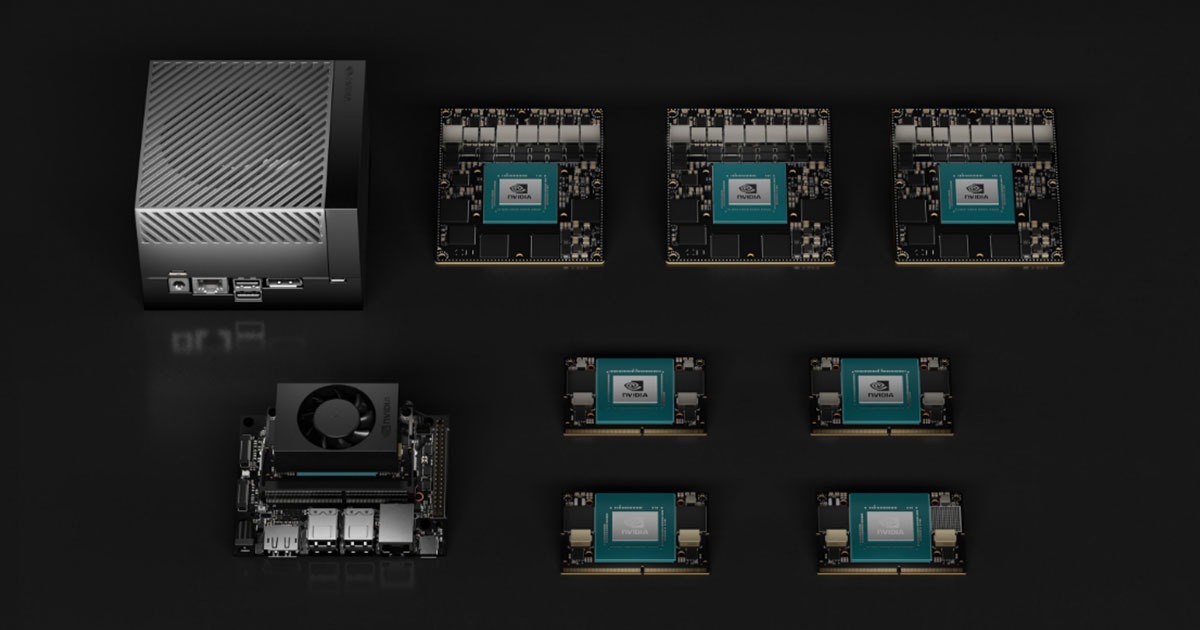
RobotNVIDIA Jetson Orin NX
The NVIDIA Jetson Orin NX is a compact, SO-DIMM form-factor edge AI compute module designed for robotics, autonomous machines, and embedded vision applications. Manufactured by NVIDIA, it is available in 8 GB and 16 GB memory configurations and pairs an Ampere-architecture GPU with an 8-core Arm Cortex-A78AE CPU to deliver high-throughput on-device inference without relying on cloud connectivity. Positioned within NVIDIA's broader Jetson Orin family, the Orin NX targets developers and system integrators who need a balance of performance and power efficiency in a small footprint. It is commonly used in applications such as industrial inspection, autonomous mobile robots (AMRs), drone navigation, and smart edge devices where real-time AI inference is critical.
531 views