Stevie
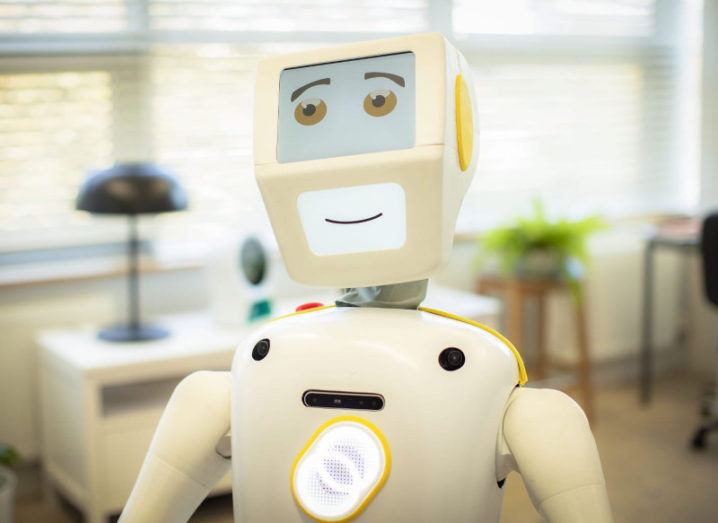
Stevie is a socially assistive humanoid robot developed by Akara Robotics, an Irish robotics company with research ties to Trinity College Dublin's Robotics & Innovation Lab. Designed specifically for older adults living in residential care settings, Stevie is intended to support both residents and care staff by leading group activities such as bingo, music sessions, and light exercise, while also providing conversational companionship and fall-detection capabilities. As of public reporting, Stevie is offered on a pre-order basis, positioning it as an emerging product rather than a widely deployed commercial platform. Akara Robotics has framed the robot as a tool to augment—rather than replace—human caregivers, addressing growing demand for scalable social and wellness support in aged-care facilities across Ireland and potentially beyond.
Overview and Use Cases
Stevie is a socially assistive robot purpose-built for residential aged-care environments. Its core mission is to enhance the quality of life of older adults by delivering structured group engagement and one-on-one interaction. Reported use cases include:
- Group activity facilitation: Leading sessions of bingo, music appreciation, trivia, and guided exercise routines.
- Conversational companionship: Engaging residents in dialogue to reduce social isolation, a recognized risk factor for cognitive and physical decline in older adults.
- Fall detection: Monitoring residents and alerting care staff when a fall is detected, supporting safety oversight in busy care settings.
- Staff augmentation: Freeing human caregivers to focus on higher-complexity clinical and personal care tasks by handling routine social programming.
The robot's humanoid form factor is a deliberate design choice intended to make interactions feel more natural and approachable for elderly users who may be unfamiliar with robotic technology.
Design and Development Background
Stevie was developed by Akara Robotics, a company founded in Ireland and closely affiliated with the Robotics & Innovation Lab at Trinity College Dublin. This academic partnership has reportedly shaped the robot's human-centered design philosophy, emphasizing user acceptance, ethical deployment, and iterative co-design with care staff and residents.
The collaboration with Trinity College Dublin reflects a broader trend of university spin-outs and research partnerships driving innovation in social robotics, particularly in countries with aging populations and strained public health systems.
Technical Features
Specific technical specifications for Stevie have not been comprehensively published in open sources as of the time of writing. Based on available public information, the robot is understood to incorporate:
- Sensors capable of detecting falls and monitoring the immediate environment.
- Speech and dialogue systems enabling natural-language conversation with residents.
- A humanoid physical form designed to be non-threatening and socially legible to older adults.
- Activity-delivery software for structured programming such as games and exercise guidance.
Detailed figures for battery runtime, payload, locomotion speed, or sensor specifications have not been confirmed in public reporting and are therefore not listed here.
Market Context and Target Buyers
Stevie is positioned within the emerging socially assistive robot (SAR) market, which targets healthcare providers, residential care operators, and senior living communities. As of public reporting, the robot is available on a pre-order basis, suggesting it is in a late-development or early-commercialization phase rather than volume production.
Target buyers are likely to include:
- Nursing homes and residential care facilities in Ireland and potentially the broader European market.
- Healthcare organizations seeking scalable solutions to staff shortages and resident engagement challenges.
Pricing has not been publicly disclosed. The pre-order model is consistent with other social robotics platforms that require customization and pilot deployment before full commercial rollout.
Competitive Landscape
Stevie operates in a niche but growing segment alongside other socially assistive robots. Comparable platforms include:
- PARO (AIBA, Japan): A therapeutic robotic seal widely used in dementia care, focused on tactile comfort rather than activity facilitation.
- Pepper (SoftBank Robotics, Japan/France): A humanoid social robot deployed in some care settings, though not exclusively designed for aged care.
- Stevie's differentiator appears to be its specific co-design with aged-care stakeholders and its integrated fall-detection capability alongside social programming.
Akara Robotics has no other robot models on public record as of this writing, making Stevie the company's flagship and sole known product.
Future Outlook
The aged-care robotics sector is expected to grow significantly as populations in Europe, North America, and East Asia continue to age and care workforce shortages intensify. Stevie's Ireland-based origin positions Akara Robotics to benefit from EU research funding streams and regulatory frameworks supportive of assistive technology innovation.
Key factors that will shape Stevie's trajectory include successful pilot deployments, evidence of measurable resident wellbeing outcomes, regulatory clearance in target markets, and the company's ability to scale manufacturing and support operations beyond the pre-order phase.
Related entries
 Robot
RobotG1
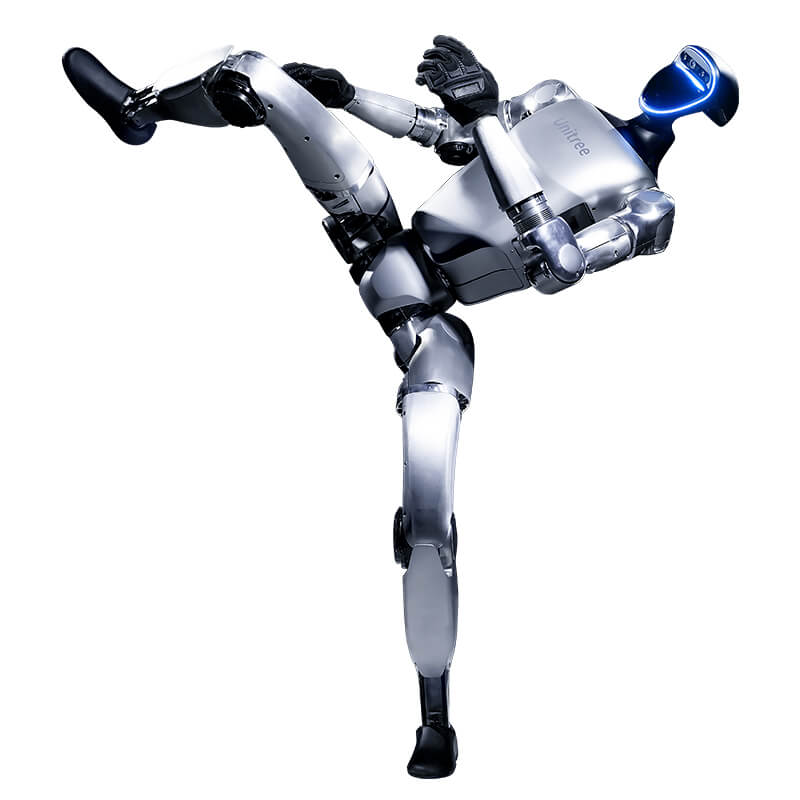
The Unitree G1 is a general-purpose humanoid robot developed by Unitree Robotics, a Chinese robotics company headquartered in Hangzhou. Standing approximately 1.32 meters tall and weighing around 35 kilograms, the G1 features 23 degrees of freedom and is capable of walking, running, recovering from falls, and performing dexterous manipulation tasks. It ships with SDK access, making it accessible to researchers and small-business operators seeking an affordable entry point into humanoid robotics. The G1 is widely regarded as one of the most competitively priced serious humanoid platforms available as of public reporting, positioning Unitree as a disruptive force in a market historically dominated by far more expensive systems. Its combination of mobility, recoverability, and open software access has attracted attention from academic institutions, robotics developers, and automation-focused startups worldwide.
5,829 views
 Robot
RobotUniversal Robots UR5e
The Universal Robots UR5e is a six-axis collaborative robot arm (cobot) belonging to Universal Robots' e-Series product line. Designed for light-to-medium industrial and laboratory tasks, it is widely used in assembly, pick-and-place, machine tending, quality inspection, and lab automation workflows. Universal Robots, a Danish company and a subsidiary of Teradyne, is one of the most recognized names in the collaborative robotics market. The UR5e is programmed using Universal Robots' PolyScope graphical interface on a teach pendant, making it accessible to operators without deep robotics expertise. Its built-in force/torque sensing, tool-center-point control, and a broad ecosystem of certified end-effectors and accessories (the UR+ platform) have made it a popular mid-range cobot choice across manufacturing, electronics, food handling, and research sectors.
5,175 views
 Robot
RobotQuicktron M100
The Quicktron M100 is a heavy-duty autonomous mobile robot (AMR) belonging to Quicktron Robotics' M-Series product line. It is designed for demanding material handling tasks in warehouses, distribution centers, and manufacturing environments, using an integrated lift mechanism to transport shelves and pallets autonomously across facility floors. Quicktron Robotics, a company with roots in China and a global commercial presence, positions the M100 as a high-capacity solution for operations that require moving heavier loads than lighter AMR models can accommodate. The M100 targets logistics operators and manufacturers seeking to automate goods-to-person or pallet-movement workflows at scale.
601 views
 Robot
RobotNVIDIA Jetson Orin NX
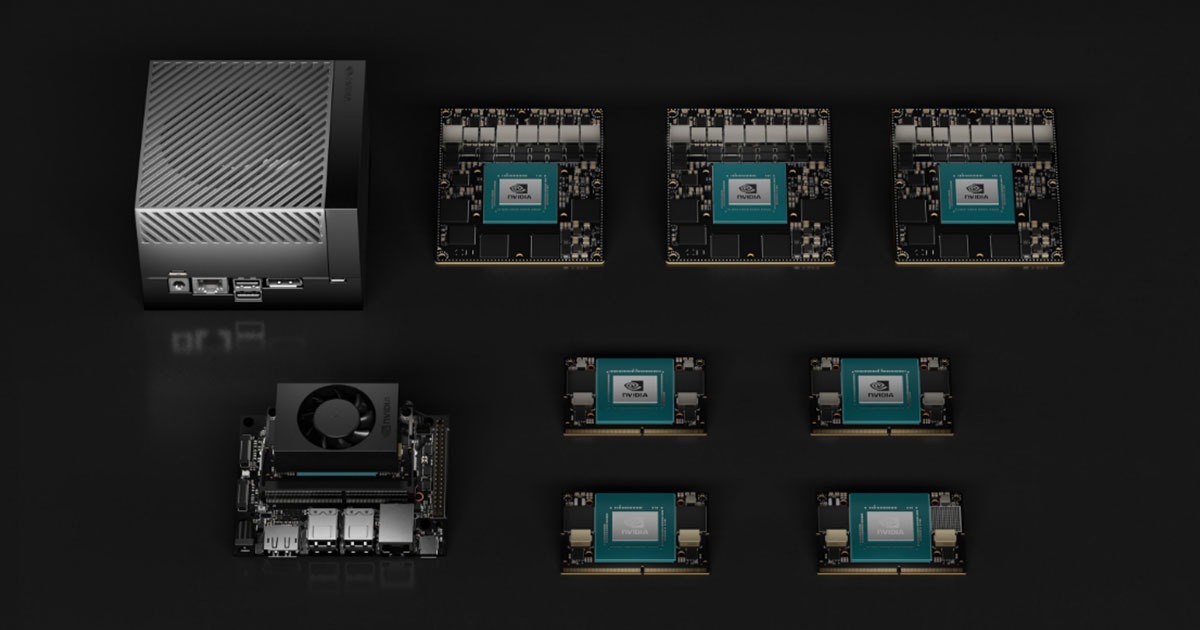
The NVIDIA Jetson Orin NX is a compact, SO-DIMM form-factor edge AI compute module designed for robotics, autonomous machines, and embedded vision applications. Manufactured by NVIDIA, it is available in 8 GB and 16 GB memory configurations and pairs an Ampere-architecture GPU with an 8-core Arm Cortex-A78AE CPU to deliver high-throughput on-device inference without relying on cloud connectivity. Positioned within NVIDIA's broader Jetson Orin family, the Orin NX targets developers and system integrators who need a balance of performance and power efficiency in a small footprint. It is commonly used in applications such as industrial inspection, autonomous mobile robots (AMRs), drone navigation, and smart edge devices where real-time AI inference is critical.
531 views