Servi
Servi is an AI-driven hospitality service robot developed by Bear Robotics, a U.S.-based robotics company headquartered in Redwood City, California. Designed to assist restaurant and hospitality staff, Servi autonomously navigates dining floors to handle food running and table bussing, freeing human workers for higher-value guest interactions. The robot uses LiDAR-based autonomous navigation to move safely through dynamic, crowded environments and features Bear Robotics' patented Stabilizing Trays, which are engineered to disperse momentum and reduce the risk of spills during delivery. Servi has been deployed across a range of restaurant chains and hospitality venues, primarily in the United States and select international markets.
Overview and Use Cases
Servi is Bear Robotics' flagship hospitality robot, purpose-built for the food service and hospitality industry. Its primary roles include:
- Food running: Autonomously transporting dishes from the kitchen pass to designated tables, reducing the burden on servers during peak hours.
- Table bussing: Collecting used dishes, glasses, and trays from tables and returning them to a designated drop-off point.
- Staff augmentation: Acting as a force multiplier so that human staff can focus on guest engagement, upselling, and complex service tasks rather than repetitive transport work.
Servi is designed for deployment in full-service restaurants, casual dining chains, hotel dining rooms, and similar hospitality environments where floor traffic is high and layouts are semi-structured.
Key Technical Features
Servi's design centers on reliable, safe autonomous navigation in environments shared with guests and staff:
- LiDAR-based navigation: The robot uses LiDAR sensors alongside additional perception systems to map its environment and avoid obstacles in real time, without requiring fixed floor markers or extensive infrastructure changes.
- Patented Stabilizing Trays: Bear Robotics holds patents on tray designs that are engineered to absorb and disperse momentum, helping to prevent spills when the robot accelerates, decelerates, or navigates turns.
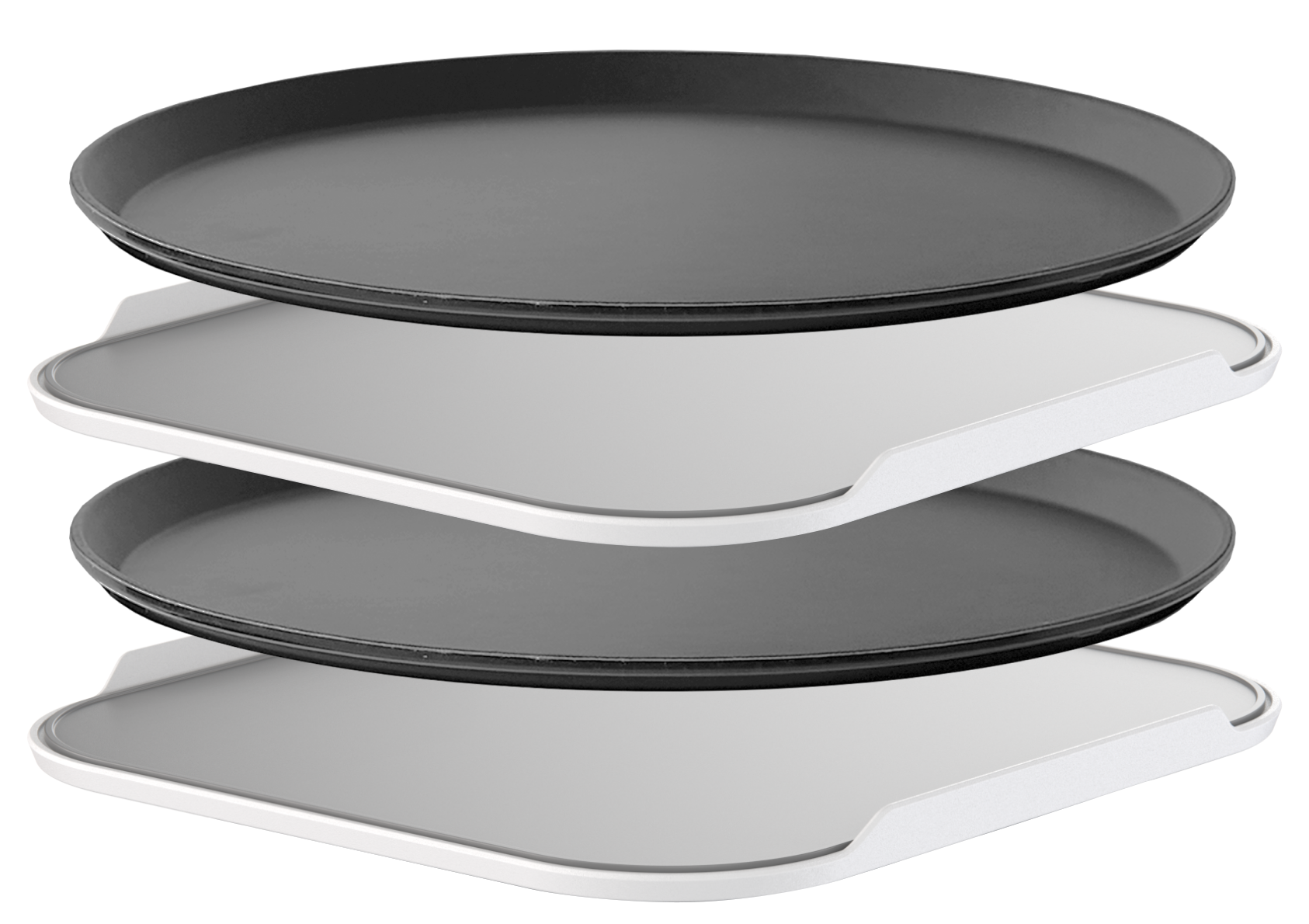
- Multi-tray configuration: Servi typically features multiple shelf levels, allowing it to carry several orders or a mix of food delivery and bussing loads in a single trip.
- Autonomous fleet management: When deployed in multiples, Servi units can be managed through Bear Robotics' software platform, coordinating routes and tasks across the dining floor.
Specific payload capacity, battery runtime, and maximum speed figures have not been consistently disclosed in public documentation; prospective buyers are advised to consult Bear Robotics directly for current specifications.
Comparison to Similar Robots
Within Bear Robotics' own lineup, Servi is the company's primary and, as of public reporting, best-known model in the hospitality segment.
In the broader competitive landscape, Servi competes with robots such as:
- Keenon Robotics' T series and W series (China-origin, widely deployed globally in restaurants)
- Pudu Robotics' BellaBot and HolaBot (also China-origin, with strong international restaurant presence)
- Richtech Robotics' ADAM (U.S.-market focused, with a dual-arm beverage-making variant)
Servi differentiates itself through its U.S.-based engineering and support, its patented tray stabilization technology, and its focus on integration with existing restaurant workflows rather than novelty or entertainment value.
Market Context and Target Buyers
Servi is positioned in the mid-to-premium tier of the restaurant robot market. It is primarily targeted at:
- Chain restaurants and franchises seeking scalable labor augmentation solutions across multiple locations
- Hotel and resort dining operations with consistent, high-volume service needs
- Operators facing labor shortages who need to maintain service quality with reduced headcount
Bear Robotics has pursued a robot-as-a-service (RaaS) model for some deployments, allowing operators to access Servi through subscription arrangements rather than outright purchase, lowering the barrier to adoption. Specific pricing has not been publicly disclosed.
Notable Deployments
Servi has been deployed in partnership with several well-known restaurant brands. Bear Robotics has publicly referenced collaborations with chains including Chili's Grill & Bar (operated by Brinker International), which conducted notable trials and rollouts of Servi in U.S. locations. The robot has also reportedly been used in various independent and chain restaurant settings across the United States, South Korea, and other markets.
SoftBank has been reported as an investor in Bear Robotics, which has contributed to the company's ability to scale its deployments.
Future Outlook
As labor costs in the hospitality sector continue to rise and operator interest in automation grows, demand for robots like Servi is expected to remain strong. Bear Robotics has indicated ongoing development of its software platform and robot capabilities. The broader restaurant robotics market is becoming increasingly competitive, with both established Asian manufacturers and new U.S. entrants vying for market share. Servi's continued success is likely to depend on software reliability, ease of integration, and the quality of after-sales support — areas where its U.S.-based operations may provide an advantage for domestic customers.
Related videos

Intelligent Ripper Robot Service In Construction Efficiency
Satisfying Work

Restaurant Robot Pilot at Jolloff Etcetera | Smart Dining Automation #RestaurantRobot #ServiceRobot
OpenBot Solutions - Hospitality Service Robots

Inside Amazon's drone delivery service
CBS Detroit

Will AI robots on the frontline mark the end of human soldiers? - BBC World Service
BBC World Service

Amazon Prime drone delivery service launches in Kansas City metro
FOX4 News Kansas City

Self-driving robots becoming popular for food delivery service across South Florida
CBS Miami
Recent news
eMazzanti Technologies President Carl Mazzanti Presents AI-Powered Cybersecurity Automation Strategies at 2026 New York State Cybersecurity Conference
PRNewswire · 6/17/2026
HowToRobot Announces Record Q1 Revenue, 94% Gross Margins, and Surge in Enterprise Automation Demand
Financial Post · 6/17/2026
Introducing Agent Harness Testing in Cisco AI Defense
Cisco.com · 6/17/2026
Introducing Agent Harness Testing in Cisco AI Defense
Cisco.com · 6/17/2026
Bring your own knowledge to the automation intelligent assistant
Redhat.com · 6/17/2026
Related entries
 Robot
RobotG1
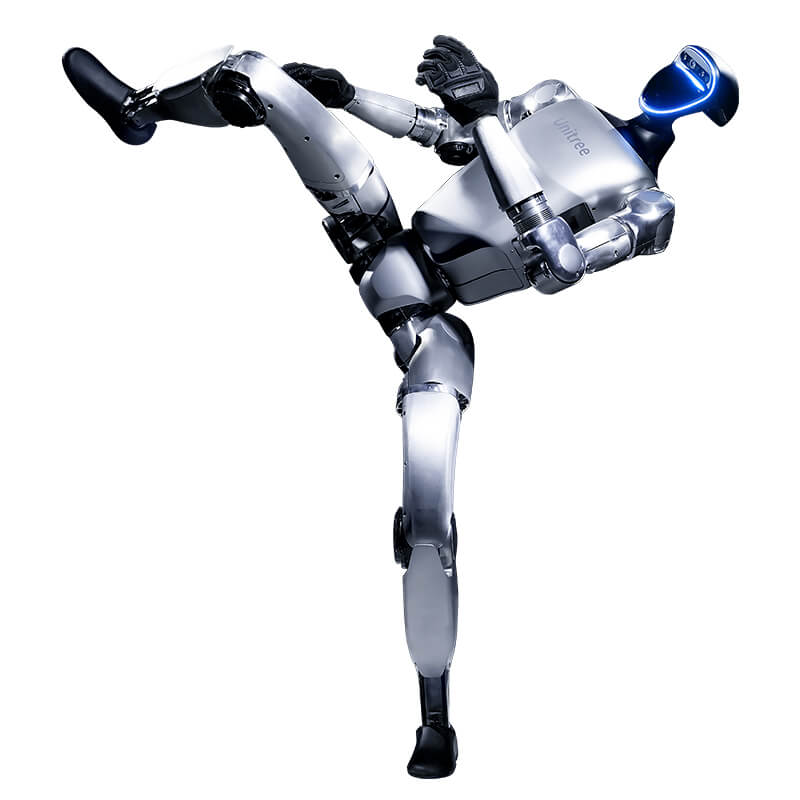
The Unitree G1 is a general-purpose humanoid robot developed by Unitree Robotics, a Chinese robotics company headquartered in Hangzhou. Standing approximately 1.32 meters tall and weighing around 35 kilograms, the G1 features 23 degrees of freedom and is capable of walking, running, recovering from falls, and performing dexterous manipulation tasks. It ships with SDK access, making it accessible to researchers and small-business operators seeking an affordable entry point into humanoid robotics. The G1 is widely regarded as one of the most competitively priced serious humanoid platforms available as of public reporting, positioning Unitree as a disruptive force in a market historically dominated by far more expensive systems. Its combination of mobility, recoverability, and open software access has attracted attention from academic institutions, robotics developers, and automation-focused startups worldwide.
5,829 views
 Robot
RobotUniversal Robots UR5e
The Universal Robots UR5e is a six-axis collaborative robot arm (cobot) belonging to Universal Robots' e-Series product line. Designed for light-to-medium industrial and laboratory tasks, it is widely used in assembly, pick-and-place, machine tending, quality inspection, and lab automation workflows. Universal Robots, a Danish company and a subsidiary of Teradyne, is one of the most recognized names in the collaborative robotics market. The UR5e is programmed using Universal Robots' PolyScope graphical interface on a teach pendant, making it accessible to operators without deep robotics expertise. Its built-in force/torque sensing, tool-center-point control, and a broad ecosystem of certified end-effectors and accessories (the UR+ platform) have made it a popular mid-range cobot choice across manufacturing, electronics, food handling, and research sectors.
5,175 views
 Robot
RobotQuicktron M100
The Quicktron M100 is a heavy-duty autonomous mobile robot (AMR) belonging to Quicktron Robotics' M-Series product line. It is designed for demanding material handling tasks in warehouses, distribution centers, and manufacturing environments, using an integrated lift mechanism to transport shelves and pallets autonomously across facility floors. Quicktron Robotics, a company with roots in China and a global commercial presence, positions the M100 as a high-capacity solution for operations that require moving heavier loads than lighter AMR models can accommodate. The M100 targets logistics operators and manufacturers seeking to automate goods-to-person or pallet-movement workflows at scale.
601 views
 Robot
RobotNVIDIA Jetson Orin NX
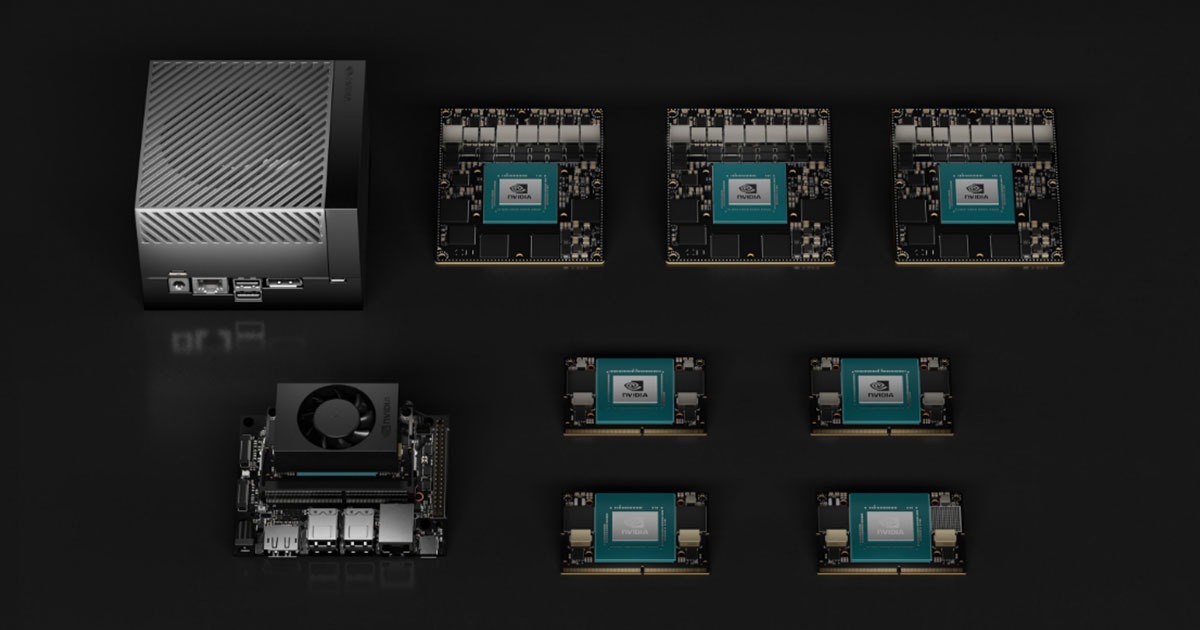
The NVIDIA Jetson Orin NX is a compact, SO-DIMM form-factor edge AI compute module designed for robotics, autonomous machines, and embedded vision applications. Manufactured by NVIDIA, it is available in 8 GB and 16 GB memory configurations and pairs an Ampere-architecture GPU with an 8-core Arm Cortex-A78AE CPU to deliver high-throughput on-device inference without relying on cloud connectivity. Positioned within NVIDIA's broader Jetson Orin family, the Orin NX targets developers and system integrators who need a balance of performance and power efficiency in a small footprint. It is commonly used in applications such as industrial inspection, autonomous mobile robots (AMRs), drone navigation, and smart edge devices where real-time AI inference is critical.
531 views