PUDU CC1
The PUDU CC1 is an intelligent commercial cleaning robot developed by Pudu Robotics, a Shenzhen-based company known for service robotics. It integrates four cleaning functions — sweeping, scrubbing, vacuuming, and dust mopping — into a single autonomous unit designed for large indoor commercial environments, including multi-floor buildings. A key feature of the CC1 is its dedicated docking station, which supports automatic charging, water supply and drainage, and automatic detergent replenishment, enabling extended unattended operation. The robot is positioned as a labor-saving solution for facilities such as shopping malls, office buildings, hotels, and airports.

Overview and Use Cases
The PUDU CC1 is a 4-in-1 autonomous floor-cleaning robot designed for commercial and institutional environments. By combining sweeping, scrubbing, vacuuming, and dust mopping in one platform, it aims to replace or supplement traditional manual cleaning crews in high-traffic indoor spaces. Target deployment environments reportedly include shopping centers, hotel lobbies, office complexes, transportation hubs, and hospitals.
The robot is engineered to handle multi-floor operations, making it suitable for large facilities where cleaning staff would otherwise need to transport equipment between levels. Its autonomous navigation allows it to follow pre-mapped routes and adapt to pedestrian traffic during operating hours.
Key Technical Features
- 4-in-1 Cleaning System: Integrates dry sweeping, wet scrubbing, vacuuming, and dust mopping functions, reducing the need for multiple specialized machines.
- Autonomous Docking Station: The companion docking station handles automatic charging, clean water supply, wastewater drainage, and detergent replenishment — minimizing manual intervention between cleaning cycles.
- Navigation: The CC1 reportedly uses a combination of LiDAR and other sensors for simultaneous localization and mapping (SLAM), enabling obstacle avoidance and route planning in dynamic environments.
- Multi-Floor Capability: Designed to operate across different floors of a building, though specific elevator-integration details have not been fully disclosed in public documentation.
Specific figures for battery runtime, water tank capacity, and cleaning coverage rate have not been independently verified and are not listed here to avoid inaccuracy.
Comparison to Sibling Robots
Pudu Robotics' broader portfolio is dominated by hospitality-focused delivery robots. The BellaBot and KettyBot are both food and item delivery robots used in restaurants and hotels, featuring cat-themed or sleek designs intended to enhance customer interaction. The CC1 represents a distinct product line focused on facility maintenance rather than customer-facing service, reflecting Pudu Robotics' strategy to expand beyond its hospitality roots into the commercial cleaning segment.
Market Context and Competitive Landscape
The commercial autonomous cleaning robot market includes established players such as Gaussian Robotics, Nilfisk, Tennant (with its T7AMR), and Karcher. The PUDU CC1 competes in the mid-to-large commercial segment, targeting facility managers and building operators seeking to reduce labor costs and maintain consistent cleaning standards.
Pudu Robotics leverages its existing expertise in autonomous navigation and service robotics to enter this space, though it faces competition from companies with longer track records specifically in industrial and commercial cleaning equipment. The all-in-one docking station is a differentiating feature that addresses a common pain point — the need for staff to manually refill water and detergent — which some competing models still require.
Deployments and Customers
As of public reporting, the PUDU CC1 has been marketed toward large commercial real estate operators, hotel chains, and facility management companies, particularly in China. Pudu Robotics has a broad installed base for its delivery robots across Asia and internationally, which may support cross-selling of the CC1 to existing clients. Specific named customer deployments for the CC1 have not been widely disclosed in available public sources.
Future Outlook
The commercial cleaning robotics sector is experiencing sustained growth driven by labor cost pressures and increasing acceptance of autonomous systems in public spaces. Pudu Robotics is reportedly continuing to invest in its cleaning robot lineup alongside its hospitality products. Future iterations of the CC1 or successor models may incorporate enhanced AI-based dirt detection, improved fleet management software, and deeper integration with building management systems. The automatic docking and replenishment model is likely to become an industry standard expectation, and Pudu's early emphasis on this feature positions the CC1 competitively for near-term adoption.
Related videos

PUDU CC1 Pro | AI-powered Autonomous Cleaning Robot
Pudu Robotics

Meet The Pudu MT1 MAX | Cleaning Robotics
Cleaning Robotics, LLC

Commercial Cleaning with the Pudu CC1 | Autonomous Cleaning Robot Demo
SmartDots Robotic Solutions

AI-Powered Autonomous Floor Cleaning: PUDU & Karcher KIRA B50
Superior ProCare

PUDU CC1 Pro: AI-Powered Autonomous Cleaning Robot
Pudu Robotics

Pudu CC1 Cleans Restaurant | Cleaning Robotics
Cleaning Robotics, LLC
Recent news
Related entries
 Robot
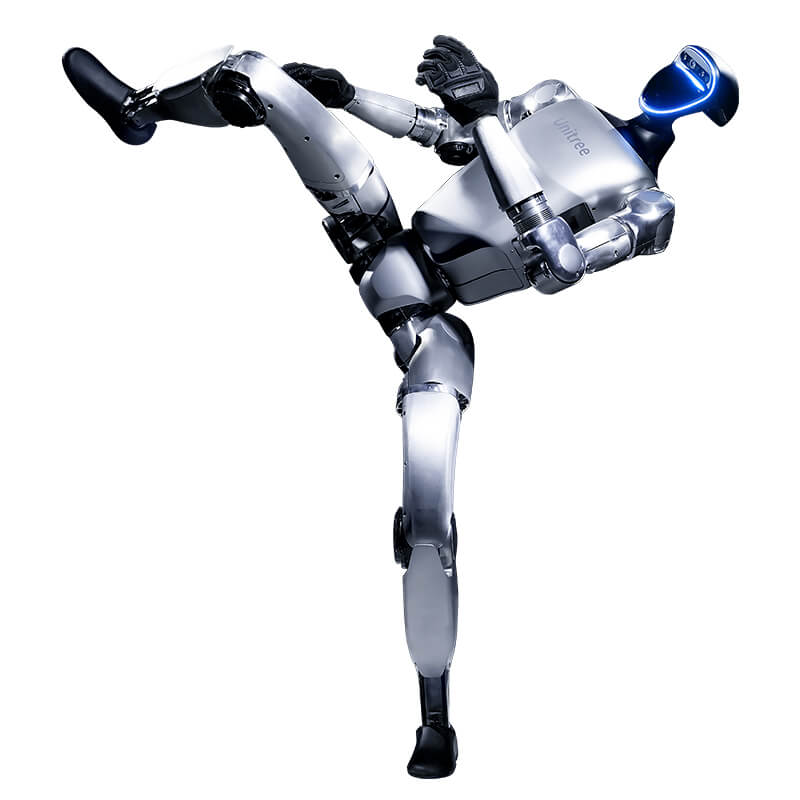
RobotG1
The Unitree G1 is a general-purpose humanoid robot developed by Unitree Robotics, a Chinese robotics company headquartered in Hangzhou. Standing approximately 1.32 meters tall and weighing around 35 kilograms, the G1 features 23 degrees of freedom and is capable of walking, running, recovering from falls, and performing dexterous manipulation tasks. It ships with SDK access, making it accessible to researchers and small-business operators seeking an affordable entry point into humanoid robotics. The G1 is widely regarded as one of the most competitively priced serious humanoid platforms available as of public reporting, positioning Unitree as a disruptive force in a market historically dominated by far more expensive systems. Its combination of mobility, recoverability, and open software access has attracted attention from academic institutions, robotics developers, and automation-focused startups worldwide.
5,834 views
 Robot
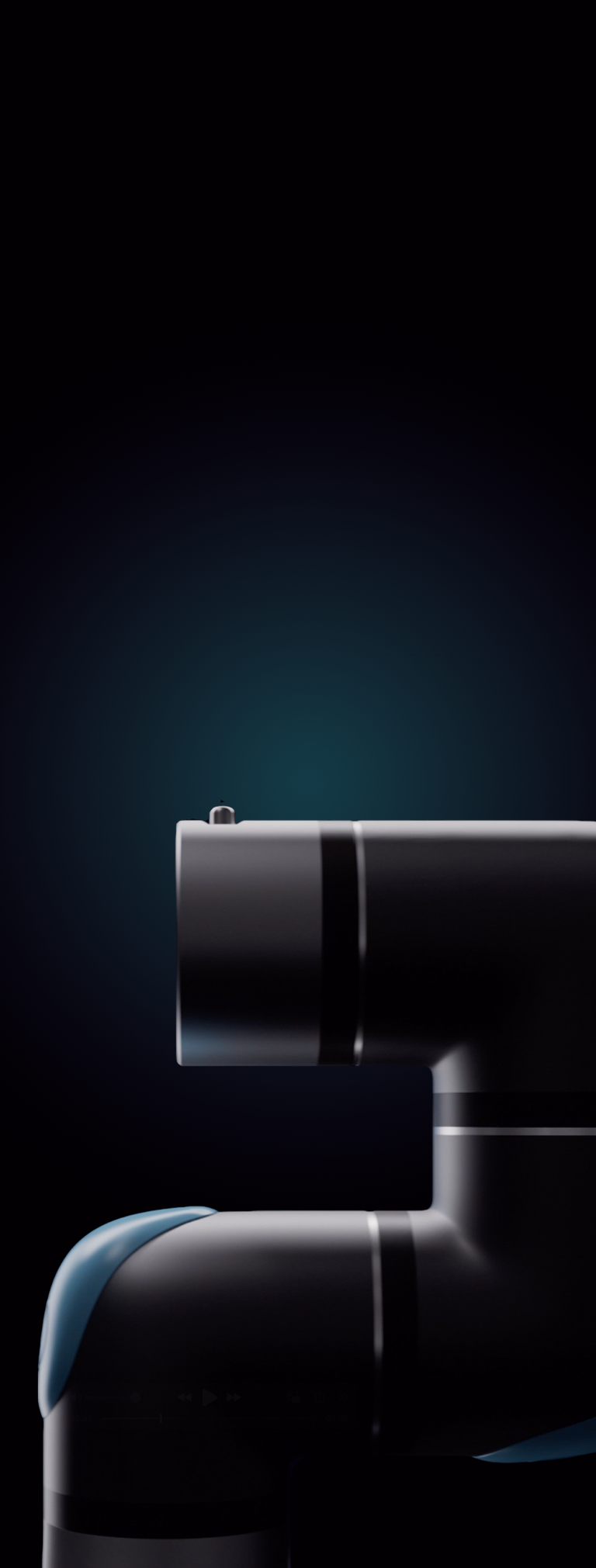
RobotUniversal Robots UR5e
The Universal Robots UR5e is a six-axis collaborative robot arm (cobot) belonging to Universal Robots' e-Series product line. Designed for light-to-medium industrial and laboratory tasks, it is widely used in assembly, pick-and-place, machine tending, quality inspection, and lab automation workflows. Universal Robots, a Danish company and a subsidiary of Teradyne, is one of the most recognized names in the collaborative robotics market. The UR5e is programmed using Universal Robots' PolyScope graphical interface on a teach pendant, making it accessible to operators without deep robotics expertise. Its built-in force/torque sensing, tool-center-point control, and a broad ecosystem of certified end-effectors and accessories (the UR+ platform) have made it a popular mid-range cobot choice across manufacturing, electronics, food handling, and research sectors.
5,180 views
 Robot
RobotQuicktron M100
The Quicktron M100 is a heavy-duty autonomous mobile robot (AMR) belonging to Quicktron Robotics' M-Series product line. It is designed for demanding material handling tasks in warehouses, distribution centers, and manufacturing environments, using an integrated lift mechanism to transport shelves and pallets autonomously across facility floors. Quicktron Robotics, a company with roots in China and a global commercial presence, positions the M100 as a high-capacity solution for operations that require moving heavier loads than lighter AMR models can accommodate. The M100 targets logistics operators and manufacturers seeking to automate goods-to-person or pallet-movement workflows at scale.
601 views
 Robot
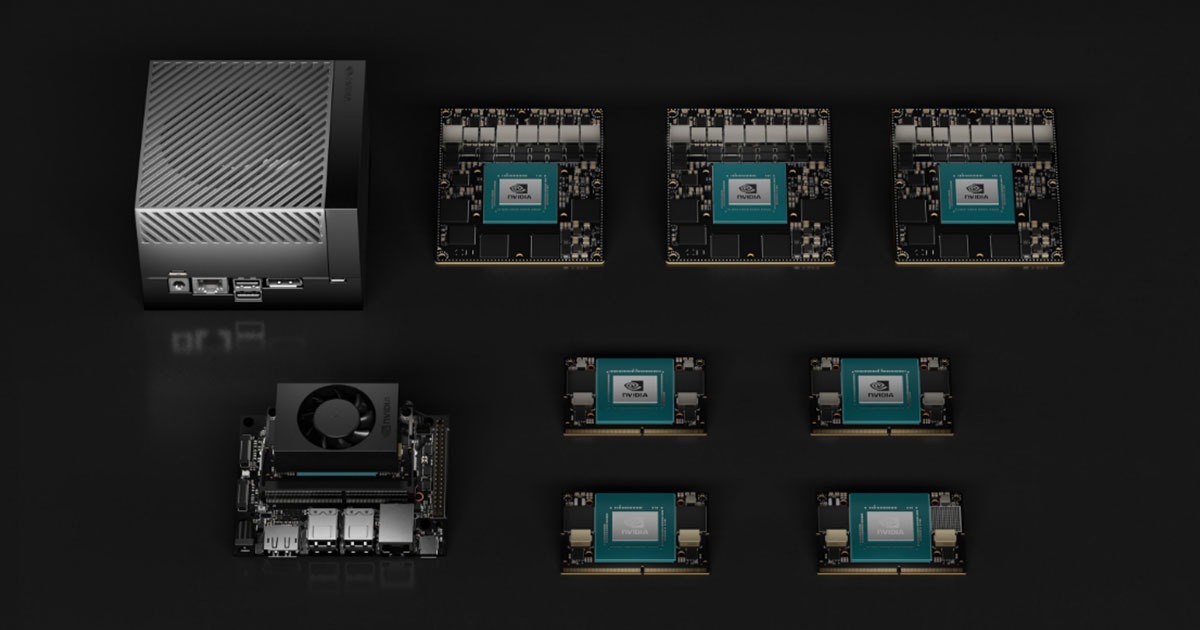
RobotNVIDIA Jetson Orin NX
The NVIDIA Jetson Orin NX is a compact, SO-DIMM form-factor edge AI compute module designed for robotics, autonomous machines, and embedded vision applications. Manufactured by NVIDIA, it is available in 8 GB and 16 GB memory configurations and pairs an Ampere-architecture GPU with an 8-core Arm Cortex-A78AE CPU to deliver high-throughput on-device inference without relying on cloud connectivity. Positioned within NVIDIA's broader Jetson Orin family, the Orin NX targets developers and system integrators who need a balance of performance and power efficiency in a small footprint. It is commonly used in applications such as industrial inspection, autonomous mobile robots (AMRs), drone navigation, and smart edge devices where real-time AI inference is critical.
531 views