Phoenix
Phoenix is an industrial-grade general-purpose humanoid robot developed by Sanctuary AI, a Canadian robotics company. Standing approximately human height and weight, it is designed to perform dexterous manipulation tasks in real-world work environments, powered by Sanctuary's proprietary Carbon AI control system that enables embodied intelligence and adaptive task execution. Phoenix is positioned as a labor-augmentation platform aimed at industries facing workforce shortages, such as retail, manufacturing, and logistics. Sanctuary AI has described it as one of the world's first human-like intelligence systems in a general-purpose humanoid form factor, with successive generations progressively improving speed, dexterity, and autonomy.

Overview and Use Cases
Phoenix is Sanctuary AI's flagship humanoid robot, engineered to operate in environments built for humans without requiring significant infrastructure changes. Its primary focus is dexterous manipulation — the ability to grasp, sort, assemble, and handle objects with human-like precision. Target use cases include:
- Retail shelf stocking and inventory management
- Light manufacturing and assembly line support
- Warehouse picking and packing
- General facility tasks such as cleaning or material transport
Sanctuary AI frames Phoenix not merely as a hardware platform but as a vehicle for its Carbon AI system, which is designed to generalize across tasks rather than being programmed for a single function.
Key Technical Details
Phoenix is built to approximate human dimensions, allowing it to use standard tools, workstations, and spaces. Key reported characteristics include:
- Form factor: Bipedal, roughly human height and weight (exact figures vary by generation and have not always been officially confirmed)
- Hands: Multi-fingered dexterous hands capable of fine manipulation, reportedly among the most capable in the humanoid robot category
- AI backbone: Carbon, Sanctuary's proprietary AI control system, which uses a combination of teleoperation-derived training data and machine learning to build generalizable task knowledge
- Sensing: Onboard cameras and sensors for environmental perception; specific sensor suites have not been fully disclosed publicly
- Runtime and payload: Specific battery life and payload figures have not been consistently published in official materials as of public reporting
Each successive generation of Phoenix has reportedly reduced the time required to teach the robot new tasks, a key metric Sanctuary AI tracks publicly.
Comparison to Similar Robots
Within Sanctuary AI's portfolio, Phoenix is the only humanoid robot; the company's other publicly known platforms serve different categories (mobile and companion robots developed under separate brand relationships). Phoenix is therefore the sole embodiment of Sanctuary's core humanoid and AI research.
Among competitors, Phoenix occupies a similar space to:
- Figure 01 / Figure 02 (Figure AI) — also targeting industrial labor with a general-purpose humanoid
- Optimus (Tesla) — in-house manufacturing focus with large-scale production ambitions
- Atlas (Boston Dynamics) — research-oriented humanoid with exceptional mobility, less focused on commercial deployment
- Digit (Agility Robotics) — warehouse-focused bipedal robot with a proven logistics deployment record
Phoenix is distinguished by its emphasis on the Carbon AI software layer and its teleoperation-to-autonomy training pipeline.
Market Context and Target Buyers
Sanctuary AI positions Phoenix in the enterprise and industrial market segment. It is not a consumer product. Target buyers are large organizations in sectors experiencing chronic labor shortages. As of public reporting, Phoenix is not sold off-the-shelf at a published retail price; commercial arrangements are understood to be handled through direct partnerships and pilot programs. The broader humanoid robot market is widely considered to be in an early commercialization phase, with most deployments still at the pilot or limited-production stage.
Deployments and Notable Customers
Sanctuary AI has publicly announced pilot deployments with select retail and industrial partners. Notably, the company has worked with Canadian Tire (a major Canadian retail chain) to trial Phoenix in store environments — one of the more concrete real-world deployment examples reported for any general-purpose humanoid robot as of public reporting. These pilots are used to gather operational data and refine the Carbon AI system's task library.
Future Outlook
Sanctuary AI has indicated a roadmap focused on increasing the autonomy, speed, and task repertoire of Phoenix with each hardware and software generation. The company's long-term thesis is that the Carbon AI system will accumulate sufficient task knowledge to make Phoenix economically viable as a general labor substitute across many industries. Key milestones to watch include expansion of commercial pilot programs, announcements of series production commitments, and continued improvements in autonomous (non-teleoperated) task completion rates.
Related entries
 Robot
RobotG1
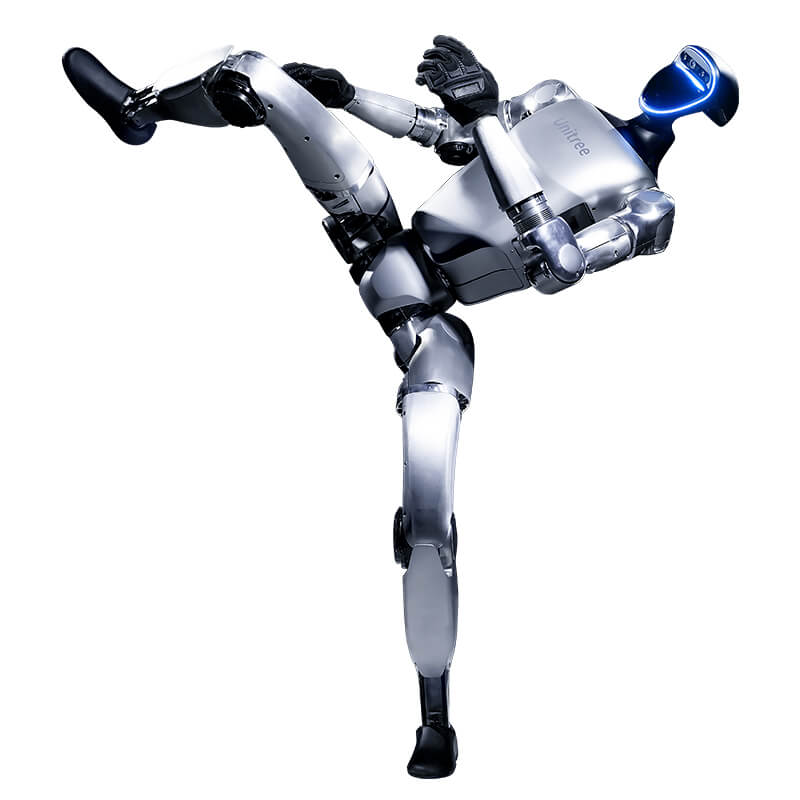
The Unitree G1 is a general-purpose humanoid robot developed by Unitree Robotics, a Chinese robotics company headquartered in Hangzhou. Standing approximately 1.32 meters tall and weighing around 35 kilograms, the G1 features 23 degrees of freedom and is capable of walking, running, recovering from falls, and performing dexterous manipulation tasks. It ships with SDK access, making it accessible to researchers and small-business operators seeking an affordable entry point into humanoid robotics. The G1 is widely regarded as one of the most competitively priced serious humanoid platforms available as of public reporting, positioning Unitree as a disruptive force in a market historically dominated by far more expensive systems. Its combination of mobility, recoverability, and open software access has attracted attention from academic institutions, robotics developers, and automation-focused startups worldwide.
44 views
 Robot
RobotUniversal Robots UR5e
The Universal Robots UR5e is a six-axis collaborative robot arm (cobot) belonging to Universal Robots' e-Series product line. Designed for light-to-medium industrial and laboratory tasks, it is widely used in assembly, pick-and-place, machine tending, quality inspection, and lab automation workflows. Universal Robots, a Danish company and a subsidiary of Teradyne, is one of the most recognized names in the collaborative robotics market. The UR5e is programmed using Universal Robots' PolyScope graphical interface on a teach pendant, making it accessible to operators without deep robotics expertise. Its built-in force/torque sensing, tool-center-point control, and a broad ecosystem of certified end-effectors and accessories (the UR+ platform) have made it a popular mid-range cobot choice across manufacturing, electronics, food handling, and research sectors.
43 views
 Robot
RobotQuicktron M100
The Quicktron M100 is a heavy-duty autonomous mobile robot (AMR) belonging to Quicktron Robotics' M-Series product line. It is designed for demanding material handling tasks in warehouses, distribution centers, and manufacturing environments, using an integrated lift mechanism to transport shelves and pallets autonomously across facility floors. Quicktron Robotics, a company with roots in China and a global commercial presence, positions the M100 as a high-capacity solution for operations that require moving heavier loads than lighter AMR models can accommodate. The M100 targets logistics operators and manufacturers seeking to automate goods-to-person or pallet-movement workflows at scale.
36 views
 Robot
RobotNVIDIA Jetson Orin NX
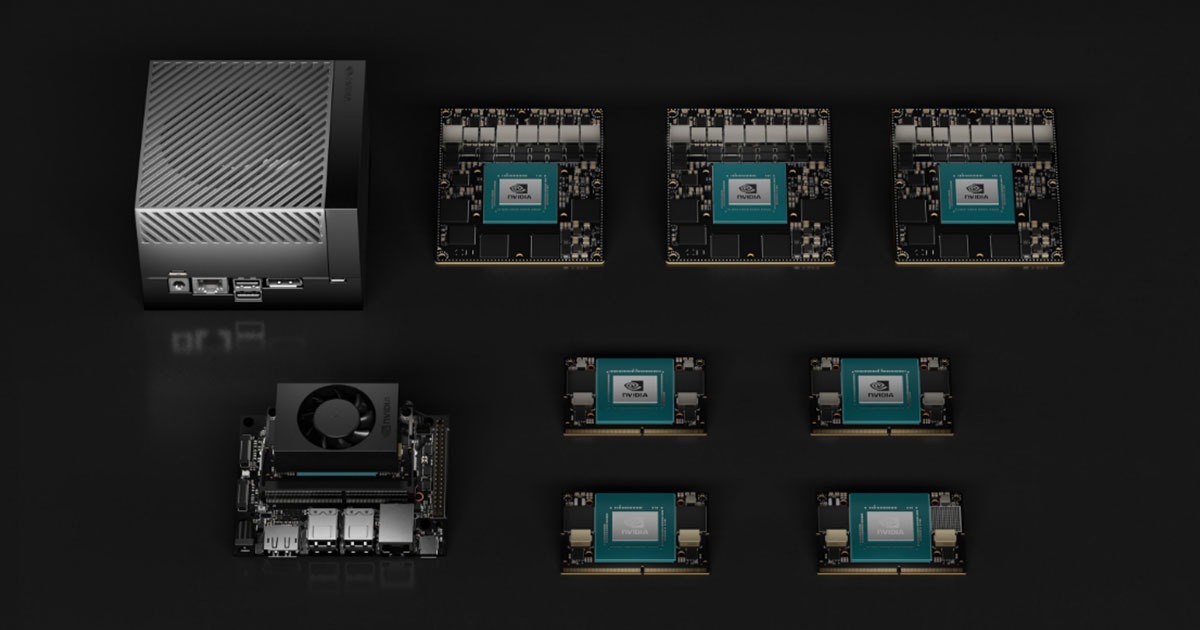
The NVIDIA Jetson Orin NX is a compact, SO-DIMM form-factor edge AI compute module designed for robotics, autonomous machines, and embedded vision applications. Manufactured by NVIDIA, it is available in 8 GB and 16 GB memory configurations and pairs an Ampere-architecture GPU with an 8-core Arm Cortex-A78AE CPU to deliver high-throughput on-device inference without relying on cloud connectivity. Positioned within NVIDIA's broader Jetson Orin family, the Orin NX targets developers and system integrators who need a balance of performance and power efficiency in a small footprint. It is commonly used in applications such as industrial inspection, autonomous mobile robots (AMRs), drone navigation, and smart edge devices where real-time AI inference is critical.
35 views