Optimus Gen 2
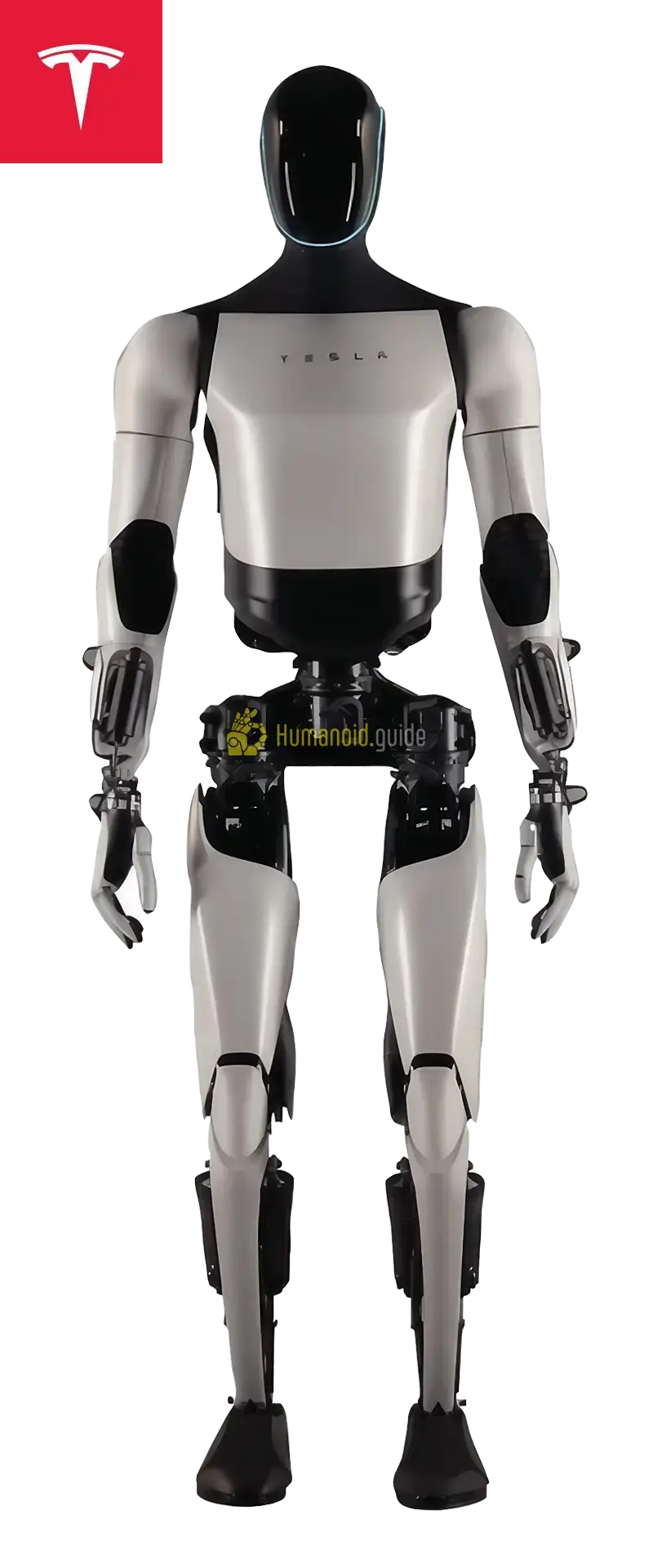
Optimus Gen 2 is a general-purpose humanoid robot developed by Tesla, representing the second major hardware iteration of the company's Optimus program. It is designed to perform a broad range of physical tasks, leveraging perception and motion-planning software derived from Tesla's Full Self-Driving (FSD) stack. As of public reporting, units are used for internal demonstrations and select tasks within Tesla's own manufacturing facilities. Tesla has stated an ambition to eventually offer Optimus at consumer-accessible pricing, positioning it as a mass-market humanoid rather than an industrial-only platform. Compared to its predecessor, Gen 2 reportedly features improved hand dexterity, smoother whole-body motion, and a lighter overall frame, though many detailed specifications remain unconfirmed or subject to ongoing revision as the program continues to iterate.
Overview and Use Cases
Optimus Gen 2 is Tesla's second-generation humanoid robot prototype, unveiled publicly in late 2023. It is built around the premise that a general-purpose humanoid can take on repetitive, physically demanding, or hazardous tasks that are currently performed by human workers. Tesla has demonstrated the robot performing tasks such as sorting objects, handling parts, and executing basic manipulation sequences.
The primary near-term use case is within Tesla's own factories, where units are reportedly being tested on real production-line tasks. Over the longer term, Tesla envisions Optimus operating in a wide variety of environments — from manufacturing and logistics to, eventually, consumer households.
Key Technical Details
While Tesla has not published a comprehensive technical datasheet, several features have been highlighted in official presentations and public demonstrations:
- Hands: Gen 2 features a redesigned hand with 11 degrees of freedom, enabling more precise grasping and manipulation compared to the first-generation prototype.
- Actuators: The robot uses Tesla-designed actuators throughout the body, with the company emphasizing cost reduction and in-house manufacturing as key goals.
- Locomotion: Gen 2 reportedly walks more fluidly than its predecessor, with improved balance and a faster walking speed (Tesla cited approximately 30% speed improvement over Gen 1, though this figure should be treated as a demonstration claim).
- Weight: The frame is said to be lighter than Gen 1, though an exact confirmed figure has not been independently verified.
- Perception: Sensors include cameras feeding into a vision system informed by Tesla's FSD neural network architecture. The robot does not rely on lidar, consistent with Tesla's camera-first philosophy.
- Onboard compute: Powered by Tesla's own silicon, though specific chip details for Gen 2 have not been fully disclosed publicly.
Comparison to Competitors
Optimus Gen 2 enters a competitive humanoid landscape that includes:
- Boston Dynamics Atlas: A highly capable research and demonstration platform known for dynamic mobility, but not positioned for mass-market consumer pricing.
- Figure 01 / Figure 02 (Figure AI): A U.S.-based humanoid targeting industrial deployment, with reported partnerships in automotive manufacturing.
- 1X Neo / EVE: Norwegian-American humanoid programs focused on service and light industrial tasks.
- Unitree H1/G1: Chinese humanoids competing on cost and agility.
Tesla's primary differentiator is its stated intent to achieve high-volume, low-cost production by leveraging existing manufacturing scale and its proprietary AI stack — an approach no competitor has yet demonstrated at scale.
Market Context and Target Buyers
Tesla has publicly suggested a long-term target price that would make Optimus accessible well below the cost of most industrial humanoids currently on the market, though no confirmed retail price has been announced. The implied target buyer segments include:
- Industrial / manufacturing: Repetitive assembly, parts handling, and inspection tasks.
- Logistics: Warehouse picking and sorting.
- Consumer (long-term): Household assistance, though this remains a speculative future application.
The robot is currently in a prototype and internal-deployment phase, not available for commercial sale as of public reporting.
Deployments and Notable Activity
As of available public information, Optimus Gen 2 units are deployed within Tesla's own facilities for testing and task evaluation. Tesla CEO Elon Musk has stated that the company aims to use thousands of Optimus robots internally before offering them externally. No third-party customer deployments have been publicly confirmed to date.
Future Outlook
Tesla has signaled aggressive development timelines for Optimus, with Musk making optimistic public statements about production ramp and eventual unit economics. Analysts and observers generally treat these timelines with caution given the technical challenges of general-purpose humanoid robotics. Key milestones to watch include the transition from demonstration tasks to sustained, unsupervised production work, the announcement of any external commercial availability, and further hardware revisions that may constitute a Gen 3 platform.
Related videos

Elon Musk Shocked Everyone with New Optimus Update: Human Skin & Superintelligence
Carros Show

New GEN 3 AI Robot KILLS Tesla Optimus? (9 NEW TASKS, $24,760 HUMANOID)
AI News

Elon Musk’s New Tesla Optimus Robot Looks Shockingly Human
Carros Show

Tesla Optimus Gen 3: Elon Musk JUST Revealed a NEW Humanoid Robot To Win The AI Race!
Visionary

Tesla Optimus vs Unitree G1: The REAL Humanoid Robot Showdown
TechFrontierNow

Inside Tesla’s AI Robot Factory: Building the Optimus Humanoid Step by Step (Full Process)
NextGen Manufacturing Hub
Community buzz (Reddit)
Communities pull together in a crisis.
r/Snorkblot · ▲ 60,039
Spot on
r/Millennials · ▲ 58,254
Curiosity wheels taken yesterday, showing the damages caused during the 13 years it has been on the Red Planet
r/spaceporn · ▲ 46,903
Gen Z really looked at alcohol and said ‘hard pass’
r/SipsTea · ▲ 41,688
Retail Stare
r/CuratedTumblr · ▲ 39,409
Related entries
 Robot
RobotG1
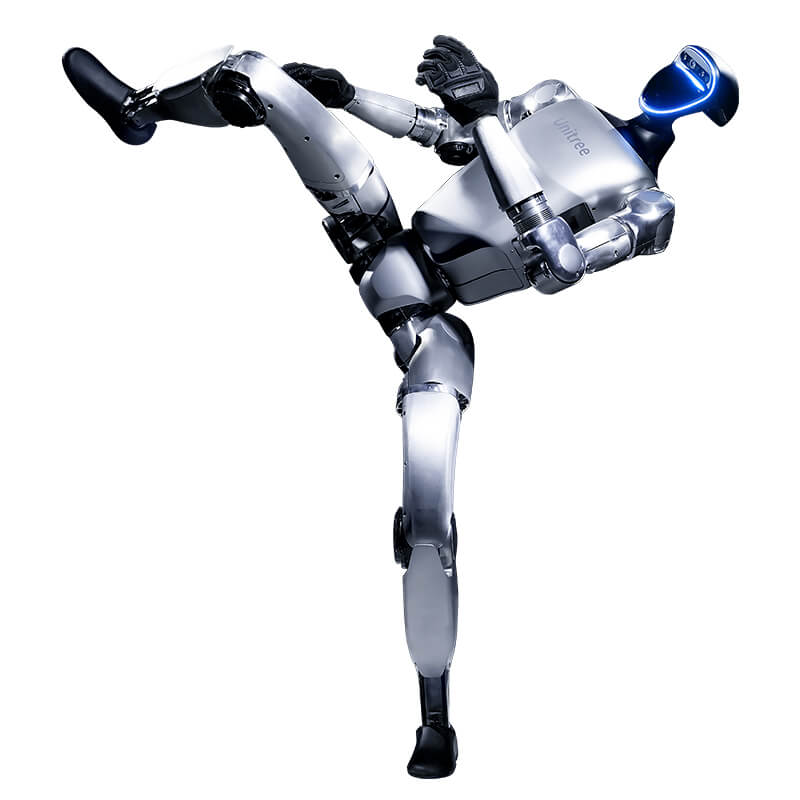
The Unitree G1 is a general-purpose humanoid robot developed by Unitree Robotics, a Chinese robotics company headquartered in Hangzhou. Standing approximately 1.32 meters tall and weighing around 35 kilograms, the G1 features 23 degrees of freedom and is capable of walking, running, recovering from falls, and performing dexterous manipulation tasks. It ships with SDK access, making it accessible to researchers and small-business operators seeking an affordable entry point into humanoid robotics. The G1 is widely regarded as one of the most competitively priced serious humanoid platforms available as of public reporting, positioning Unitree as a disruptive force in a market historically dominated by far more expensive systems. Its combination of mobility, recoverability, and open software access has attracted attention from academic institutions, robotics developers, and automation-focused startups worldwide.
27 views
 Robot
RobotUniversal Robots UR5e
The Universal Robots UR5e is a six-axis collaborative robot arm (cobot) belonging to Universal Robots' e-Series product line. Designed for light-to-medium industrial and laboratory tasks, it is widely used in assembly, pick-and-place, machine tending, quality inspection, and lab automation workflows. Universal Robots, a Danish company and a subsidiary of Teradyne, is one of the most recognized names in the collaborative robotics market. The UR5e is programmed using Universal Robots' PolyScope graphical interface on a teach pendant, making it accessible to operators without deep robotics expertise. Its built-in force/torque sensing, tool-center-point control, and a broad ecosystem of certified end-effectors and accessories (the UR+ platform) have made it a popular mid-range cobot choice across manufacturing, electronics, food handling, and research sectors.
26 views
 Robot
RobotQuicktron M100
The Quicktron M100 is a heavy-duty autonomous mobile robot (AMR) belonging to Quicktron Robotics' M-Series product line. It is designed for demanding material handling tasks in warehouses, distribution centers, and manufacturing environments, using an integrated lift mechanism to transport shelves and pallets autonomously across facility floors. Quicktron Robotics, a company with roots in China and a global commercial presence, positions the M100 as a high-capacity solution for operations that require moving heavier loads than lighter AMR models can accommodate. The M100 targets logistics operators and manufacturers seeking to automate goods-to-person or pallet-movement workflows at scale.
26 views
 Robot
RobotNVIDIA Jetson Orin NX
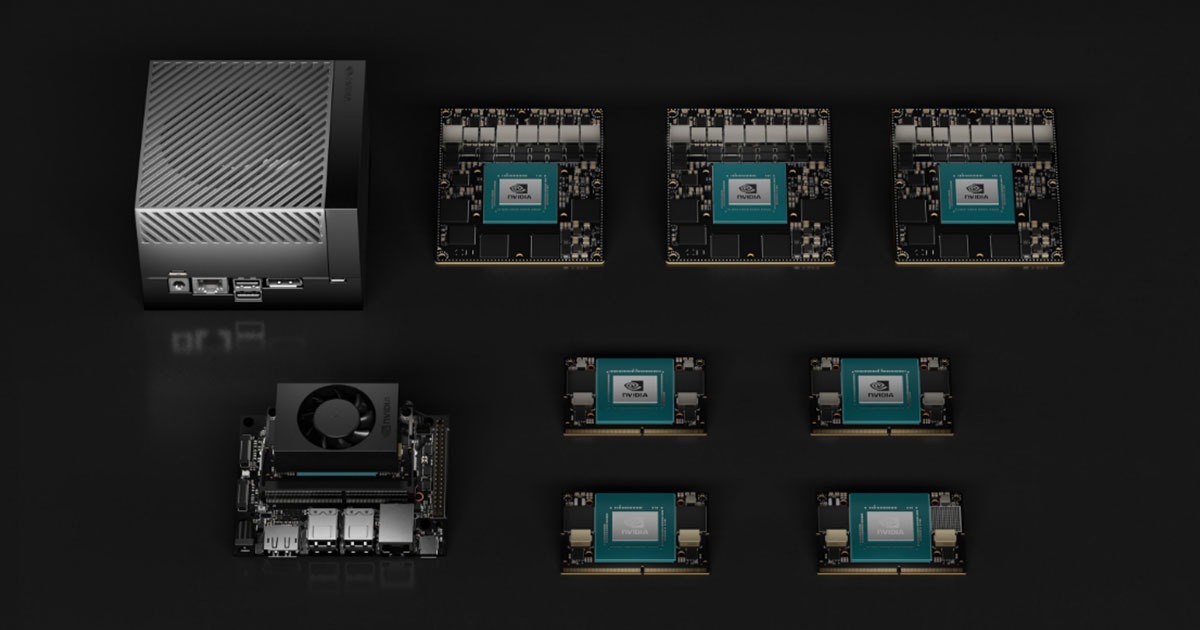
The NVIDIA Jetson Orin NX is a compact, SO-DIMM form-factor edge AI compute module designed for robotics, autonomous machines, and embedded vision applications. Manufactured by NVIDIA, it is available in 8 GB and 16 GB memory configurations and pairs an Ampere-architecture GPU with an 8-core Arm Cortex-A78AE CPU to deliver high-throughput on-device inference without relying on cloud connectivity. Positioned within NVIDIA's broader Jetson Orin family, the Orin NX targets developers and system integrators who need a balance of performance and power efficiency in a small footprint. It is commonly used in applications such as industrial inspection, autonomous mobile robots (AMRs), drone navigation, and smart edge devices where real-time AI inference is critical.
25 views