LOVOT
LOVOT is a home companion robot developed by Japanese startup GROOVE X, designed not to perform household tasks but to foster genuine emotional bonds with its owners. It responds to human presence, touch, and mood through a suite of sensors and expressive behaviors, including large animated eyes, warm body temperature, and soft tactile surfaces. First unveiled in 2018 and made available to consumers in Japan, LOVOT represents a distinct philosophy in robotics: that a robot's value can lie entirely in emotional support and companionship rather than utility. It is the sole product line from GROOVE X and has attracted attention from researchers, media, and consumers interested in the intersection of robotics and emotional well-being.

Overview and Use Cases
LOVOT (a portmanteau of "love" and "robot") is a companion robot built around the premise that emotional connection is itself a meaningful function. Unlike most consumer robots that emphasize automation or assistance, LOVOT is intended to be held, cuddled, and interacted with in ways that mirror the experience of caring for a pet or a young child. It waddles, seeks out its owner, raises its arms to be picked up, and reacts to being ignored or comforted.
Primary use cases include:
- Emotional support for individuals living alone or experiencing loneliness
- Stress relief and mood improvement in home environments
- Therapeutic contexts, with reported trials in care homes and wellness settings in Japan
- Family entertainment, particularly for households with children
Key Technical Details
GROOVE X has described LOVOT as incorporating over 50 sensors embedded throughout its body, enabling it to detect touch, temperature, proximity, and sound. Notable technical features, as publicly reported, include:
- Eyes: A custom hemispherical OLED-like display capable of nuanced expressions, with a camera embedded within to track faces and recognize individuals
- Horn: A rotating sensor tower on top of the head housing cameras and thermal sensors for environmental awareness
- Body warmth: The outer surface is maintained at a temperature approximating human skin, intended to enhance the sensation of holding a living creature
- Mobility: LOVOT moves on a wheeled base concealed beneath its rounded body, allowing it to navigate home environments and approach people
- Battery and nest: The robot returns autonomously to a charging cradle (called a "nest") when its battery runs low; reported runtime per charge is roughly 45 minutes to an hour under active use, though this may vary
- Cloud connectivity: Behavioral learning and personality development are reportedly supported by cloud-based processing
Specific processor models, payload figures, and detailed actuator specifications have not been publicly disclosed by GROOVE X.
Comparison to Similar Robots
Within GROOVE X's lineup, LOVOT is the company's only robot model, making internal comparison moot. In the broader companion robot market, LOVOT is frequently compared to:
- Sony AIBO: A robotic dog with a longer commercial history, also focused on emotional bonding; AIBO emphasizes pet-like locomotion while LOVOT emphasizes physical warmth and being held
- Paro (AIST): A therapeutic seal robot used in clinical settings, similarly focused on emotional response but less mobile and less visually expressive than LOVOT
- Amazon Astro: A home robot with a screen face, primarily utility-focused with some companionship features — a contrasting design philosophy
LOVOT is generally regarded as occupying a premium emotional-companion niche, prioritizing sensory and affective design over task capability.
Market Context and Pricing
LOVOT is positioned in the premium consumer robotics segment. As of public reporting, the robot has been sold in Japan with a subscription-based model that includes hardware cost plus ongoing cloud service fees, placing it at a price point accessible primarily to enthusiast or affluent consumers. Exact current pricing should be verified directly with GROOVE X, as it has been subject to change. The target buyer profile includes adults seeking companionship, families, and institutions exploring therapeutic robotics.
Deployments and Notable Attention
LOVOT has been deployed or trialed in several contexts beyond the home:
- Reported pilot programs in elderly care facilities in Japan, where staff observed positive emotional responses from residents
- Appearances at major technology exhibitions including CES and various Japanese robotics expos
- Coverage by international media outlets focusing on Japan's approach to social robotics and its aging population
GROOVE X was founded by Kaname Hayashi, formerly of SoftBank Robotics (the team behind Pepper), lending the company credibility in the social robotics space.
Future Outlook
As of public reporting, GROOVE X continues to develop LOVOT's software capabilities, with behavioral updates delivered over-the-air. The company has expressed interest in expanding LOVOT's presence in therapeutic and care settings, areas where demand for emotionally supportive technology is growing alongside aging demographics in Japan and globally. Whether GROOVE X will introduce additional robot models or expand internationally at scale remains to be seen, but LOVOT has established a recognized identity in the niche of emotionally driven robotics.
Related entries
 Robot
RobotG1
The Unitree G1 is a general-purpose humanoid robot developed by Unitree Robotics, a Chinese robotics company headquartered in Hangzhou. Standing approximately 1.32 meters tall and weighing around 35 kilograms, the G1 features 23 degrees of freedom and is capable of walking, running, recovering from falls, and performing dexterous manipulation tasks. It ships with SDK access, making it accessible to researchers and small-business operators seeking an affordable entry point into humanoid robotics. The G1 is widely regarded as one of the most competitively priced serious humanoid platforms available as of public reporting, positioning Unitree as a disruptive force in a market historically dominated by far more expensive systems. Its combination of mobility, recoverability, and open software access has attracted attention from academic institutions, robotics developers, and automation-focused startups worldwide.
44 views
 Robot
RobotUniversal Robots UR5e
The Universal Robots UR5e is a six-axis collaborative robot arm (cobot) belonging to Universal Robots' e-Series product line. Designed for light-to-medium industrial and laboratory tasks, it is widely used in assembly, pick-and-place, machine tending, quality inspection, and lab automation workflows. Universal Robots, a Danish company and a subsidiary of Teradyne, is one of the most recognized names in the collaborative robotics market. The UR5e is programmed using Universal Robots' PolyScope graphical interface on a teach pendant, making it accessible to operators without deep robotics expertise. Its built-in force/torque sensing, tool-center-point control, and a broad ecosystem of certified end-effectors and accessories (the UR+ platform) have made it a popular mid-range cobot choice across manufacturing, electronics, food handling, and research sectors.
43 views
 Robot
RobotQuicktron M100
The Quicktron M100 is a heavy-duty autonomous mobile robot (AMR) belonging to Quicktron Robotics' M-Series product line. It is designed for demanding material handling tasks in warehouses, distribution centers, and manufacturing environments, using an integrated lift mechanism to transport shelves and pallets autonomously across facility floors. Quicktron Robotics, a company with roots in China and a global commercial presence, positions the M100 as a high-capacity solution for operations that require moving heavier loads than lighter AMR models can accommodate. The M100 targets logistics operators and manufacturers seeking to automate goods-to-person or pallet-movement workflows at scale.
36 views
 Robot
RobotNVIDIA Jetson Orin NX
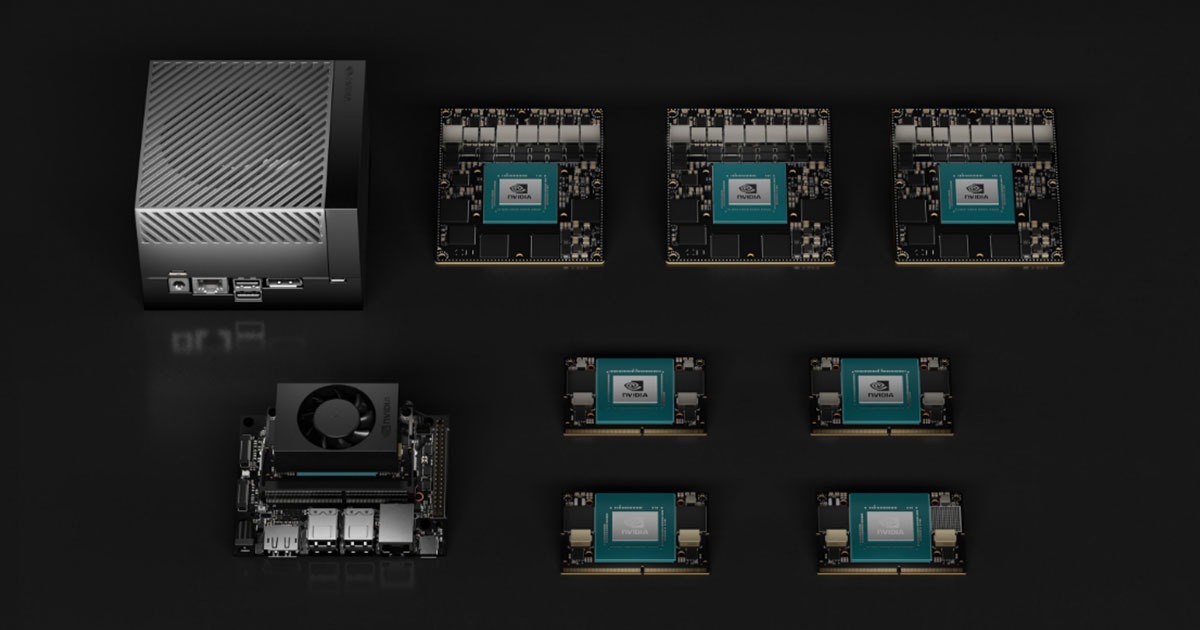
The NVIDIA Jetson Orin NX is a compact, SO-DIMM form-factor edge AI compute module designed for robotics, autonomous machines, and embedded vision applications. Manufactured by NVIDIA, it is available in 8 GB and 16 GB memory configurations and pairs an Ampere-architecture GPU with an 8-core Arm Cortex-A78AE CPU to deliver high-throughput on-device inference without relying on cloud connectivity. Positioned within NVIDIA's broader Jetson Orin family, the Orin NX targets developers and system integrators who need a balance of performance and power efficiency in a small footprint. It is commonly used in applications such as industrial inspection, autonomous mobile robots (AMRs), drone navigation, and smart edge devices where real-time AI inference is critical.
35 views