Locus Origin
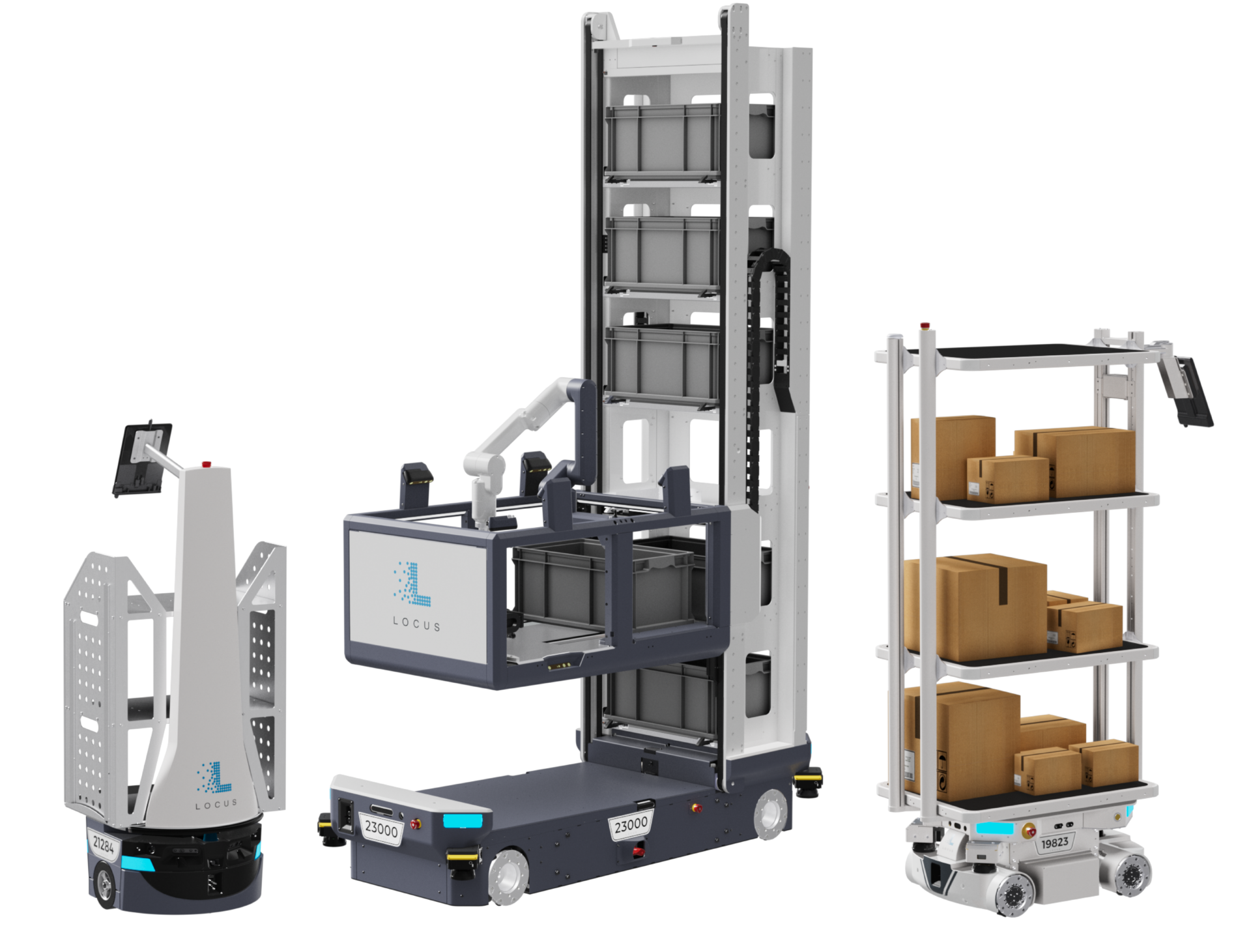
The Locus Origin is a collaborative autonomous mobile robot (AMR) developed by Locus Robotics, a Massachusetts-based warehouse automation company. Designed for high-volume order fulfillment environments, it works alongside human warehouse associates rather than replacing them, enabling a goods-to-person picking workflow that is orchestrated by the company's LocusONE software platform. The Origin represents Locus Robotics' approach to human-robot collaboration in distribution centers and fulfillment warehouses. By guiding workers through optimized pick paths and handling the transport of goods between picking zones and packing stations, the robot is intended to increase throughput and reduce associate walking time. Locus Robotics has deployed its AMR fleets with a range of retail, third-party logistics (3PL), and healthcare customers.
Overview and Use Cases
The Locus Origin is an autonomous mobile robot built for collaborative order fulfillment in warehouse and distribution center environments. Unlike fully automated systems that remove humans from the picking process entirely, the Origin operates on a person-to-goods model in which the robot travels to shelf locations and signals associates to pick specific items into totes carried on the robot's frame. This human-robot teaming approach is intended to reduce the walking burden on workers—often cited as a major source of fatigue and inefficiency in manual fulfillment—while maintaining the flexibility of human judgment for item handling.
Primary use cases include:
- E-commerce order fulfillment in high-SKU-count environments
- Third-party logistics (3PL) operations serving multiple retail clients
- Retail distribution requiring rapid, accurate order assembly
- Healthcare and pharmaceutical distribution where accuracy is critical
Key Technical Details
The Locus Origin navigates warehouse floors autonomously using onboard sensors and a map of the facility, avoiding both static obstacles and dynamic ones such as other robots and human workers. It is designed to operate in existing warehouse infrastructure without requiring facility modifications such as special flooring, QR-code grids, or dedicated robot lanes.
While Locus Robotics has not always published exhaustive hardware specifications publicly, the Origin is reported to:
- Use laser-based navigation (LiDAR) combined with additional sensing for obstacle detection
- Carry one or more tote positions on its frame for collecting picked items
- Operate for extended shifts on a single charge, with fleet management handled through the LocusONE platform to coordinate charging schedules
- Communicate wirelessly with the LocusONE warehouse execution system, which assigns tasks, optimizes routes, and tracks inventory in real time
Specific payload capacity, maximum speed, and battery runtime figures should be verified against current Locus Robotics datasheets, as these details are subject to change across hardware generations.
LocusONE Platform Integration
A defining characteristic of the Locus Origin is its deep integration with the LocusONE software platform. Rather than functioning as a standalone device, the robot is one node in a fleet managed by LocusONE, which serves as a warehouse execution system (WES). The platform handles task orchestration, dynamic re-slotting, labor analytics, and integration with warehouse management systems (WMS) from third-party vendors. This software-hardware pairing is central to Locus Robotics' commercial proposition and differentiates it from simpler AMR vendors that offer robots without a native WES layer.
Comparison to Similar Robots
Within the collaborative fulfillment AMR segment, the Locus Origin competes with products such as the 6 River Systems Chuck, Fetch Robotics' CartConnect and RollerTop platforms, and Geek+ picking robots. Compared to fully autonomous goods-to-person systems—such as Autostore or Ocado's grid-based solutions—the Origin requires lower upfront infrastructure investment and can be deployed incrementally.
Locus Robotics has historically offered a fleet-based, robotics-as-a-service (RaaS) model, which lowers the barrier to adoption for 3PL operators and retailers who prefer operational expenditure over large capital outlays. This positions the Origin in a mid-market to enterprise tier rather than the smallest warehouse operations.
Market Context and Target Buyers
The Locus Origin is aimed primarily at mid-to-large fulfillment operations that process high daily order volumes and face labor availability challenges. Key buyer profiles include:
- 3PL providers seeking flexible automation scalable across client contracts
- Omnichannel retailers managing both store replenishment and direct-to-consumer orders
- Healthcare distributors requiring high pick accuracy
Locus Robotics has pursued a RaaS pricing model, bundling hardware, software, maintenance, and support into a subscription fee, though specific pricing is not publicly disclosed.
Deployments and Notable Customers
As of public reporting, Locus Robotics has deployed its AMR fleets—including Origin units—with customers in the retail, apparel, and logistics sectors across North America and Europe. Reported customers have included DHL Supply Chain and various retail brands, though the specific robot models deployed at individual sites are not always disclosed publicly.
Future Outlook
Locus Robotics has faced a competitive and financially challenging market environment, as reported in industry coverage through 2023–2024. The broader AMR sector continues to consolidate, with larger automation conglomerates acquiring or outcompeting standalone AMR vendors. The Origin's future trajectory will depend on Locus Robotics' ability to sustain its software platform investments, expand its customer base, and differentiate against well-capitalized competitors. The trend toward AI-driven warehouse orchestration and multi-robot fleet interoperability may present both challenges and opportunities for the platform.
Community buzz (Reddit)
I [32M] have been sleeping with my best friend [32F] and for 2 weeks and I think we've been dating for 10 years and never realized it
r/BestofRedditorUpdates · ▲ 16,104
Husband has a new chosen family he prioritizes and sees every week, I’m jealous and frustrated
r/BestofRedditorUpdates · ▲ 14,223
An abrupt and sudden shift in tone that dramatically changes the direction of the story
r/TopCharacterTropes · ▲ 12,482
Flip Deck anyone? Valve, I need a new cool job! 🤣
r/SteamDeck · ▲ 12,204
Coaxed into totally realistic progression of technology
r/coaxedintoasnafu · ▲ 10,293
Related entries
 Robot
RobotG1
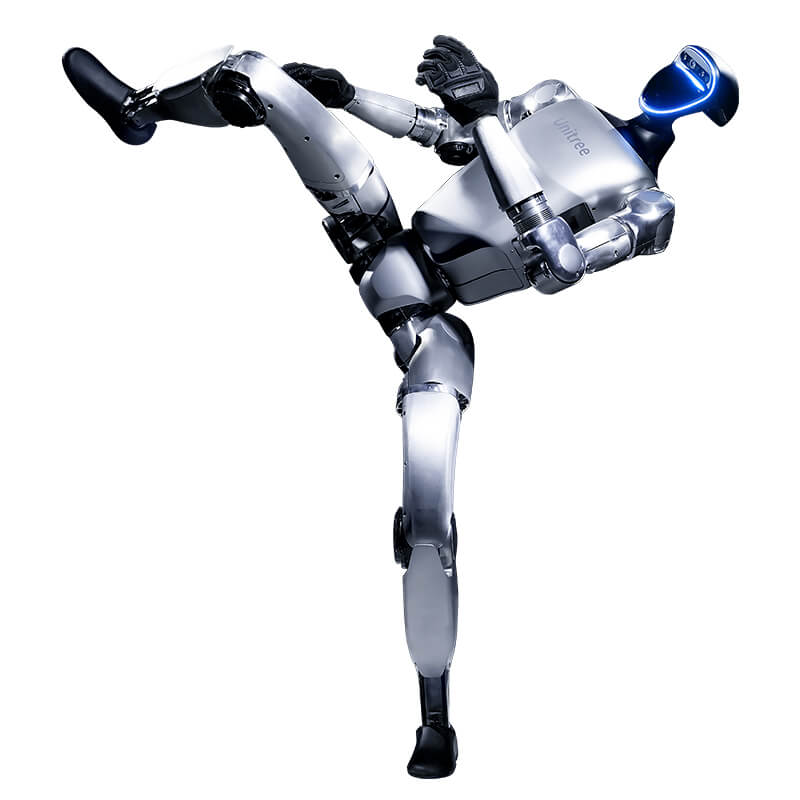
The Unitree G1 is a general-purpose humanoid robot developed by Unitree Robotics, a Chinese robotics company headquartered in Hangzhou. Standing approximately 1.32 meters tall and weighing around 35 kilograms, the G1 features 23 degrees of freedom and is capable of walking, running, recovering from falls, and performing dexterous manipulation tasks. It ships with SDK access, making it accessible to researchers and small-business operators seeking an affordable entry point into humanoid robotics. The G1 is widely regarded as one of the most competitively priced serious humanoid platforms available as of public reporting, positioning Unitree as a disruptive force in a market historically dominated by far more expensive systems. Its combination of mobility, recoverability, and open software access has attracted attention from academic institutions, robotics developers, and automation-focused startups worldwide.
26 views
 Robot
RobotUniversal Robots UR5e
The Universal Robots UR5e is a six-axis collaborative robot arm (cobot) belonging to Universal Robots' e-Series product line. Designed for light-to-medium industrial and laboratory tasks, it is widely used in assembly, pick-and-place, machine tending, quality inspection, and lab automation workflows. Universal Robots, a Danish company and a subsidiary of Teradyne, is one of the most recognized names in the collaborative robotics market. The UR5e is programmed using Universal Robots' PolyScope graphical interface on a teach pendant, making it accessible to operators without deep robotics expertise. Its built-in force/torque sensing, tool-center-point control, and a broad ecosystem of certified end-effectors and accessories (the UR+ platform) have made it a popular mid-range cobot choice across manufacturing, electronics, food handling, and research sectors.
25 views
 Robot
RobotQuicktron M100
The Quicktron M100 is a heavy-duty autonomous mobile robot (AMR) belonging to Quicktron Robotics' M-Series product line. It is designed for demanding material handling tasks in warehouses, distribution centers, and manufacturing environments, using an integrated lift mechanism to transport shelves and pallets autonomously across facility floors. Quicktron Robotics, a company with roots in China and a global commercial presence, positions the M100 as a high-capacity solution for operations that require moving heavier loads than lighter AMR models can accommodate. The M100 targets logistics operators and manufacturers seeking to automate goods-to-person or pallet-movement workflows at scale.
25 views
 Robot
RobotNVIDIA Jetson Orin NX
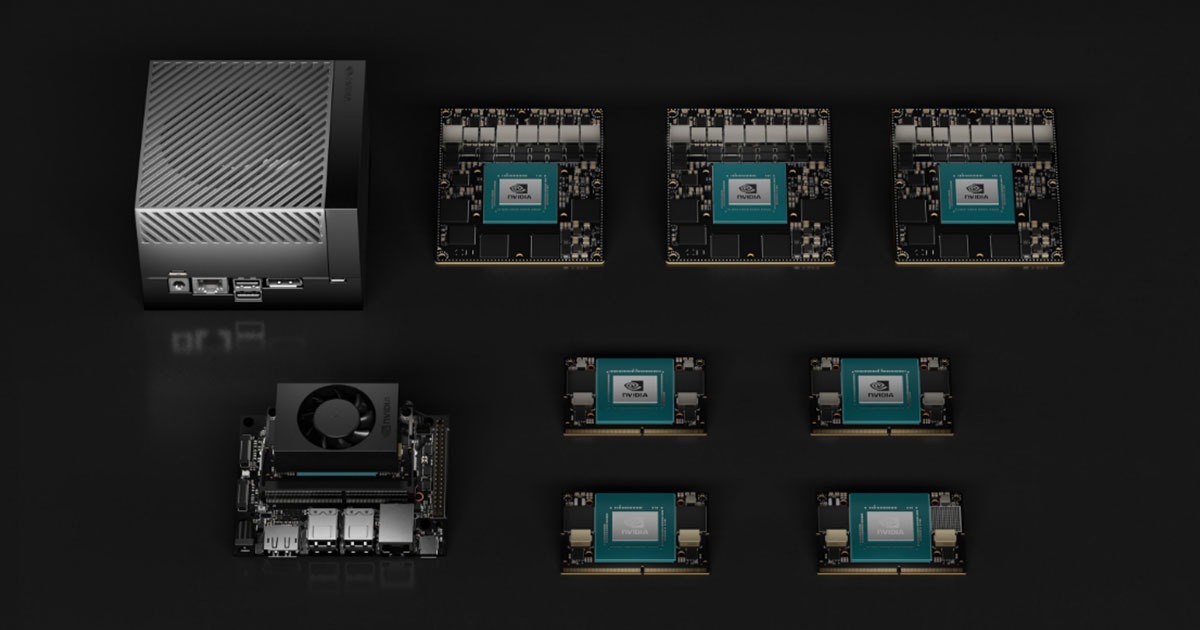
The NVIDIA Jetson Orin NX is a compact, SO-DIMM form-factor edge AI compute module designed for robotics, autonomous machines, and embedded vision applications. Manufactured by NVIDIA, it is available in 8 GB and 16 GB memory configurations and pairs an Ampere-architecture GPU with an 8-core Arm Cortex-A78AE CPU to deliver high-throughput on-device inference without relying on cloud connectivity. Positioned within NVIDIA's broader Jetson Orin family, the Orin NX targets developers and system integrators who need a balance of performance and power efficiency in a small footprint. It is commonly used in applications such as industrial inspection, autonomous mobile robots (AMRs), drone navigation, and smart edge devices where real-time AI inference is critical.
24 views