Dynamis
The Dynamis is an advanced robotic surgical system developed by LEM Surgical, designed to assist surgeons in performing precision medical procedures with enhanced control, stability, and repeatability. The platform is engineered to integrate smoothly into modern operating room environments, combining ergonomic design with what the company describes as cutting-edge technology aimed at improving both surgical performance and patient outcomes. LEM Surgical positions the Dynamis as a flagship product representing its commitment to surgical innovation and superior engineering. While detailed technical specifications have not been widely disclosed in public reporting, the system is marketed toward hospitals and surgical centers seeking to adopt robotic-assisted surgery platforms. Its exact country of origin has not been confirmed in available public sources.
Overview and Use Cases
The Dynamis is a robotic surgical assistance platform developed by LEM Surgical. It is intended to support surgeons during precision medical procedures by providing enhanced instrument control, reduced hand tremor, and improved visualization within the surgical field. The system is described by its manufacturer as suitable for integration into modern operating rooms, with a design philosophy centered on reliability and ease of use.
Typical use cases for robotic surgical systems in this category include minimally invasive surgery (MIS), laparoscopic procedures, and other interventions where fine motor precision is critical. LEM Surgical has not publicly specified the full range of surgical specialties the Dynamis is cleared or approved for as of available reporting.
Key Technical Details
Detailed technical specifications for the Dynamis have not been widely published in accessible public sources. Based on the manufacturer's marketing materials, the system reportedly emphasizes:
- Ergonomic design intended to reduce surgeon fatigue during extended procedures
- Precision instrument control for enhanced surgical accuracy
- Seamless operating room integration, suggesting compatibility with standard OR infrastructure
- Reliability-focused engineering as a core design principle
Specific data on degrees of freedom, instrument payload, imaging systems, or software architecture have not been confirmed in public reporting and are therefore not listed here.
Comparison to Similar Robots
Within the broader robotic surgical system market, the Dynamis competes in a space occupied by well-established platforms such as Intuitive Surgical's da Vinci system and newer entrants from companies like Medtronic (Hugo™ RAS) and CMR Surgical (Versius). These competing systems are generally characterized by multi-arm configurations, high-definition 3D visualization, and wristed instrument technology.
LEM Surgical's Dynamis appears to be positioned as an alternative for institutions seeking options beyond the dominant incumbents, though direct feature-by-feature comparisons are difficult to make without full published specifications. Notably, LEM Surgical's broader product portfolio — as reflected in sibling listings — spans diverse robotics categories including cleaning, delivery, outdoor navigation, security, and agricultural automation, suggesting the company operates across multiple robotics verticals rather than focusing exclusively on surgical systems.
Market Context and Target Buyers
Robotic surgical systems are generally positioned in the premium segment of medical device markets, with acquisition costs, installation, and service contracts representing significant capital expenditure for healthcare institutions. The Dynamis is marketed toward hospitals, surgical centers, and healthcare networks looking to expand or establish robotic-assisted surgery capabilities.
Price tier and specific procurement terms for the Dynamis have not been disclosed in public sources. As with most surgical robotics platforms, total cost of ownership typically includes not only the capital equipment but also ongoing instrument costs, maintenance agreements, and training programs for surgical staff.
Deployments and Notable Customers
As of available public reporting, specific hospital deployments, clinical trial sites, or named customer institutions for the Dynamis have not been confirmed. LEM Surgical has not published a widely accessible list of reference sites or case studies in sources reviewed for this entry. Prospective buyers are advised to consult LEM Surgical directly for current installation references and clinical evidence.
Future Outlook
The robotic-assisted surgery market continues to expand globally, driven by demand for minimally invasive procedures, improved patient recovery times, and growing surgeon familiarity with robotic platforms. LEM Surgical's Dynamis enters this market at a time of increasing competition and regulatory scrutiny, with new entrants challenging established players on cost, modularity, and ease of adoption.
LEM Surgical has described the Dynamis as a platform built for continuous innovation, suggesting the company intends to iterate on the system over time. Whether this will involve software updates, new instrument attachments, or expanded surgical indications remains to be seen based on future public announcements.
Related entries
 Robot
RobotG1
The Unitree G1 is a general-purpose humanoid robot developed by Unitree Robotics, a Chinese robotics company headquartered in Hangzhou. Standing approximately 1.32 meters tall and weighing around 35 kilograms, the G1 features 23 degrees of freedom and is capable of walking, running, recovering from falls, and performing dexterous manipulation tasks. It ships with SDK access, making it accessible to researchers and small-business operators seeking an affordable entry point into humanoid robotics. The G1 is widely regarded as one of the most competitively priced serious humanoid platforms available as of public reporting, positioning Unitree as a disruptive force in a market historically dominated by far more expensive systems. Its combination of mobility, recoverability, and open software access has attracted attention from academic institutions, robotics developers, and automation-focused startups worldwide.
5,930 views
 Robot
RobotUniversal Robots UR5e
The Universal Robots UR5e is a six-axis collaborative robot arm (cobot) belonging to Universal Robots' e-Series product line. Designed for light-to-medium industrial and laboratory tasks, it is widely used in assembly, pick-and-place, machine tending, quality inspection, and lab automation workflows. Universal Robots, a Danish company and a subsidiary of Teradyne, is one of the most recognized names in the collaborative robotics market. The UR5e is programmed using Universal Robots' PolyScope graphical interface on a teach pendant, making it accessible to operators without deep robotics expertise. Its built-in force/torque sensing, tool-center-point control, and a broad ecosystem of certified end-effectors and accessories (the UR+ platform) have made it a popular mid-range cobot choice across manufacturing, electronics, food handling, and research sectors.
5,261 views
 Robot
RobotQuicktron M100
The Quicktron M100 is a heavy-duty autonomous mobile robot (AMR) belonging to Quicktron Robotics' M-Series product line. It is designed for demanding material handling tasks in warehouses, distribution centers, and manufacturing environments, using an integrated lift mechanism to transport shelves and pallets autonomously across facility floors. Quicktron Robotics, a company with roots in China and a global commercial presence, positions the M100 as a high-capacity solution for operations that require moving heavier loads than lighter AMR models can accommodate. The M100 targets logistics operators and manufacturers seeking to automate goods-to-person or pallet-movement workflows at scale.
608 views
 Robot
RobotNVIDIA Jetson Orin NX
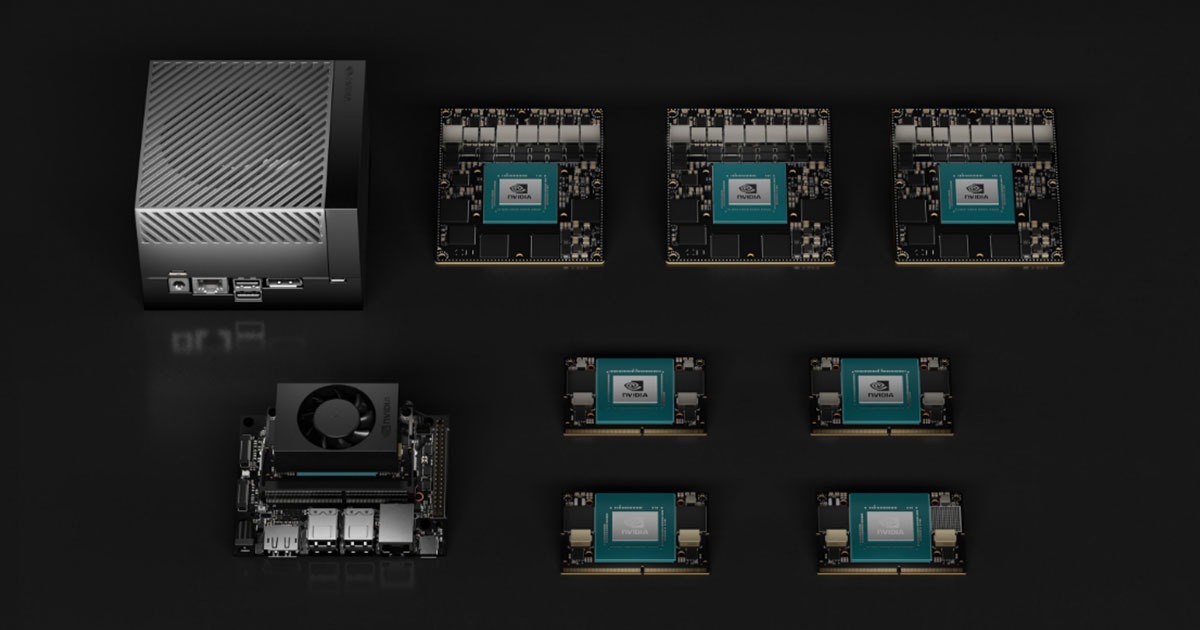
The NVIDIA Jetson Orin NX is a compact, SO-DIMM form-factor edge AI compute module designed for robotics, autonomous machines, and embedded vision applications. Manufactured by NVIDIA, it is available in 8 GB and 16 GB memory configurations and pairs an Ampere-architecture GPU with an 8-core Arm Cortex-A78AE CPU to deliver high-throughput on-device inference without relying on cloud connectivity. Positioned within NVIDIA's broader Jetson Orin family, the Orin NX targets developers and system integrators who need a balance of performance and power efficiency in a small footprint. It is commonly used in applications such as industrial inspection, autonomous mobile robots (AMRs), drone navigation, and smart edge devices where real-time AI inference is critical.
538 views