Buddy
Buddy is a social companion robot developed by Blue Frog Robotics, a French startup. Designed primarily for elderly care and family interaction, Buddy serves as an emotional support companion, a medication and appointment reminder, and a communication bridge between seniors and their families. The robot features a tablet-like face display, mobility on wheels, and AI-driven capabilities including face recognition and voice interaction. Although marketed with consumer-friendly aesthetics, Buddy incorporates sensors and a mobile app interface that allow remote caregivers to monitor a user's well-being. Blue Frog Robotics positioned Buddy as an accessible, affordable social robot intended for home and light-care environments, distinguishing it from heavier industrial or clinical robotic platforms.
Overview and Use Cases
Buddy is a wheeled social robot created by Blue Frog Robotics, reportedly founded in France. The robot is designed to address loneliness and safety concerns among elderly individuals living independently, as well as to support families seeking a connected care solution. Core use cases include:
- Emotional companionship: Engaging users in conversation, playing games, and providing entertainment.
- Health reminders: Alerting users to take medication, attend appointments, or perform daily routines.
- Family communication: Acting as a video-call terminal so relatives can check in remotely.
- Well-being monitoring: Transmitting status updates to caregivers via a dedicated mobile app.
- Educational and entertainment functions: Reportedly capable of running third-party applications, making it adaptable for children's education as well.
Buddy's expressive screen-based face and compact wheeled form factor allow it to navigate home environments and interact naturally with users of varying ages.
Key Technical Details
As of public reporting, Buddy's hardware includes:
- Mobility: Wheeled locomotion suited to flat indoor surfaces; not designed for stairs or rough terrain.
- Display: A tablet-style screen serving as the robot's face, capable of rendering expressive animations.
- Sensors: Reportedly includes cameras for face and obstacle detection, microphones for voice recognition, and proximity sensors for safe navigation.
- AI capabilities: Face recognition, natural language processing for voice commands, and emotion-responsive interaction.
- Connectivity: Wi-Fi connectivity enabling the companion app and remote monitoring features.
- Battery runtime: Specific runtime figures have not been consistently confirmed in public sources; the robot is intended for home use with periodic charging.
Blue Frog Robotics has described an open software platform allowing developers to create or install additional applications, which extends Buddy's functionality beyond its default feature set.
Comparison to Similar Robots
Within Blue Frog Robotics' portfolio, Buddy is the company's flagship consumer-facing social robot. The sibling products listed under the same manufacturer — including platforms associated with agricultural, security, and industrial categories — appear to reflect a broader portfolio context rather than directly comparable social robots from Blue Frog Robotics itself.
Among competitors, Buddy occupies a space alongside robots such as:
- Pepper (SoftBank Robotics): A humanoid social robot with broader commercial deployment but a higher price point.
- ElliQ (Intuition Robotics): A voice-and-screen companion device specifically targeting elderly users, though less mobile.
- Stevie (Akara Robotics): A care-focused humanoid with more clinical ambitions.
Buddy differentiates itself through its relatively accessible price positioning (for the social robot category), expressive design, and open app ecosystem.
Market Context and Target Buyers
Buddy targets two primary buyer segments:
- Families and individual consumers seeking a care companion for elderly relatives living alone.
- Senior care facilities and assisted-living operators looking to supplement human caregiving staff with interactive technology.
Blue Frog Robotics launched a crowdfunding campaign for Buddy (reportedly via Indiegogo) that attracted significant attention, suggesting early market validation. The robot is positioned in a mid-range consumer-to-prosumer price tier for social robots, though specific MSRP figures should be verified directly with the manufacturer as pricing may have changed.
Deployments and Notable Engagements
As of public reporting, Buddy has been demonstrated at major technology trade shows and has been piloted in various care-related contexts in Europe. Specific large-scale commercial deployments or named institutional customers have not been widely confirmed in publicly available sources. Blue Frog Robotics has reportedly partnered with healthcare and technology organizations to explore integration into care workflows.
Future Outlook
The social companion robot market is projected to grow as aging populations in Europe, North America, and Asia drive demand for scalable care solutions. Buddy's open platform approach positions it to evolve alongside advances in conversational AI and smart-home integration. Key challenges include achieving reliable natural language interaction, ensuring data privacy for vulnerable users, and demonstrating measurable health outcomes to justify adoption by institutional buyers. Blue Frog Robotics' ability to iterate on Buddy's software ecosystem and expand distribution partnerships will likely determine its long-term market relevance.
Related videos


Related entries
 Robot
RobotG1
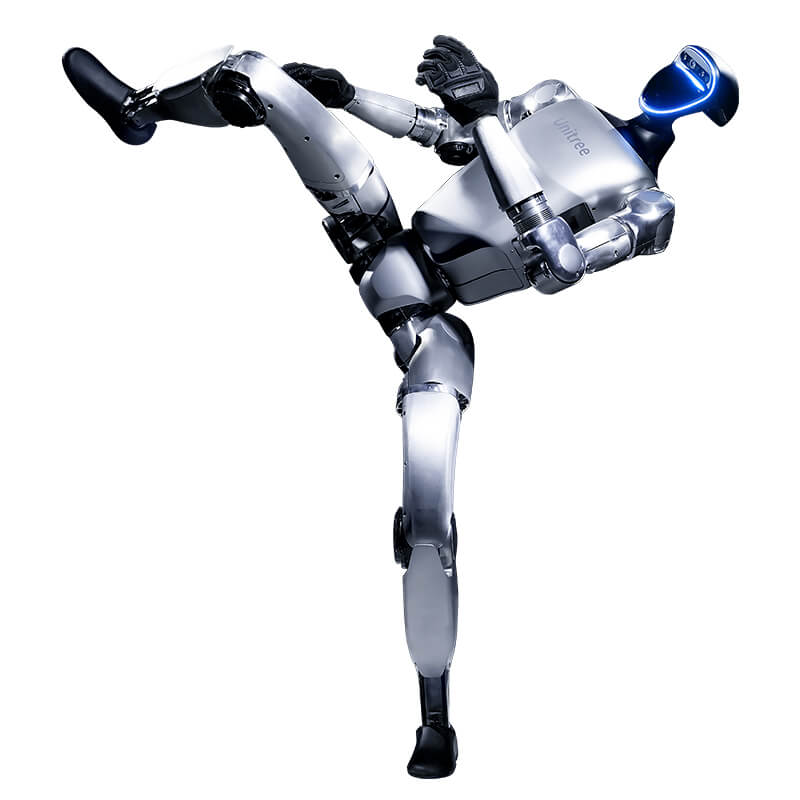
The Unitree G1 is a general-purpose humanoid robot developed by Unitree Robotics, a Chinese robotics company headquartered in Hangzhou. Standing approximately 1.32 meters tall and weighing around 35 kilograms, the G1 features 23 degrees of freedom and is capable of walking, running, recovering from falls, and performing dexterous manipulation tasks. It ships with SDK access, making it accessible to researchers and small-business operators seeking an affordable entry point into humanoid robotics. The G1 is widely regarded as one of the most competitively priced serious humanoid platforms available as of public reporting, positioning Unitree as a disruptive force in a market historically dominated by far more expensive systems. Its combination of mobility, recoverability, and open software access has attracted attention from academic institutions, robotics developers, and automation-focused startups worldwide.
5,939 views
 Robot
RobotUniversal Robots UR5e
The Universal Robots UR5e is a six-axis collaborative robot arm (cobot) belonging to Universal Robots' e-Series product line. Designed for light-to-medium industrial and laboratory tasks, it is widely used in assembly, pick-and-place, machine tending, quality inspection, and lab automation workflows. Universal Robots, a Danish company and a subsidiary of Teradyne, is one of the most recognized names in the collaborative robotics market. The UR5e is programmed using Universal Robots' PolyScope graphical interface on a teach pendant, making it accessible to operators without deep robotics expertise. Its built-in force/torque sensing, tool-center-point control, and a broad ecosystem of certified end-effectors and accessories (the UR+ platform) have made it a popular mid-range cobot choice across manufacturing, electronics, food handling, and research sectors.
5,266 views
 Robot
RobotQuicktron M100
The Quicktron M100 is a heavy-duty autonomous mobile robot (AMR) belonging to Quicktron Robotics' M-Series product line. It is designed for demanding material handling tasks in warehouses, distribution centers, and manufacturing environments, using an integrated lift mechanism to transport shelves and pallets autonomously across facility floors. Quicktron Robotics, a company with roots in China and a global commercial presence, positions the M100 as a high-capacity solution for operations that require moving heavier loads than lighter AMR models can accommodate. The M100 targets logistics operators and manufacturers seeking to automate goods-to-person or pallet-movement workflows at scale.
619 views
 Robot
RobotNVIDIA Jetson Orin NX
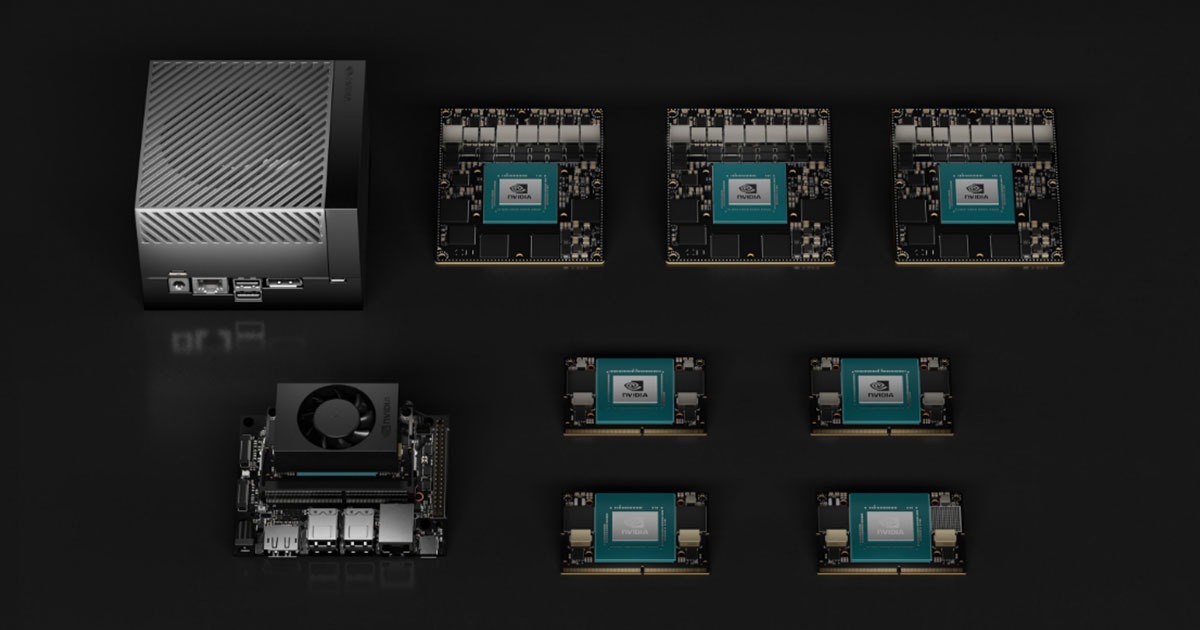
The NVIDIA Jetson Orin NX is a compact, SO-DIMM form-factor edge AI compute module designed for robotics, autonomous machines, and embedded vision applications. Manufactured by NVIDIA, it is available in 8 GB and 16 GB memory configurations and pairs an Ampere-architecture GPU with an 8-core Arm Cortex-A78AE CPU to deliver high-throughput on-device inference without relying on cloud connectivity. Positioned within NVIDIA's broader Jetson Orin family, the Orin NX targets developers and system integrators who need a balance of performance and power efficiency in a small footprint. It is commonly used in applications such as industrial inspection, autonomous mobile robots (AMRs), drone navigation, and smart edge devices where real-time AI inference is critical.
544 views