Let's compare
YK600XG
Yamaha Robotics
Not yet assessed
- Height
- —
- Payload
- —
- Verified autonomy
- not assessed
- Real deployment
- not assessed
- Status
- —
- Price
- —
YK600XG
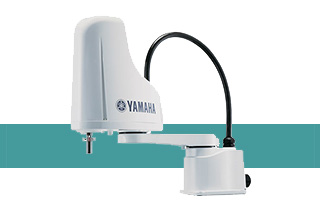
Yamaha RoboticsThe Yamaha YK600XG is a 4-axis SCARA industrial robot with a 600 mm arm reach, 10 kg maximum payload, and a standard cycle time of approximately 0.43–0.46 seconds. It is designed for high-speed precision tasks such as electronic assembly, screw tightening, and parts transfer, and is controlled by the RCX240/RCX340/RCX240-R3 controller. The robot operates fully autonomously once programmed — executing its industrial tasks without any human performing or driving the task — though it requires initial setup, programming, and periodic maintenance. Community reports confirm real-world deployment with occasional fault issues (D3 overload, Z-axis brake faults, control board failures) consistent with normal industrial robot maintenance, not human task takeover.
Availability
Specification
- arm_reach
- 600 mm total (X: 300 mm, Y: 300 mm arm segments)
- maximum_payload
- 10 kg (standard type); 9 kg (tool flange mount type)
- maximum_speed
- X: 8.4 m/s, Y: 2.3 m/s, Z: 1.7 m/s, R: 1700°/s; X-Y combined: 8.5 m/s
- body_weight
- 31 kg
Price
No public price — contact the supplier for a quote.
Good · Bad · Ugly
Evidence-graded claims from the Yamaha Robotics deep report
Yamaha's industrial robots (SCARA, Cartesian, cobot, surface mounters) operate fully autonomously once programmed — humans only perform setup, commissioning, and maintenance, not the tasks themselves.
An independent industrial maintenance community on Reddit [13] confirms these robots operate in production environments with human involvement limited to commissioning and maintenance, corroborating the vendor's autonomy description — though the sample is anecdotal and not a formal audit.
from Yamaha Robotics deep report →Yamaha Motor acquired Robotics Plus to build autonomous AI-powered equipment for the specialty crop agriculture market.
Robotics Tomorrow [10], an independent trade publication, reported the acquisition with a direct quote from the announcement, confirming the deal and its agricultural autonomy focus — though actual deployed product performance in the field remains unverified.
from Yamaha Robotics deep report →
Yamaha's 7-axis cobot autonomously adapts its posture to avoid interference in confined spaces, enabled by torque sensors in all 7 axes — without human intervention during task execution.
Only Yamaha's own official product page [2] describes the 7-axis structure and torque sensors; no independent test, customer report, or third-party benchmark in the dossier verifies the autonomous posture-adaptation claim in real-world deployment.
from Yamaha Robotics deep report →The cobot achieves ±0.04 mm repeatability (ISO 9283) with a 10 kg payload at 1,300 mm reach and 3,000 mm/s TCP speed.
All four specifications are sourced exclusively from Yamaha's own official product page [2]; no independent lab test, standards-body certification result, or third-party validation appears in the dossier.
from Yamaha Robotics deep report →Yamaha established the TY ROBOTICS joint venture with TOYO in August 2025 to transfer single-axis and Cartesian robot production and expand the model lineup.
The sole source is Yamaha Motor's own official news release [11]; no independent reporting, regulatory filing, or third-party confirmation of the joint venture's operational status or production transfer progress appears in the dossier.
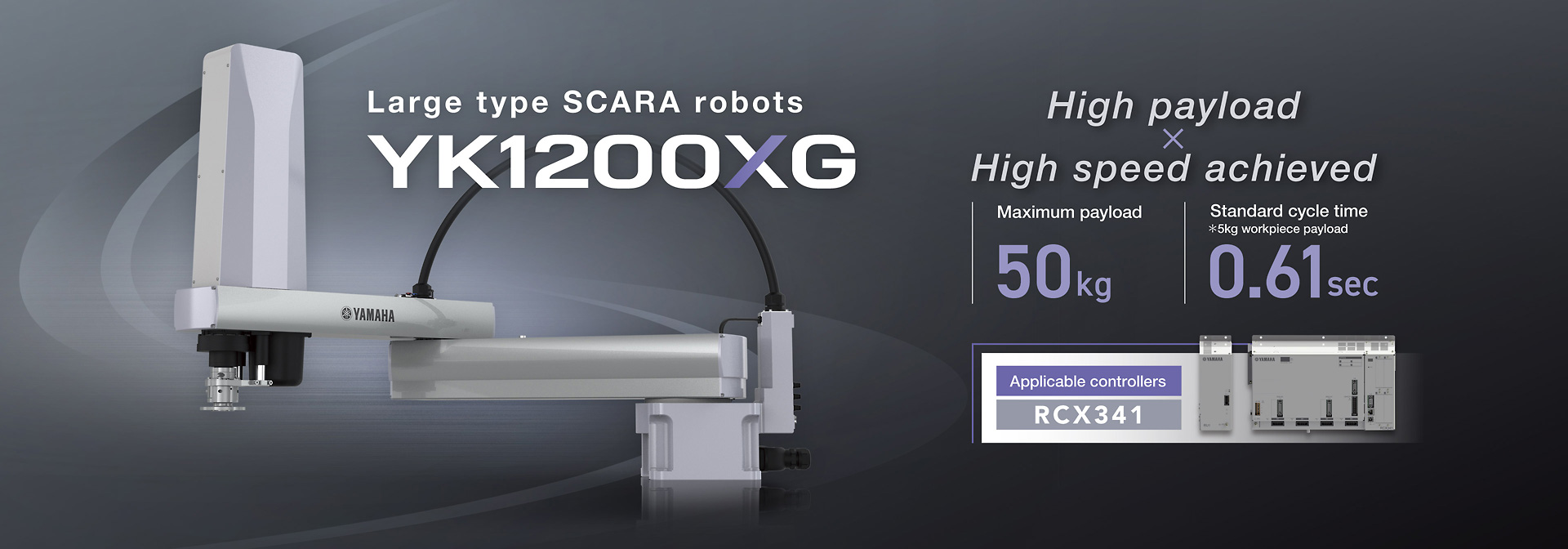
from Yamaha Robotics deep report →Yamaha's SCARA robots offer up to 1,200 mm arm reach and 50 kg payload, while Cartesian/single-axis robots achieve ±5 µm repeatability with strokes up to 4,050 mm.
These specs come from a 2017 distributor catalog PDF [4] (YRG Inc.), which is not an independent test and is nearly a decade old; current model specifications may differ and no third-party benchmark validates these figures.
from Yamaha Robotics deep report →Yamaha's cobot is commercially deployed across multiple real-world process applications — screw tightening, sealing, visual inspection, polishing, and connector insertion — with named partner companies for each process.
Partner companies (SANYO MACHINE WORKS, ThreeBond, Phoxter, FUJI CORPORATION) are listed only on Yamaha's own product page [2]; no independent customer case study, production volume data, or third-party deployment report in the dossier confirms actual at-scale commercial deployment.
from Yamaha Robotics deep report →
About the company
Editorial directory of real robot products from leading global manufacturers. Each entry links to the manufacturer's official page.