Let's compare
CR10 Legacy
Dobot
Not yet assessed
- Height
- —
- Payload
- —
- Verified autonomy
- not assessed
- Real deployment
- not assessed
- Status
- —
- Price
- —
CR10 Legacy
DobotThe 'CR10 Legacy' system as described by the extracted facts is the Creality CR-10 series FDM 3D printer — a consumer/prosumer desktop printer with a 300×300×400mm build volume, ~$500 price point, and near-pre-assembled design. The extracted facts also contain substantial off-topic material about Dobot collaborative robots, DOBOT Atom humanoid robots, and unrelated academic robotics research (CRANE, KUKA KRL, autonomous vehicles), none of which pertain to the CR-10 printer. The CR-10 printer performs its printing task autonomously once a job is started, but independent community evidence documents significant reliability issues including random mid-print stops, bowden tube failures, ABL sensor errors, and poor support responsiveness. No human drives or performs the printing task itself, but reliability problems mean prints frequently fail and require user intervention to restart.
Availability
Specification
- power_supply
- 24V
Price
No public price — contact the supplier for a quote.
Good · Bad · Ugly
Evidence-graded claims from the DOBOT deep report
DOBOT ATOM full-size industrial humanoid robot has entered third-batch mass production and delivery.
Gasgoo/Autonews [14], an independent automotive industry news outlet, reported that DOBOT commenced mass production and delivery of the third batch of ATOM humanoid robots; the scale of deployment and real-world performance remain unverified.
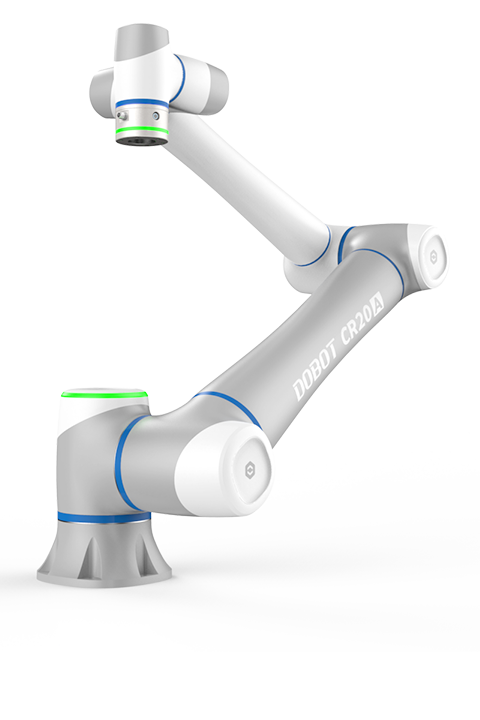
from DOBOT deep report →The DOBOT CR5 cobot delivers ±0.02 mm repeatability at a 5 kg payload and 900 mm reach, priced at $22,980.
RobotLAB's commerce listing [5], a third-party reseller, independently publishes the detailed spec table and explicit purchase price for the CR5, though real-world repeatability under production conditions has not been independently tested.
from DOBOT deep report →
DOBOT cobots' touchscreen/Blockly programming interface lowers the barrier for novice users but creates friction and limitations for experienced industrial programmers requiring third-party firmware integration.
Community sources (Reddit/PLC forums) [19] discuss this usability tradeoff for cobots generally, but the dossier explicitly notes these reports are not DOBOT-specific, limiting direct applicability.
from DOBOT deep report →DOBOT completed Siemens SRCI integration for its cobot line, enabling native interoperability with Siemens industrial automation ecosystems.
The Siemens SRCI integration is confirmed only by DOBOT's own official announcement [12]; no independent Siemens statement, customer deployment report, or third-party validation of the integration's real-world functionality appears in the dossier.
from DOBOT deep report →
DOBOT ATOM humanoid robot achieves autonomous task decomposition and decision-making in unstructured environments (automotive assembly, beverage preparation, pharmacy) via the ROM-1 model (100M parameters, 24 Hz end-to-end control).
All ROM-1 autonomy claims originate exclusively from DOBOT's official product page [2]; no independent test, customer report, or third-party review in the dossier verifies real-world autonomous performance, and community sources warn that unstructured-environment autonomy routinely falls short of vendor claims [17].
from DOBOT deep report →
About the company
Editorial directory of real robot products from leading global manufacturers. Each entry links to the manufacturer's official page.